Introduction
Printed in Paris between 1745 and 1749, this mid-eighteenth century edition of Jean Baptiste Massillon’s sermons represents the enduring authority of one of France’s most celebrated ecclesiastical orators. Massillon, Bishop of Clermont and member of the Académie Française, was renowned for the clarity, moral gravity, and psychological insight of his preaching. His sermons, delivered before the court of Louis XV, secured his reputation as one of the defining voices of French sacred eloquence during the Enlightenment.
This set gathers several of his principal sermon cycles in a uniform contemporary binding, preserving both their intellectual and material presence.
Physical description
Six volumes, 12mo format
Printed in Paris, 1745 to 1749
Imprint: La Veuve Estienne & Fils; Jean Herissant, Rue Saint Jacques
Contemporary full calf bindings
Gilt-tooled spines with red morocco spine labels
Includes:
Carême Tome I not present
General rubbing and wear to the bindings consistent with age
Text generally clean and structurally sound
Context
Jean Baptiste Massillon emerged as a central figure in early eighteenth-century French religious life. His preaching was distinguished by its introspective moral analysis and refined rhetorical structure, qualities that appealed both to courtly audiences and to the broader reading public.
The Paris presses of the Estienne family and Jean Herissant, located on the historic Rue Saint Jacques, were among the most important theological printers of their time. By the mid-eighteenth century, Massillon’s sermons were firmly established as canonical texts of Catholic eloquence and continued to be reissued for devotional, clerical, and scholarly readership.
This edition belongs to that period of consolidation, when his works were circulated not merely as sermons but as enduring literary texts.
Significance
Beyond their theological substance, these volumes embody the intellectual culture of the French Enlightenment, where moral philosophy, rhetoric, and religion intersected. Massillon’s ability to address power directly while maintaining spiritual authority made him a singular voice in the court of Louis XV.
As a physical object, the set retains the aesthetic integrity of eighteenth-century Parisian book production. The uniform calf bindings, gilt spines, and compact format give the series both scholarly weight and decorative presence.
Although incomplete in the Carême sequence, the collection remains a coherent and historically resonant survival from the great age of French sacred oratory.
Introduction
Printed in Paris between 1745 and 1749, this mid-eighteenth century edition of Jean Baptiste Massillon’s sermons represents the enduring authority of one of France’s most celebrated ecclesiastical orators. Massillon, Bishop of Clermont and member of the Académie Française, was renowned for the clarity, moral gravity, and psychological insight of his preaching. His sermons, delivered before the court of Louis XV, secured his reputation as one of the defining voices of French sacred eloquence during the Enlightenment.
This set gathers several of his principal sermon cycles in a uniform contemporary binding, preserving both their intellectual and material presence.
Physical description
Six volumes, 12mo format
Printed in Paris, 1745 to 1749
Imprint: La Veuve Estienne & Fils; Jean Herissant, Rue Saint Jacques
Contemporary full calf bindings
Gilt-tooled spines with red morocco spine labels
Includes:
Carême Tome I not present
General rubbing and wear to the bindings consistent with age
Text generally clean and structurally sound
Context
Jean Baptiste Massillon emerged as a central figure in early eighteenth-century French religious life. His preaching was distinguished by its introspective moral analysis and refined rhetorical structure, qualities that appealed both to courtly audiences and to the broader reading public.
The Paris presses of the Estienne family and Jean Herissant, located on the historic Rue Saint Jacques, were among the most important theological printers of their time. By the mid-eighteenth century, Massillon’s sermons were firmly established as canonical texts of Catholic eloquence and continued to be reissued for devotional, clerical, and scholarly readership.
This edition belongs to that period of consolidation, when his works were circulated not merely as sermons but as enduring literary texts.
Significance
Beyond their theological substance, these volumes embody the intellectual culture of the French Enlightenment, where moral philosophy, rhetoric, and religion intersected. Massillon’s ability to address power directly while maintaining spiritual authority made him a singular voice in the court of Louis XV.
As a physical object, the set retains the aesthetic integrity of eighteenth-century Parisian book production. The uniform calf bindings, gilt spines, and compact format give the series both scholarly weight and decorative presence.
Although incomplete in the Carême sequence, the collection remains a coherent and historically resonant survival from the great age of French sacred oratory.


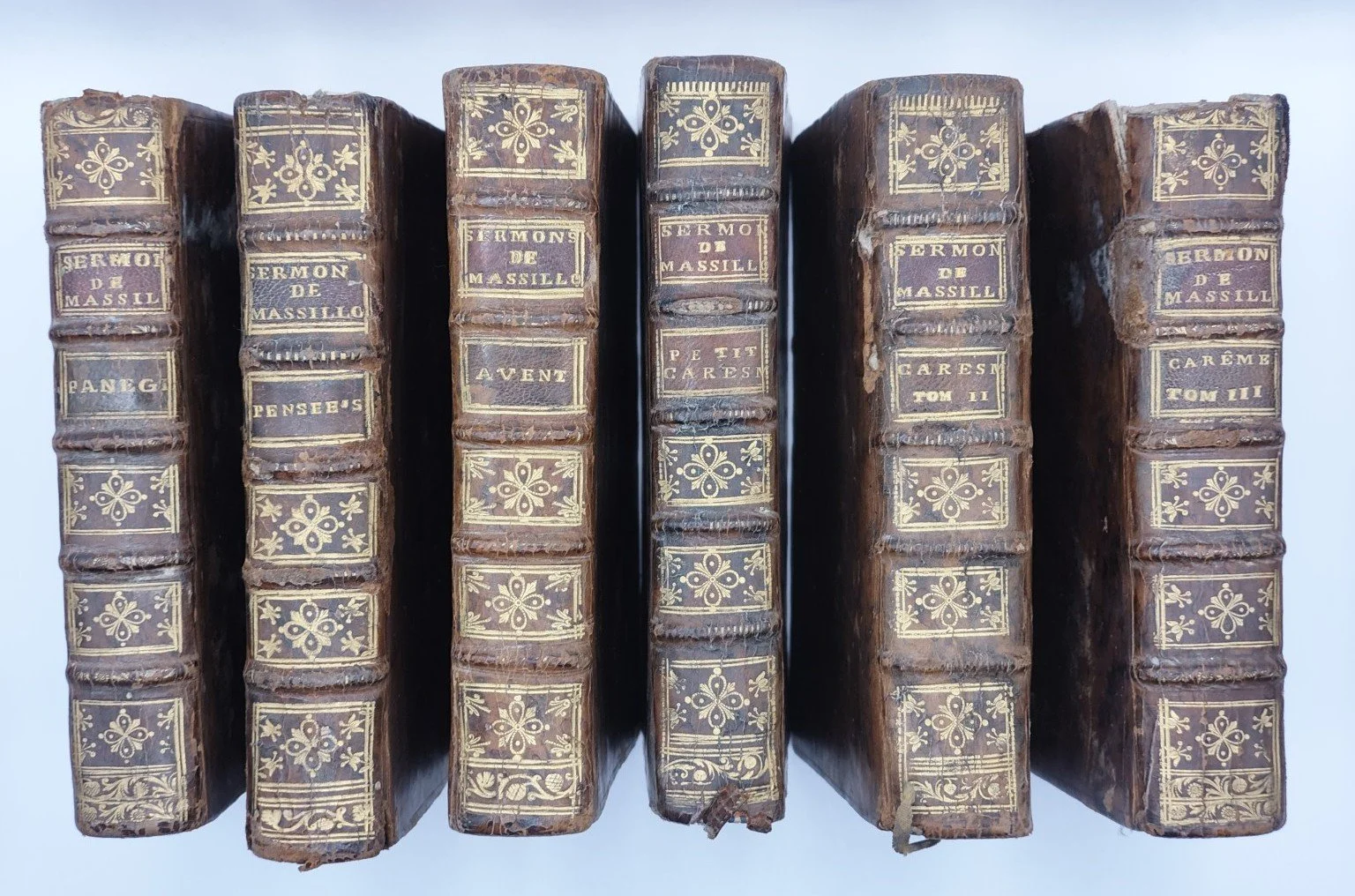 Image 1 of 12
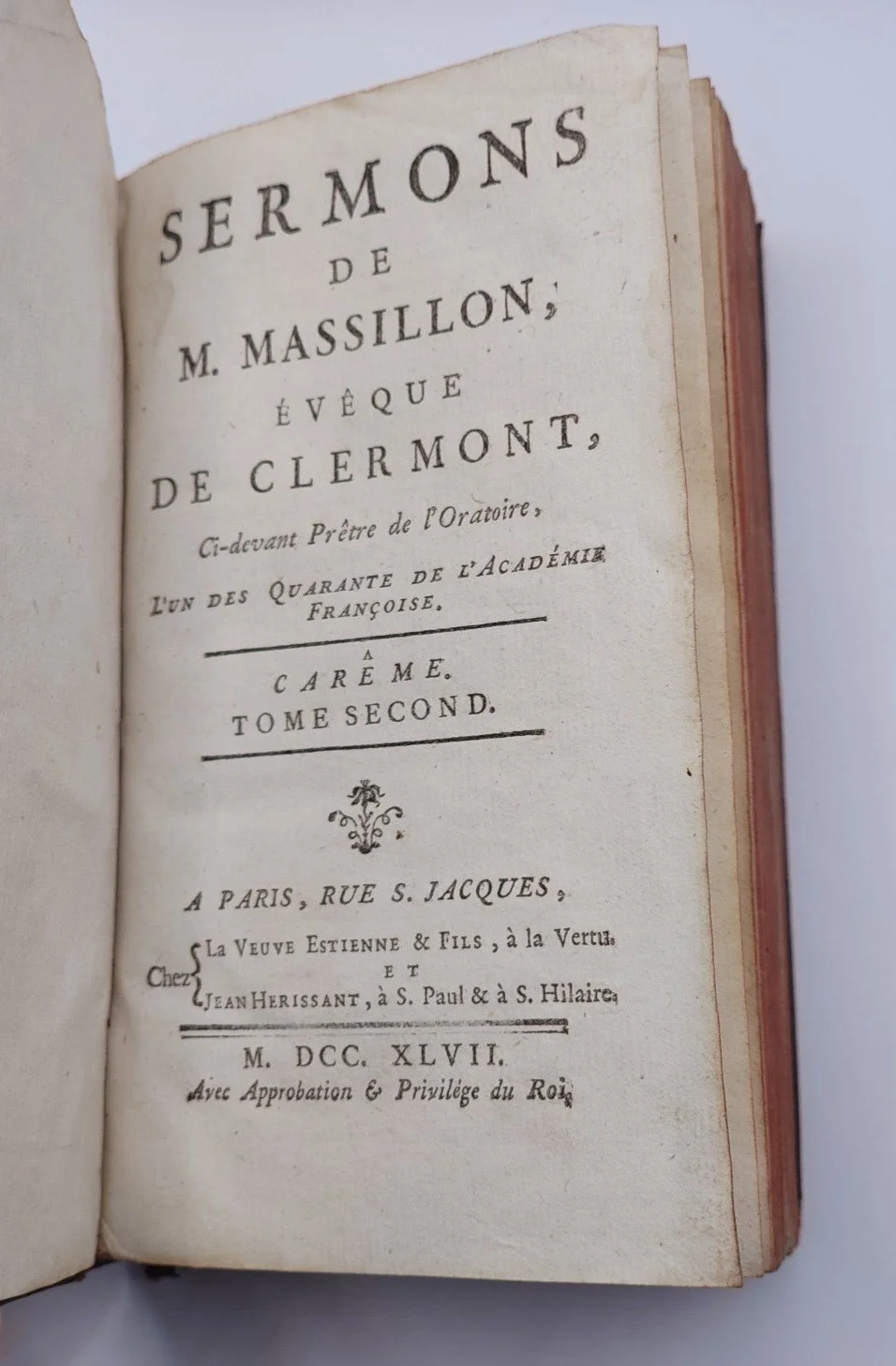 Image 2 of 12
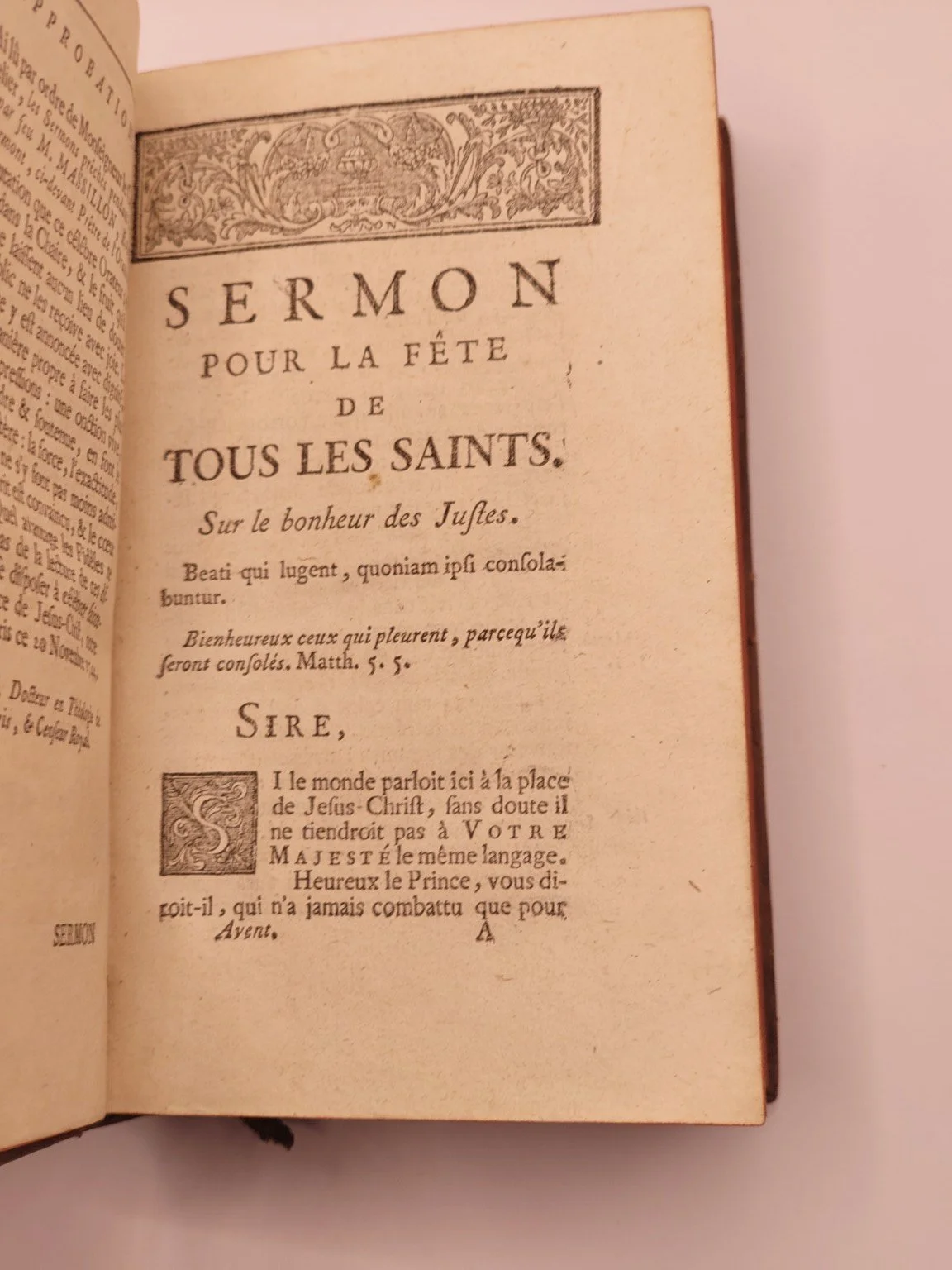 Image 3 of 12
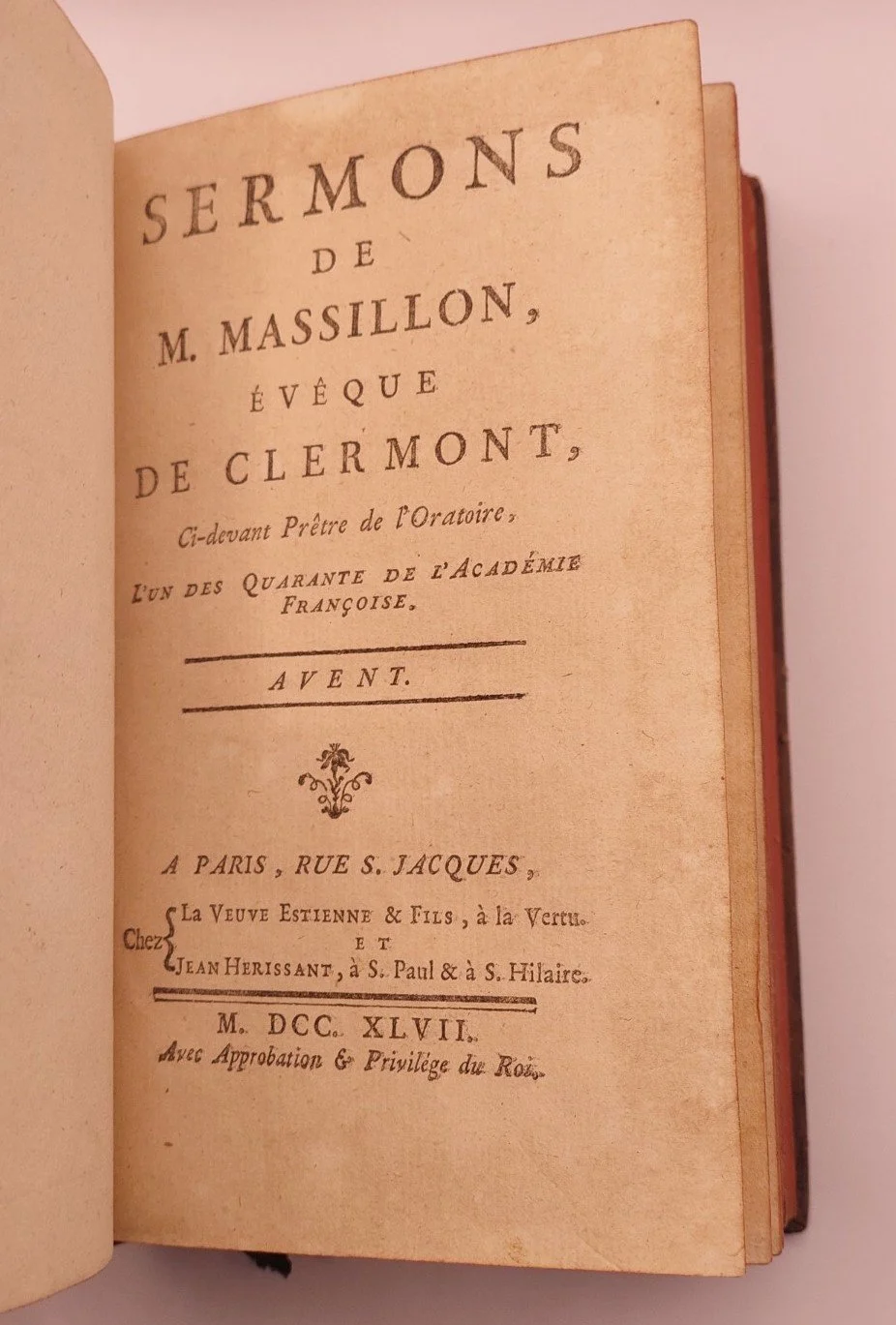 Image 5 of 12
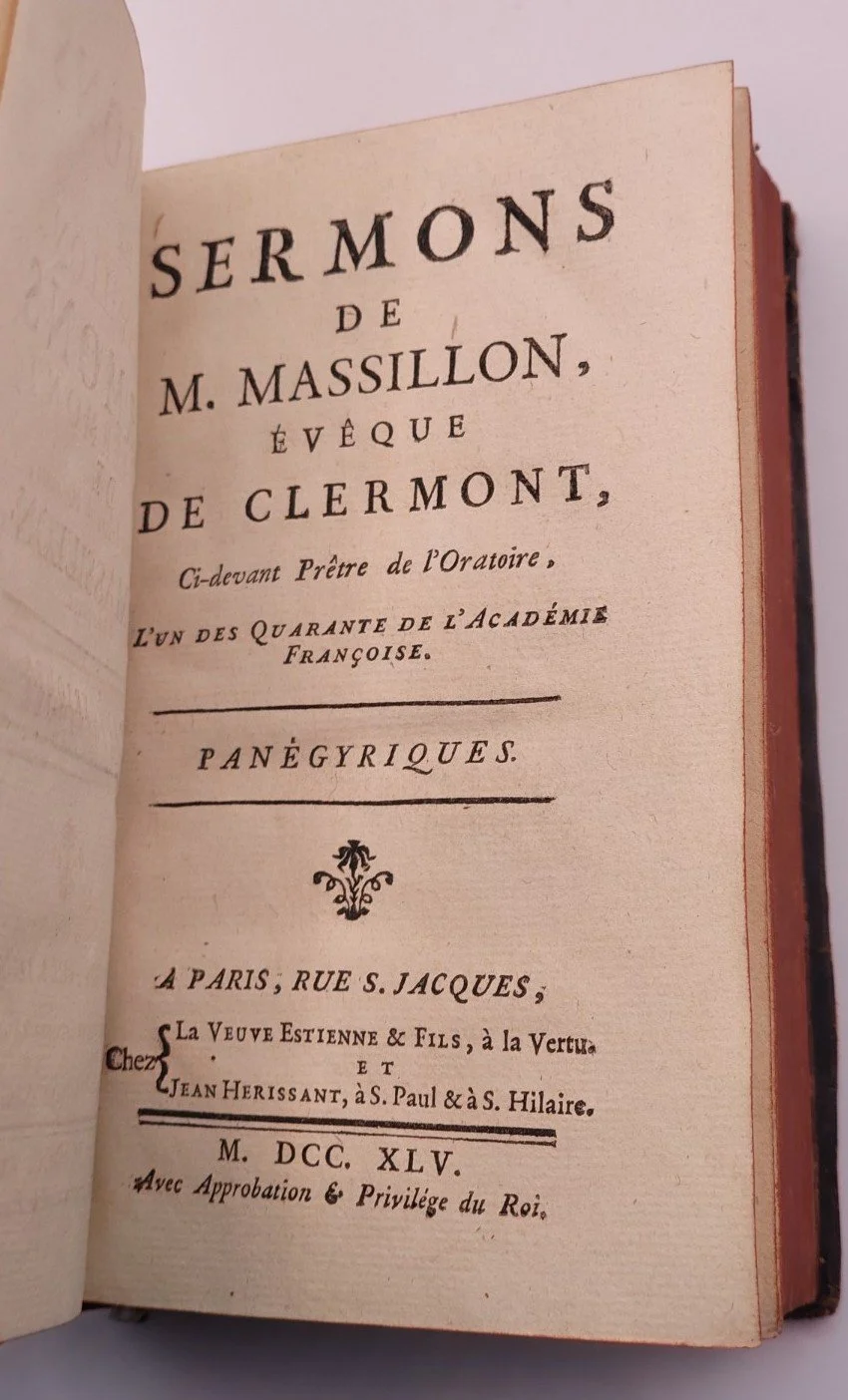 Image 7 of 12
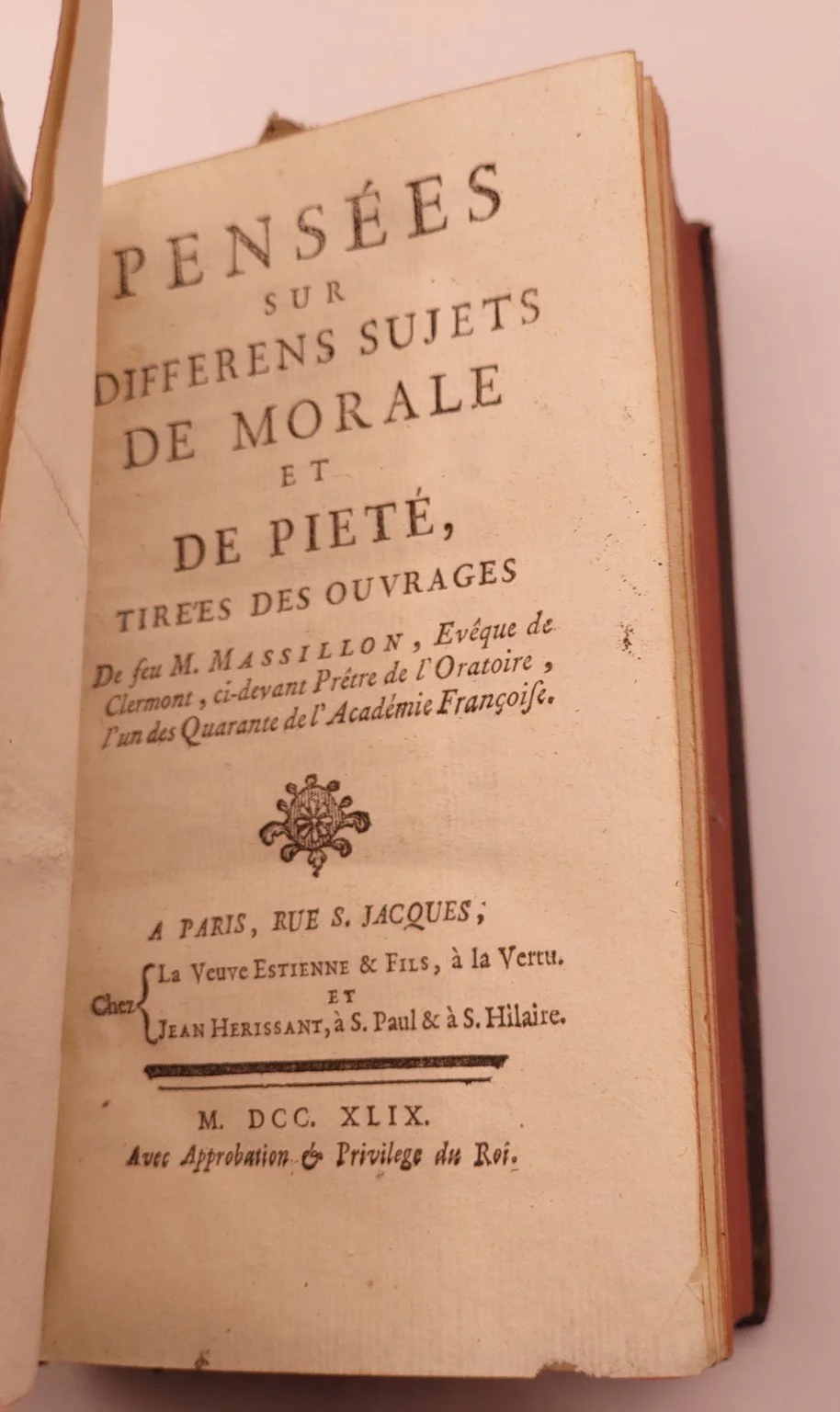 Image 8 of 12
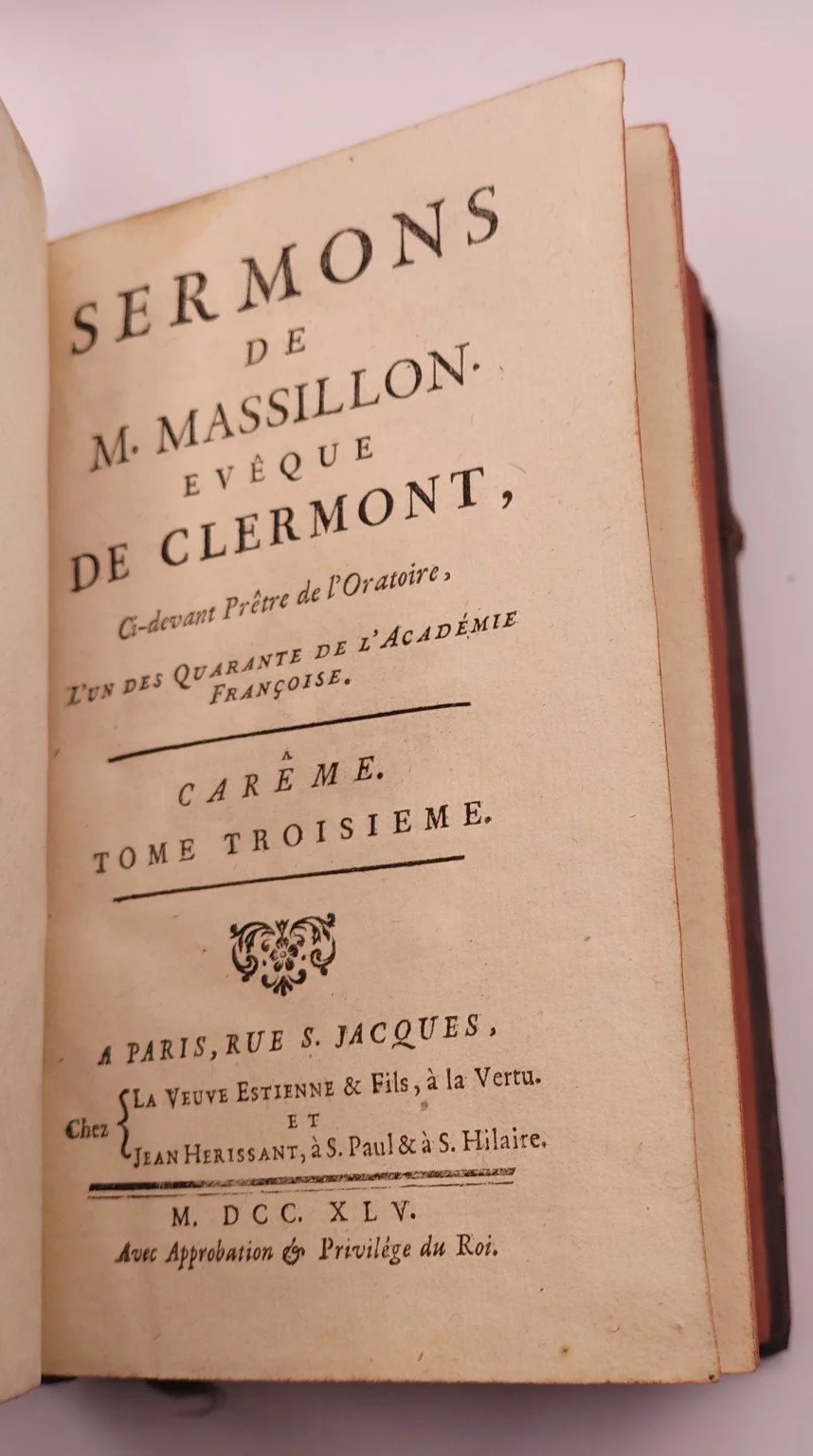 Image 9 of 12
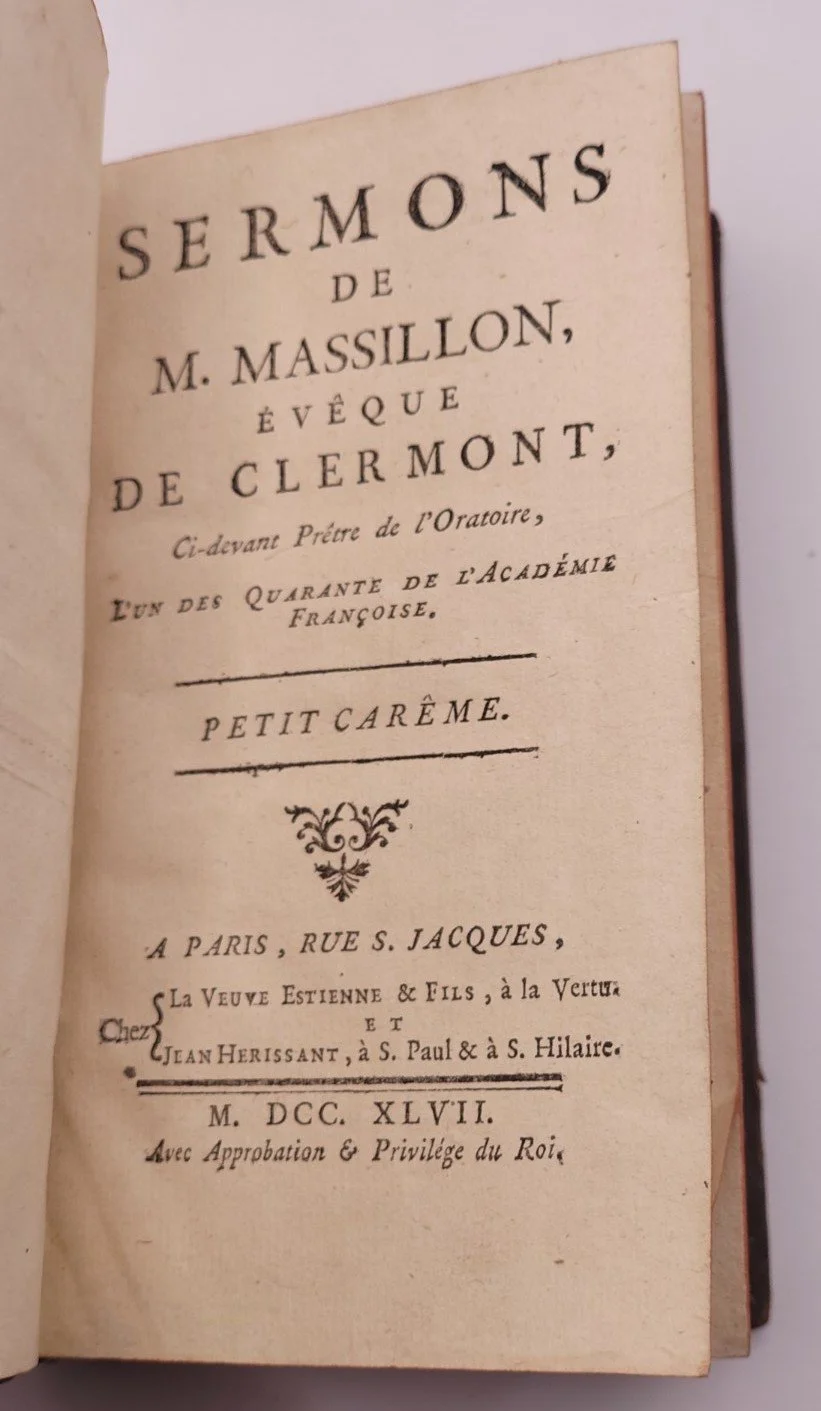 Image 10 of 12
 Image 11 of 12
 Image 12 of 12