Introduction
Printed in Norrköping in 1729 and associated with the clerical publisher Reinerus Broocman, this volume of Samtlige Söndags och Helgedags Evangelier belongs to a long tradition of Swedish devotional literature structured around the liturgical year. Intended for the reading of Gospel passages on Sundays and feast days, such books occupied a central place in both parish worship and domestic religious life during the early eighteenth century.
This particular copy, however, distinguishes itself not only through its survival, but through the clarity with which its later history can be traced.
Physical description
Norrköping, 1729
4to format
Contemporary full leather binding
Blind-stamped decoration to boards
Original metal clasps preserved (worn but intact)
Text complete and legible throughout
Toning and staining consistent with age and use
Structural wear to binding, but sound
Context
Evangelia of this kind formed part of the textual backbone of Lutheran practice in Sweden following the Reformation. While the Bible itself held doctrinal authority, collections of prescribed readings such as this provided an accessible and structured way for both clergy and laypeople to engage with scripture across the calendar year.
Norrköping, as a provincial printing centre, played a significant role in the dissemination of religious texts during this period. The association with Reinerus Broocman situates the volume within a network of clerical publishing that sought to supply both ecclesiastical and domestic demand.
Significance
The manuscript inscription contained within the volume offers a rare and unusually detailed record of ownership. The book is recorded as belonging to Anders Persson Viklund of Hammarby in Edebo parish, born in 1810, and his wife Brita Gustavia Matsdotter, born in 1813. It later passed to their granddaughter Margreta Erika Sjölund, born in 1865, who resided in Godsta in Häverö parish.
Such continuity transforms the volume from a general devotional text into a documented family object, preserved and transmitted across generations within a specific rural Swedish milieu. The survival of its original binding, complete with clasps, further reinforces its integrity as a historical artifact.
Taken together, these elements position the book not merely as an example of early eighteenth-century printing, but as a material witness to the devotional and familial life of Sweden across the nineteenth century.
Introduction
Printed in Norrköping in 1729 and associated with the clerical publisher Reinerus Broocman, this volume of Samtlige Söndags och Helgedags Evangelier belongs to a long tradition of Swedish devotional literature structured around the liturgical year. Intended for the reading of Gospel passages on Sundays and feast days, such books occupied a central place in both parish worship and domestic religious life during the early eighteenth century.
This particular copy, however, distinguishes itself not only through its survival, but through the clarity with which its later history can be traced.
Physical description
Norrköping, 1729
4to format
Contemporary full leather binding
Blind-stamped decoration to boards
Original metal clasps preserved (worn but intact)
Text complete and legible throughout
Toning and staining consistent with age and use
Structural wear to binding, but sound
Context
Evangelia of this kind formed part of the textual backbone of Lutheran practice in Sweden following the Reformation. While the Bible itself held doctrinal authority, collections of prescribed readings such as this provided an accessible and structured way for both clergy and laypeople to engage with scripture across the calendar year.
Norrköping, as a provincial printing centre, played a significant role in the dissemination of religious texts during this period. The association with Reinerus Broocman situates the volume within a network of clerical publishing that sought to supply both ecclesiastical and domestic demand.
Significance
The manuscript inscription contained within the volume offers a rare and unusually detailed record of ownership. The book is recorded as belonging to Anders Persson Viklund of Hammarby in Edebo parish, born in 1810, and his wife Brita Gustavia Matsdotter, born in 1813. It later passed to their granddaughter Margreta Erika Sjölund, born in 1865, who resided in Godsta in Häverö parish.
Such continuity transforms the volume from a general devotional text into a documented family object, preserved and transmitted across generations within a specific rural Swedish milieu. The survival of its original binding, complete with clasps, further reinforces its integrity as a historical artifact.
Taken together, these elements position the book not merely as an example of early eighteenth-century printing, but as a material witness to the devotional and familial life of Sweden across the nineteenth century.


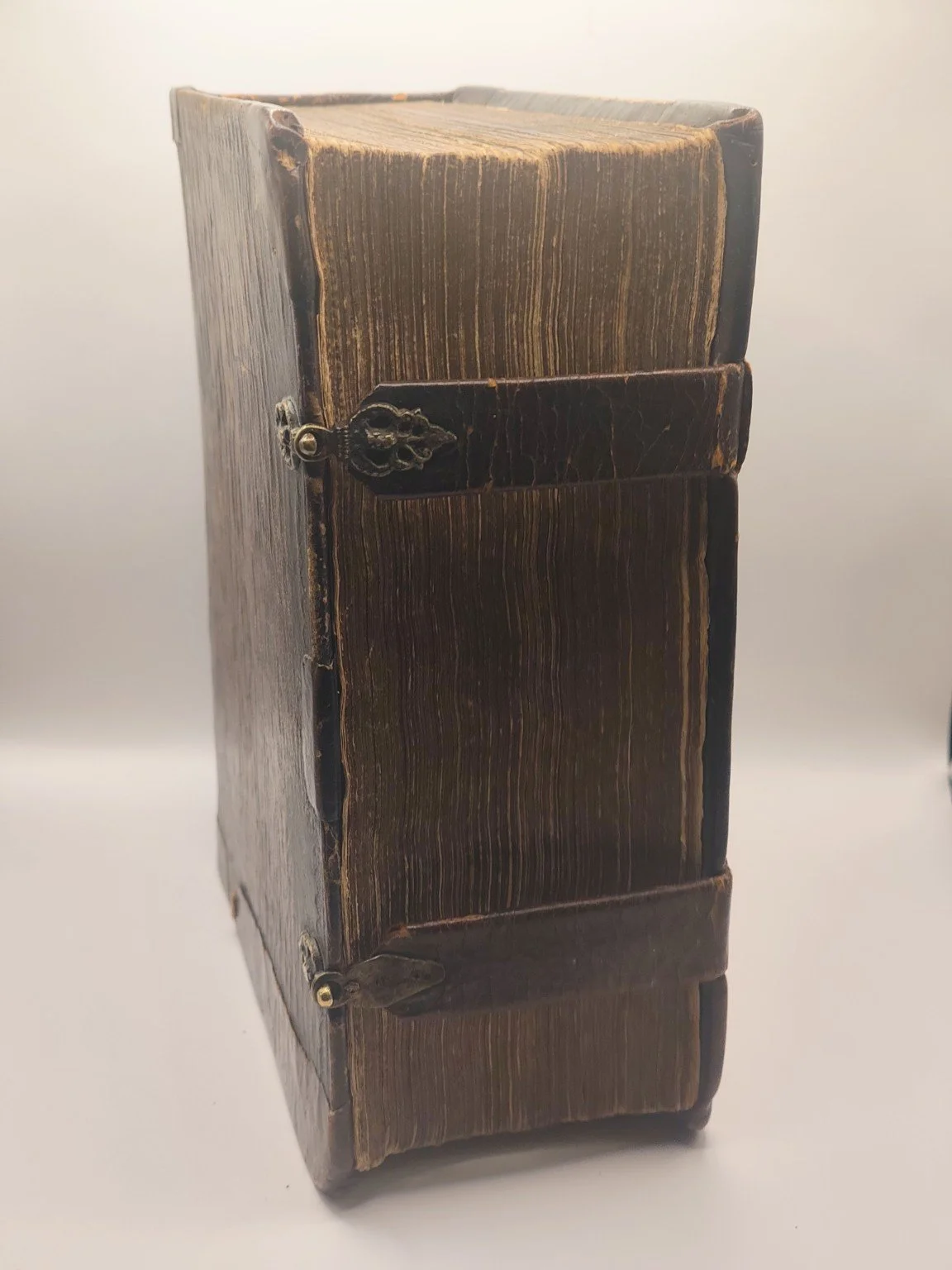 Image 1 of 8
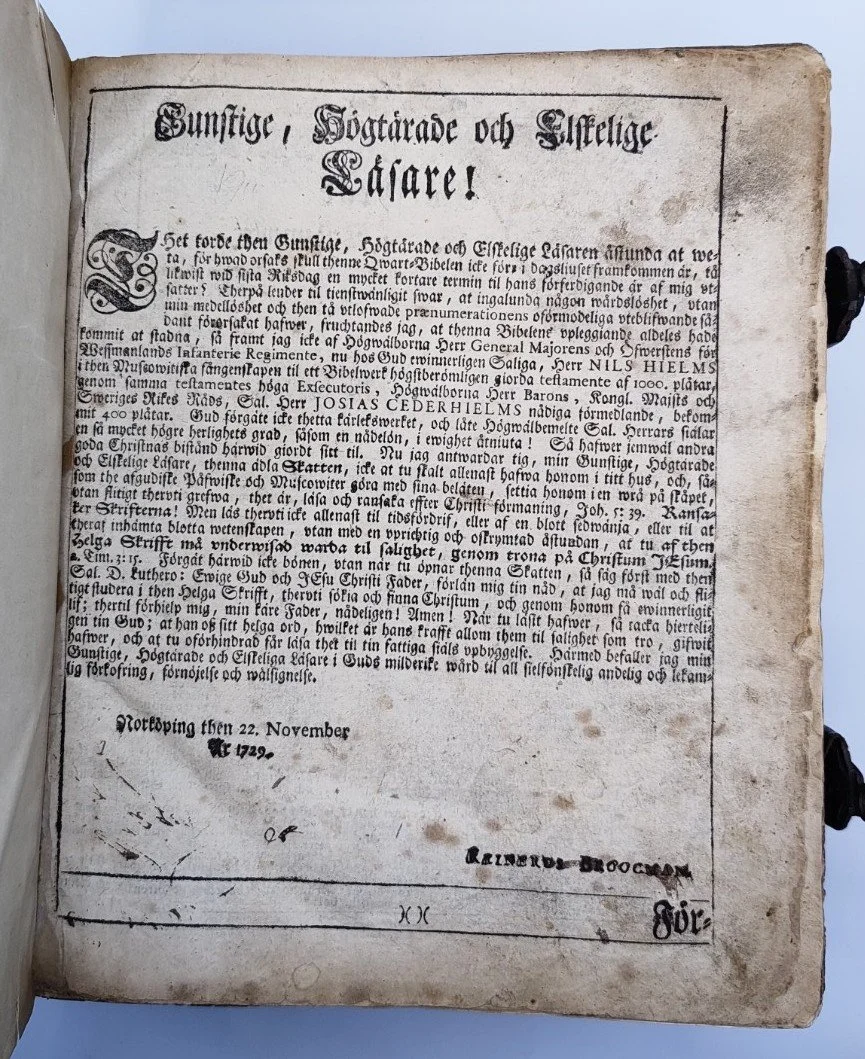 Image 2 of 8
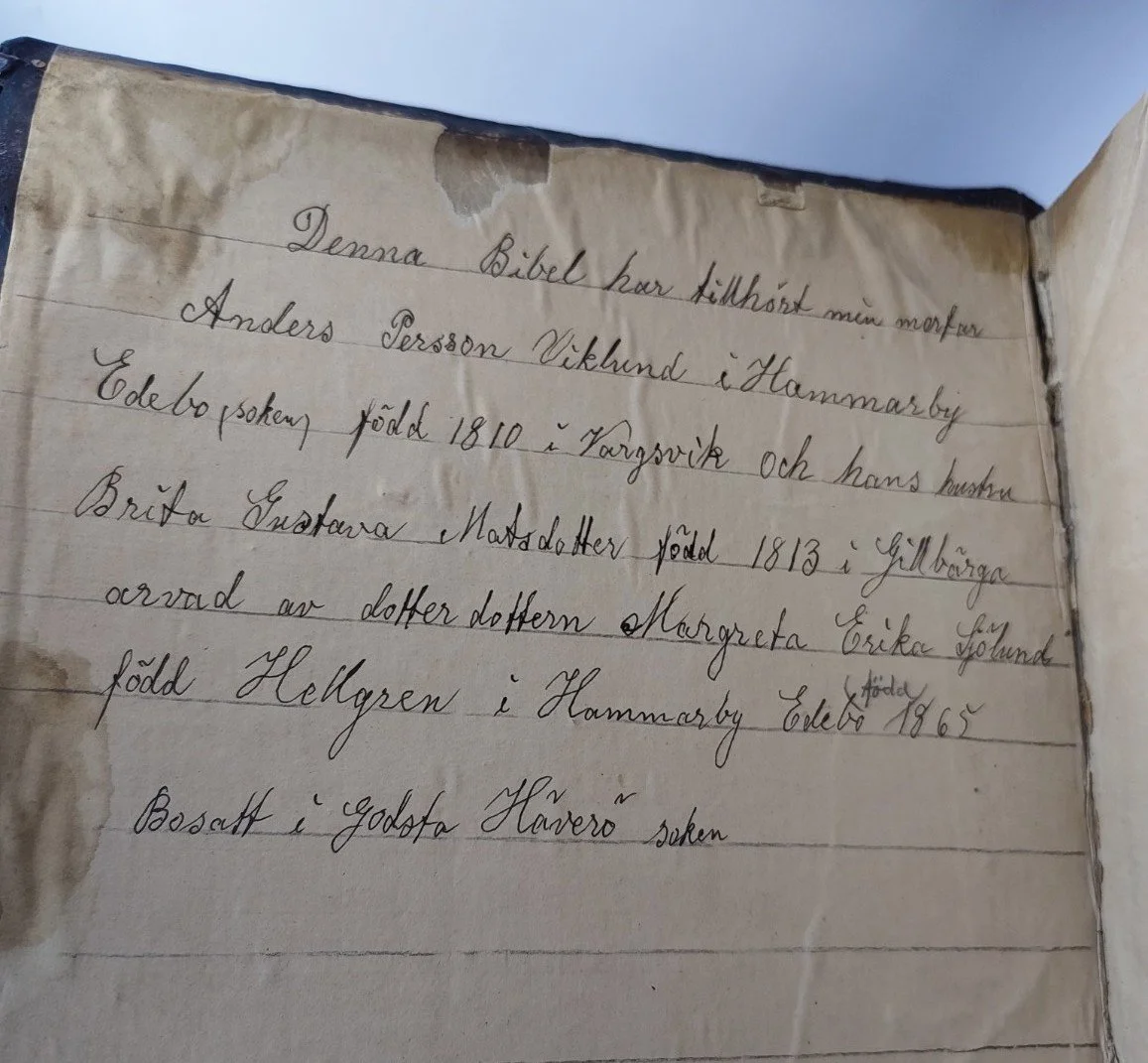 Image 3 of 8
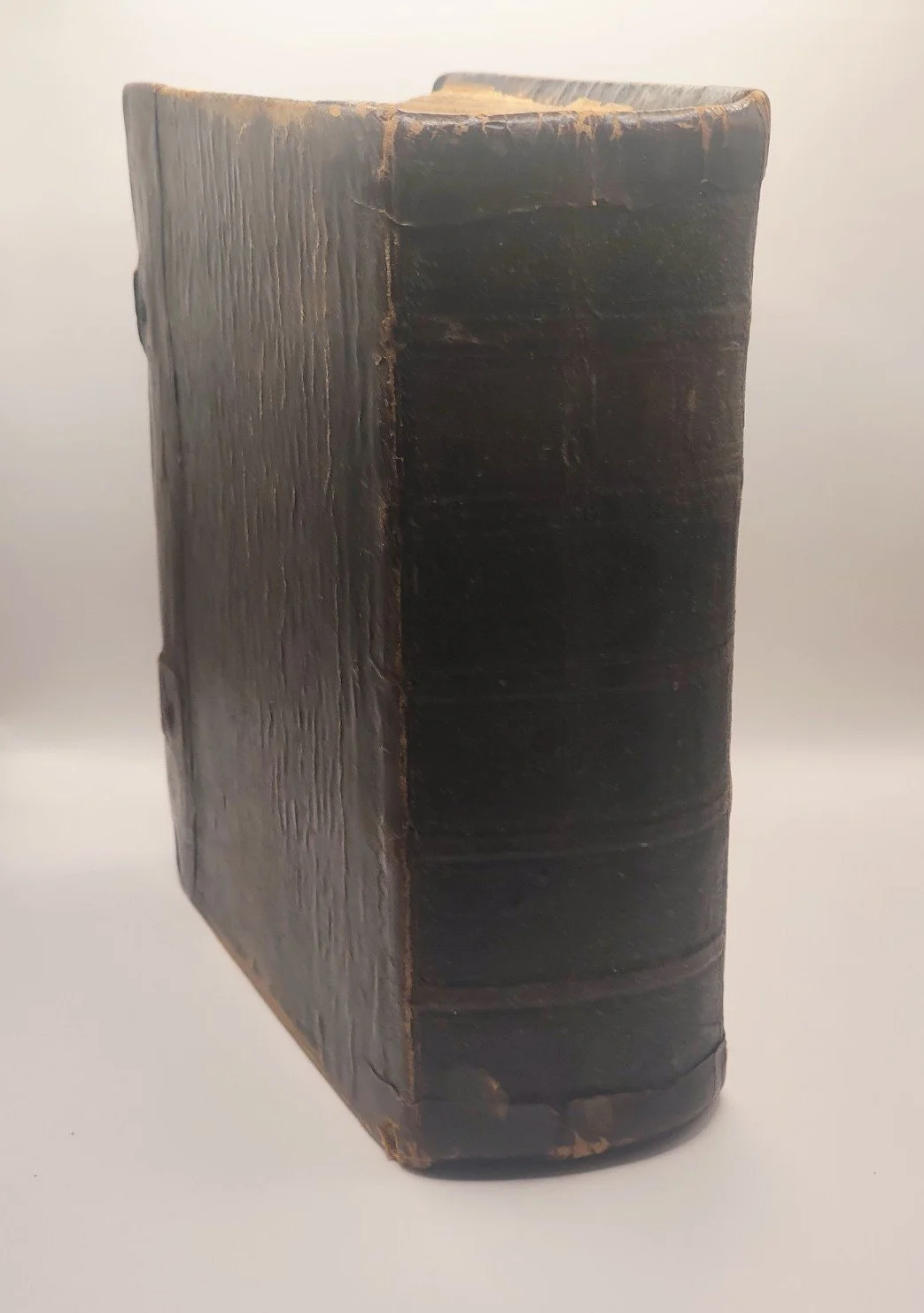 Image 4 of 8
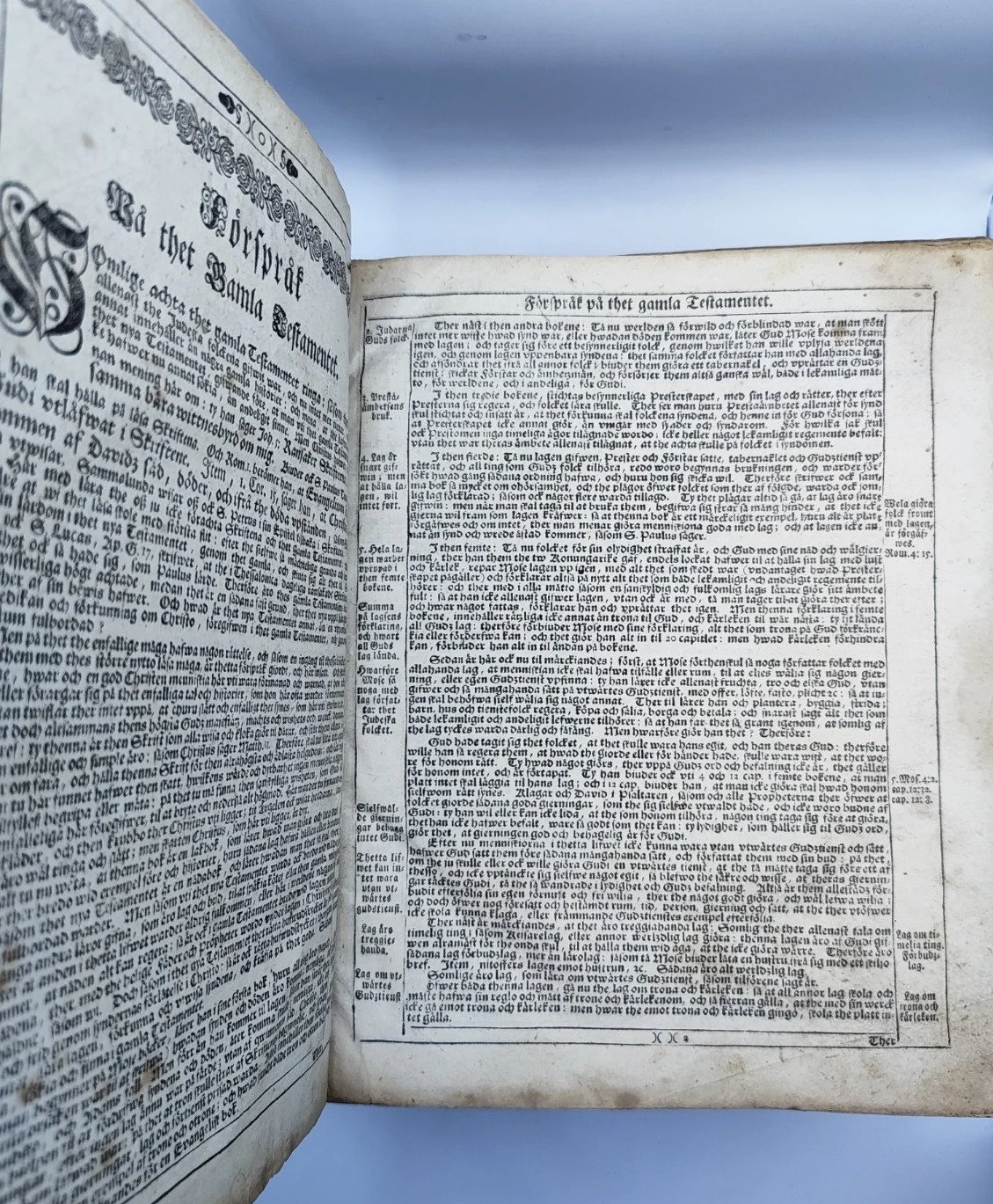 Image 5 of 8
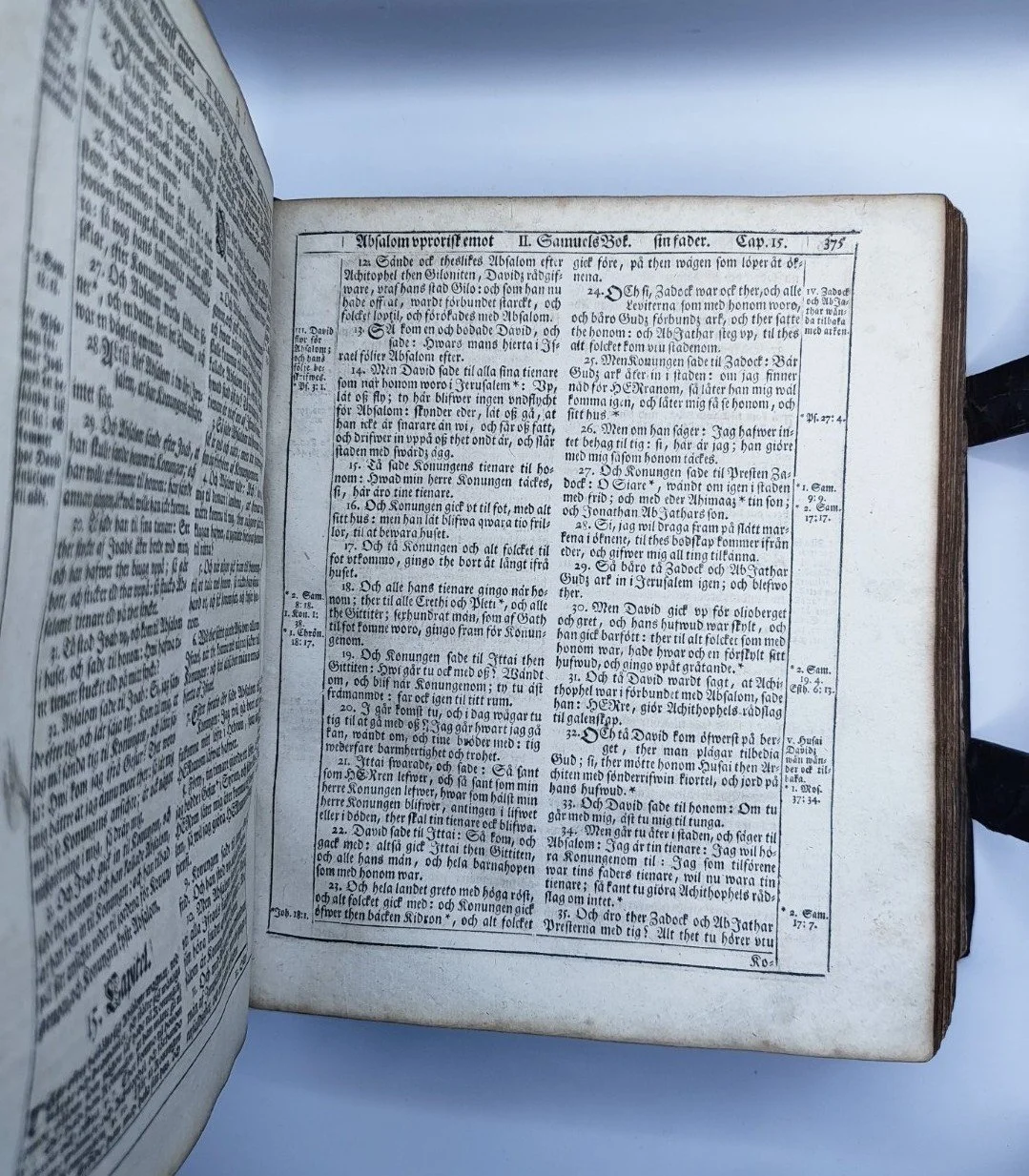 Image 6 of 8
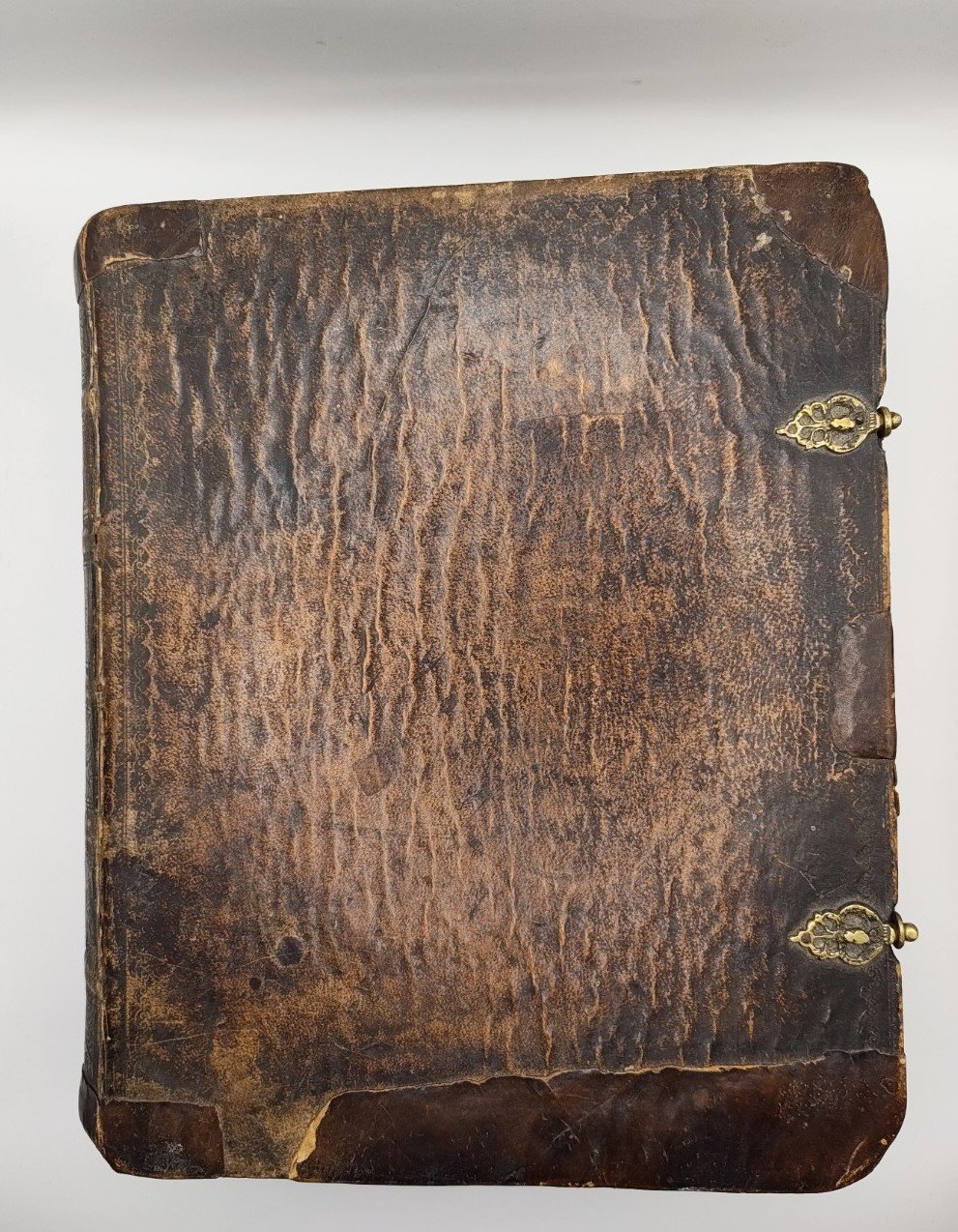 Image 7 of 8
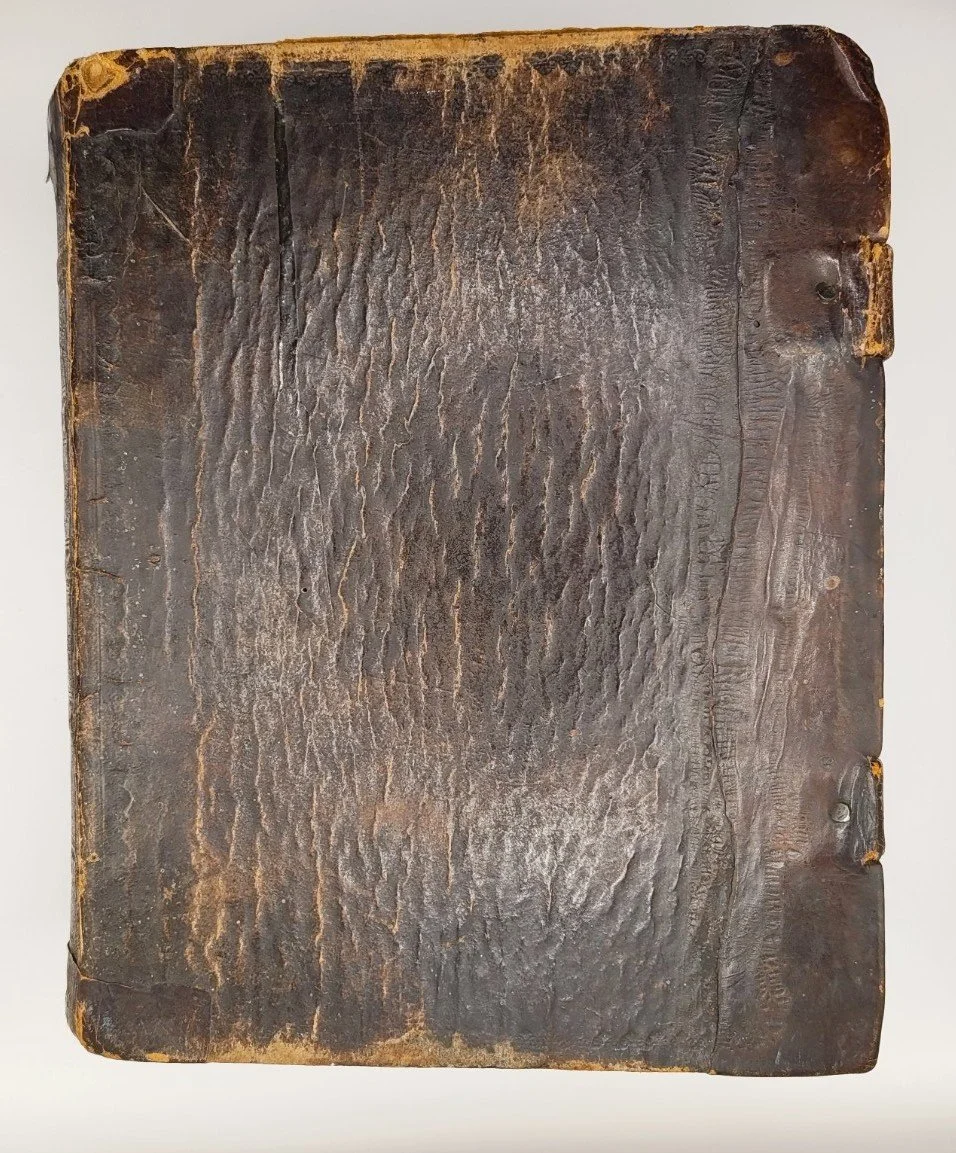 Image 8 of 8