This complete seven volume set of Lagfarenhets Bibliothek stands as one of the most ambitious Swedish legal compendia of the late eighteenth and early nineteenth century. Printed in Stockholm between 1796 and 1803 by Anders Zetterberg, Flintberg’s work sought to systematise the core elements of Swedish law during the Gustavian era, presenting statutes, commentaries, and practical guidance for both scholarly and professional use.
A comprehensive legal reference of its time
The collection spans the major branches of Swedish jurisprudence, among them the Handels Balk, the Giftermåls Balk, and the Rättegångs Balk, along with sections on procedure, contracts, and civic administration. Flintberg’s synthesis illustrates the intellectual landscape that shaped Swedish legal practice in the transitional years before the great codifications of the nineteenth century.
The set comprises all seven physical volumes as issued: parts one through six, including the subdivided fifth part that is often missing from surviving sets. Together they form a coherent and substantial legal library.
Provenance from a working Swedish jurist
Each volume carries a contemporary ownership inscription for J. M. Wenström, very likely Johan Magnus Wenström, hovrättsassessor active in the early nineteenth century. His hand links the set to the daily use of a professional jurist, confirming that these books served not only as scholarly texts but as living tools within the Swedish legal system.
Format and condition
Bound in contemporary half leather with raised bands and speckled paper boards, the set shows the patinated wear of more than two centuries of handling. Several volumes display water staining and rubbing to the bindings, and the interiors show age toning, scattered foxing, and occasional marks. Despite this the texts remain complete, legible, and structurally firm, retaining the character of a well used legal reference.
Significance
Complete sets of Flintberg’s Lagfarenhets Bibliothek seldom appear on the market. This example brings together a fully preserved run of the work with provenance to an identified Swedish legal official, offering both bibliographical rarity and historical depth.
For collectors of Scandinavian legal history, Gustavian scholarship, or provenance material from the Swedish judiciary, this is a highly engaging and resonant artifact.
This complete seven volume set of Lagfarenhets Bibliothek stands as one of the most ambitious Swedish legal compendia of the late eighteenth and early nineteenth century. Printed in Stockholm between 1796 and 1803 by Anders Zetterberg, Flintberg’s work sought to systematise the core elements of Swedish law during the Gustavian era, presenting statutes, commentaries, and practical guidance for both scholarly and professional use.
A comprehensive legal reference of its time
The collection spans the major branches of Swedish jurisprudence, among them the Handels Balk, the Giftermåls Balk, and the Rättegångs Balk, along with sections on procedure, contracts, and civic administration. Flintberg’s synthesis illustrates the intellectual landscape that shaped Swedish legal practice in the transitional years before the great codifications of the nineteenth century.
The set comprises all seven physical volumes as issued: parts one through six, including the subdivided fifth part that is often missing from surviving sets. Together they form a coherent and substantial legal library.
Provenance from a working Swedish jurist
Each volume carries a contemporary ownership inscription for J. M. Wenström, very likely Johan Magnus Wenström, hovrättsassessor active in the early nineteenth century. His hand links the set to the daily use of a professional jurist, confirming that these books served not only as scholarly texts but as living tools within the Swedish legal system.
Format and condition
Bound in contemporary half leather with raised bands and speckled paper boards, the set shows the patinated wear of more than two centuries of handling. Several volumes display water staining and rubbing to the bindings, and the interiors show age toning, scattered foxing, and occasional marks. Despite this the texts remain complete, legible, and structurally firm, retaining the character of a well used legal reference.
Significance
Complete sets of Flintberg’s Lagfarenhets Bibliothek seldom appear on the market. This example brings together a fully preserved run of the work with provenance to an identified Swedish legal official, offering both bibliographical rarity and historical depth.
For collectors of Scandinavian legal history, Gustavian scholarship, or provenance material from the Swedish judiciary, this is a highly engaging and resonant artifact.


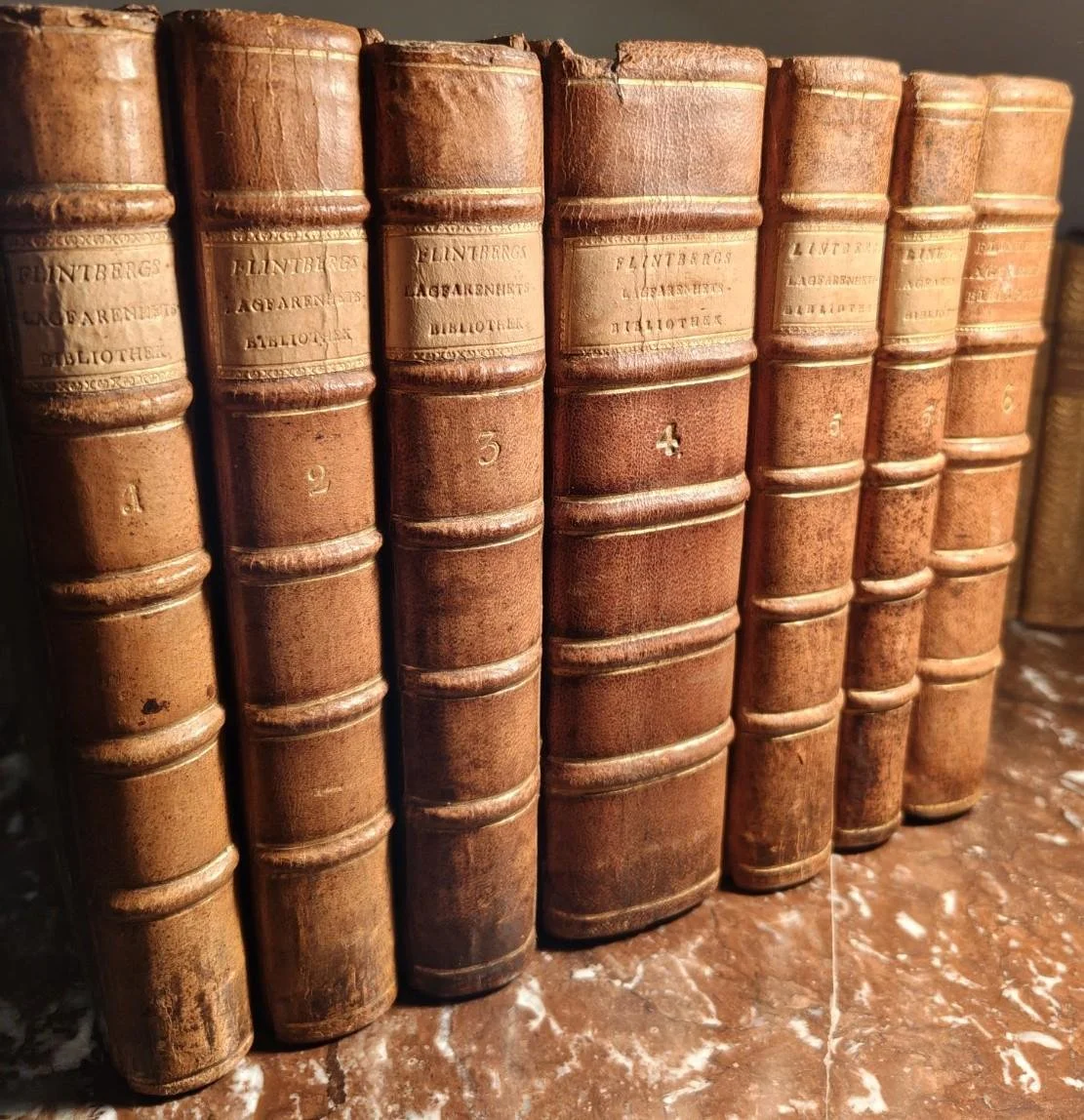 Image 1 of 10
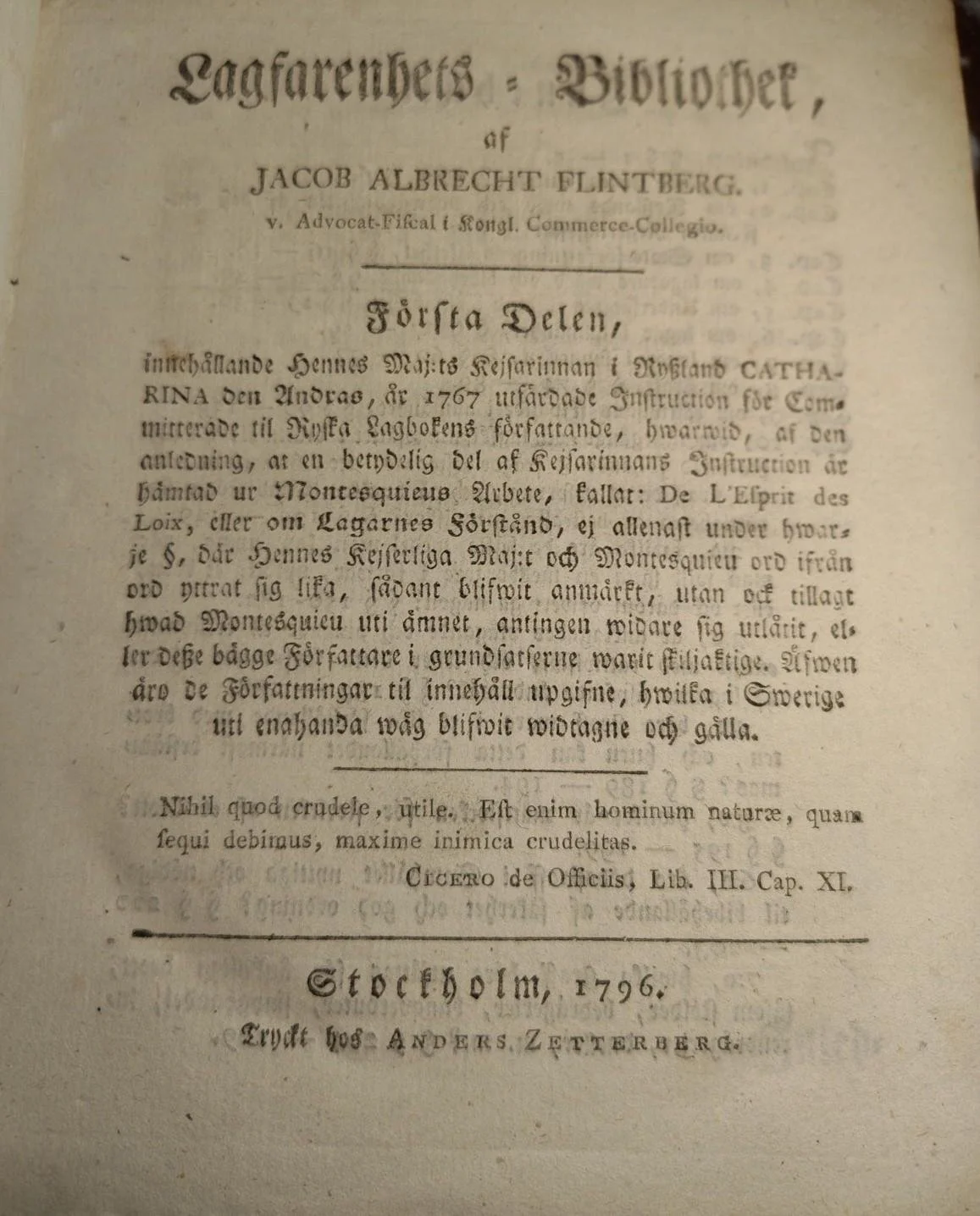 Image 2 of 10
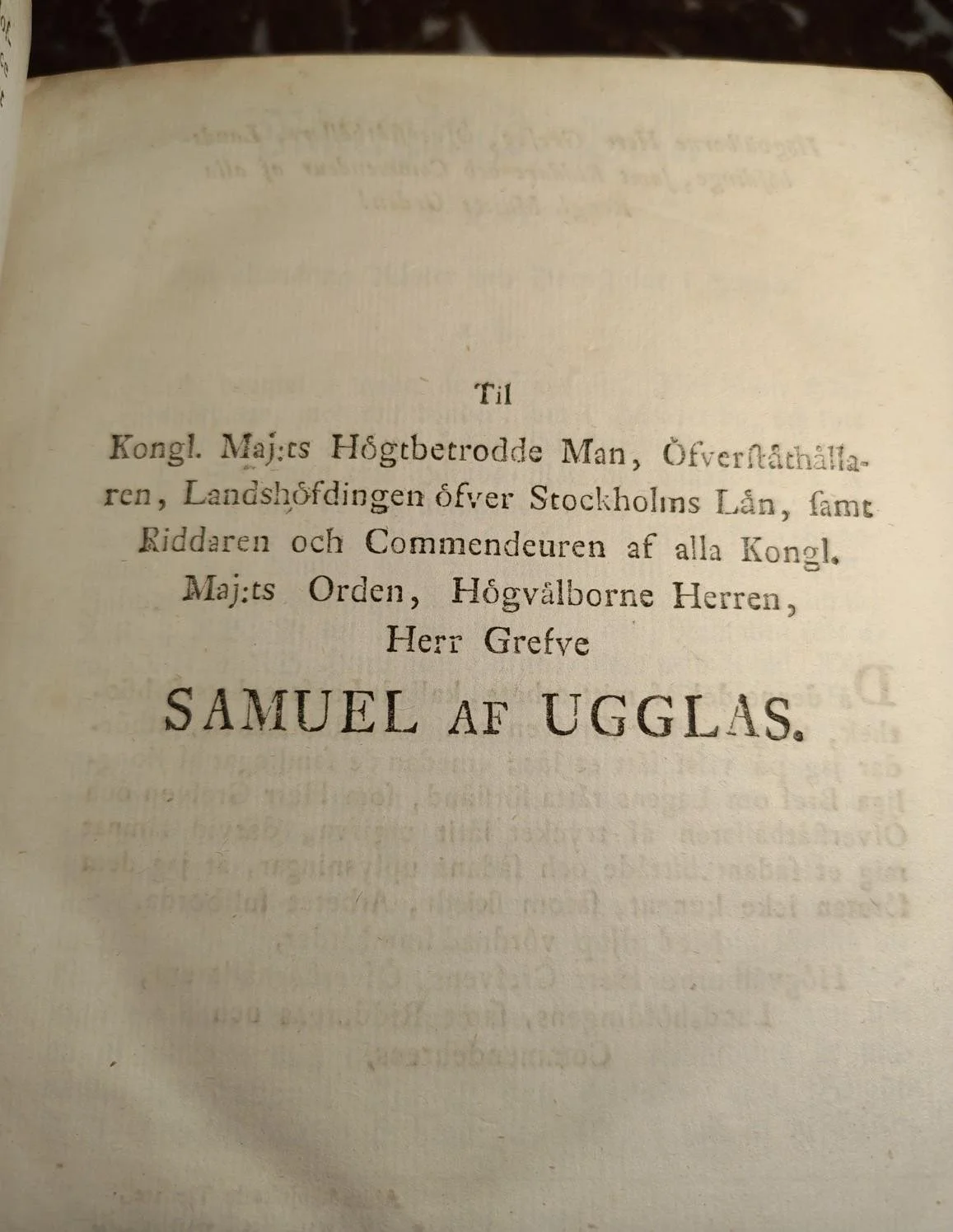 Image 3 of 10
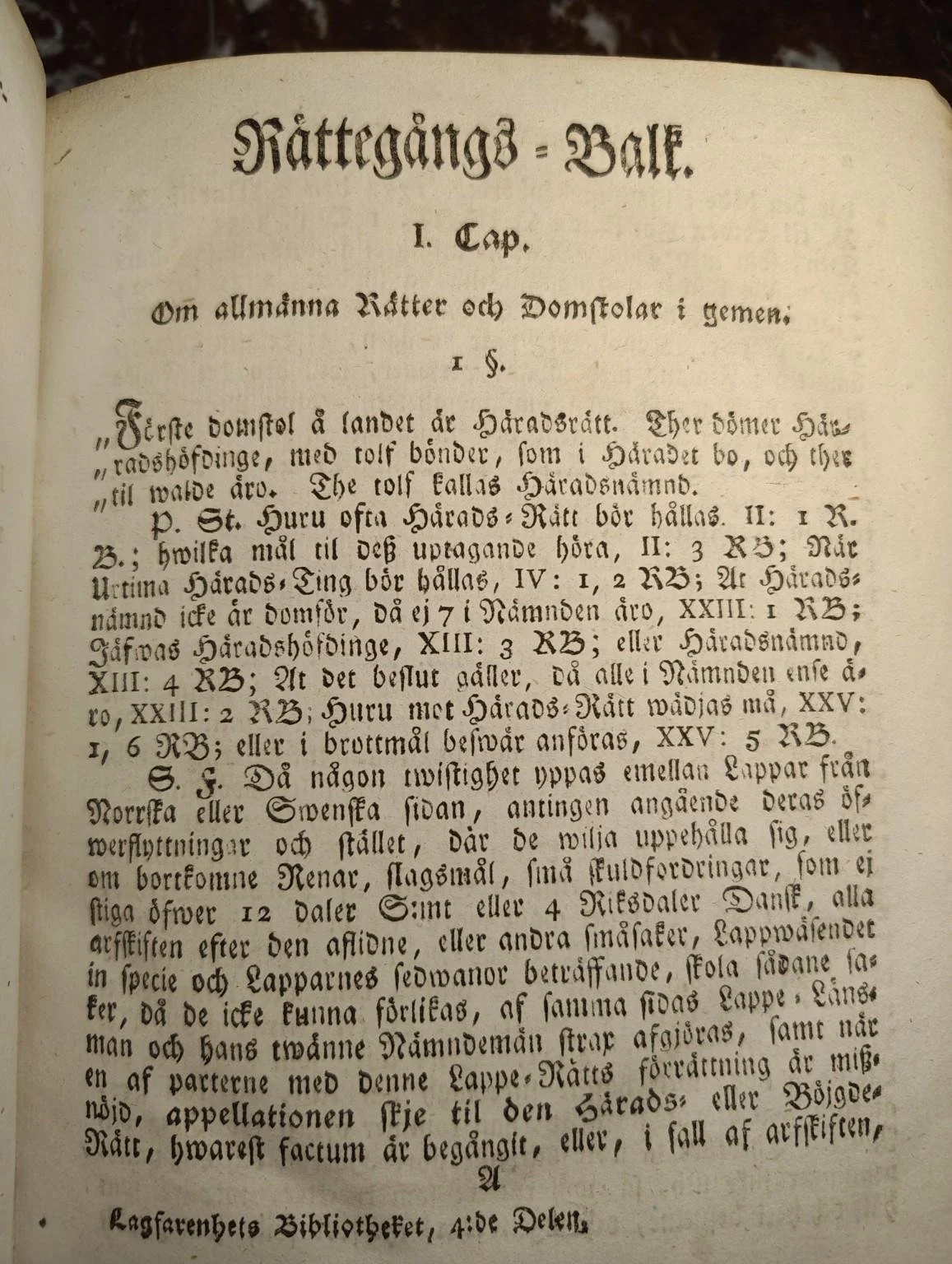 Image 4 of 10
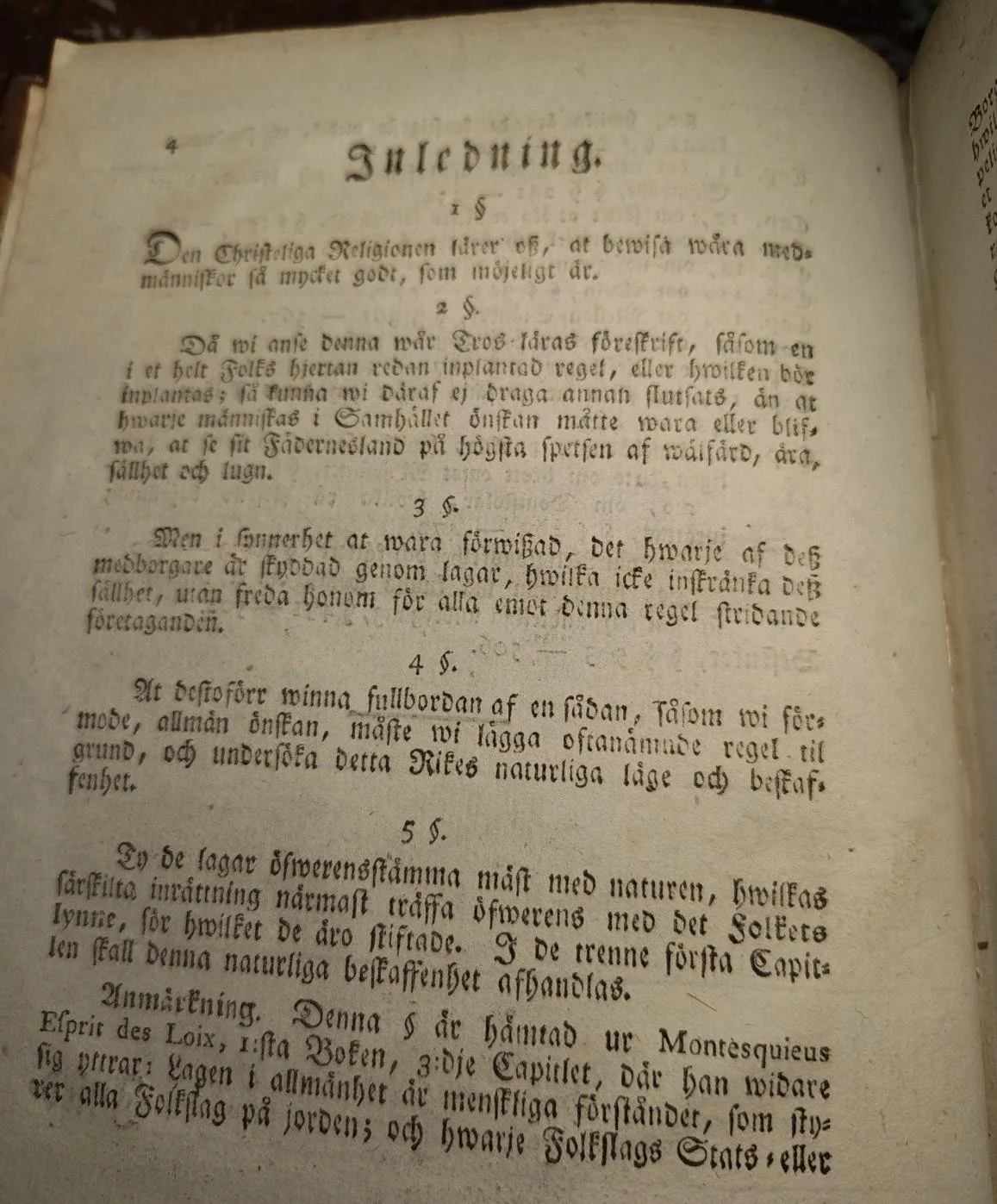 Image 5 of 10
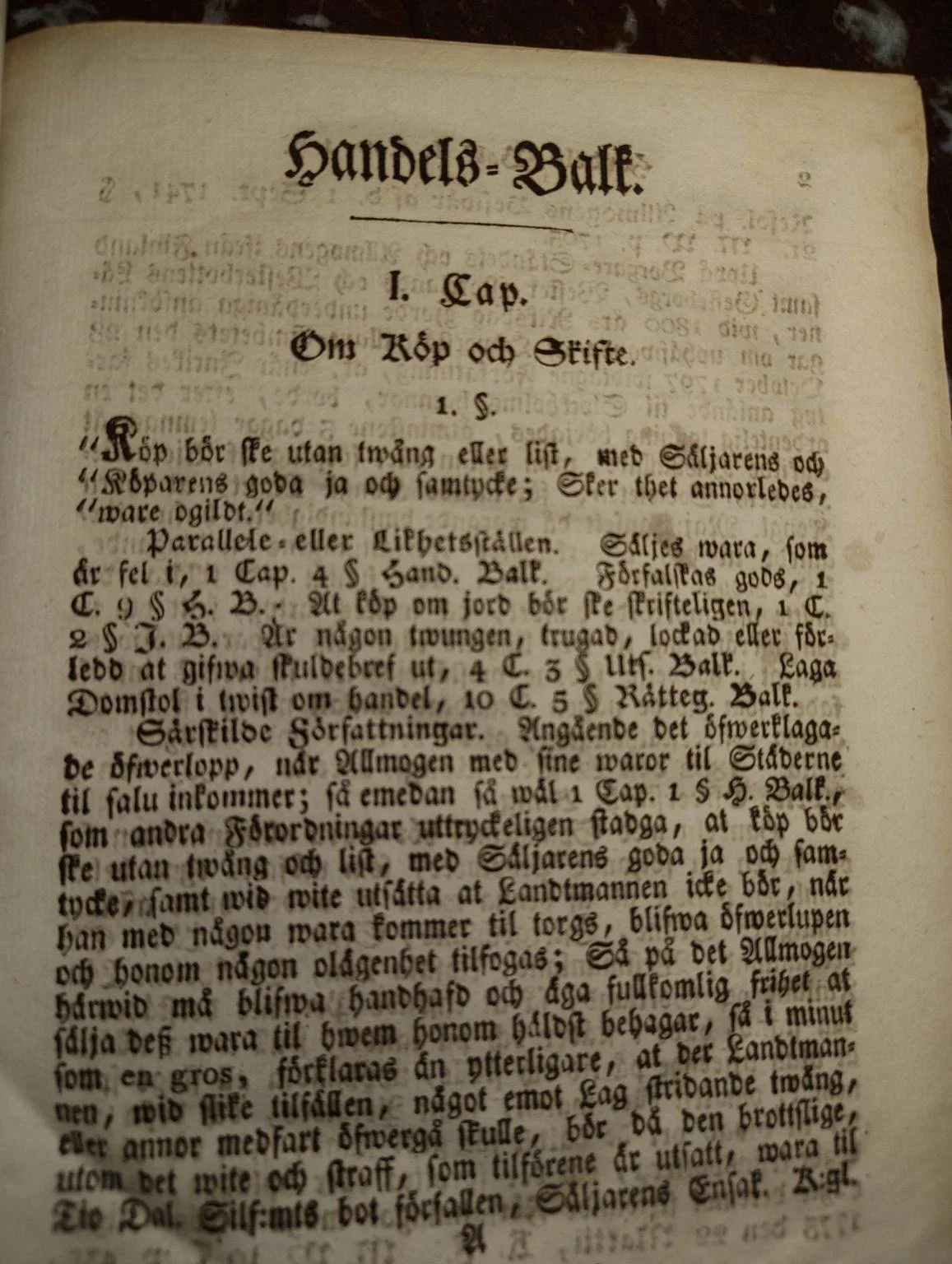 Image 6 of 10
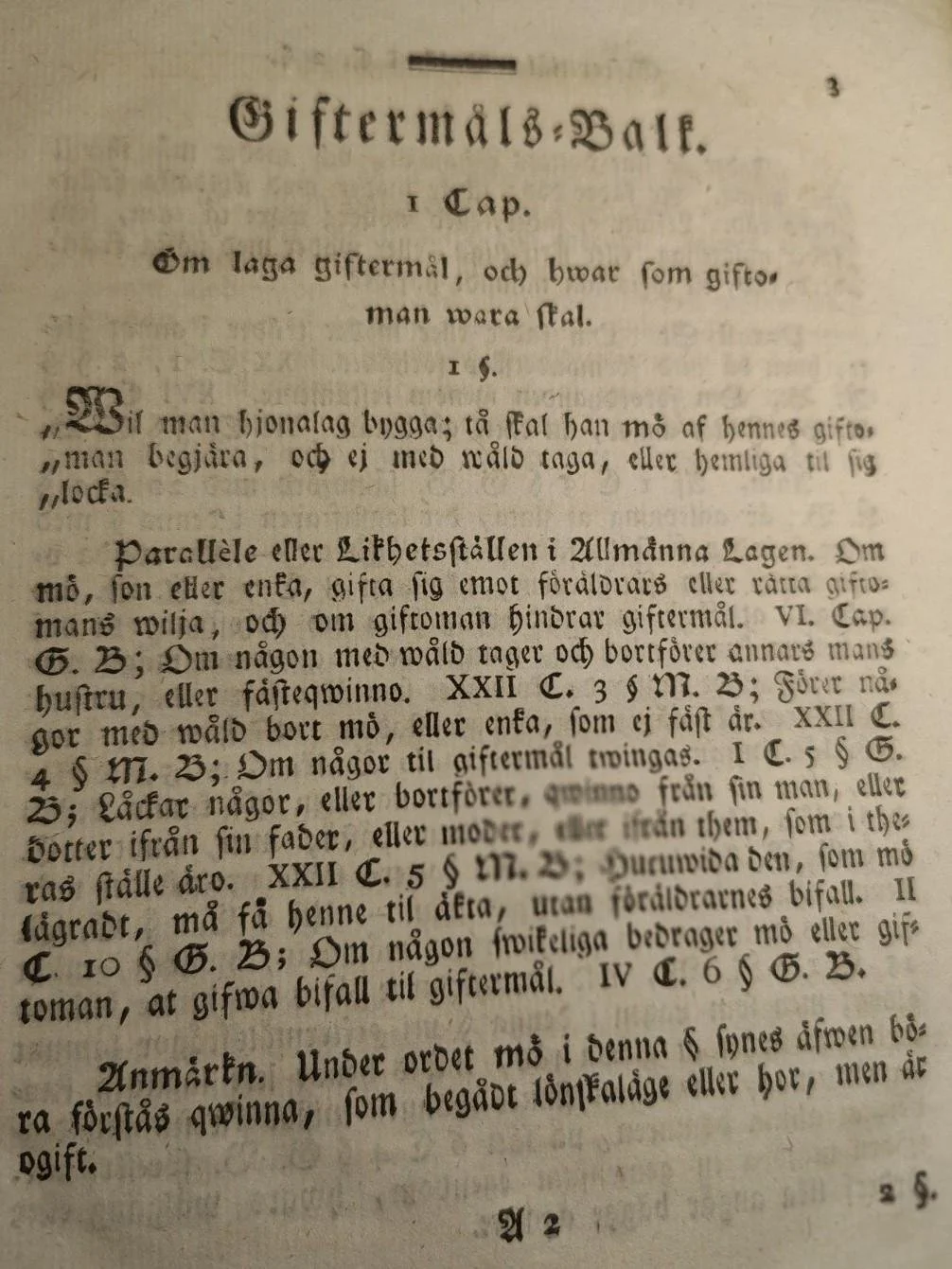 Image 7 of 10
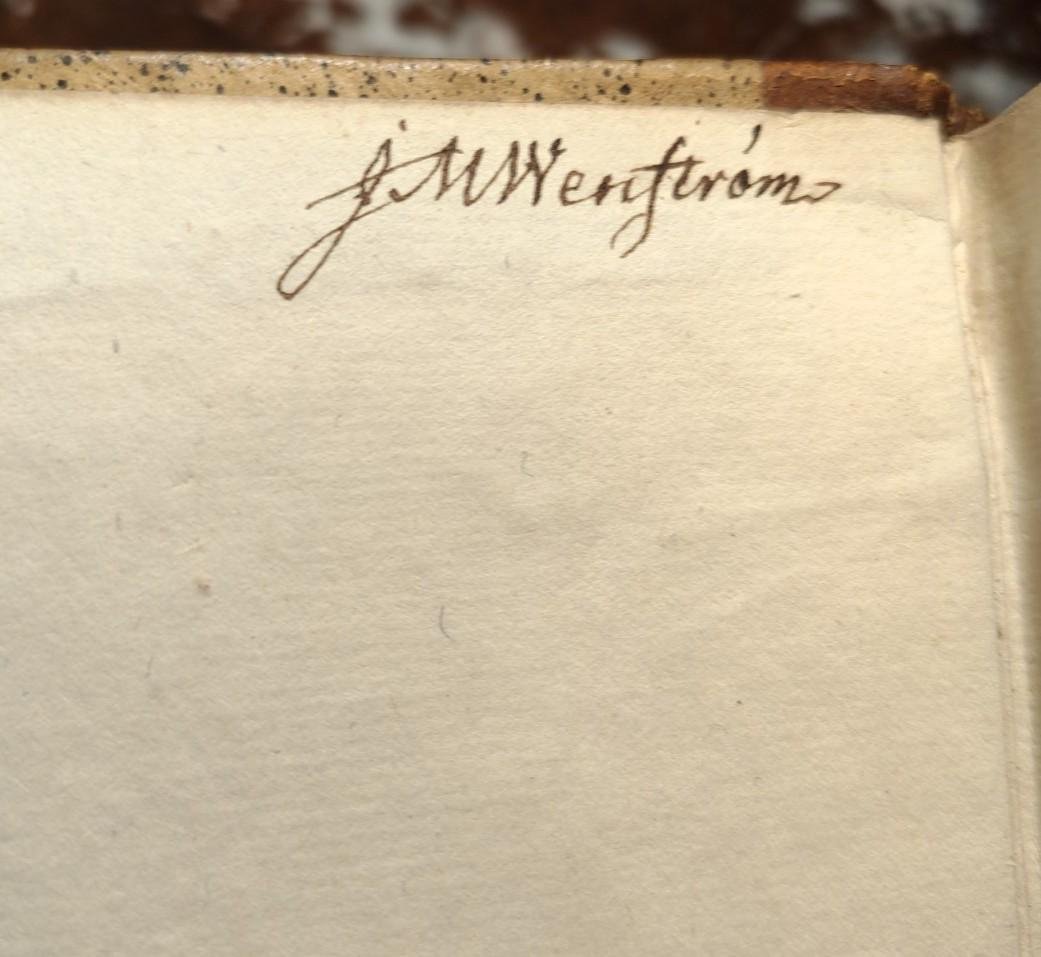 Image 8 of 10
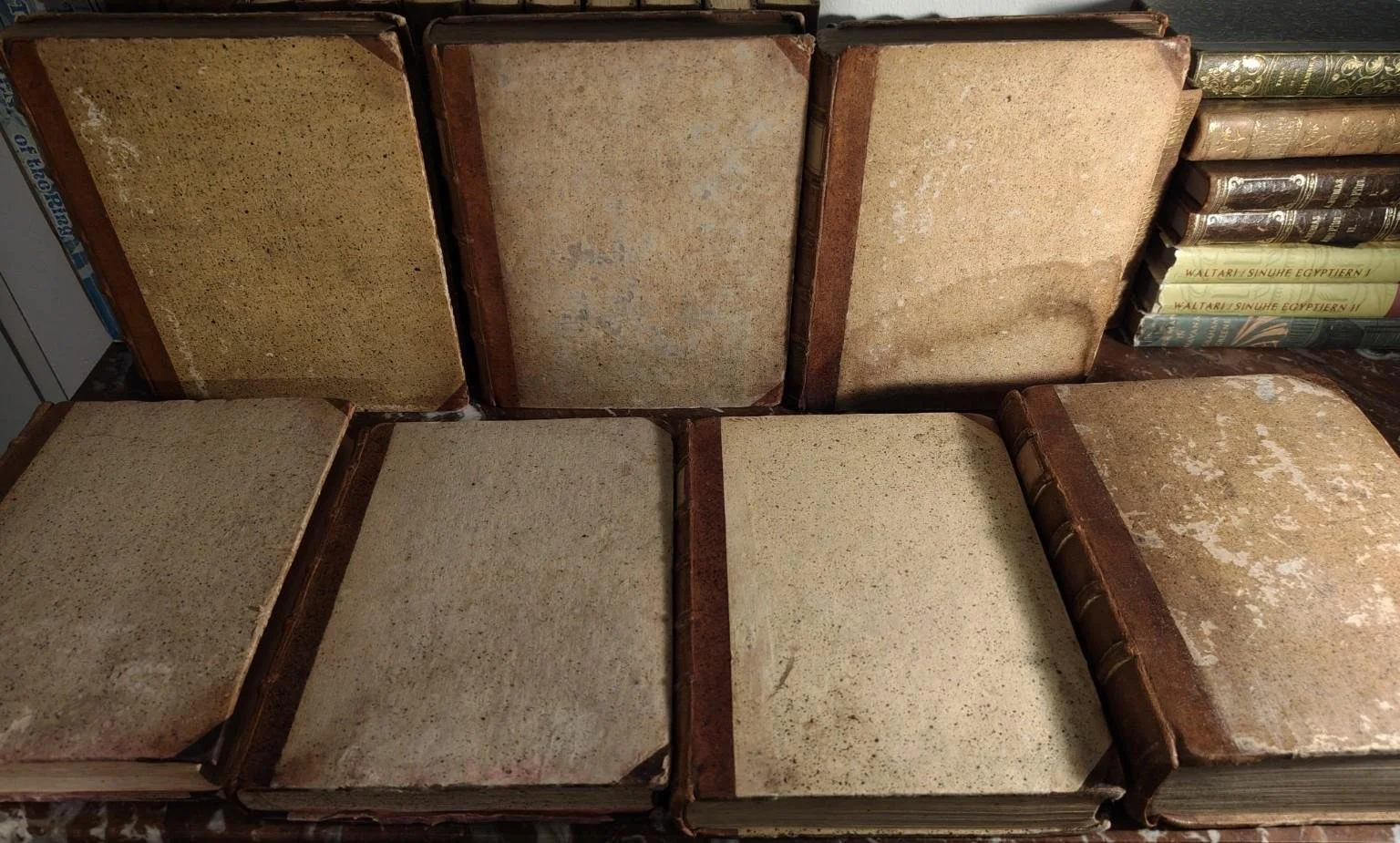 Image 9 of 10
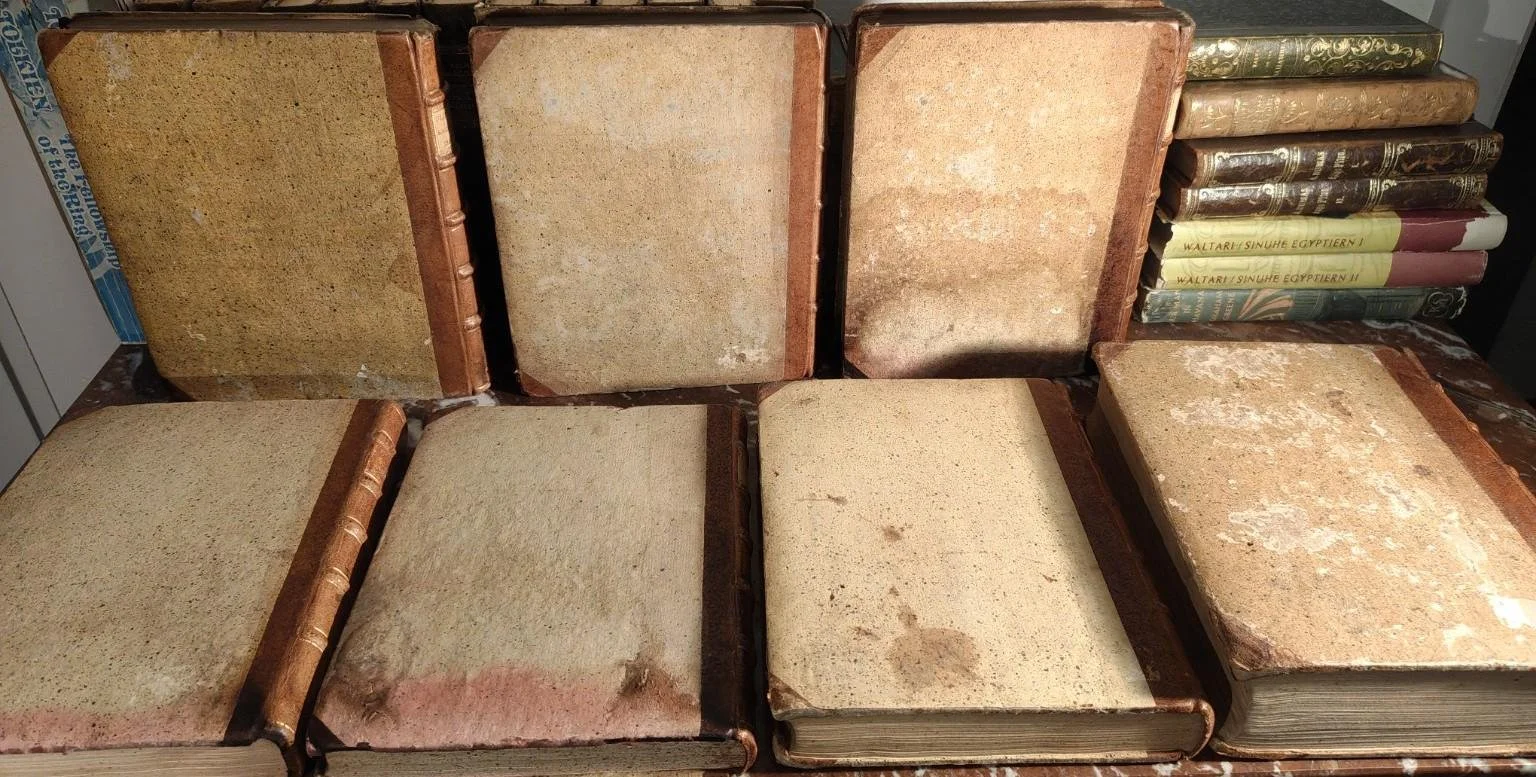 Image 10 of 10