

 Image 1 of 4
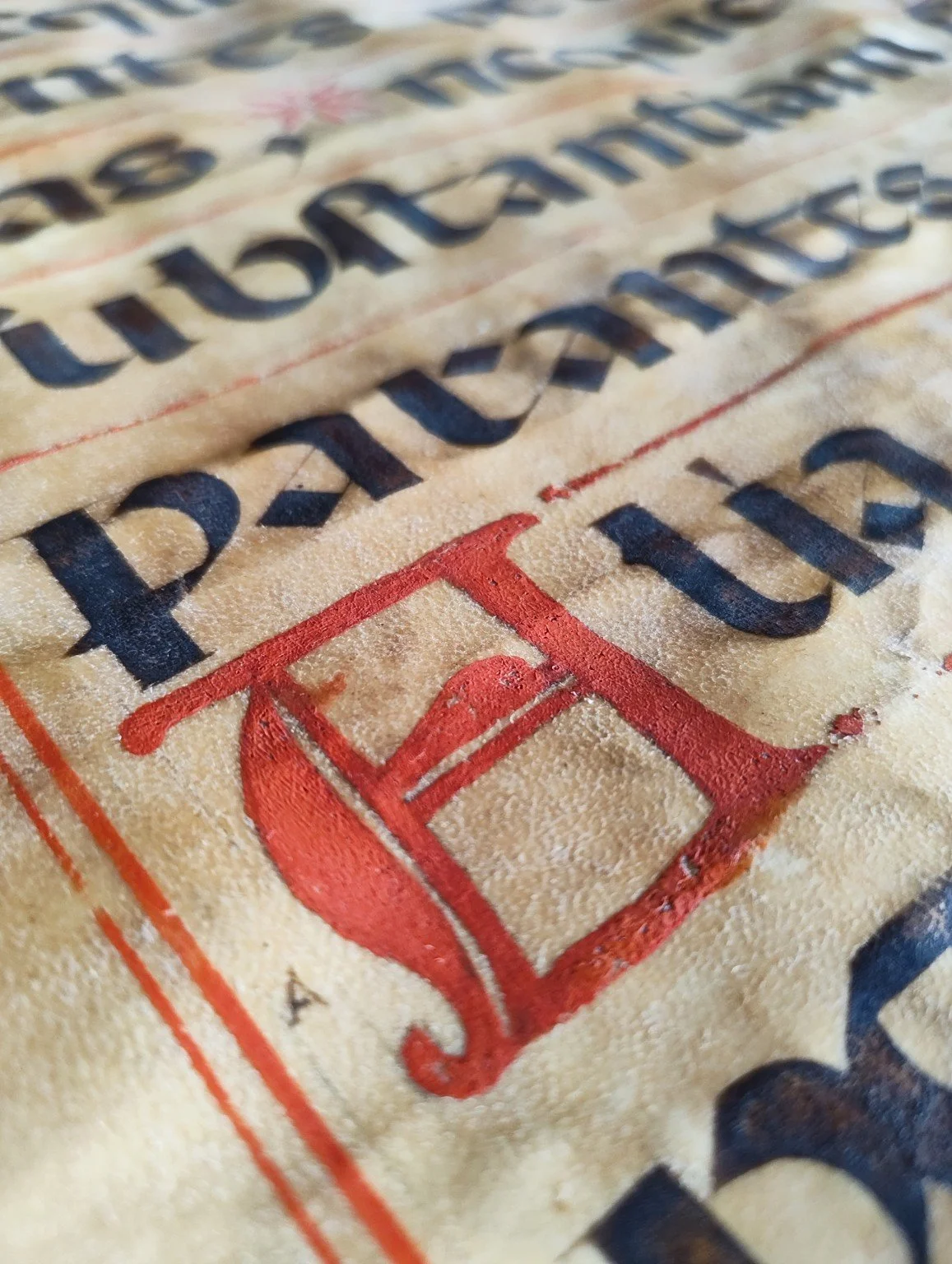 Image 2 of 4
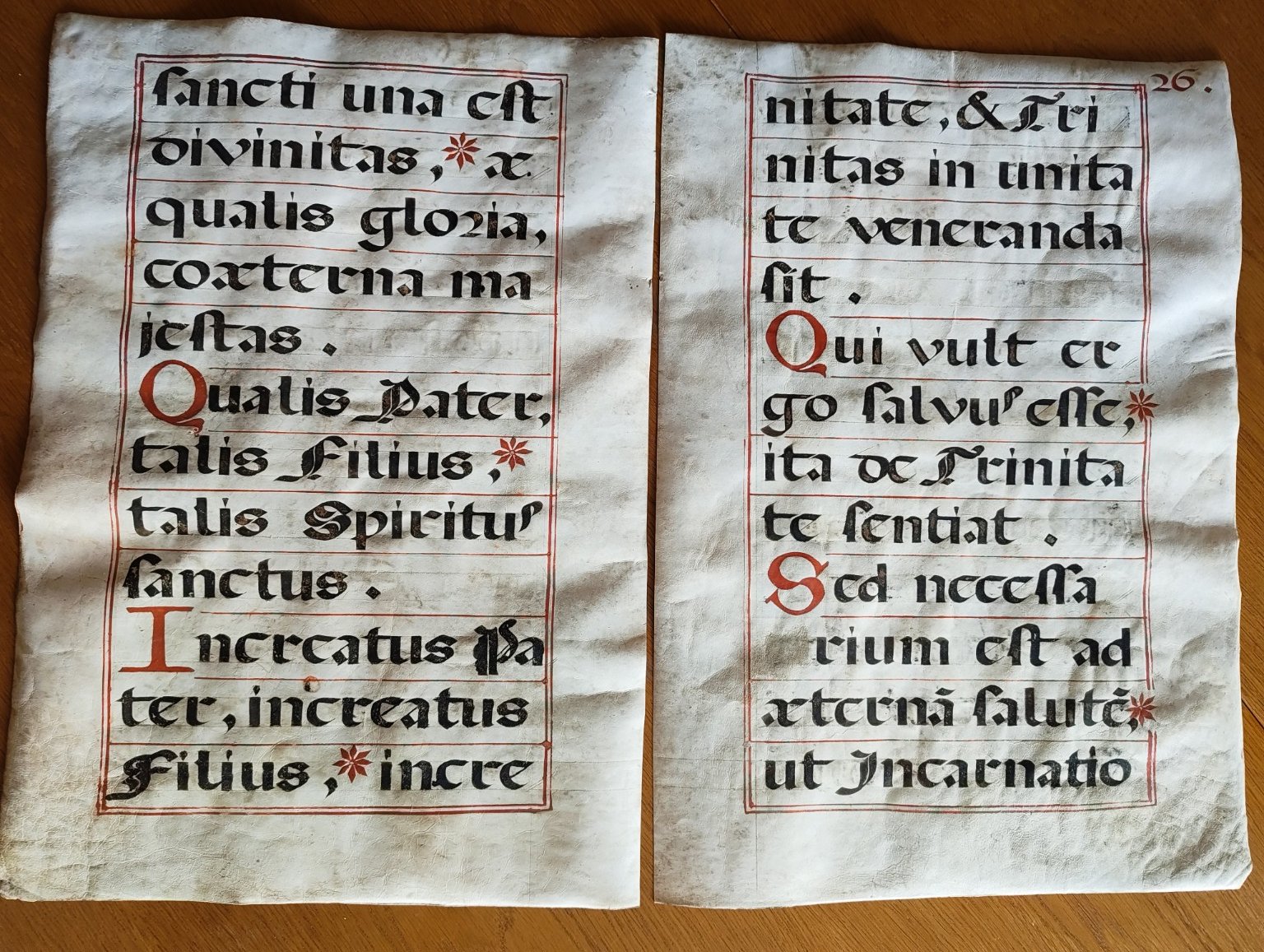 Image 3 of 4
 Image 4 of 4
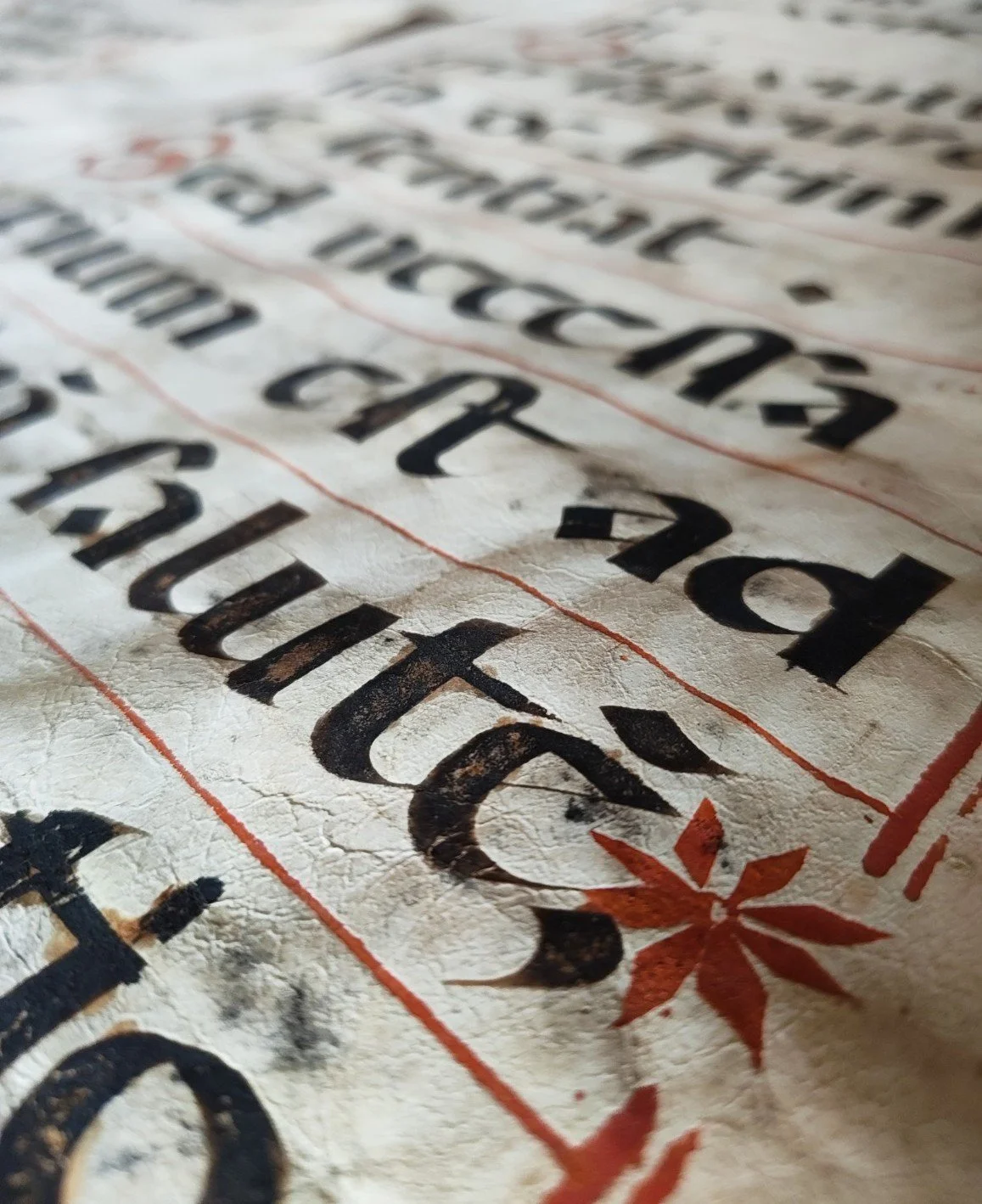
These impressive manuscript leaves originate from a large fifteenth century liturgical choirbook produced in Italy. Written on parchment in a clear Gothic rotunda script with red rubrication and decorative lombard initials, the pages contain passages from the Athanasian Creed, one of the most important doctrinal texts of medieval Western Christianity. The manuscript once formed part of a monumental volume designed for communal reading in a church or monastery, where several singers could follow the text simultaneously from a lectern. Even today, the scale and clarity of the script evoke the visual power of the medieval liturgy.
Two parchment manuscript leaves
Italy, probably Northern Italy
Circa 1450 to 1480
Large choirbook format
Dimensions: 52 × 36.5 cm
Written on both sides
Gothic rotunda script in black ink
Red rubrication and lombard initials
Decorative red star markers used to structure the liturgical text
Original foliation numbers 21 and 26 visible
Text from the Athanasian Creed
The Athanasian Creed was one of the three great creeds of the Western Church and played an important role in medieval theology and liturgy. Its opening words, Quicumque vult salvus esse (“Whoever wishes to be saved”), introduce a detailed formulation of Trinitarian doctrine and the nature of Christ as both God and man. During the Middle Ages the creed was recited or sung in the Divine Office, especially on Sundays and certain feast days. Large choirbooks such as the one from which these leaves originate were produced for communal liturgical use, allowing monks or clerics gathered in the choir to read from a single monumental volume.
These leaves offer a direct material connection to the intellectual and devotional life of the late medieval Church. Their generous scale, clear script, and rubricated structure reflect the practical needs of liturgical performance while also demonstrating the craftsmanship of manuscript production in fifteenth century Italy. Surviving choirbook leaves are valued not only as historical documents but also as striking visual artifacts of medieval culture. They preserve the rhythm of the spoken creed, the artistry of Gothic script, and the enduring presence of a text that shaped theological thought for centuries.
These impressive manuscript leaves originate from a large fifteenth century liturgical choirbook produced in Italy. Written on parchment in a clear Gothic rotunda script with red rubrication and decorative lombard initials, the pages contain passages from the Athanasian Creed, one of the most important doctrinal texts of medieval Western Christianity. The manuscript once formed part of a monumental volume designed for communal reading in a church or monastery, where several singers could follow the text simultaneously from a lectern. Even today, the scale and clarity of the script evoke the visual power of the medieval liturgy.
Two parchment manuscript leaves
Italy, probably Northern Italy
Circa 1450 to 1480
Large choirbook format
Dimensions: 52 × 36.5 cm
Written on both sides
Gothic rotunda script in black ink
Red rubrication and lombard initials
Decorative red star markers used to structure the liturgical text
Original foliation numbers 21 and 26 visible
Text from the Athanasian Creed
The Athanasian Creed was one of the three great creeds of the Western Church and played an important role in medieval theology and liturgy. Its opening words, Quicumque vult salvus esse (“Whoever wishes to be saved”), introduce a detailed formulation of Trinitarian doctrine and the nature of Christ as both God and man. During the Middle Ages the creed was recited or sung in the Divine Office, especially on Sundays and certain feast days. Large choirbooks such as the one from which these leaves originate were produced for communal liturgical use, allowing monks or clerics gathered in the choir to read from a single monumental volume.
These leaves offer a direct material connection to the intellectual and devotional life of the late medieval Church. Their generous scale, clear script, and rubricated structure reflect the practical needs of liturgical performance while also demonstrating the craftsmanship of manuscript production in fifteenth century Italy. Surviving choirbook leaves are valued not only as historical documents but also as striking visual artifacts of medieval culture. They preserve the rhythm of the spoken creed, the artistry of Gothic script, and the enduring presence of a text that shaped theological thought for centuries.