Introduction
Published in Paris in 1788, Lettres sur l’Italie by Charles-Marguerite-Jean-Baptiste Dupaty offers a refined Enlightenment perspective on Italy at the threshold of modernity. Written in epistolary form, the work blends travel narrative, moral reflection, and social observation, presenting Italy not as a static repository of classical ruins but as a living cultural and political landscape. Dupaty’s letters belong firmly to the intellectual tradition of the Grand Tour, yet they are marked by a personal, analytical voice shaped by the ideals of reason, reform, and empirical observation.
Physical Description
12mo volume
Contemporary French calf binding with gilt double fillet borders
Spine richly gilt in compartments, with red morocco title label
Marbled endpapers
Edges gilt
Printed in Paris, 1788
Complete and textually sound
Period library stamp present on one leaf
Binding worn with age, including rubbing and surface loss to boards and spine, but structurally intact
Interior clean with expected toning and light age related spotting
Context
Dupaty was a magistrate and man of letters whose travels were informed by Enlightenment values rather than antiquarian nostalgia alone. His Italian journey took place during a moment of profound tension in Europe, on the eve of the French Revolution. As such, Lettres sur l’Italie reflects a transitional mindset, balancing admiration for Italy’s artistic and intellectual heritage with criticism of its political institutions, legal systems, and social inequalities. The epistolary format allows Dupaty to move fluidly between description and reflection, combining first hand observation with broader philosophical inquiry.
Significance
This work stands as a compelling example of late eighteenth century travel literature, where the Grand Tour becomes a vehicle for social critique rather than mere cultural consumption. Lettres sur l’Italie is significant for its clear Enlightenment voice, its contribution to Franco Italian cultural exchange, and its insight into how educated Europeans understood Italy just before the revolutionary reshaping of Europe. In its original binding, the volume also serves as a tangible artifact of educated travel, reading, and reflection in the final years of the Ancien Régime.
Introduction
Published in Paris in 1788, Lettres sur l’Italie by Charles-Marguerite-Jean-Baptiste Dupaty offers a refined Enlightenment perspective on Italy at the threshold of modernity. Written in epistolary form, the work blends travel narrative, moral reflection, and social observation, presenting Italy not as a static repository of classical ruins but as a living cultural and political landscape. Dupaty’s letters belong firmly to the intellectual tradition of the Grand Tour, yet they are marked by a personal, analytical voice shaped by the ideals of reason, reform, and empirical observation.
Physical Description
12mo volume
Contemporary French calf binding with gilt double fillet borders
Spine richly gilt in compartments, with red morocco title label
Marbled endpapers
Edges gilt
Printed in Paris, 1788
Complete and textually sound
Period library stamp present on one leaf
Binding worn with age, including rubbing and surface loss to boards and spine, but structurally intact
Interior clean with expected toning and light age related spotting
Context
Dupaty was a magistrate and man of letters whose travels were informed by Enlightenment values rather than antiquarian nostalgia alone. His Italian journey took place during a moment of profound tension in Europe, on the eve of the French Revolution. As such, Lettres sur l’Italie reflects a transitional mindset, balancing admiration for Italy’s artistic and intellectual heritage with criticism of its political institutions, legal systems, and social inequalities. The epistolary format allows Dupaty to move fluidly between description and reflection, combining first hand observation with broader philosophical inquiry.
Significance
This work stands as a compelling example of late eighteenth century travel literature, where the Grand Tour becomes a vehicle for social critique rather than mere cultural consumption. Lettres sur l’Italie is significant for its clear Enlightenment voice, its contribution to Franco Italian cultural exchange, and its insight into how educated Europeans understood Italy just before the revolutionary reshaping of Europe. In its original binding, the volume also serves as a tangible artifact of educated travel, reading, and reflection in the final years of the Ancien Régime.


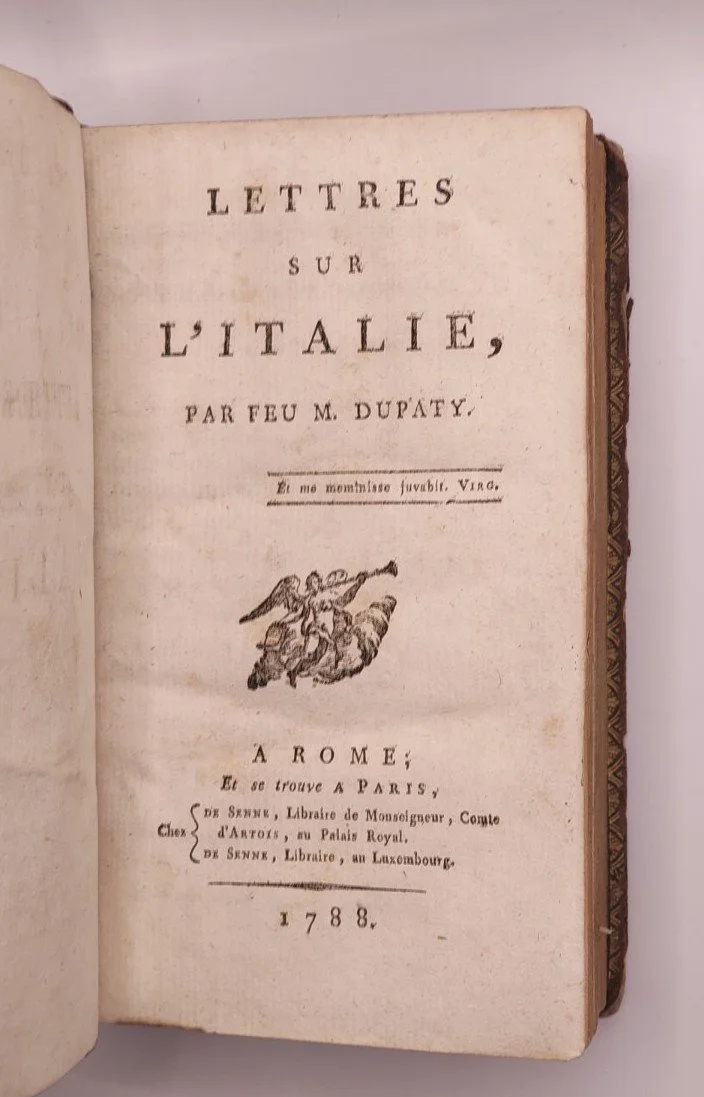 Image 1 of 7
 Image 2 of 7
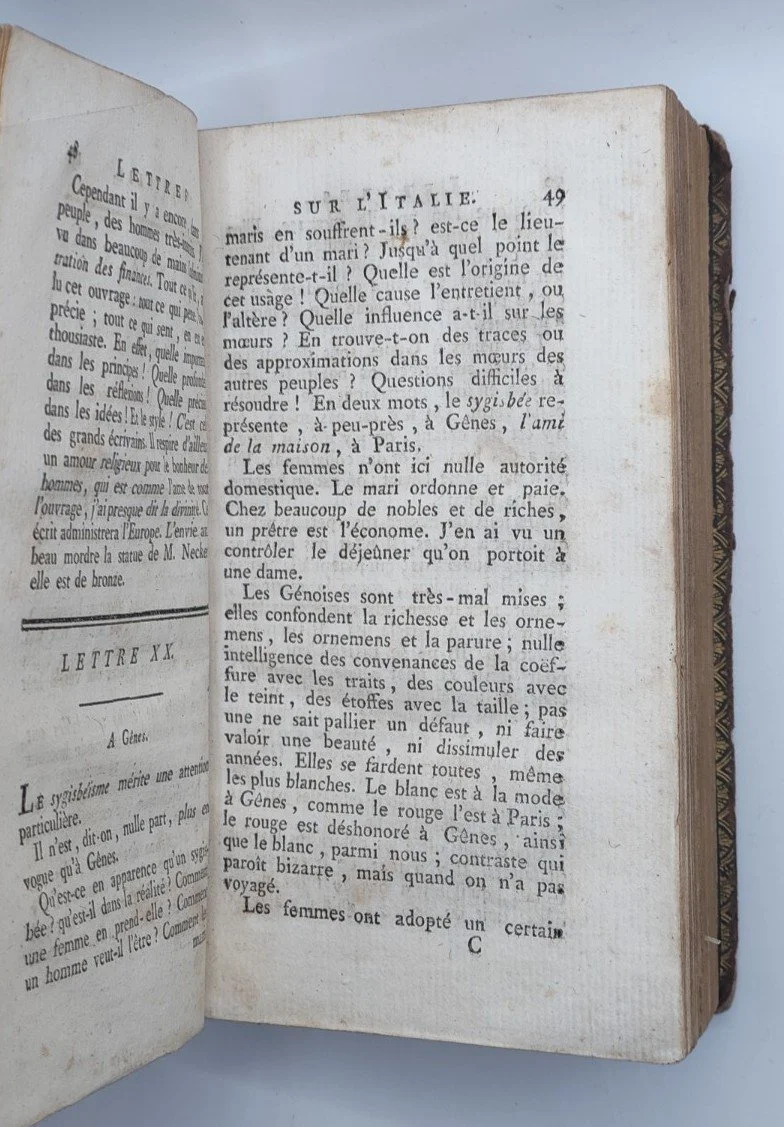 Image 3 of 7
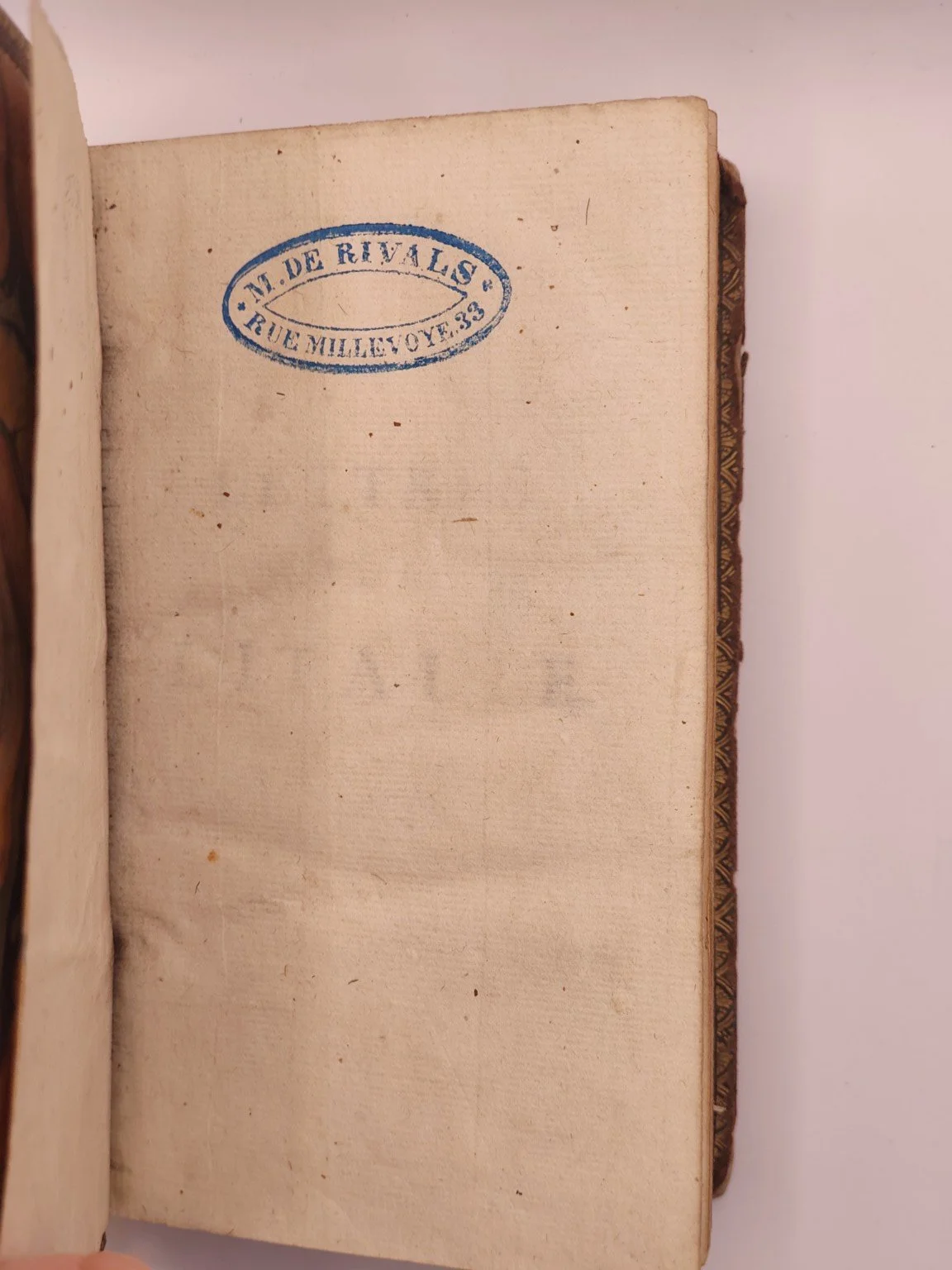 Image 4 of 7
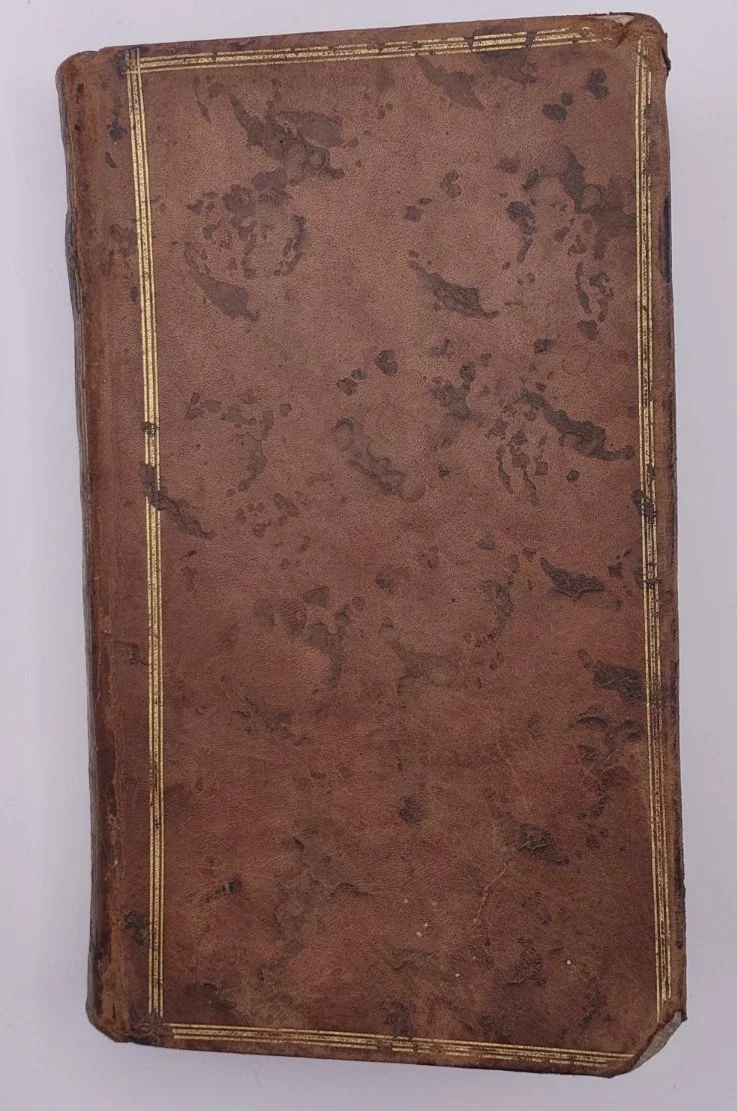 Image 5 of 7
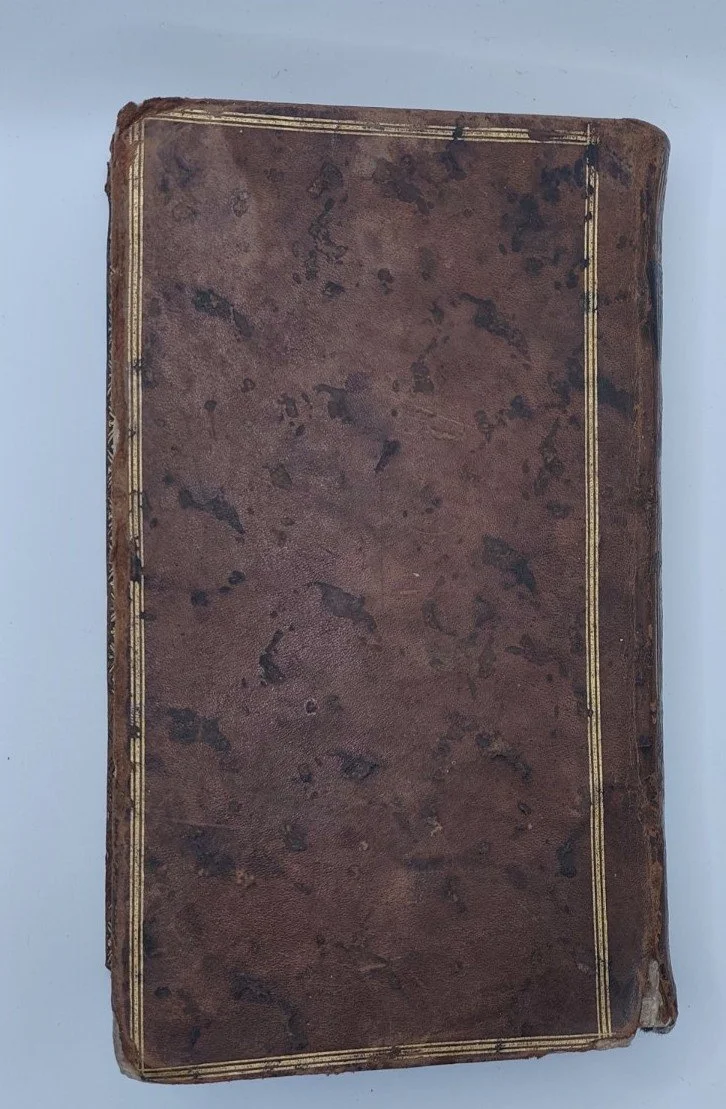 Image 6 of 7
 Image 7 of 7