Introduction
A complete six-volume set of Abbé Jean-Antoine Nollet’s Leçons de physique expérimentale, published in Paris between 1768 and 1771, represents one of the most influential and visually compelling scientific works of the Enlightenment. Conceived not as an abstract treatise but as a series of demonstrative lessons, the work translates natural philosophy into tangible experience. It is a library formed at the moment when science became public, performative, and profoundly visual.
Physical description
• Six volumes, complete
• Published in Paris, 1768–1771 (various contemporary editions)
• Contemporary full calf bindings
• Richly gilt-decorated spines with contrasting title labels
• Uniform appearance across all volumes
• Red-dyed page edges
• All engraved plates present
• No worming, no repairs
• Internally clean and well-preserved
• Moderate wear to bindings consistent with age
Context
Jean-Antoine Nollet was among the foremost scientific communicators of the eighteenth century, closely associated with the spread of experimental physics across Europe. At a time when scientific knowledge was shifting from private academies to broader audiences, Nollet’s lectures and publications played a decisive role in shaping how science was taught, seen, and understood.
Leçons de physique expérimentale belongs to this transitional moment. Rather than presenting theory alone, the work is structured around experiment and demonstration, reflecting a culture in which scientific phenomena were staged before audiences. Electricity, optics, mechanics, and acoustics are explored through apparatus and observation, often accompanied by finely engraved illustrations that served both pedagogical and aesthetic purposes.
Significance
This set stands at the intersection of science, craftsmanship, and visual culture. Its engraved plates capture not only the instruments of early modern physics but also the intellectual ambition of the Enlightenment: to render the invisible forces of nature visible and comprehensible.
As an object, the work functions simultaneously as a scientific document and as a decorative ensemble. The uniform bindings, the rhythm of the volumes, and the visual richness of the plates together create a presence that extends beyond the purely textual. It is a library in miniature, embodying both knowledge and its material form.
Complete and well-preserved sets of Nollet’s work remain enduringly desirable, appealing to collectors of scientific history as well as to those drawn to the aesthetics of eighteenth-century books.
Introduction
A complete six-volume set of Abbé Jean-Antoine Nollet’s Leçons de physique expérimentale, published in Paris between 1768 and 1771, represents one of the most influential and visually compelling scientific works of the Enlightenment. Conceived not as an abstract treatise but as a series of demonstrative lessons, the work translates natural philosophy into tangible experience. It is a library formed at the moment when science became public, performative, and profoundly visual.
Physical description
• Six volumes, complete
• Published in Paris, 1768–1771 (various contemporary editions)
• Contemporary full calf bindings
• Richly gilt-decorated spines with contrasting title labels
• Uniform appearance across all volumes
• Red-dyed page edges
• All engraved plates present
• No worming, no repairs
• Internally clean and well-preserved
• Moderate wear to bindings consistent with age
Context
Jean-Antoine Nollet was among the foremost scientific communicators of the eighteenth century, closely associated with the spread of experimental physics across Europe. At a time when scientific knowledge was shifting from private academies to broader audiences, Nollet’s lectures and publications played a decisive role in shaping how science was taught, seen, and understood.
Leçons de physique expérimentale belongs to this transitional moment. Rather than presenting theory alone, the work is structured around experiment and demonstration, reflecting a culture in which scientific phenomena were staged before audiences. Electricity, optics, mechanics, and acoustics are explored through apparatus and observation, often accompanied by finely engraved illustrations that served both pedagogical and aesthetic purposes.
Significance
This set stands at the intersection of science, craftsmanship, and visual culture. Its engraved plates capture not only the instruments of early modern physics but also the intellectual ambition of the Enlightenment: to render the invisible forces of nature visible and comprehensible.
As an object, the work functions simultaneously as a scientific document and as a decorative ensemble. The uniform bindings, the rhythm of the volumes, and the visual richness of the plates together create a presence that extends beyond the purely textual. It is a library in miniature, embodying both knowledge and its material form.
Complete and well-preserved sets of Nollet’s work remain enduringly desirable, appealing to collectors of scientific history as well as to those drawn to the aesthetics of eighteenth-century books.


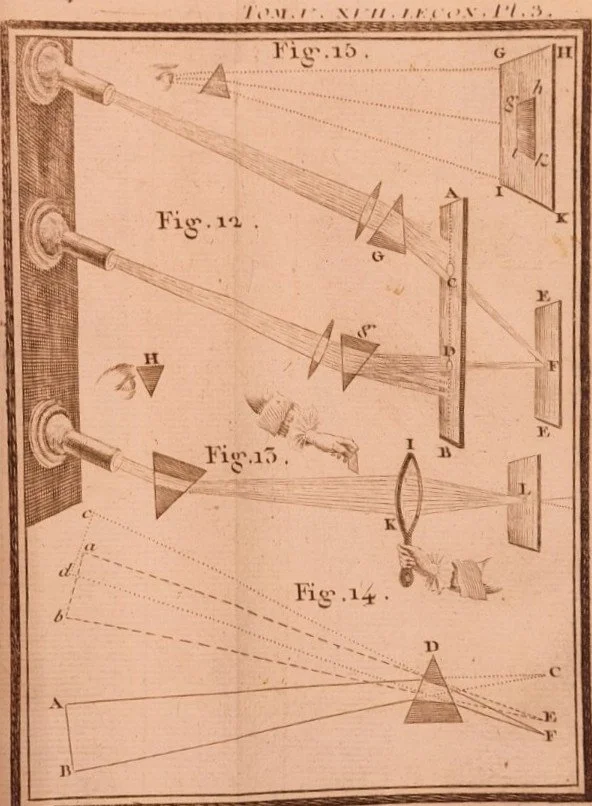 Image 1 of 24
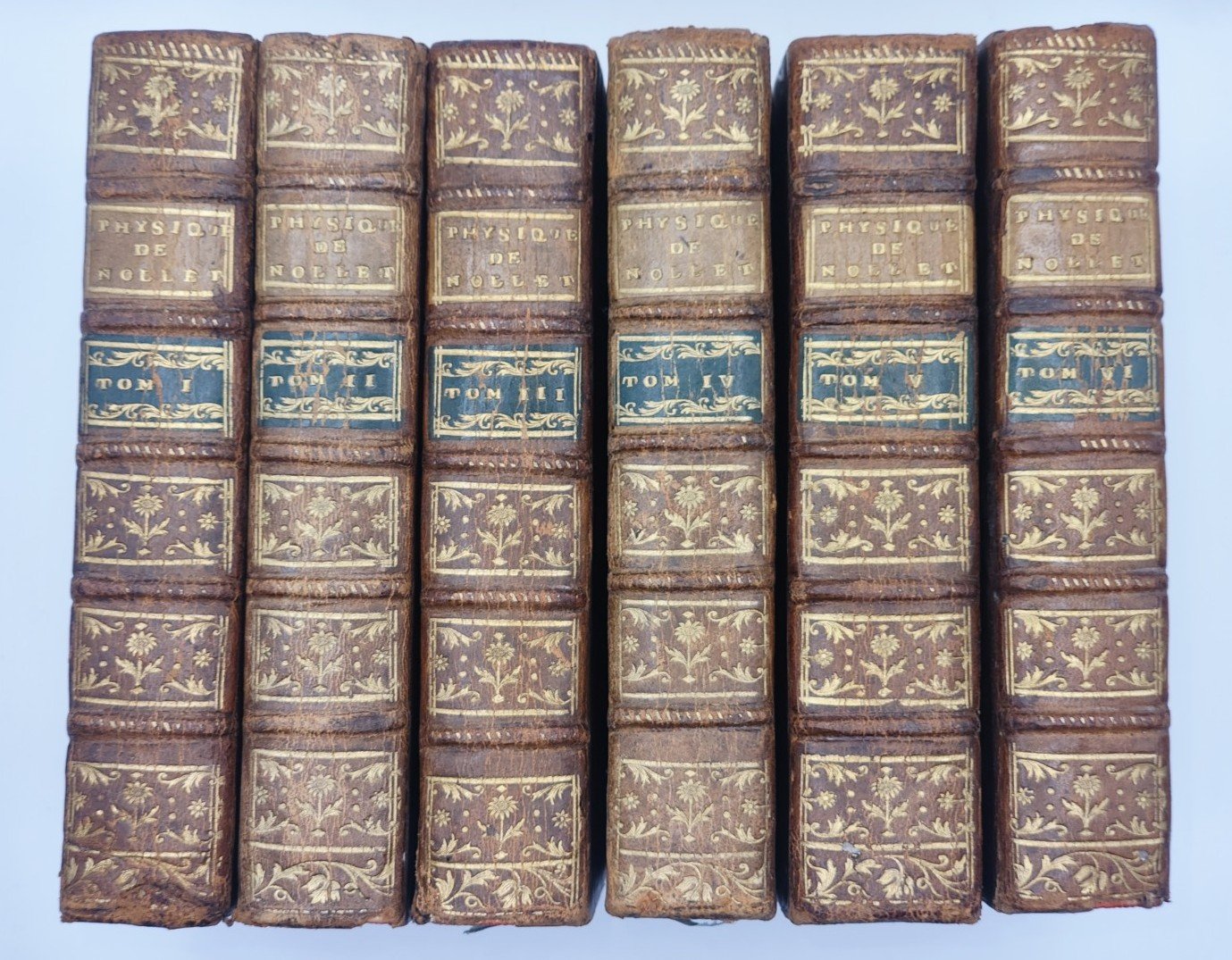 Image 2 of 24
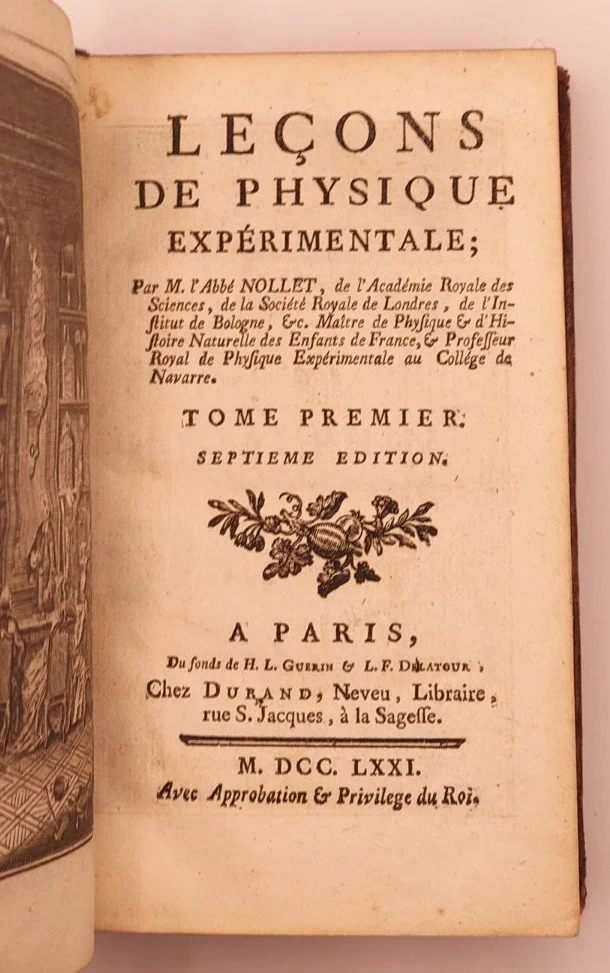 Image 3 of 24
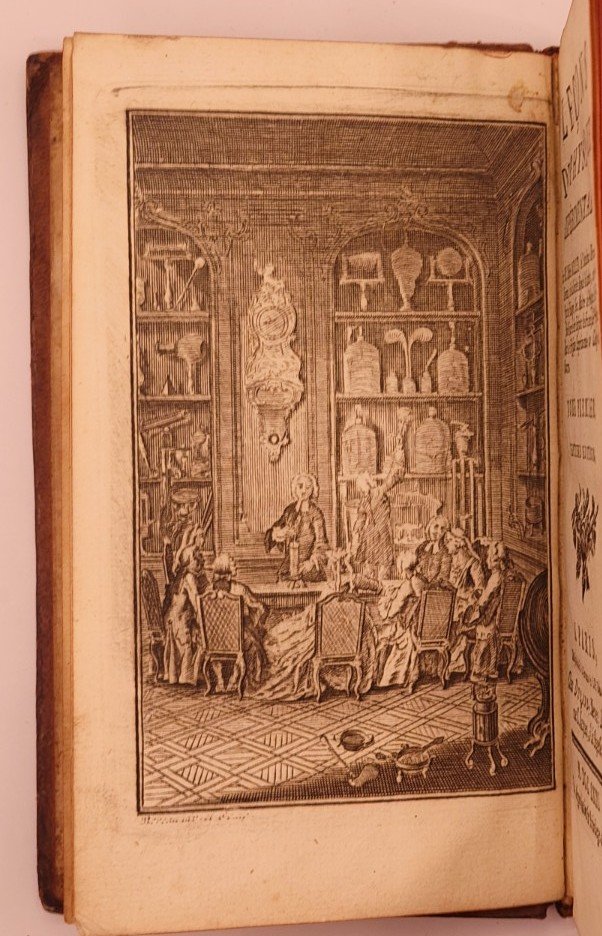 Image 4 of 24
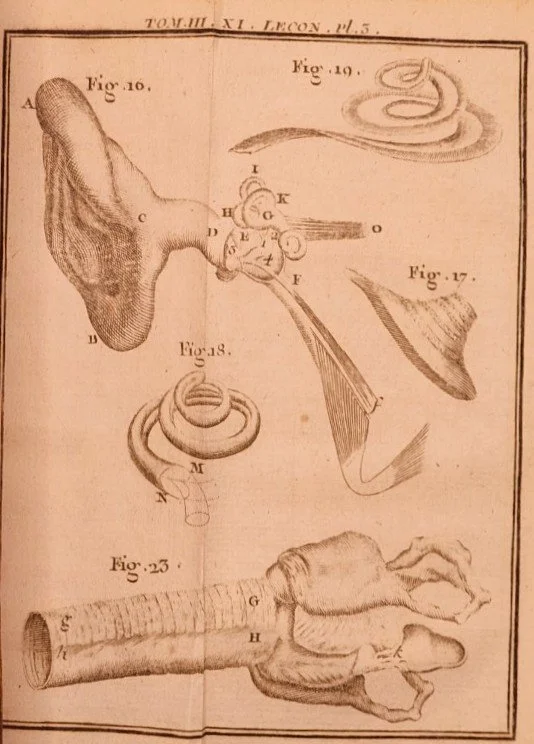 Image 5 of 24
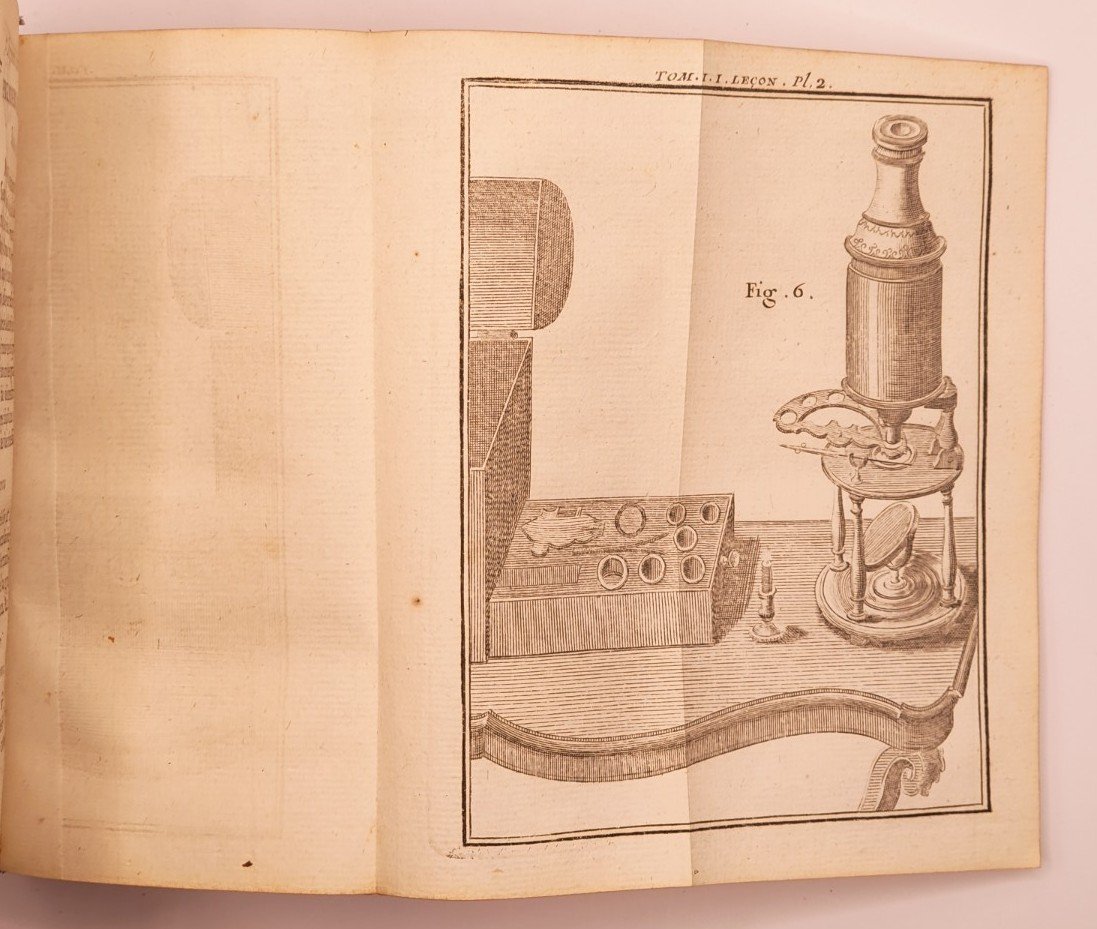 Image 6 of 24
 Image 7 of 24
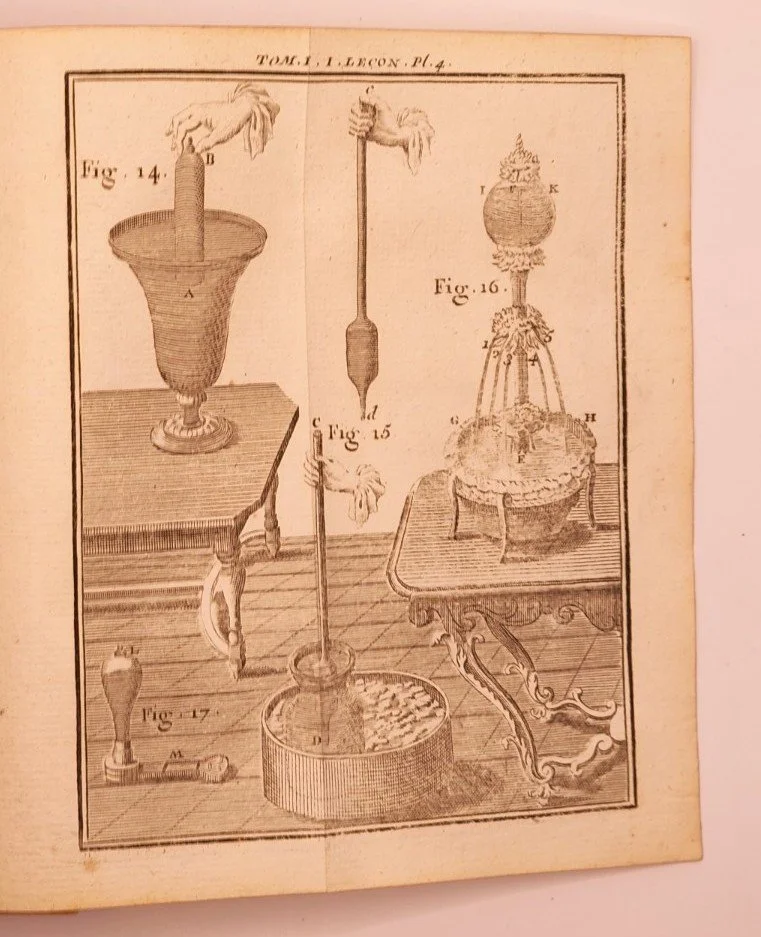 Image 8 of 24
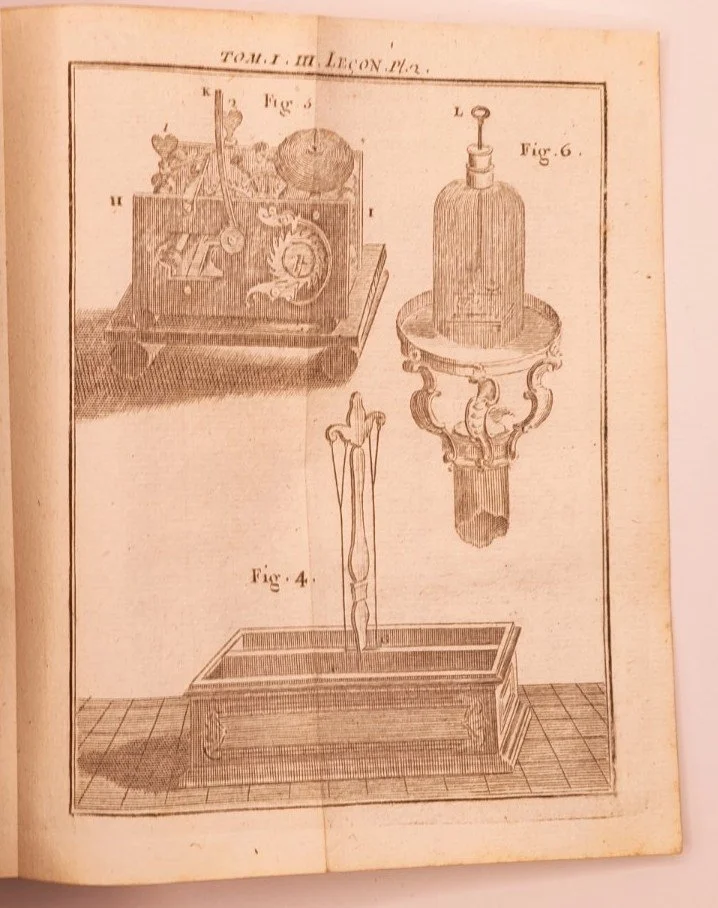 Image 9 of 24
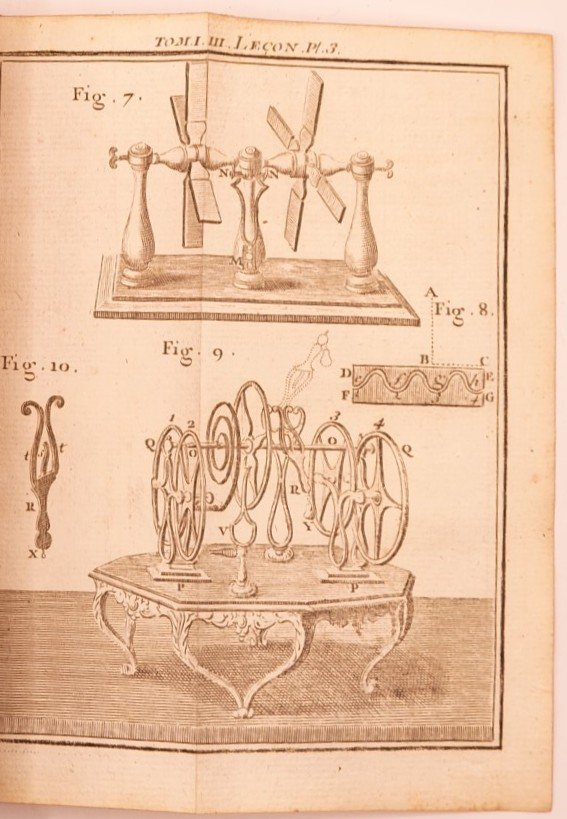 Image 10 of 24
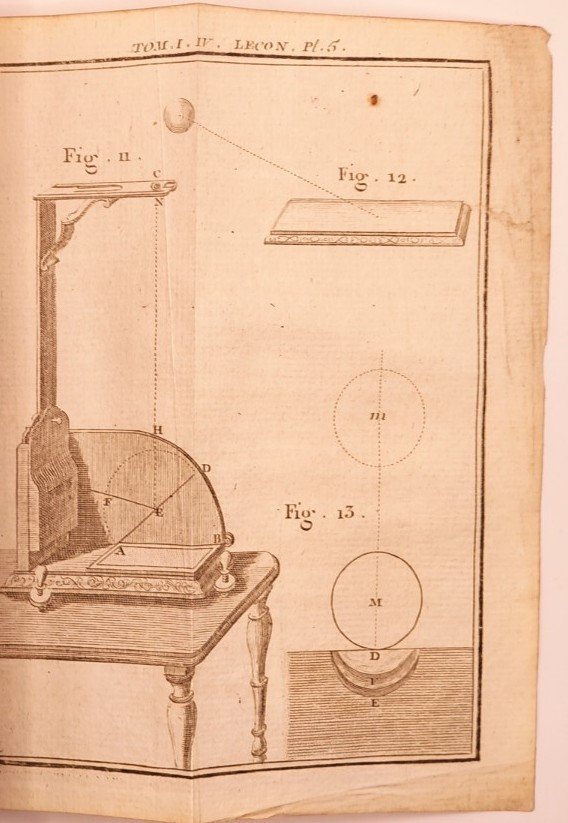 Image 11 of 24
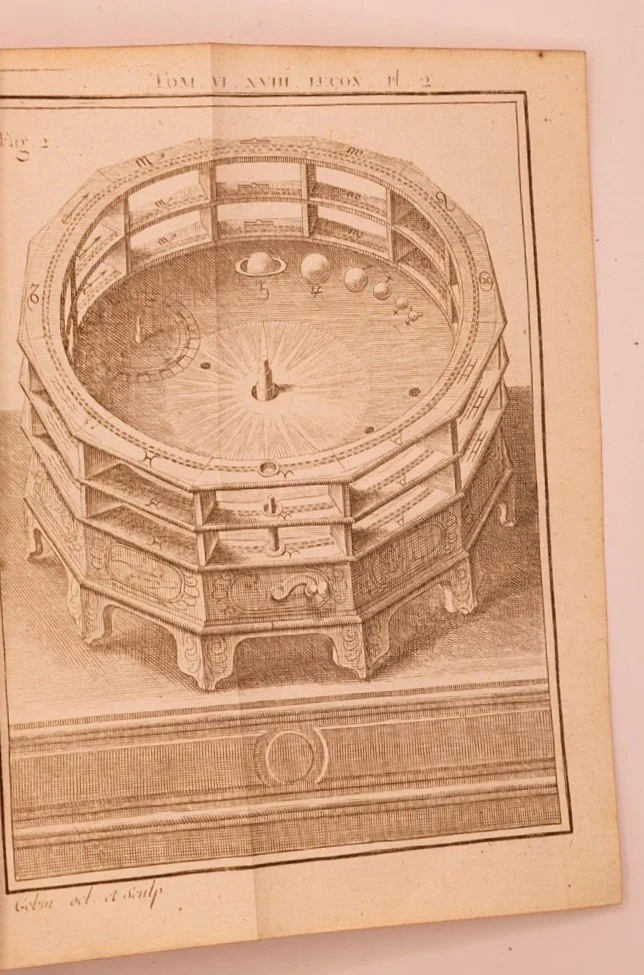 Image 12 of 24
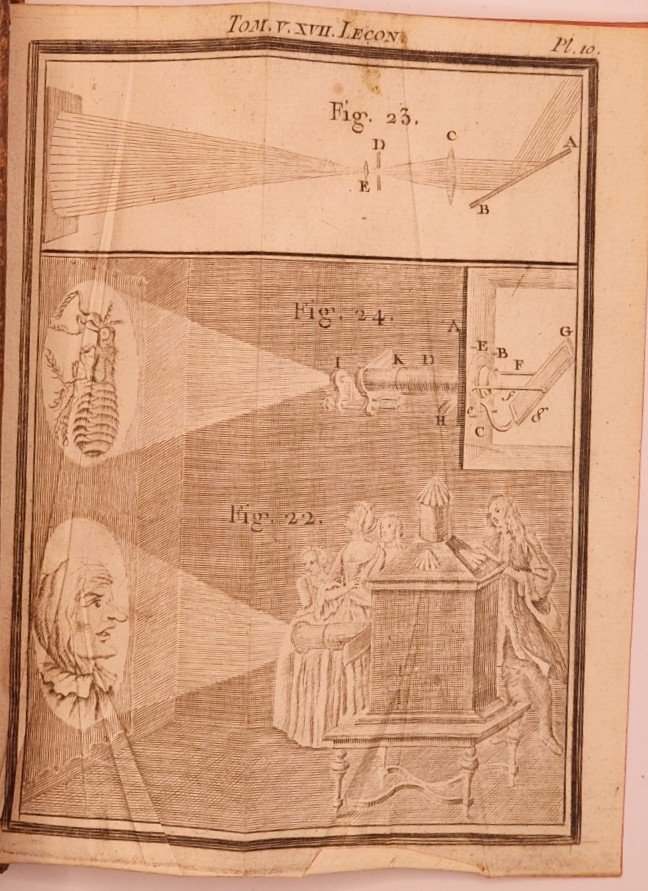 Image 13 of 24
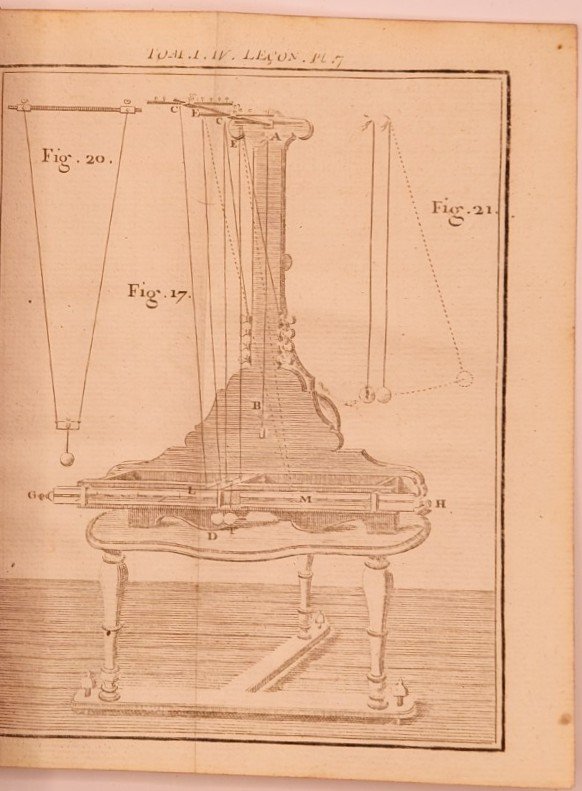 Image 14 of 24
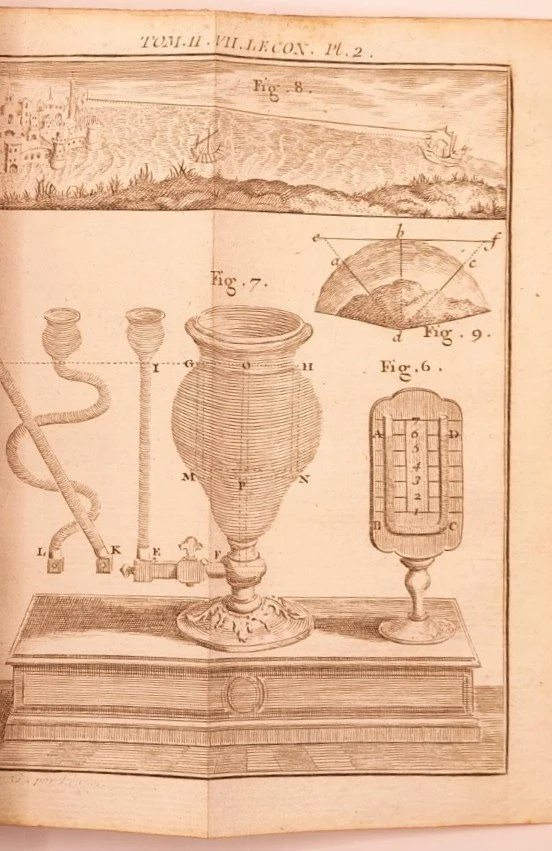 Image 15 of 24
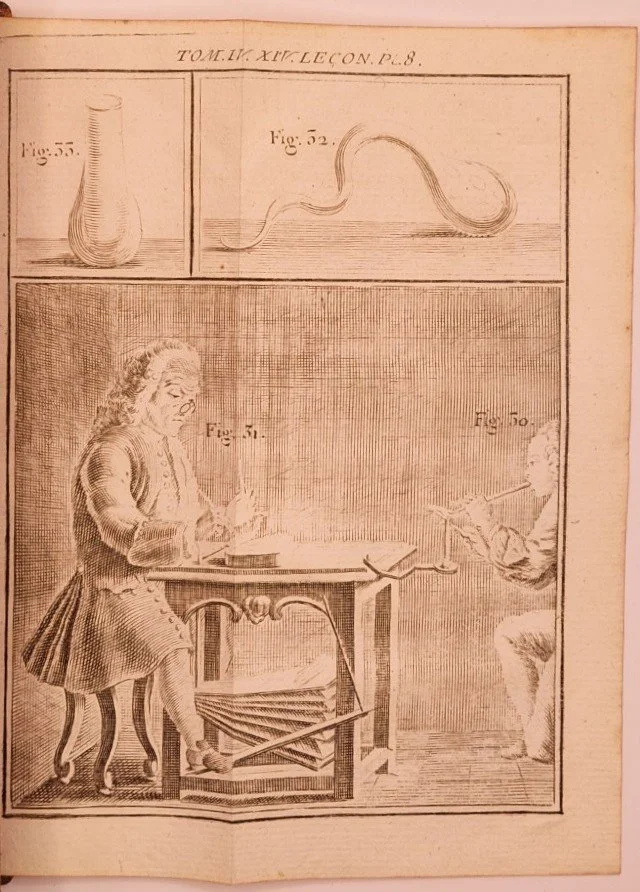 Image 16 of 24
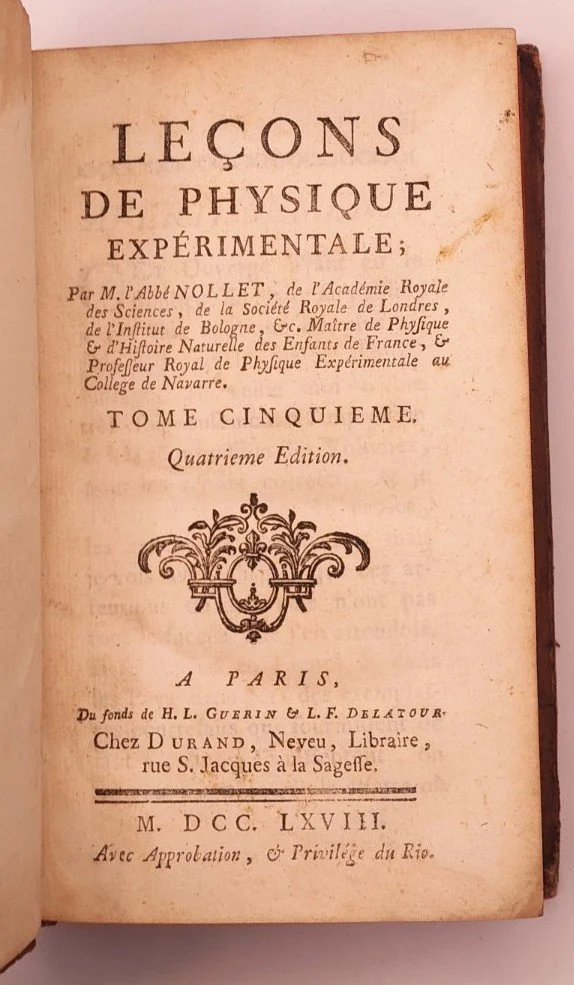 Image 17 of 24
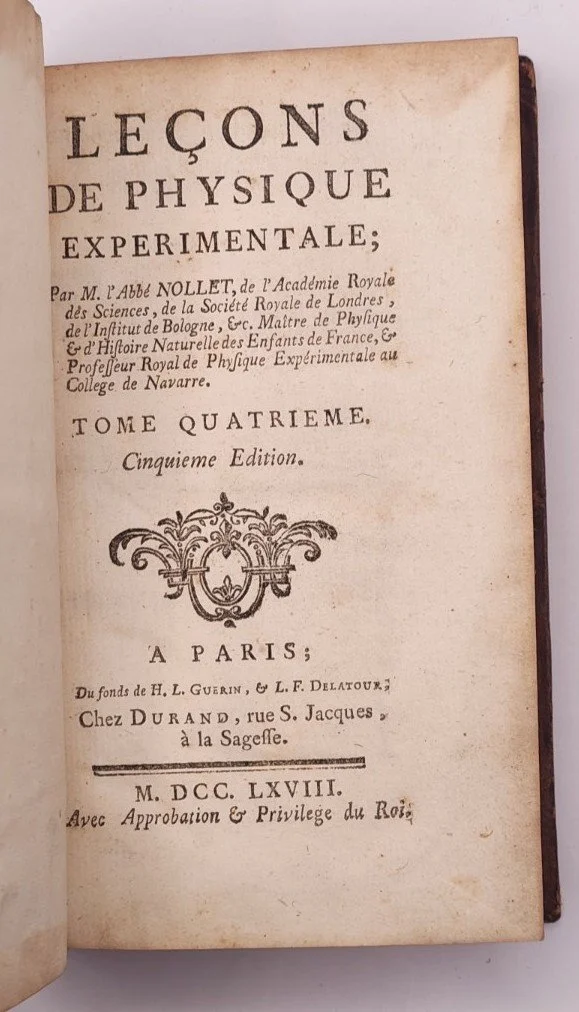 Image 18 of 24
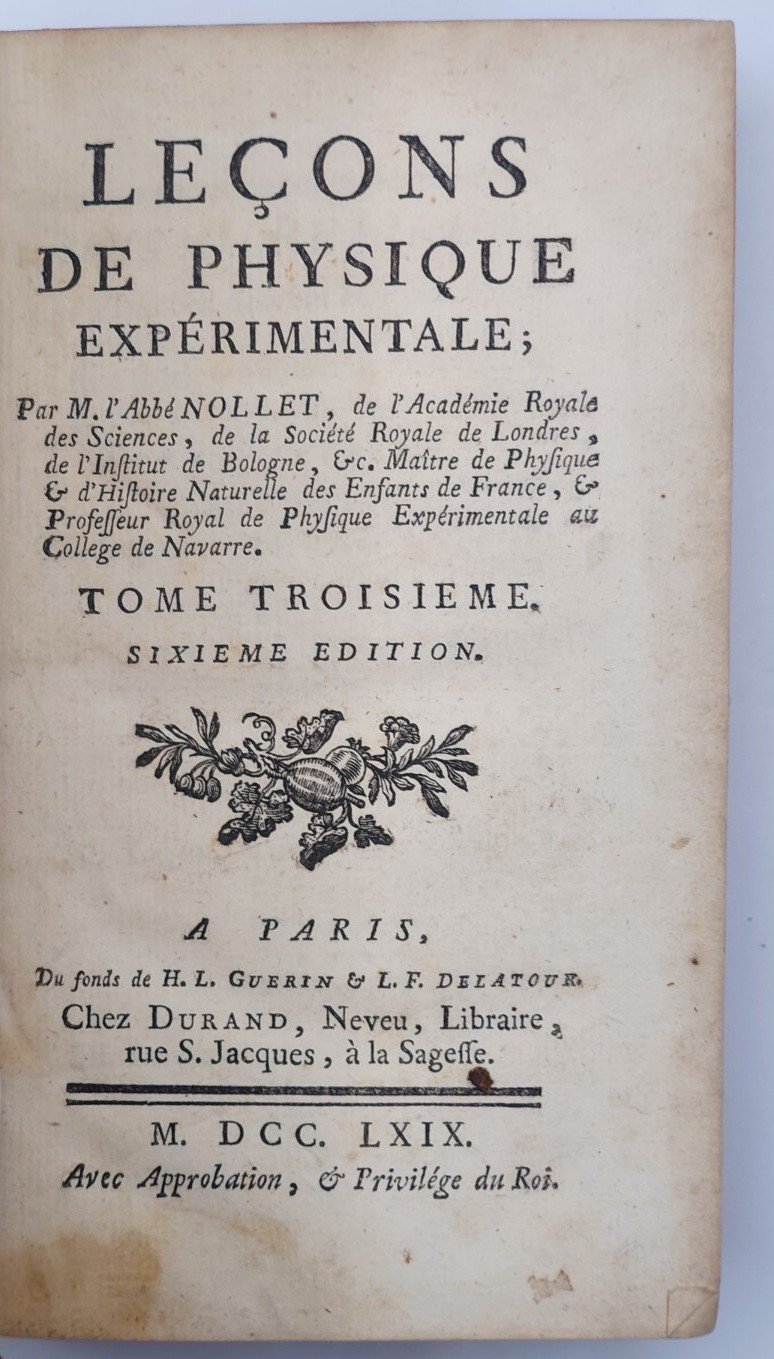 Image 19 of 24
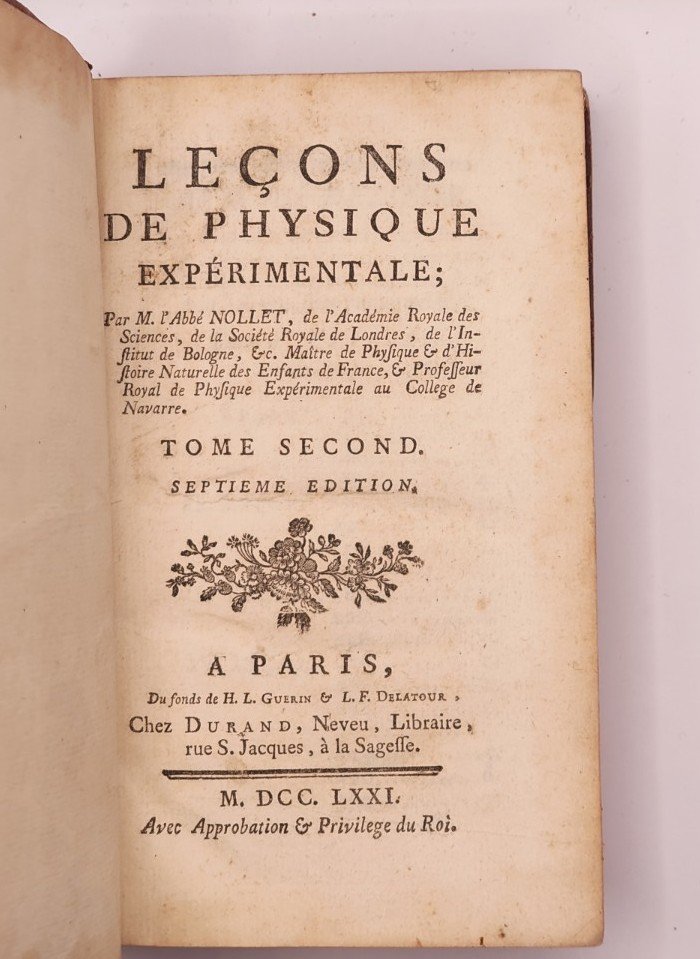 Image 20 of 24
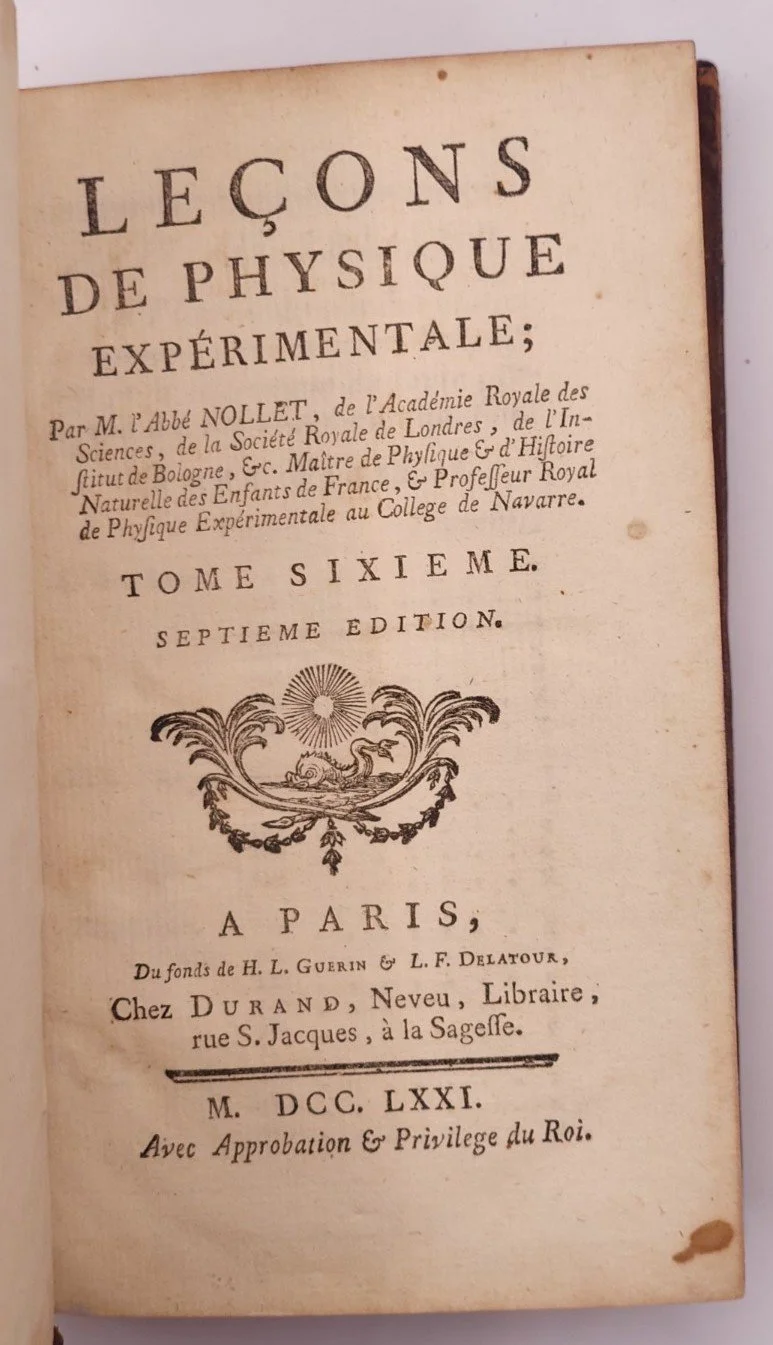 Image 21 of 24
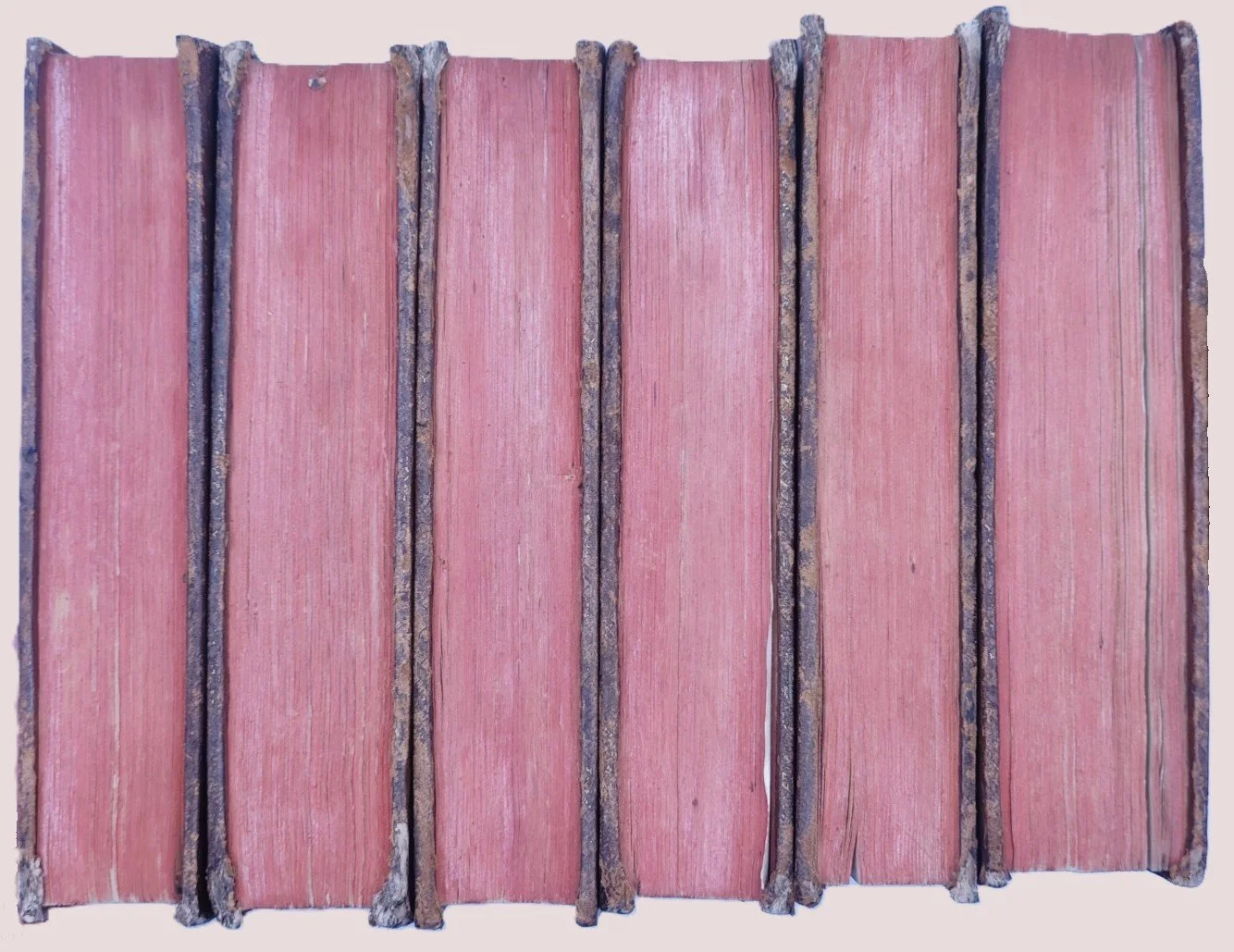 Image 22 of 24
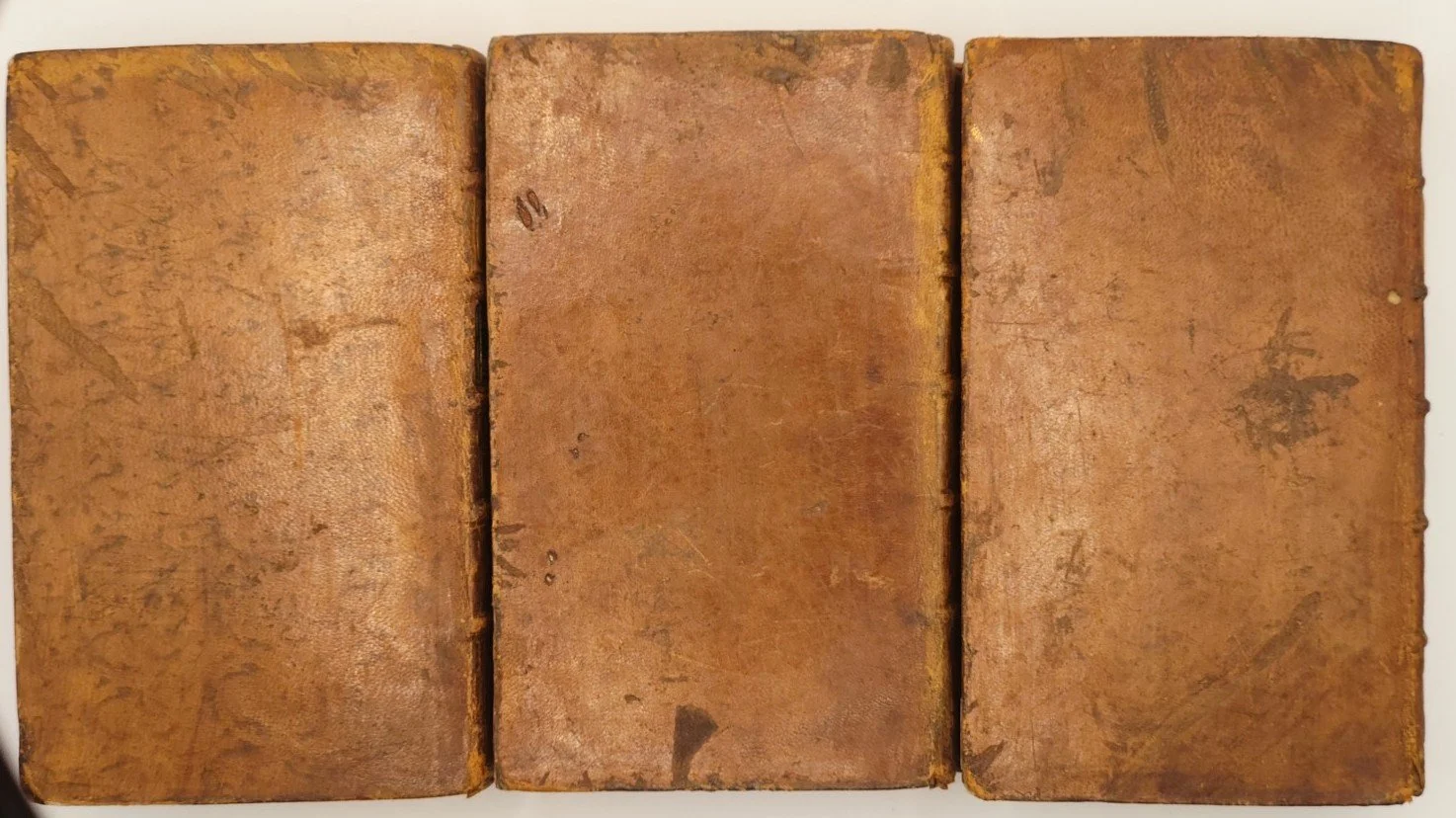 Image 23 of 24
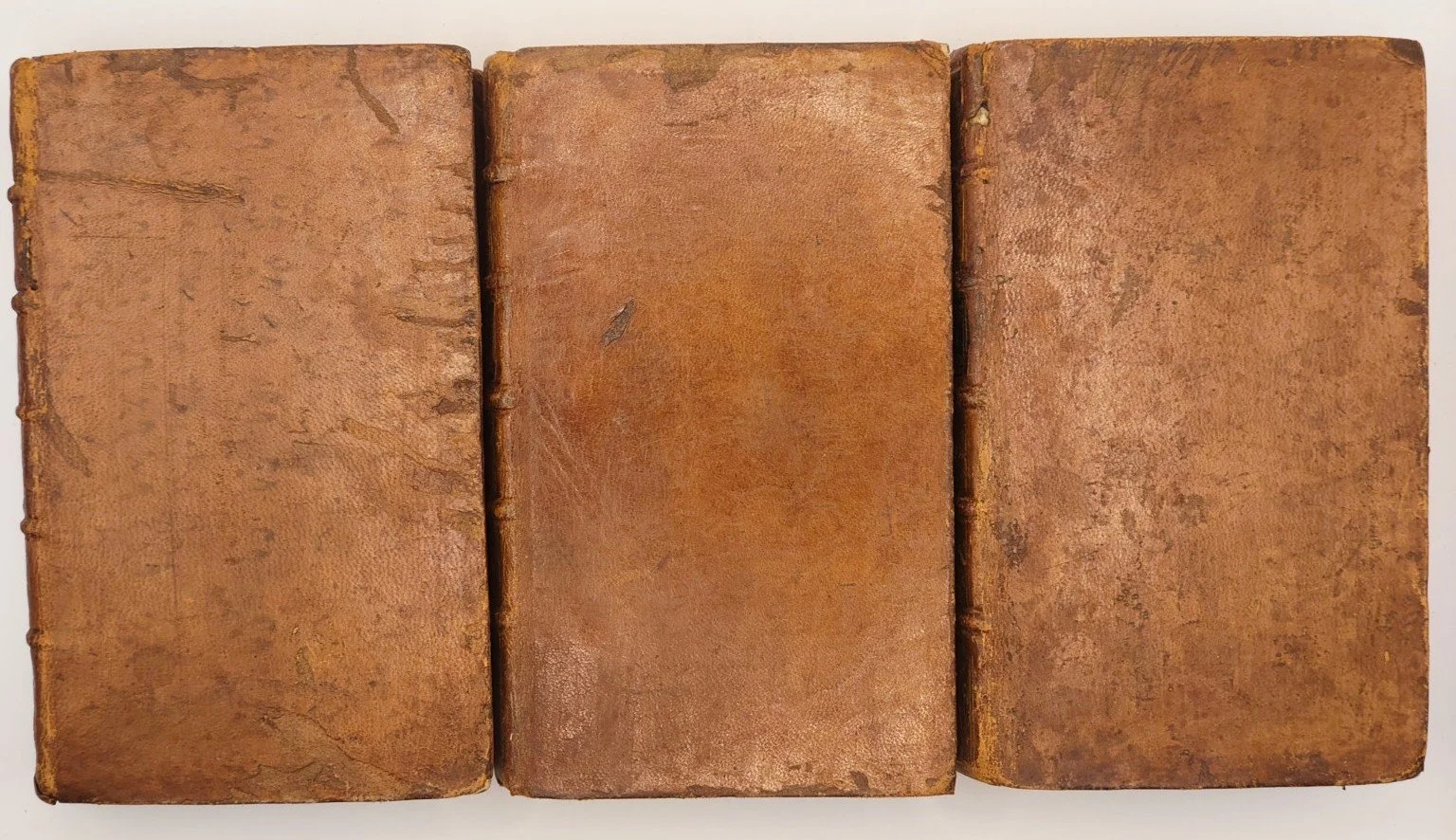 Image 24 of 24