This small devotional book, printed in Paris in 1738, belongs to a long tradition of early modern Christian literature concerned with death not as catastrophe, but as preparation. Le Bonheur de la mort chrétienne proposes an eight day spiritual retreat structured around meditation, self examination, and the acceptance of mortality as a passage rather than an end.
Anonymous in authorship, the work reflects a broader Catholic devotional culture in which texts circulated less as expressions of individual authority and more as practical instruments for inner discipline. The emphasis is not on doctrine alone, but on habit. Reading was meant to be slow, repetitive, and intimate, closely tied to daily spiritual exercise.
The volume survives in its original full calf binding, modest in format yet carefully finished, with gilt decoration to the spine. The leather shows wear, darkening, and surface loss, bearing clear traces of prolonged use. Such wear is not incidental. It speaks to a book that was handled, carried, and returned to over time. Inside, an engraved emblematic frontispiece presents a book and a candle beneath a radiant triangle, a concise visual meditation on knowledge, vigilance, and divine presence.
The preface is addressed to the Duchesse de Grammont, situating the work within the devotional life of the French aristocracy while underscoring its intended seriousness and moral weight. Faint contemporary manuscript markings in the preliminaries add another layer of human presence, reminders that this text once belonged to a particular reader whose engagement has left a quiet but enduring mark.
As an object, the book stands at the intersection of text, ritual, and material culture. It is not rare in the sense of uniqueness, but it is increasingly uncommon in its survival as a complete and expressive witness to how books were used to structure thought, emotion, and spiritual time in the early eighteenth century.
This small devotional book, printed in Paris in 1738, belongs to a long tradition of early modern Christian literature concerned with death not as catastrophe, but as preparation. Le Bonheur de la mort chrétienne proposes an eight day spiritual retreat structured around meditation, self examination, and the acceptance of mortality as a passage rather than an end.
Anonymous in authorship, the work reflects a broader Catholic devotional culture in which texts circulated less as expressions of individual authority and more as practical instruments for inner discipline. The emphasis is not on doctrine alone, but on habit. Reading was meant to be slow, repetitive, and intimate, closely tied to daily spiritual exercise.
The volume survives in its original full calf binding, modest in format yet carefully finished, with gilt decoration to the spine. The leather shows wear, darkening, and surface loss, bearing clear traces of prolonged use. Such wear is not incidental. It speaks to a book that was handled, carried, and returned to over time. Inside, an engraved emblematic frontispiece presents a book and a candle beneath a radiant triangle, a concise visual meditation on knowledge, vigilance, and divine presence.
The preface is addressed to the Duchesse de Grammont, situating the work within the devotional life of the French aristocracy while underscoring its intended seriousness and moral weight. Faint contemporary manuscript markings in the preliminaries add another layer of human presence, reminders that this text once belonged to a particular reader whose engagement has left a quiet but enduring mark.
As an object, the book stands at the intersection of text, ritual, and material culture. It is not rare in the sense of uniqueness, but it is increasingly uncommon in its survival as a complete and expressive witness to how books were used to structure thought, emotion, and spiritual time in the early eighteenth century.


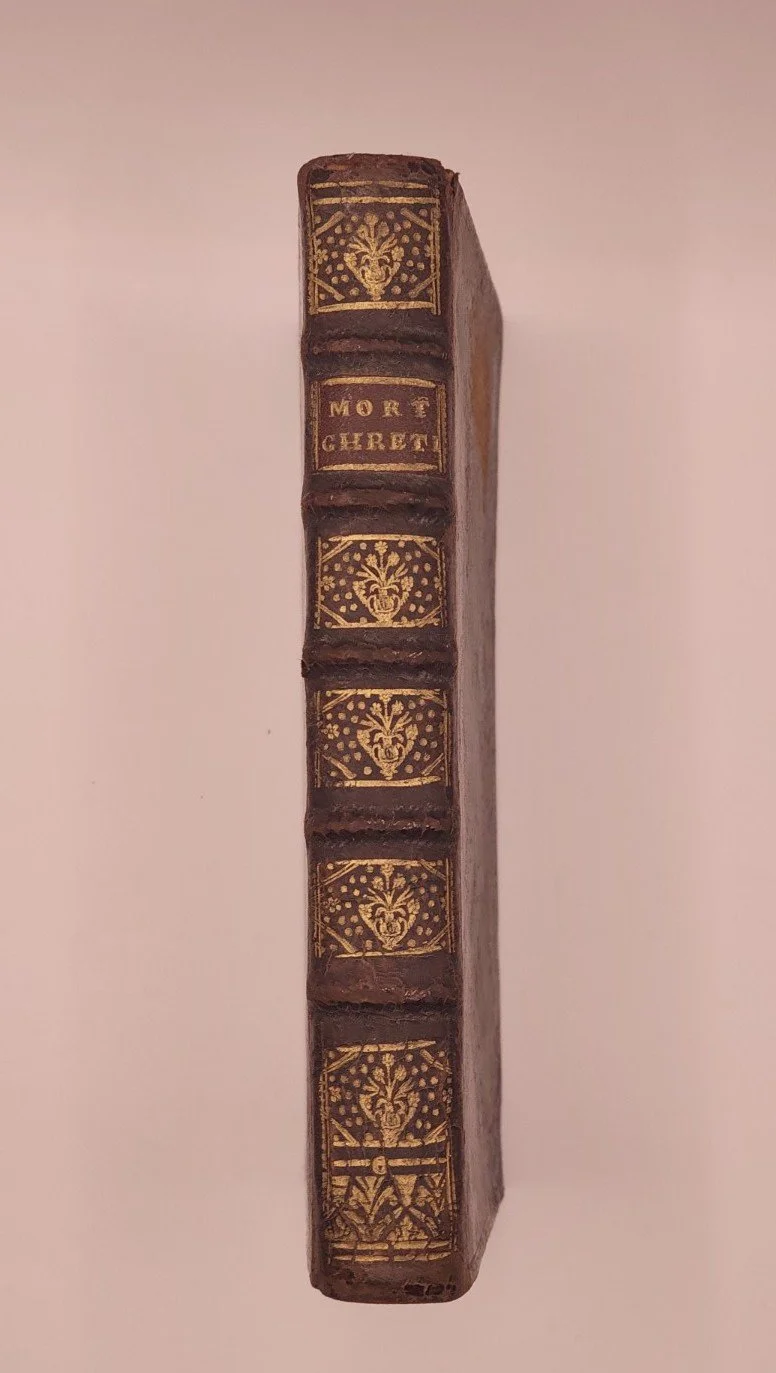 Image 1 of 7
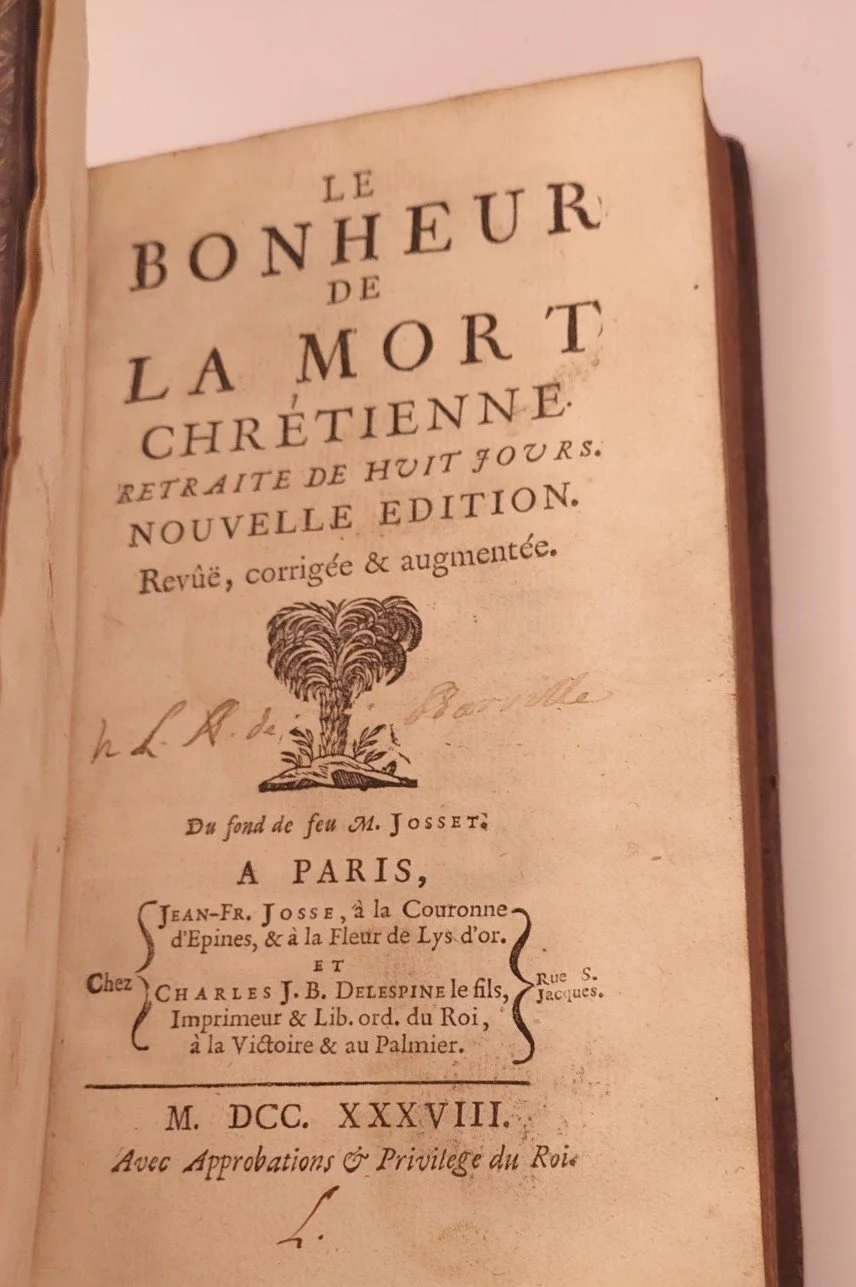 Image 2 of 7
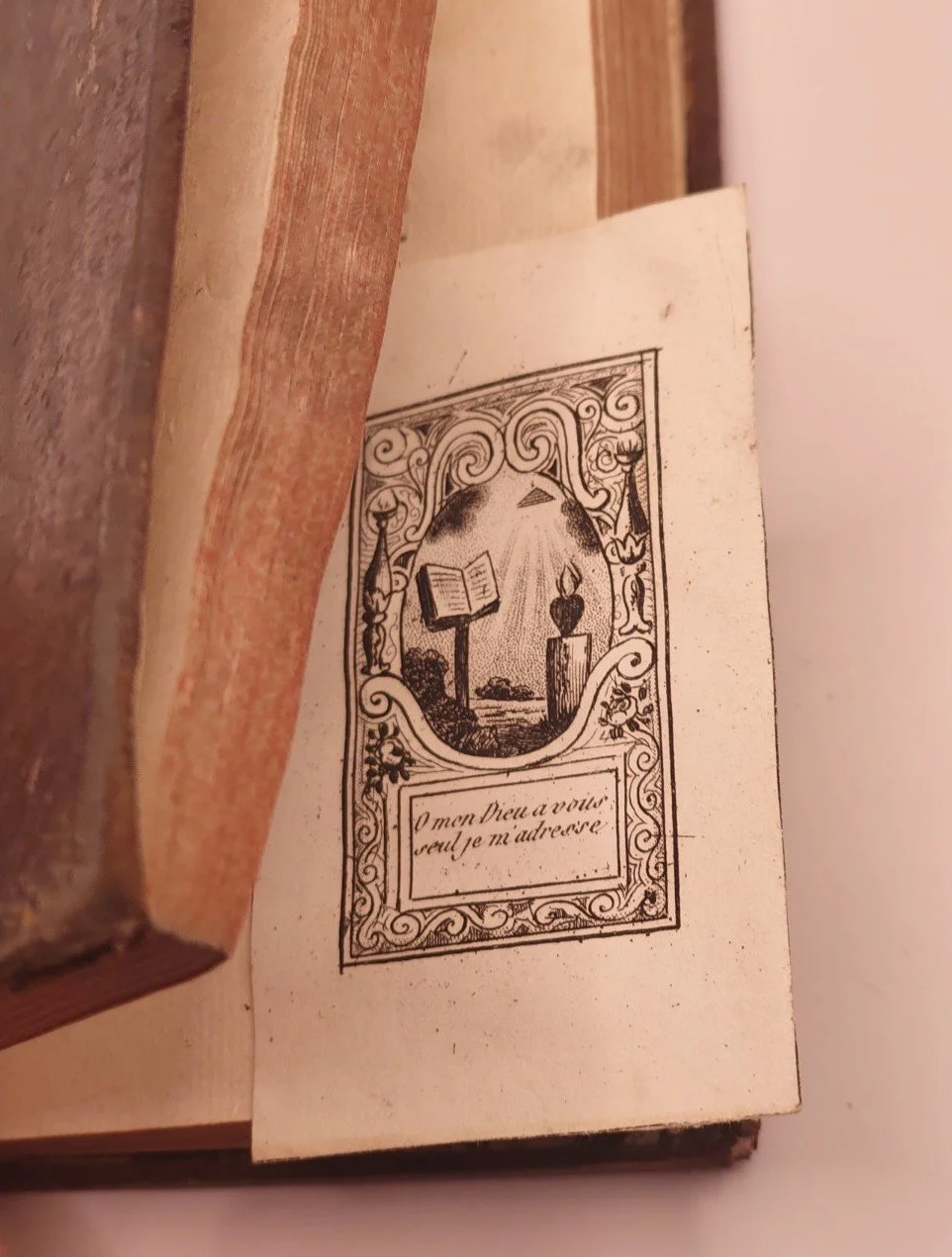 Image 3 of 7
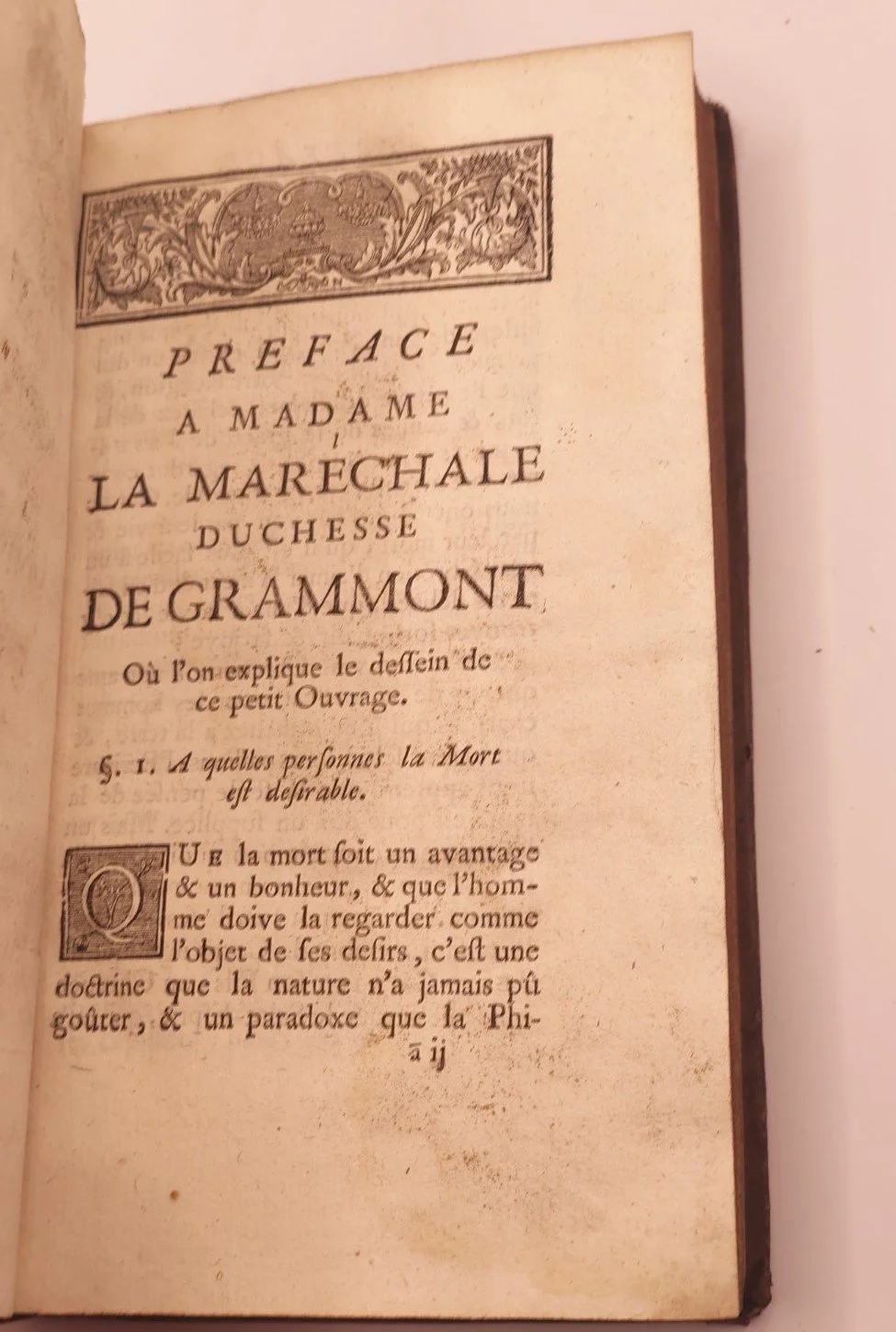 Image 4 of 7
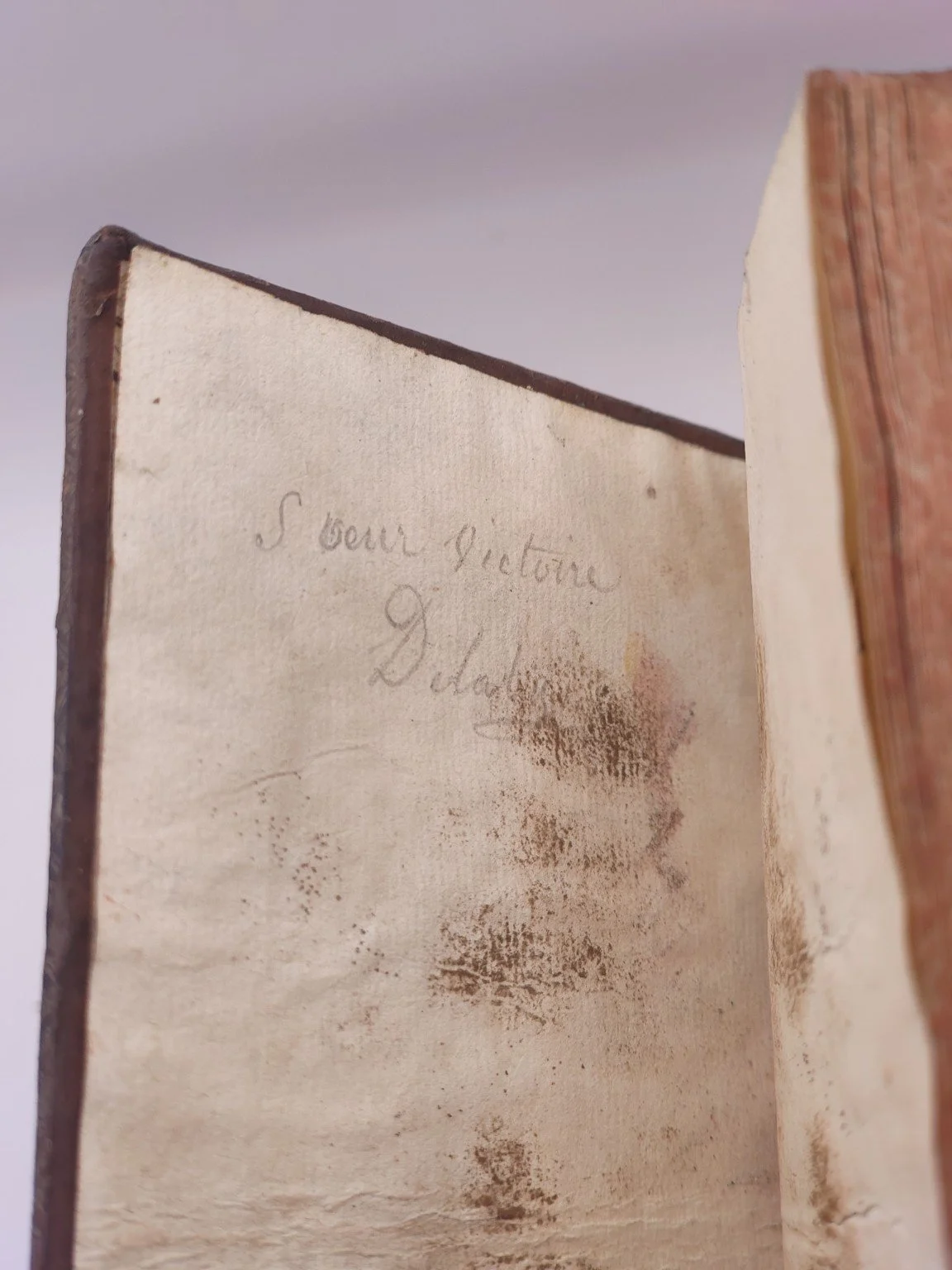 Image 5 of 7
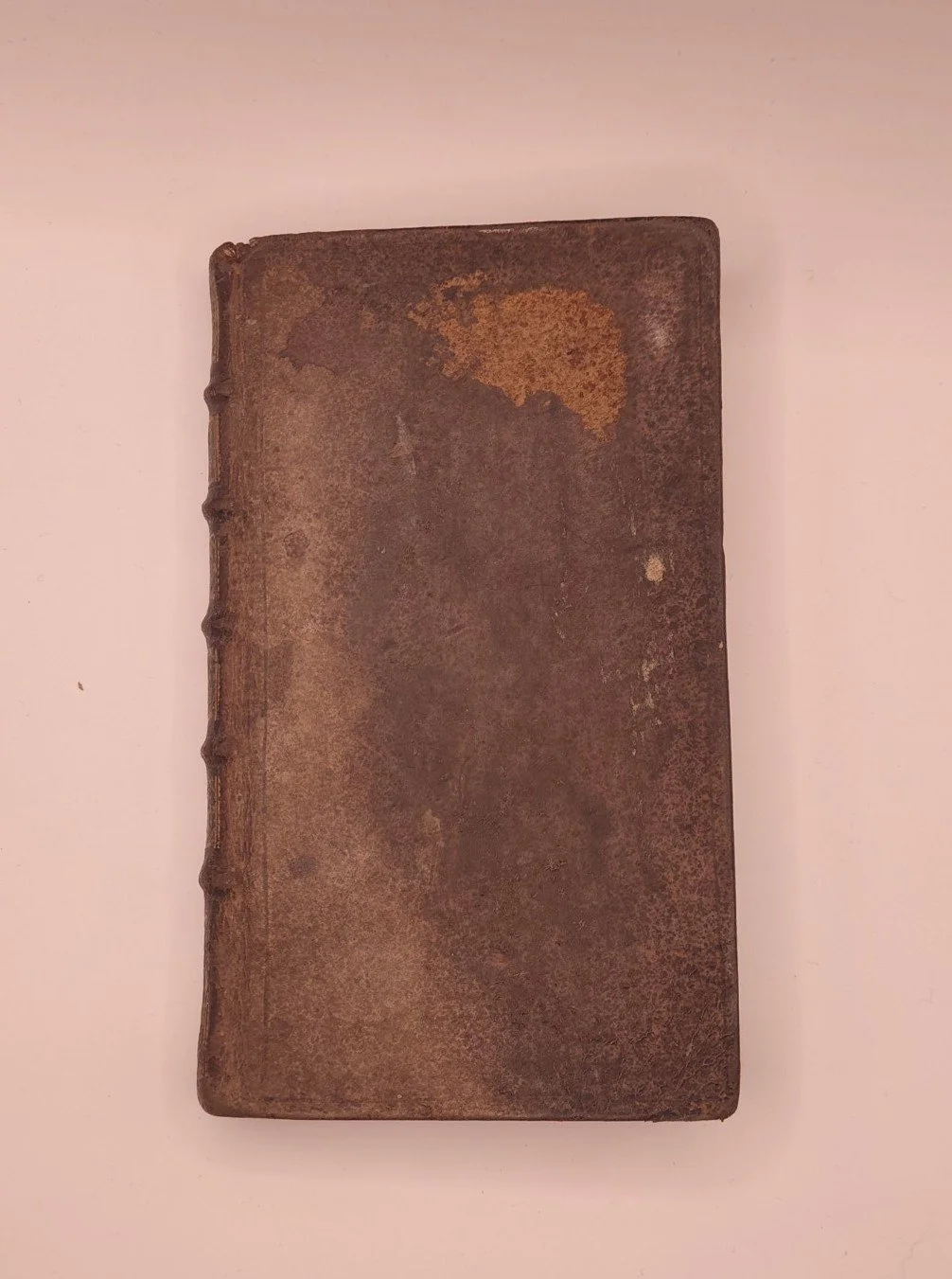 Image 6 of 7
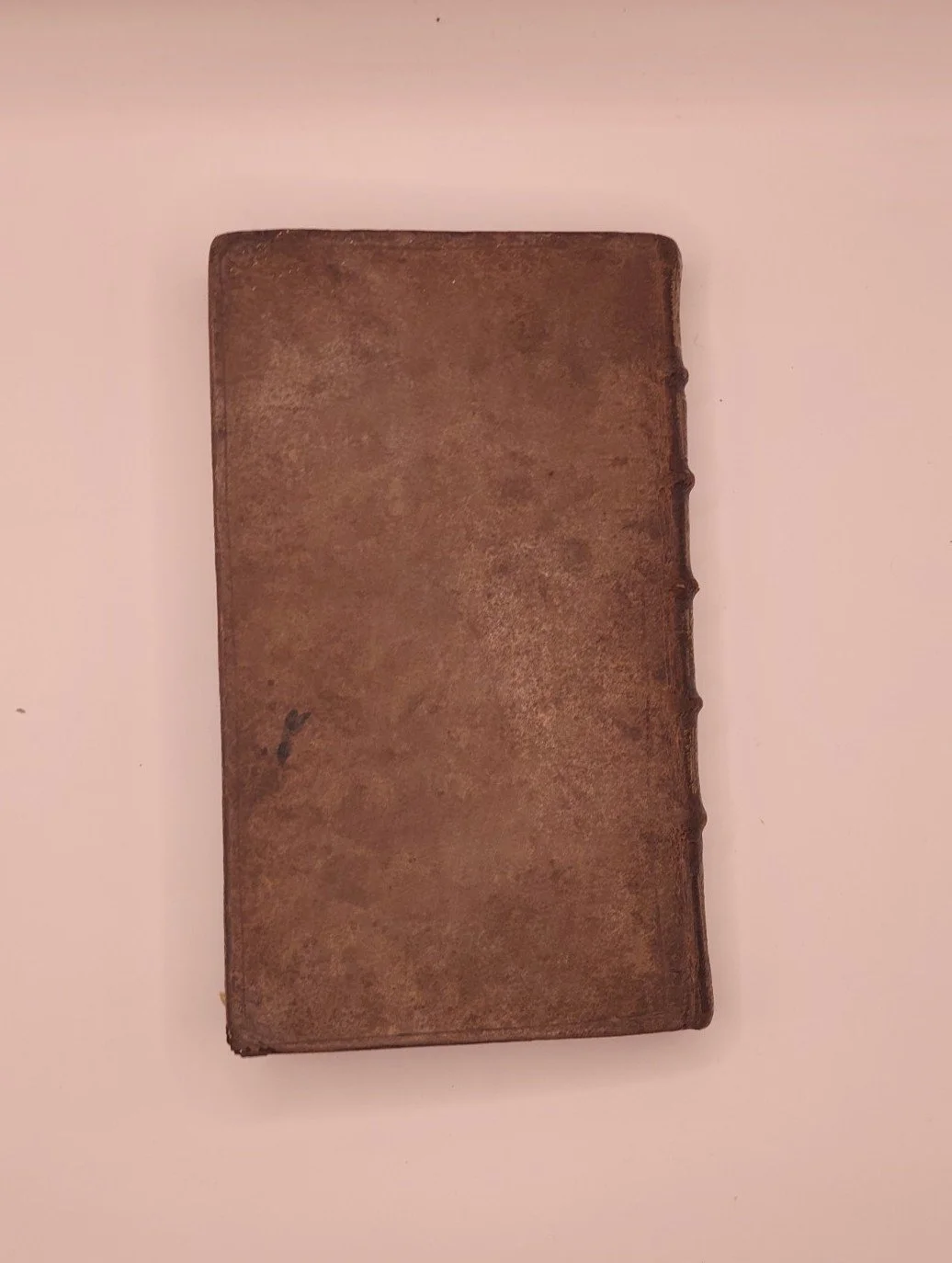 Image 7 of 7