Introduction
This two-volume devotional work, L’Âme Unie à Jésus-Christ dans le Très-Saint Sacrement de l’Autel, was published in Paris in 1781 as a posthumous text by Madame Poncet de la Rivière, Comtesse de Carcado. Conceived for sustained Eucharistic devotion, the book belongs to a late eighteenth-century tradition of French Catholic lay spirituality that emphasised structured prayer, meditation, and preparation for Communion throughout the liturgical year.
The present set is distinguished not only by its completeness and contemporary binding, but also by the survival of devotional material preserved within the volumes. Printed holy cards, feast-day slips, devotional prints, and a handwritten note together document how the book continued to function as a living object of faith well into the nineteenth century.
Physical Description
Title:L’Âme Unie à Jésus-Christ dans le Très-Saint Sacrement de l’Autel
Author: Madame Poncet de la Rivière, Comtesse de Carcado
Publication: Paris, 1781
Edition: First published edition
Format: Two volumes
Binding: Contemporary full leather bindings, uniformly executed
Typography: Clear eighteenth-century French type with ornamental headpieces
Contents: Complete textblocks in both volumes
Condition: General age-related wear to bindings, including rubbing and softened edges; one small area of paper wear to a single leaf; light to moderate toning and occasional spotting consistent with age
Additional material: Group of loose devotional ephemera preserved within the volumes, including printed holy cards, feast-day slips, devotional prints, and a handwritten dedication note quoting Matthew 5:6 (“Ceux qui ont faim et soif de la justice, parce qu’ils seront rassasiés”), written in a contemporary cursive hand.
Context
Works of this kind were intended for repeated, attentive reading rather than occasional consultation. Arranged according to Sundays and major feasts, the text guided readers through cycles of reflection tied to the sacrament of the Eucharist. Such books played a central role in the devotional life of lay Catholics in late Enlightenment France, particularly among women and members of confraternities.
The preserved ephemera point to continued use across generations and suggest an organised devotional or confraternal environment rather than casual later additions. Together, text and inserts illustrate how printed books, small devotional prints, and handwritten notes functioned collectively within everyday religious practice.
Significance
This set offers more than a devotional text. It preserves material evidence of lived Catholic spirituality across the late eighteenth and nineteenth centuries. The combination of a first-edition devotional work, contemporary bindings, and accumulated devotional ephemera provides insight into how religious books were used, augmented, and retained within personal and communal contexts.
As an object, the work stands at the intersection of text, practice, and memory. It is representative of French Catholic devotional culture on the eve of the Revolution, while also bearing witness to the continuity of religious life in the decades that followed.
Introduction
This two-volume devotional work, L’Âme Unie à Jésus-Christ dans le Très-Saint Sacrement de l’Autel, was published in Paris in 1781 as a posthumous text by Madame Poncet de la Rivière, Comtesse de Carcado. Conceived for sustained Eucharistic devotion, the book belongs to a late eighteenth-century tradition of French Catholic lay spirituality that emphasised structured prayer, meditation, and preparation for Communion throughout the liturgical year.
The present set is distinguished not only by its completeness and contemporary binding, but also by the survival of devotional material preserved within the volumes. Printed holy cards, feast-day slips, devotional prints, and a handwritten note together document how the book continued to function as a living object of faith well into the nineteenth century.
Physical Description
Title:L’Âme Unie à Jésus-Christ dans le Très-Saint Sacrement de l’Autel
Author: Madame Poncet de la Rivière, Comtesse de Carcado
Publication: Paris, 1781
Edition: First published edition
Format: Two volumes
Binding: Contemporary full leather bindings, uniformly executed
Typography: Clear eighteenth-century French type with ornamental headpieces
Contents: Complete textblocks in both volumes
Condition: General age-related wear to bindings, including rubbing and softened edges; one small area of paper wear to a single leaf; light to moderate toning and occasional spotting consistent with age
Additional material: Group of loose devotional ephemera preserved within the volumes, including printed holy cards, feast-day slips, devotional prints, and a handwritten dedication note quoting Matthew 5:6 (“Ceux qui ont faim et soif de la justice, parce qu’ils seront rassasiés”), written in a contemporary cursive hand.
Context
Works of this kind were intended for repeated, attentive reading rather than occasional consultation. Arranged according to Sundays and major feasts, the text guided readers through cycles of reflection tied to the sacrament of the Eucharist. Such books played a central role in the devotional life of lay Catholics in late Enlightenment France, particularly among women and members of confraternities.
The preserved ephemera point to continued use across generations and suggest an organised devotional or confraternal environment rather than casual later additions. Together, text and inserts illustrate how printed books, small devotional prints, and handwritten notes functioned collectively within everyday religious practice.
Significance
This set offers more than a devotional text. It preserves material evidence of lived Catholic spirituality across the late eighteenth and nineteenth centuries. The combination of a first-edition devotional work, contemporary bindings, and accumulated devotional ephemera provides insight into how religious books were used, augmented, and retained within personal and communal contexts.
As an object, the work stands at the intersection of text, practice, and memory. It is representative of French Catholic devotional culture on the eve of the Revolution, while also bearing witness to the continuity of religious life in the decades that followed.


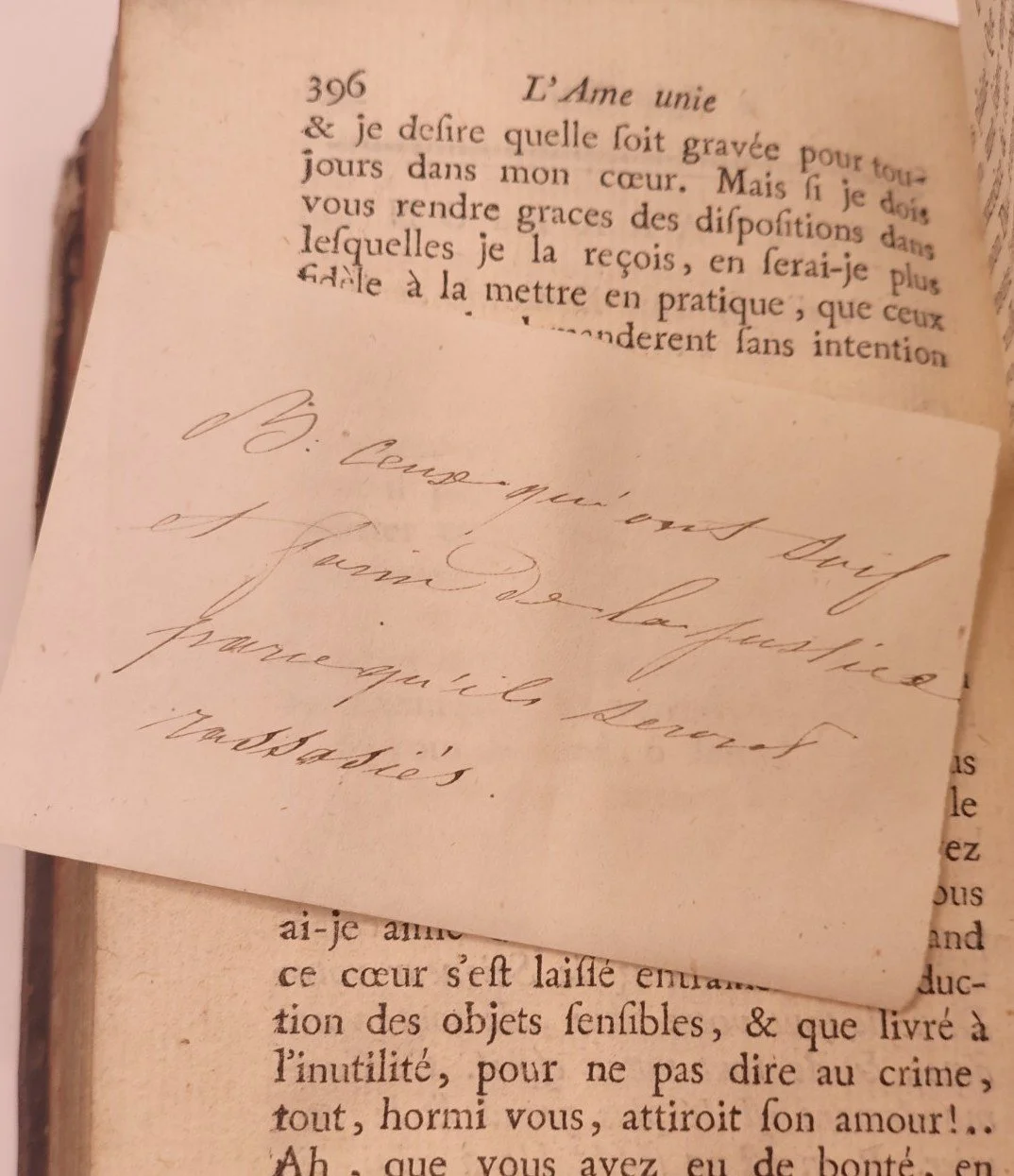 Image 1 of 18
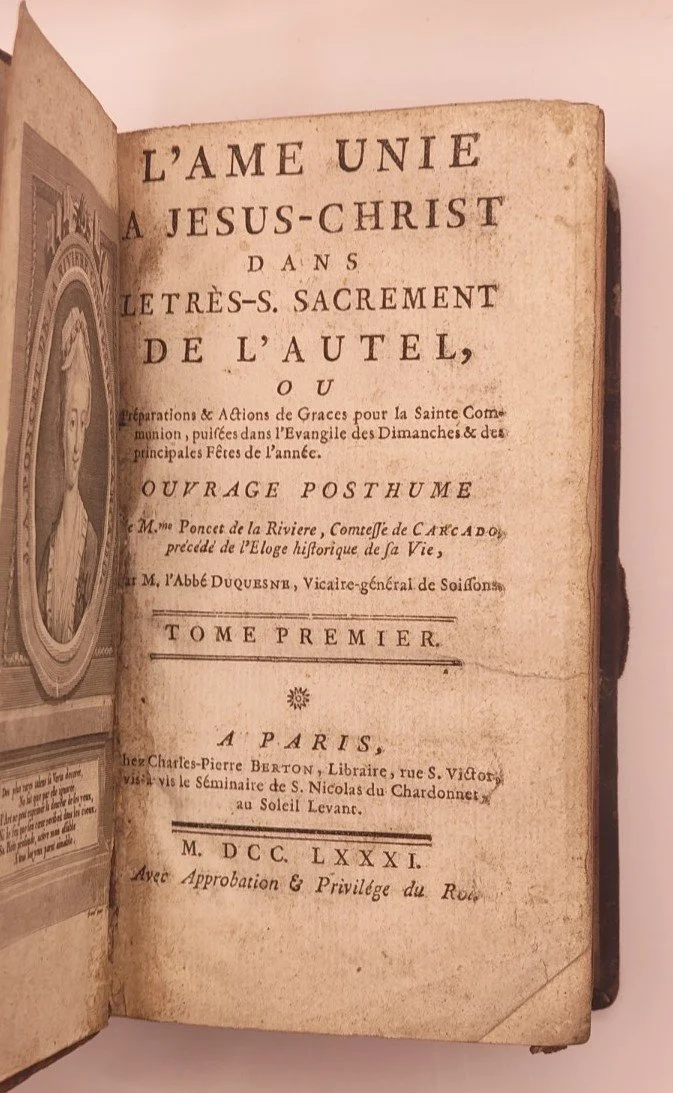 Image 2 of 18
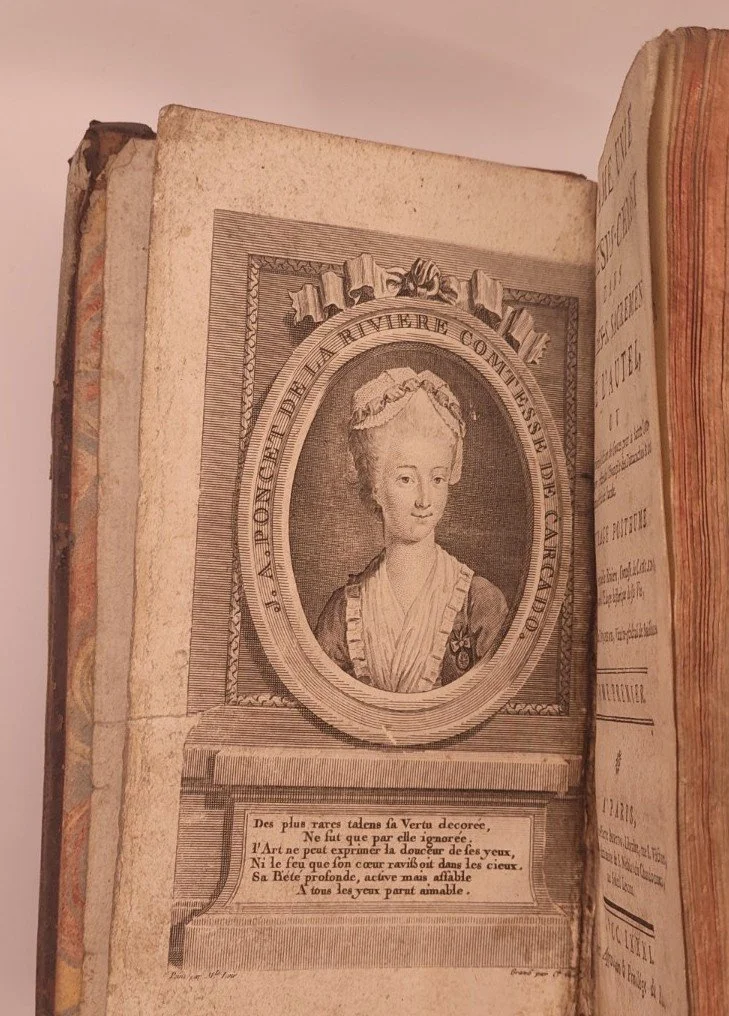 Image 3 of 18
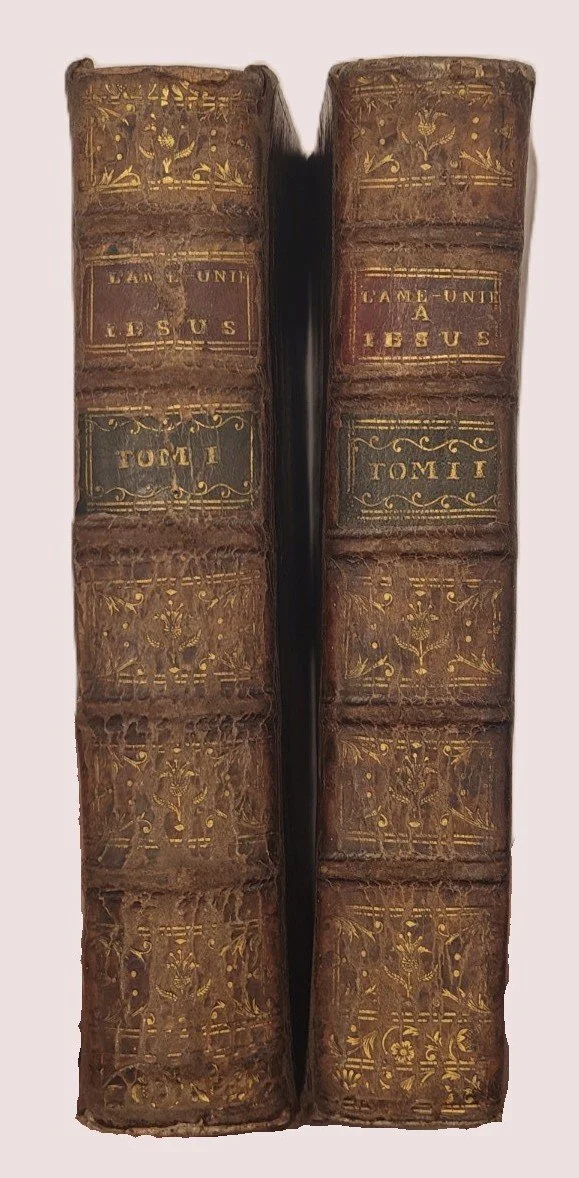 Image 4 of 18
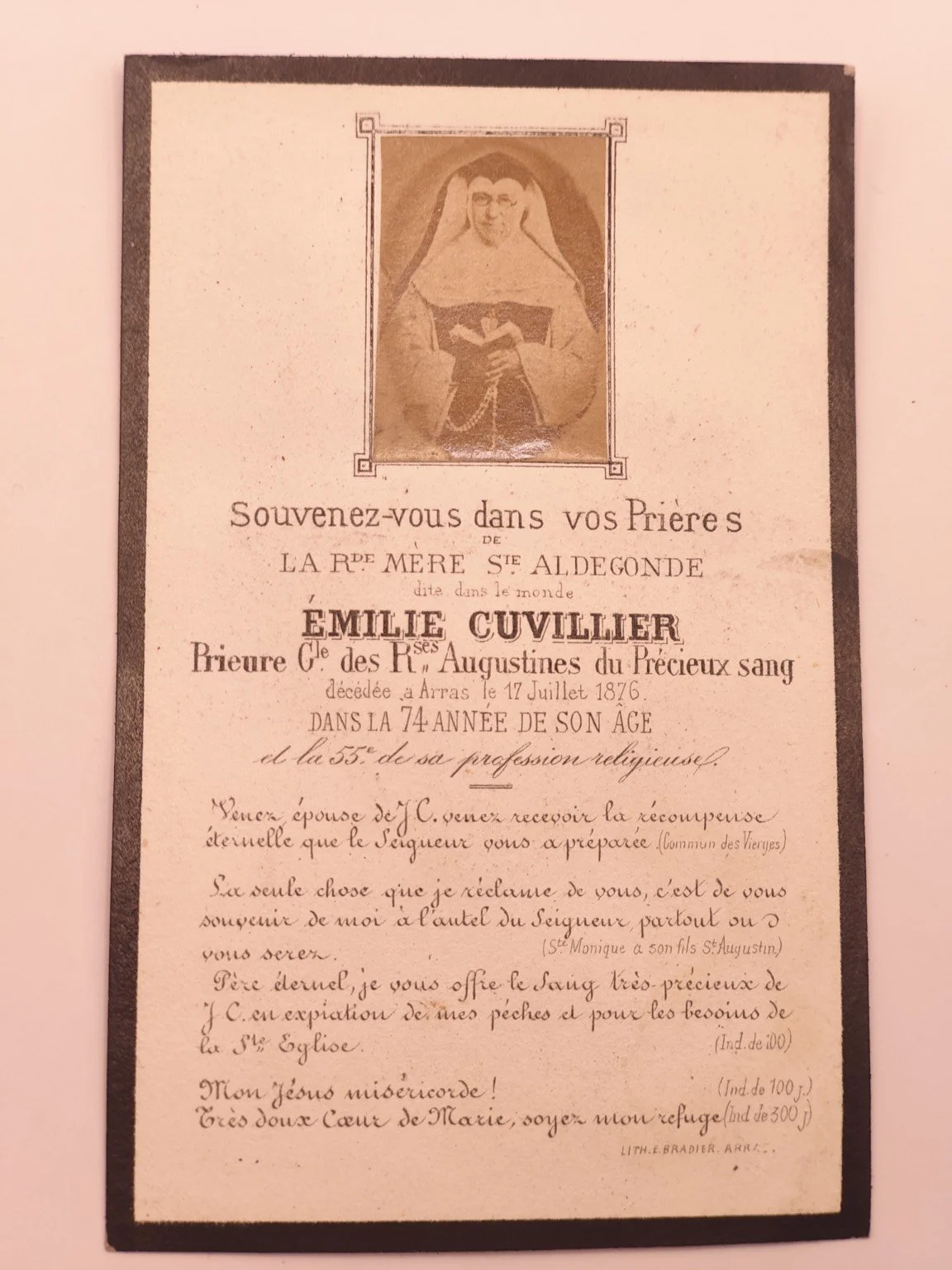 Image 5 of 18
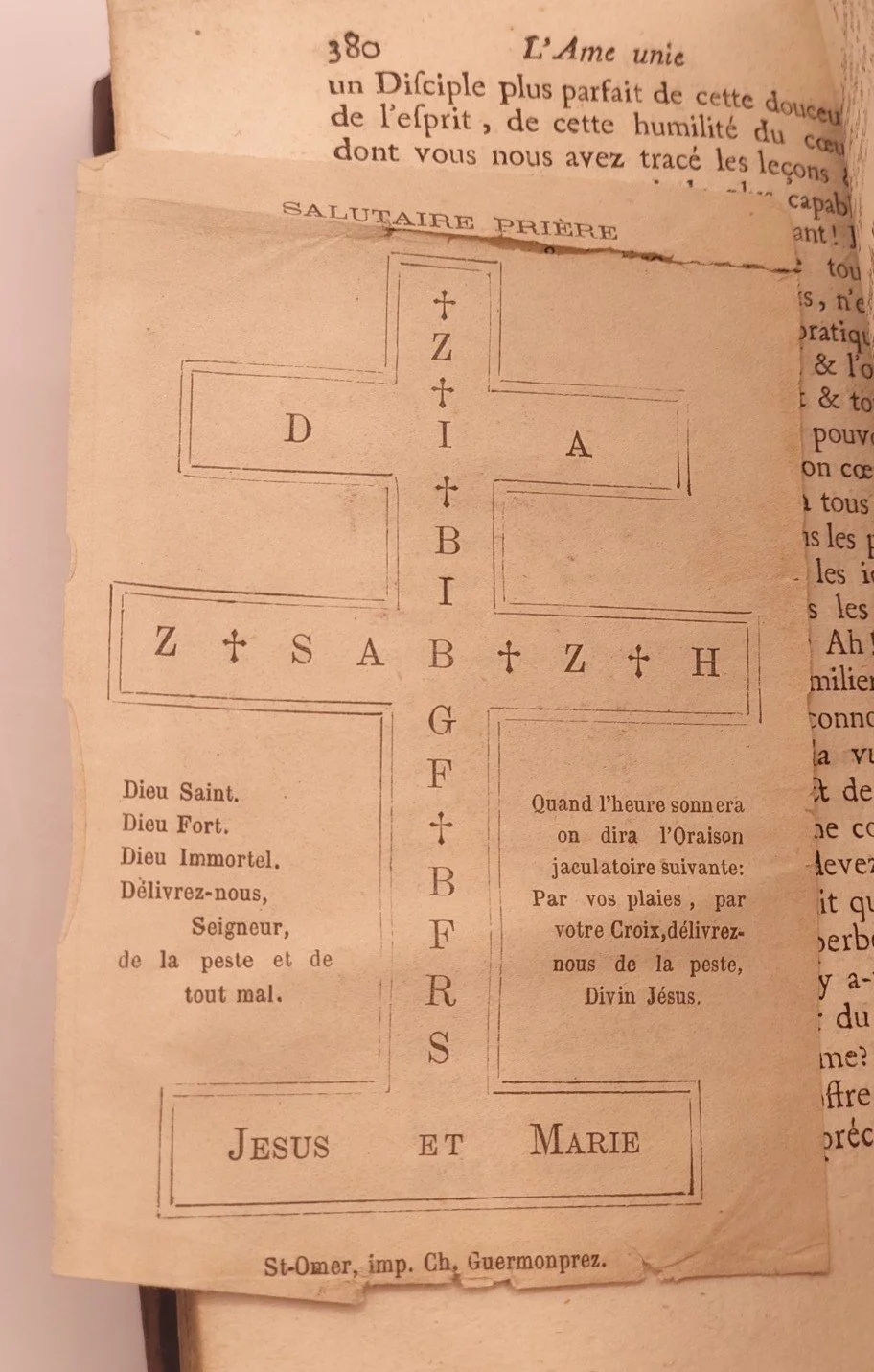 Image 6 of 18
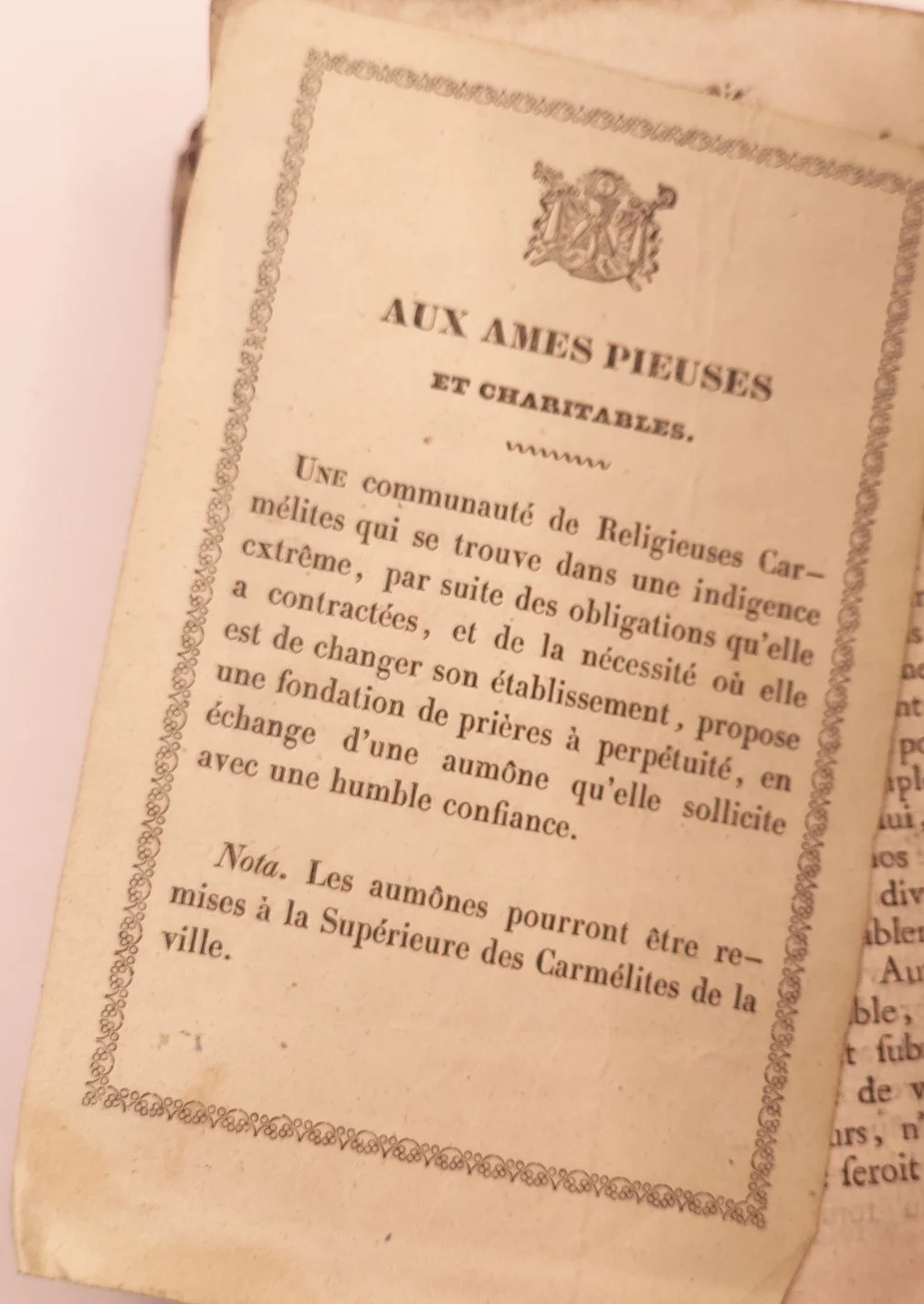 Image 7 of 18
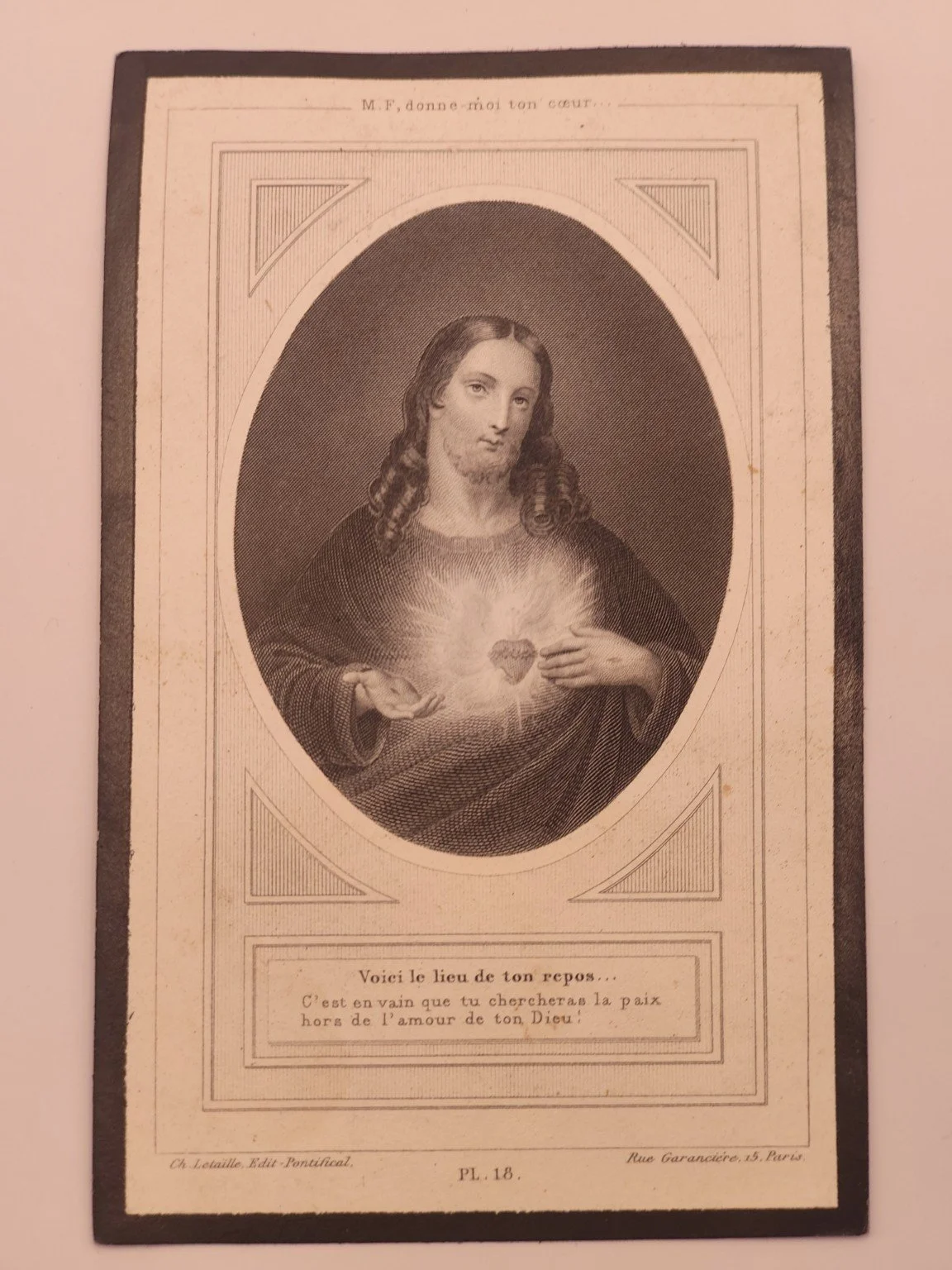 Image 8 of 18
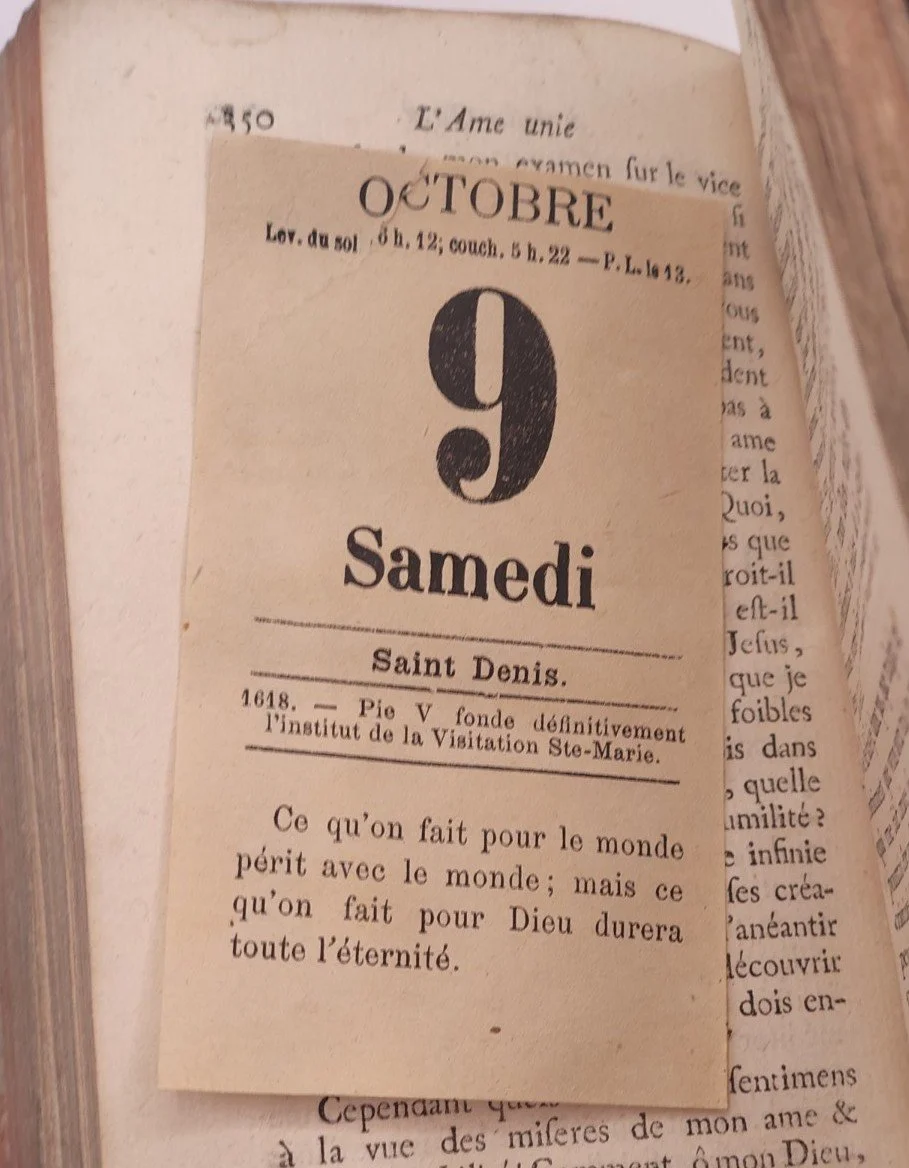 Image 9 of 18
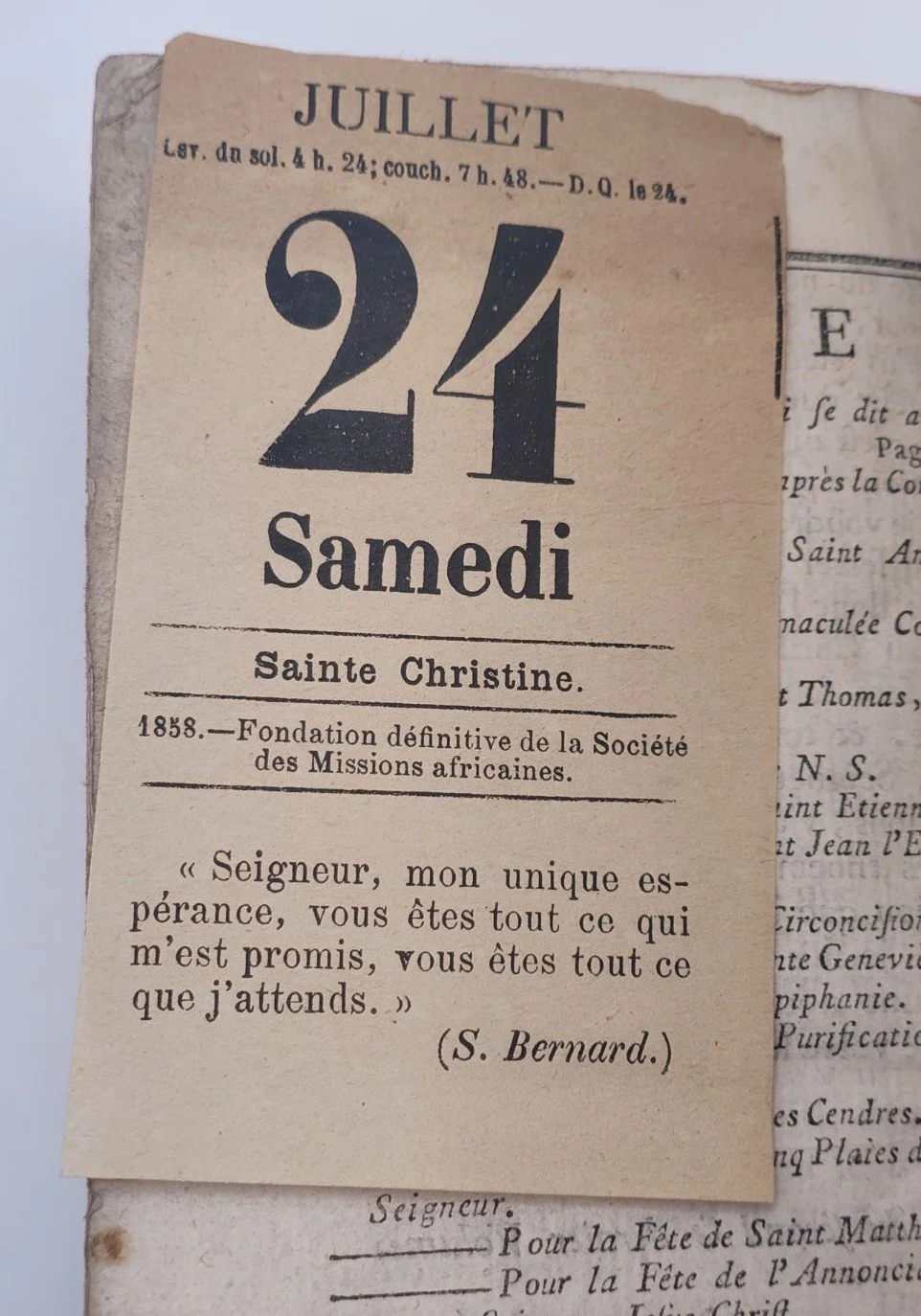 Image 10 of 18
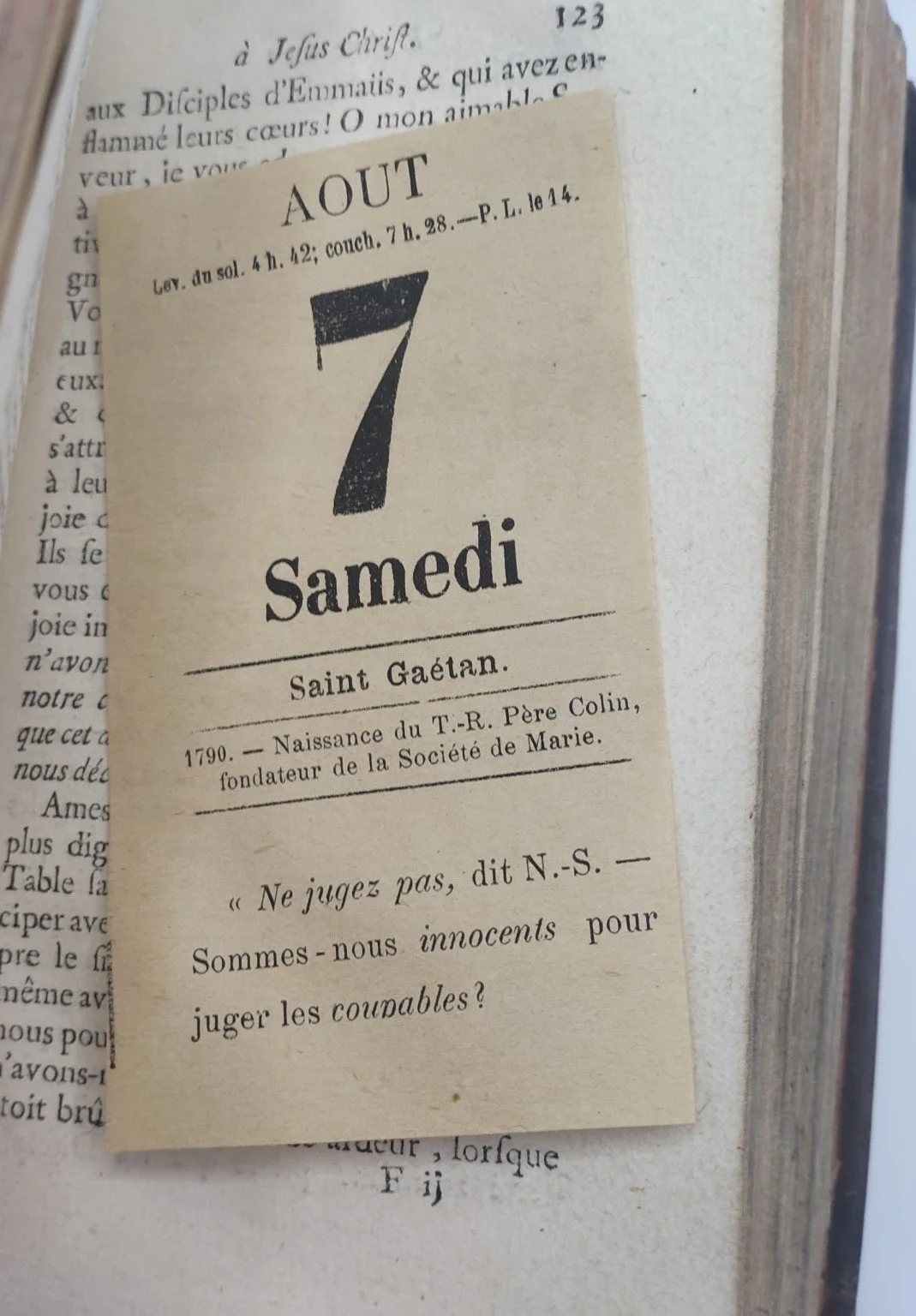 Image 11 of 18
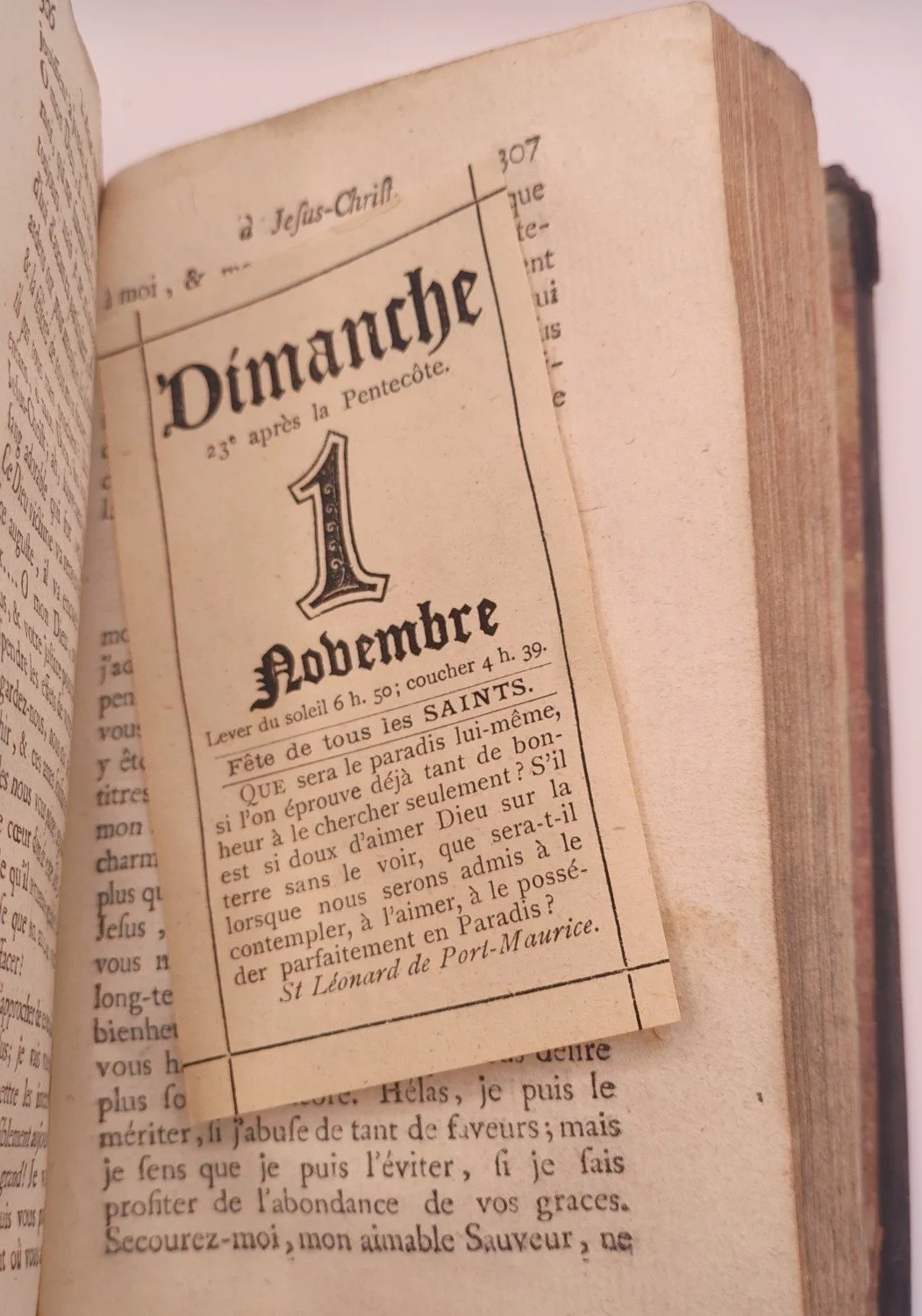 Image 12 of 18
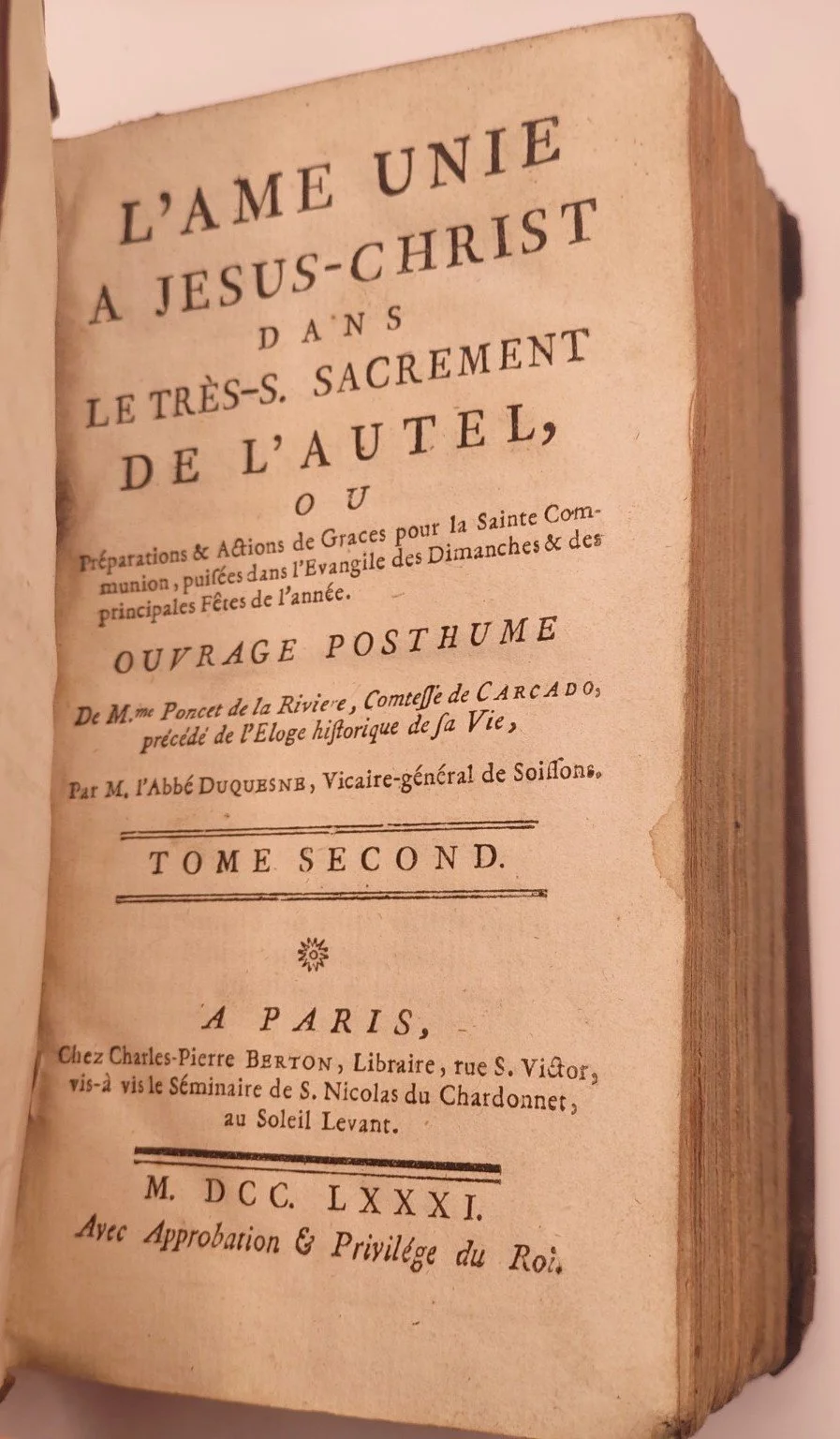 Image 13 of 18
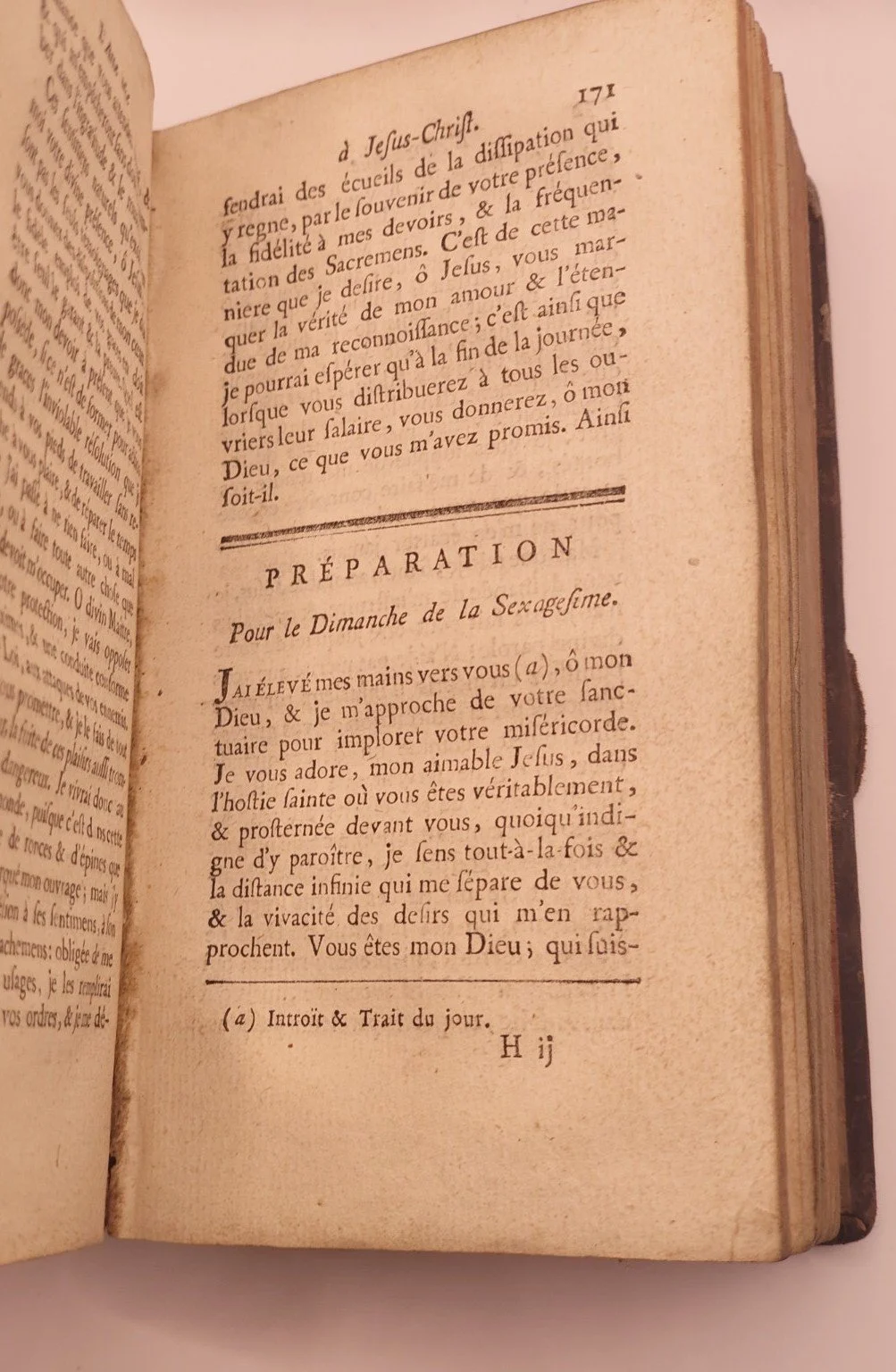 Image 14 of 18
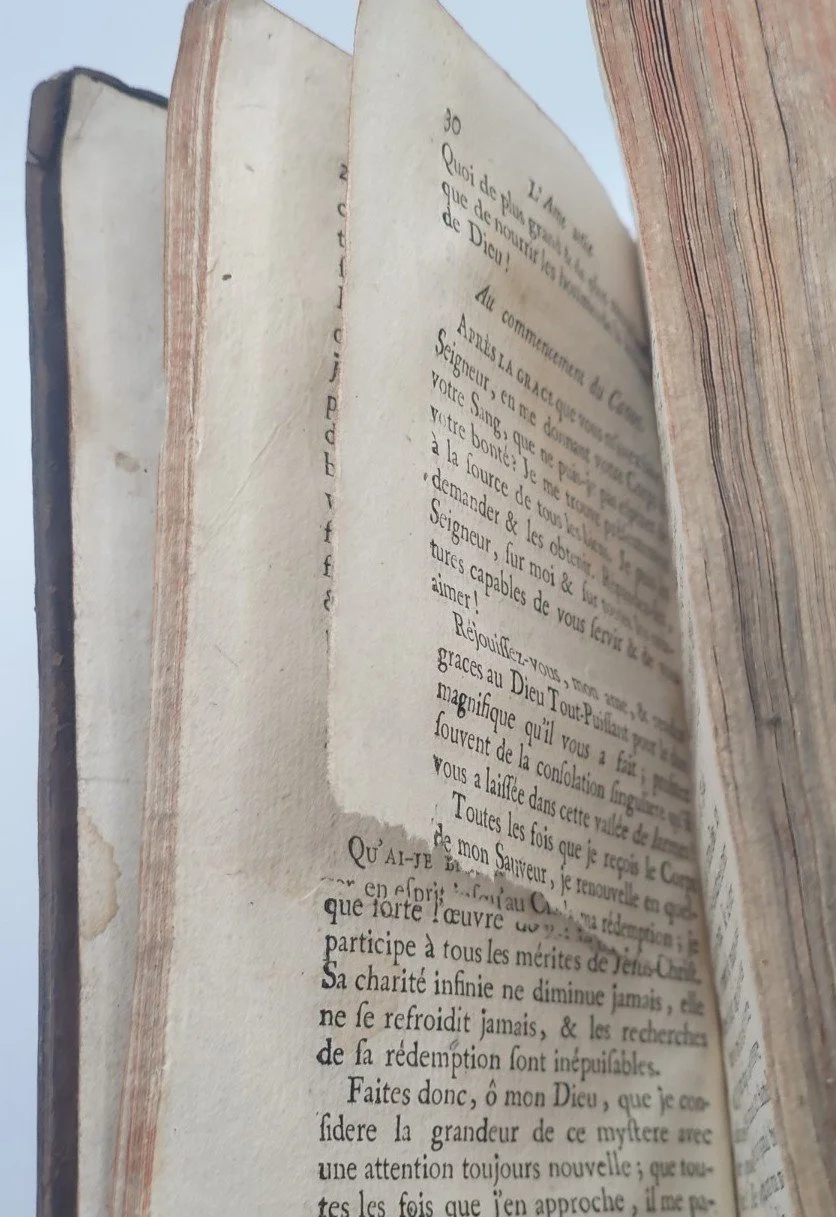 Image 15 of 18
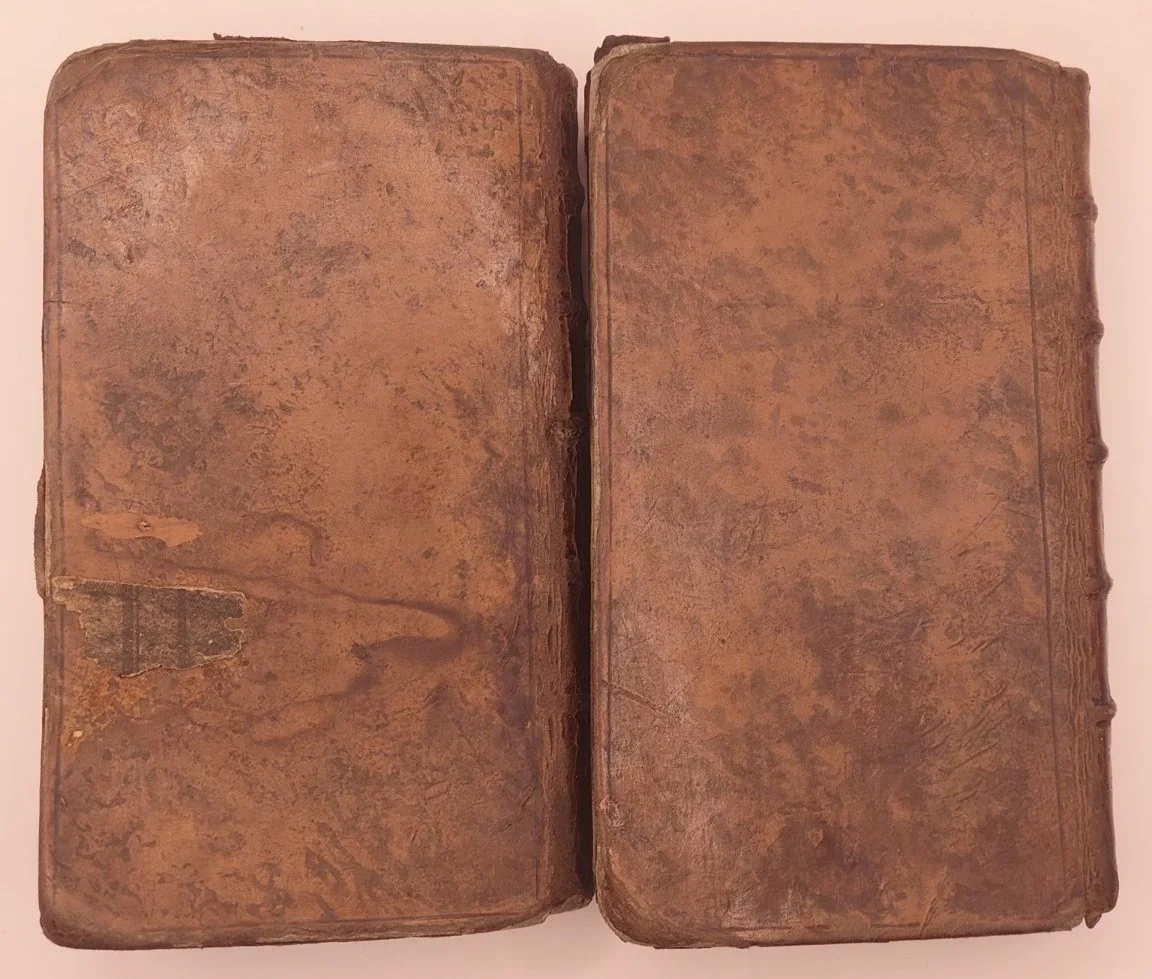 Image 16 of 18
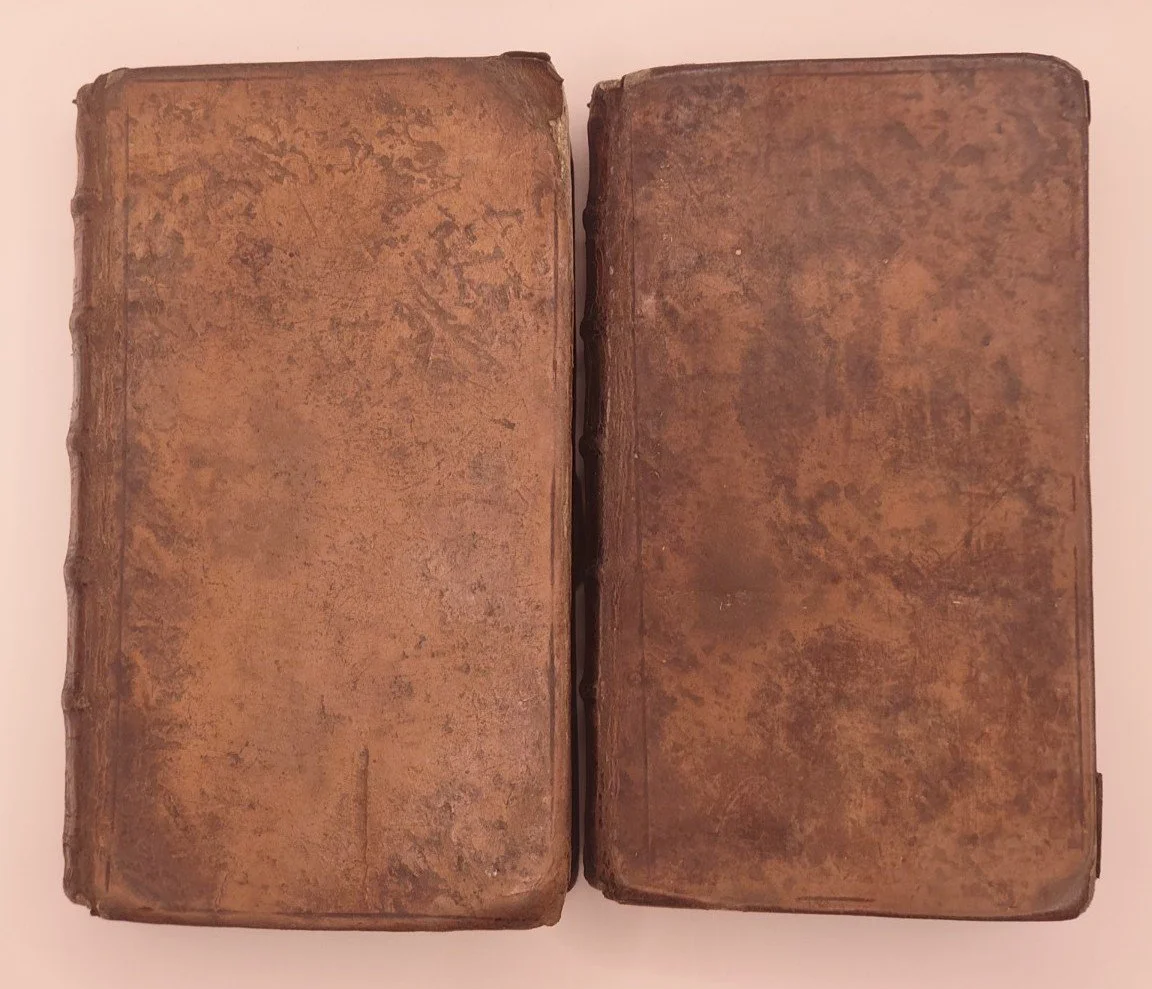 Image 17 of 18
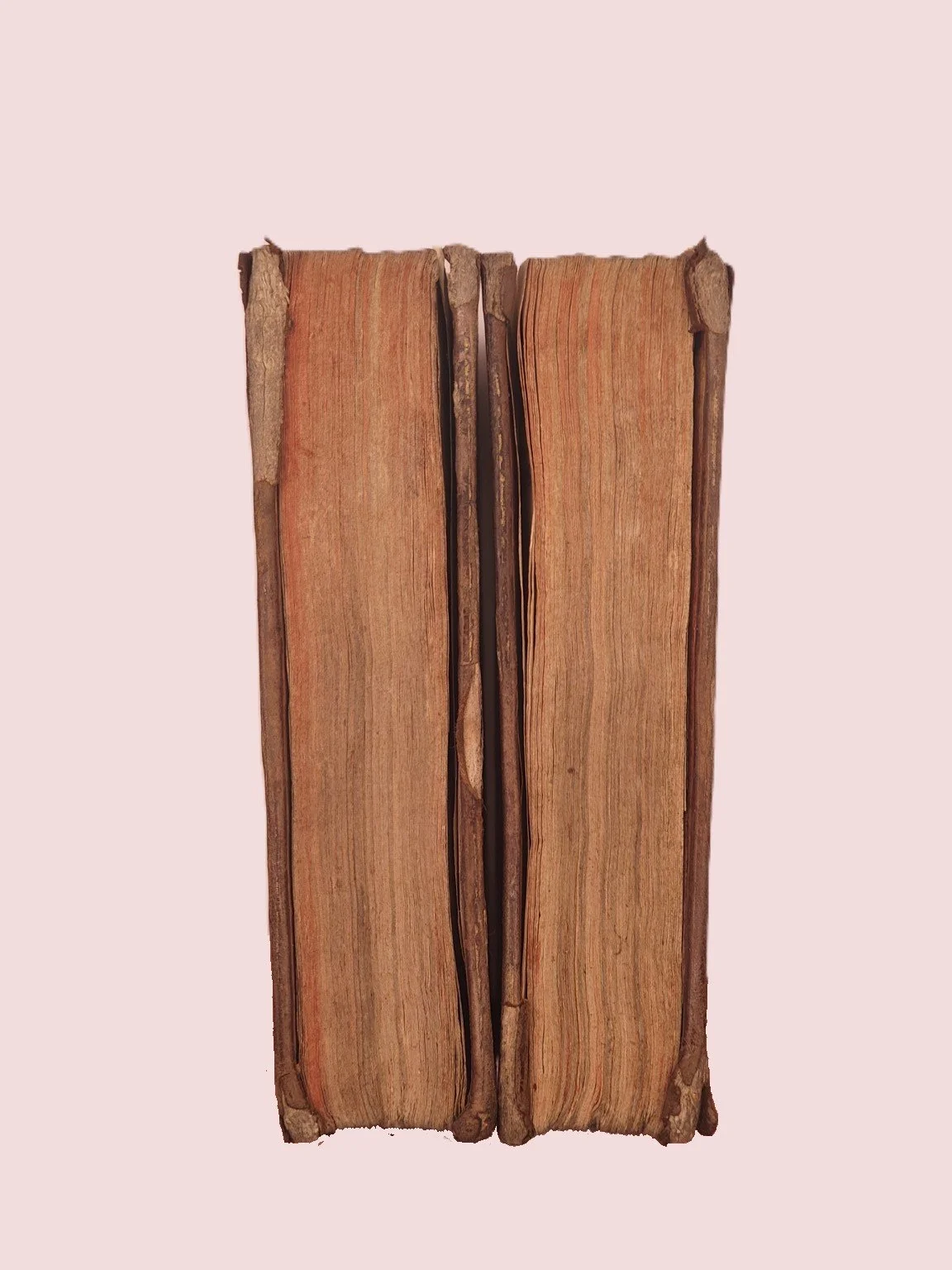 Image 18 of 18