This group of seven volumes forms part of Charles Rollin’s and Crevier’s Histoire Romaine, one of the most influential historical works of the eighteenth century. First published earlier in the century and reissued repeatedly, the work shaped how ancient Rome was read, taught, and morally interpreted throughout the Enlightenment.
Rollin conceived history as a didactic discipline. Rome was not merely recounted as a sequence of events, but presented as a moral and political laboratory, offering examples of civic virtue, ambition, corruption, and decline. For eighteenth-century readers, the Roman Republic served as both model and warning, particularly in an age marked by imperial expansion, absolutism, and growing political unease.
The present collection comprises volumes 3, 4, 5, 6, 12, 13, and 16, published in Paris by the Frères Estienne between 1765 and 1769. Although the set is incomplete, it offers a substantial and representative cross section of the series. Several volumes include engraved maps and folding plans, such as urban layouts and military schemes, reflecting the period’s desire to render antiquity legible through cartography and visual order.
The books are preserved in contemporary full calf bindings with gilt spines and marbled endpapers. The bindings show wear consistent with age and use, bearing the marks of long residence in working libraries rather than decorative collections. As objects, they retain a strong material presence, balancing scholarship with the physical realities of eighteenth-century book production and use.
Full title: Histoire Romaine depuis la fondation de Rome jusqu’à la bataille d’Actium
Author: Rollin, C.; Crevier, JBL.
Printing: Paris, Frères Estienne, 1765–1769. Nouvelle Edition.
Today, Histoire Romaine is read less as modern historiography and more as a document of its own time. It reveals how antiquity was mobilised to think about power, governance, empire, and historical inevitability. In fragmentary form, these volumes speak not only of Rome, but of the Enlightenment’s effort to discipline the past in order to understand the present.
This group of seven volumes forms part of Charles Rollin’s and Crevier’s Histoire Romaine, one of the most influential historical works of the eighteenth century. First published earlier in the century and reissued repeatedly, the work shaped how ancient Rome was read, taught, and morally interpreted throughout the Enlightenment.
Rollin conceived history as a didactic discipline. Rome was not merely recounted as a sequence of events, but presented as a moral and political laboratory, offering examples of civic virtue, ambition, corruption, and decline. For eighteenth-century readers, the Roman Republic served as both model and warning, particularly in an age marked by imperial expansion, absolutism, and growing political unease.
The present collection comprises volumes 3, 4, 5, 6, 12, 13, and 16, published in Paris by the Frères Estienne between 1765 and 1769. Although the set is incomplete, it offers a substantial and representative cross section of the series. Several volumes include engraved maps and folding plans, such as urban layouts and military schemes, reflecting the period’s desire to render antiquity legible through cartography and visual order.
The books are preserved in contemporary full calf bindings with gilt spines and marbled endpapers. The bindings show wear consistent with age and use, bearing the marks of long residence in working libraries rather than decorative collections. As objects, they retain a strong material presence, balancing scholarship with the physical realities of eighteenth-century book production and use.
Full title: Histoire Romaine depuis la fondation de Rome jusqu’à la bataille d’Actium
Author: Rollin, C.; Crevier, JBL.
Printing: Paris, Frères Estienne, 1765–1769. Nouvelle Edition.
Today, Histoire Romaine is read less as modern historiography and more as a document of its own time. It reveals how antiquity was mobilised to think about power, governance, empire, and historical inevitability. In fragmentary form, these volumes speak not only of Rome, but of the Enlightenment’s effort to discipline the past in order to understand the present.


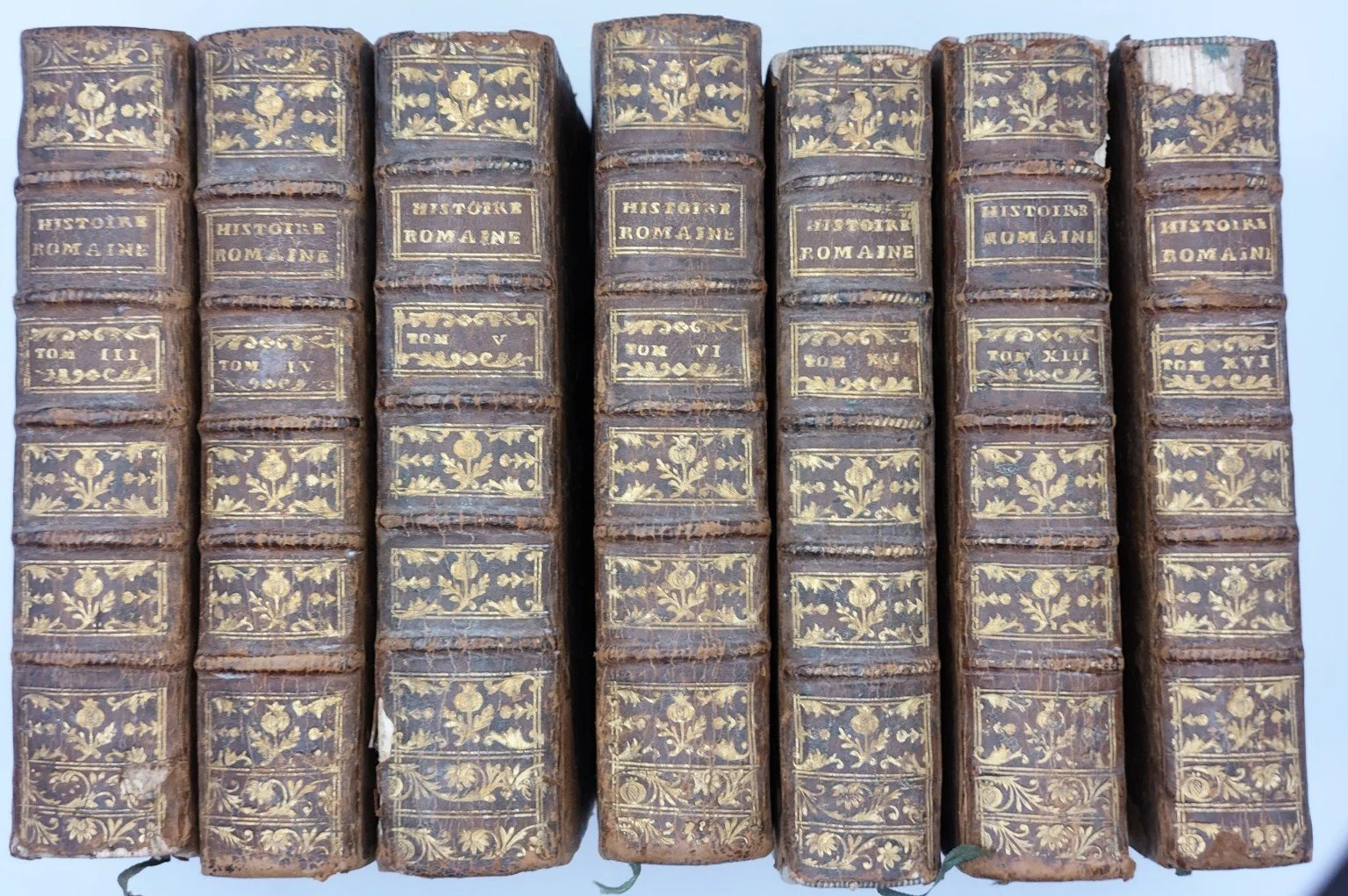 Image 1 of 10
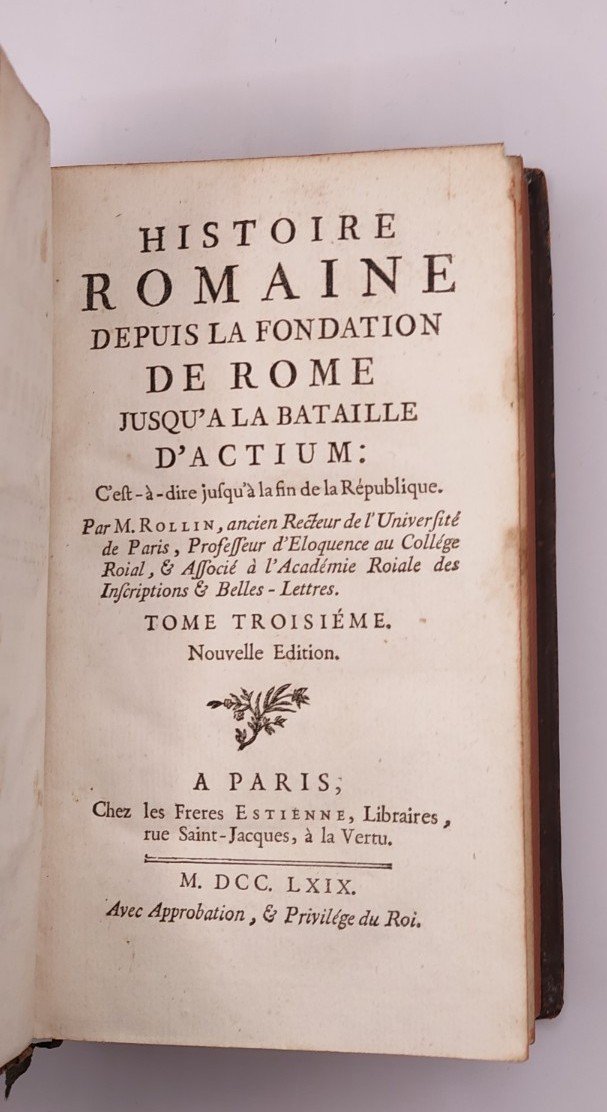 Image 2 of 10
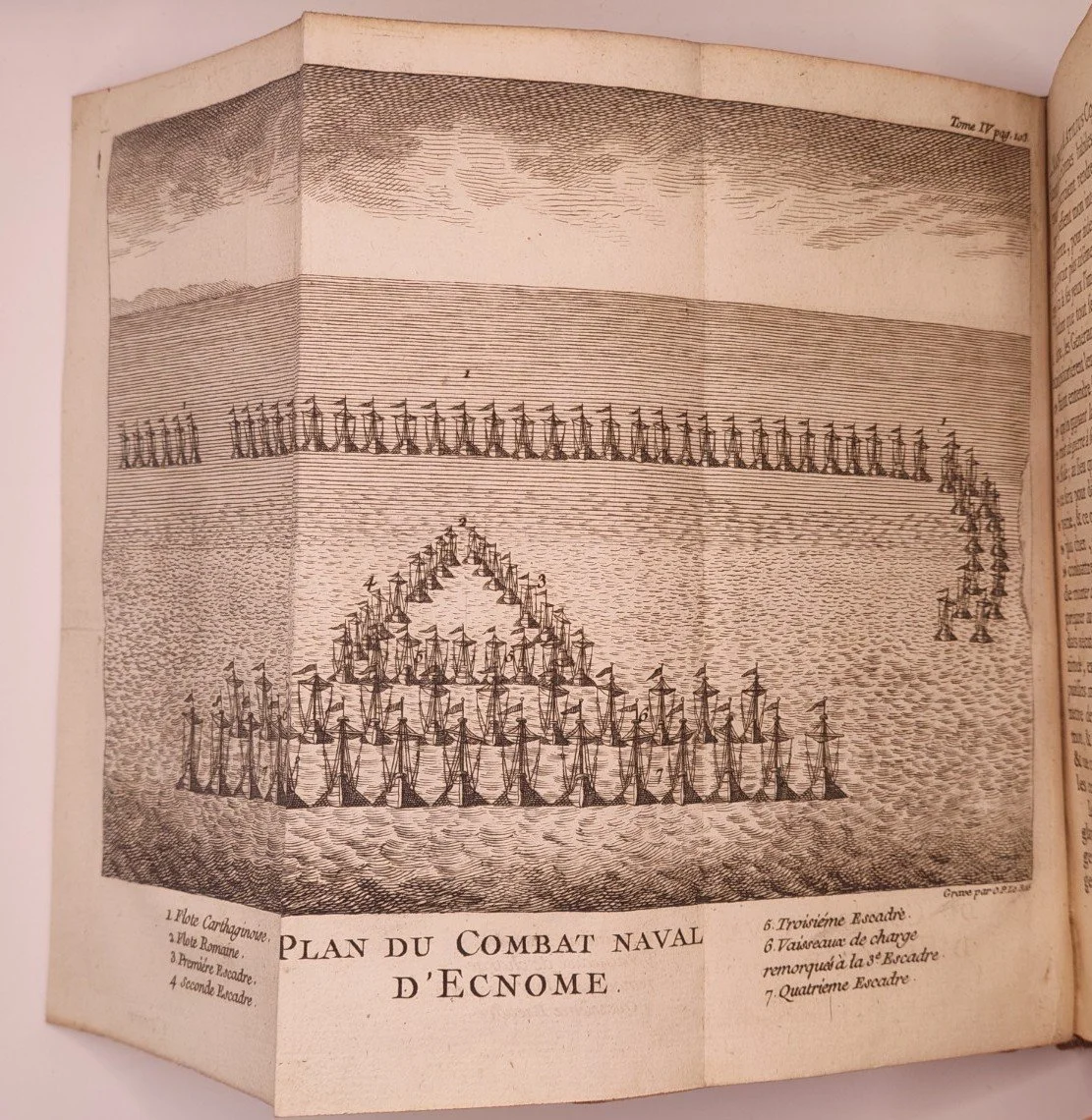 Image 3 of 10
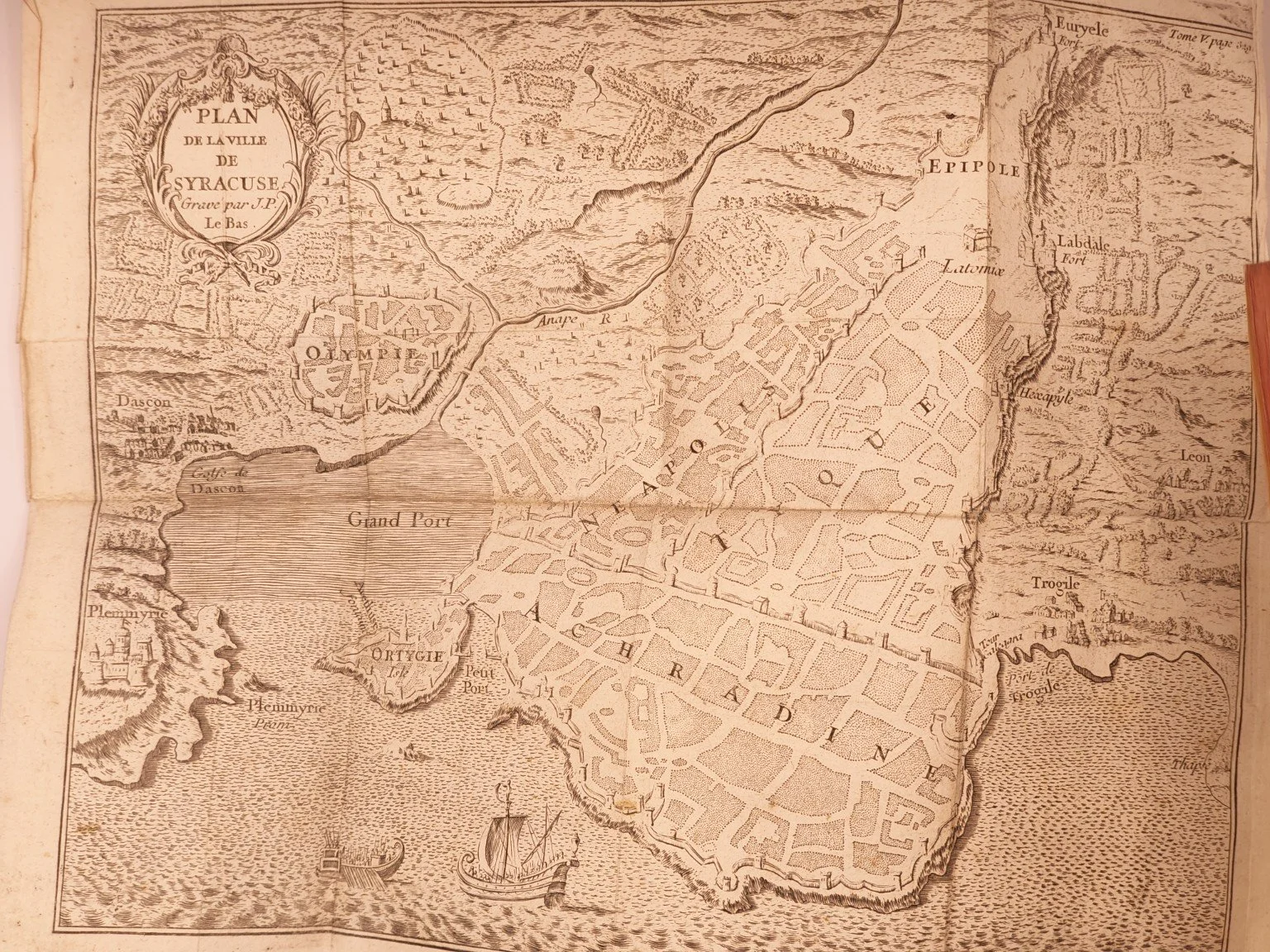 Image 4 of 10
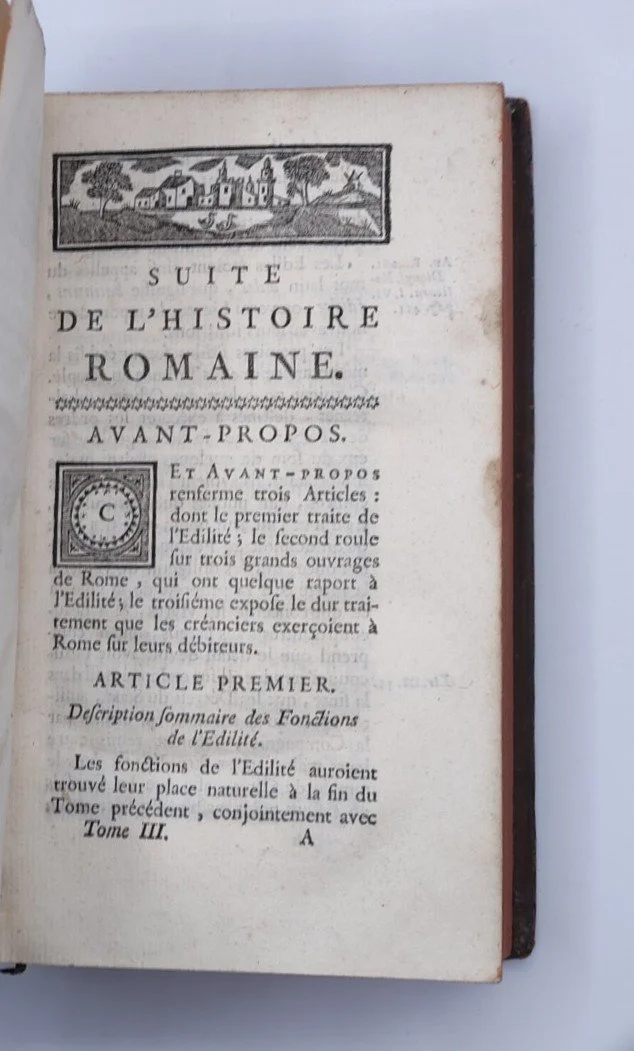 Image 5 of 10
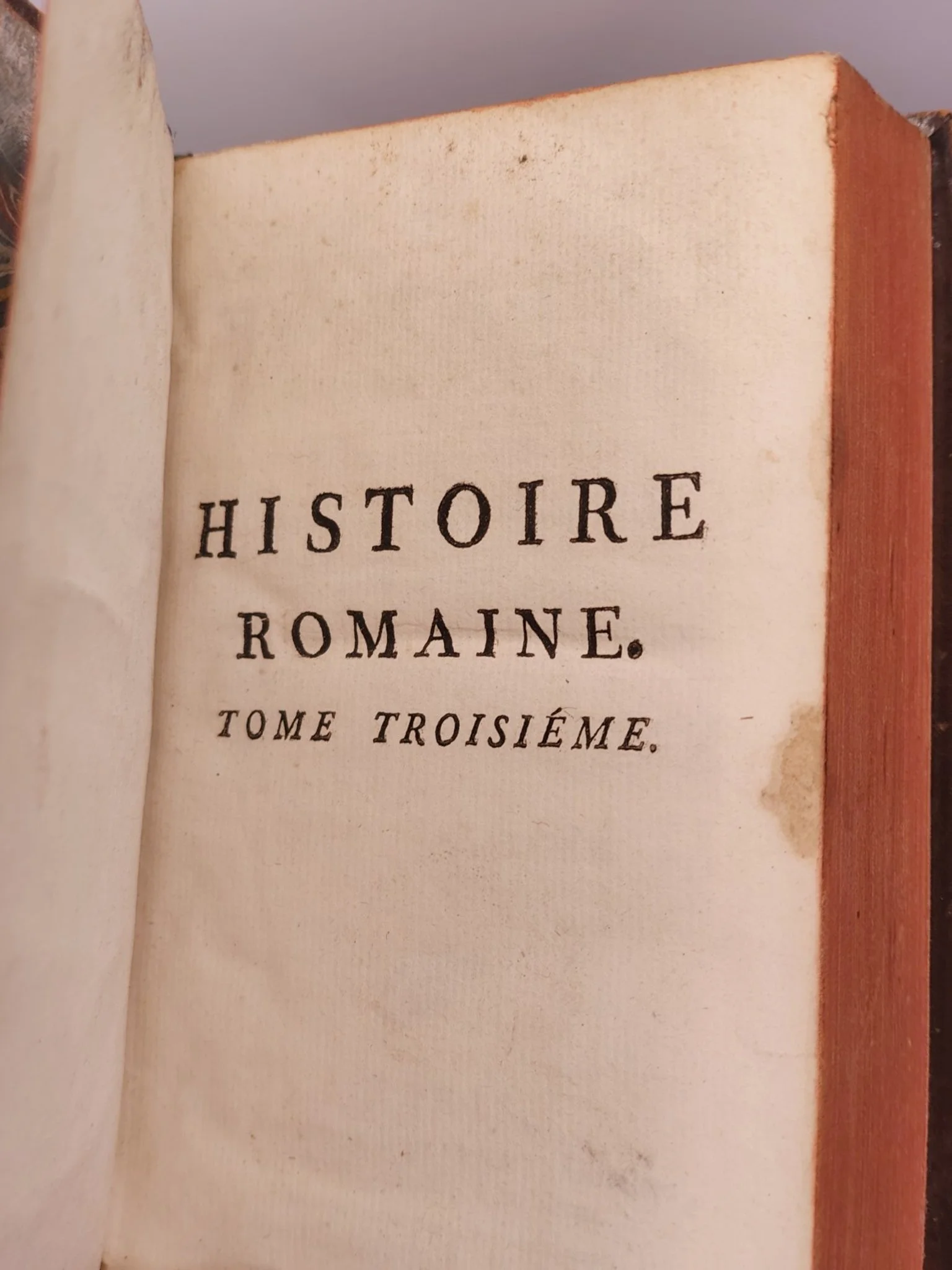 Image 6 of 10
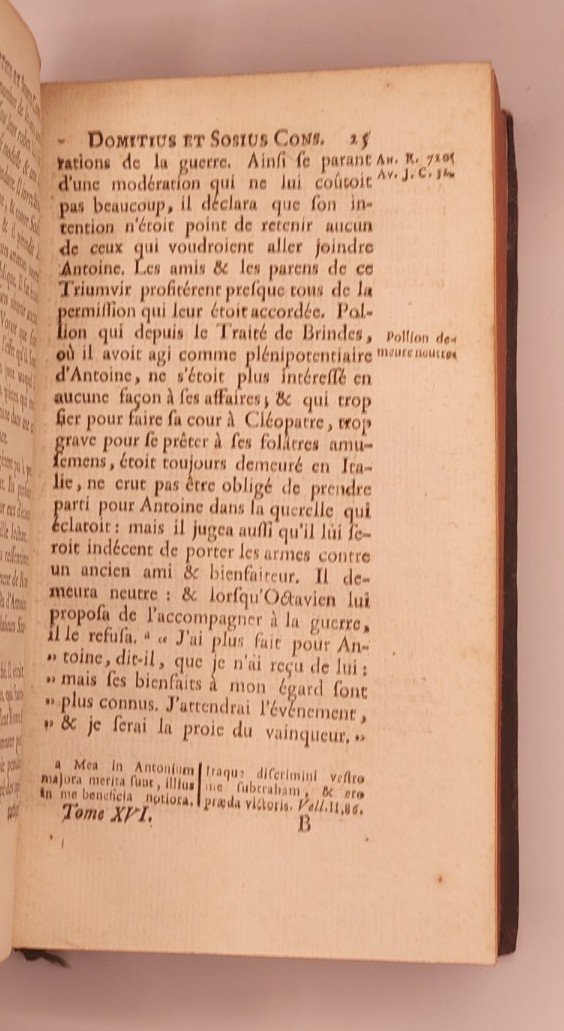 Image 7 of 10
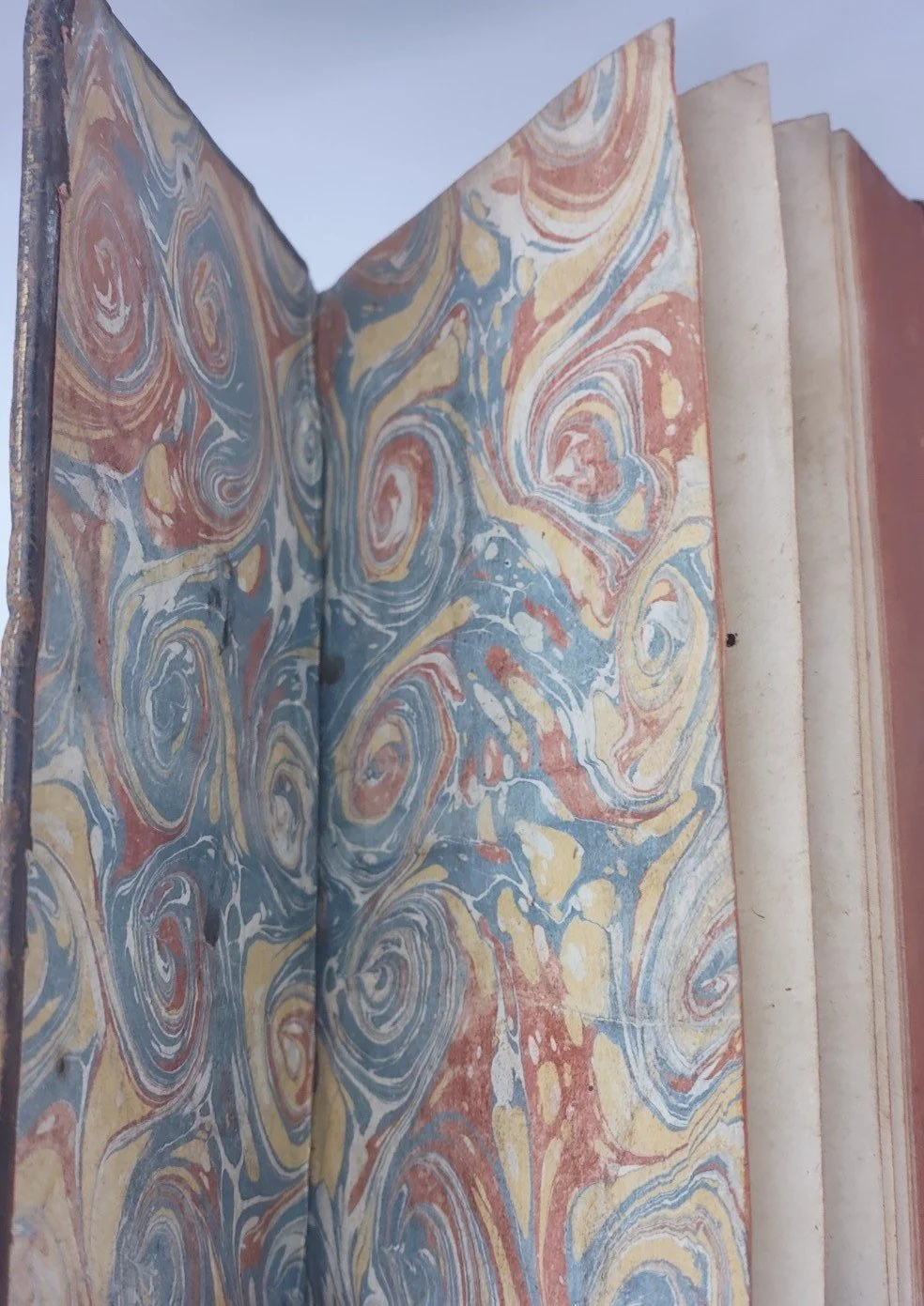 Image 8 of 10
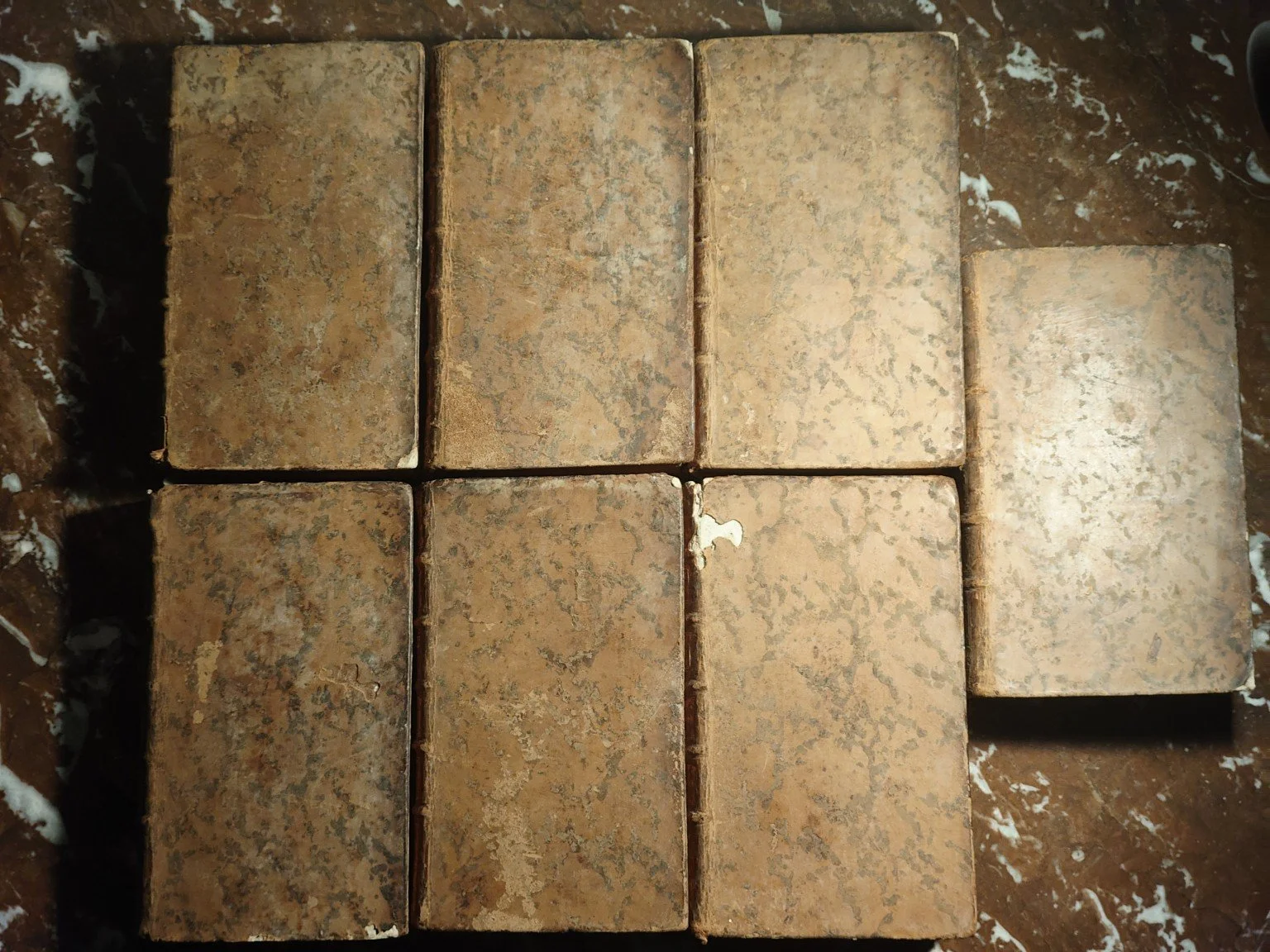 Image 9 of 10
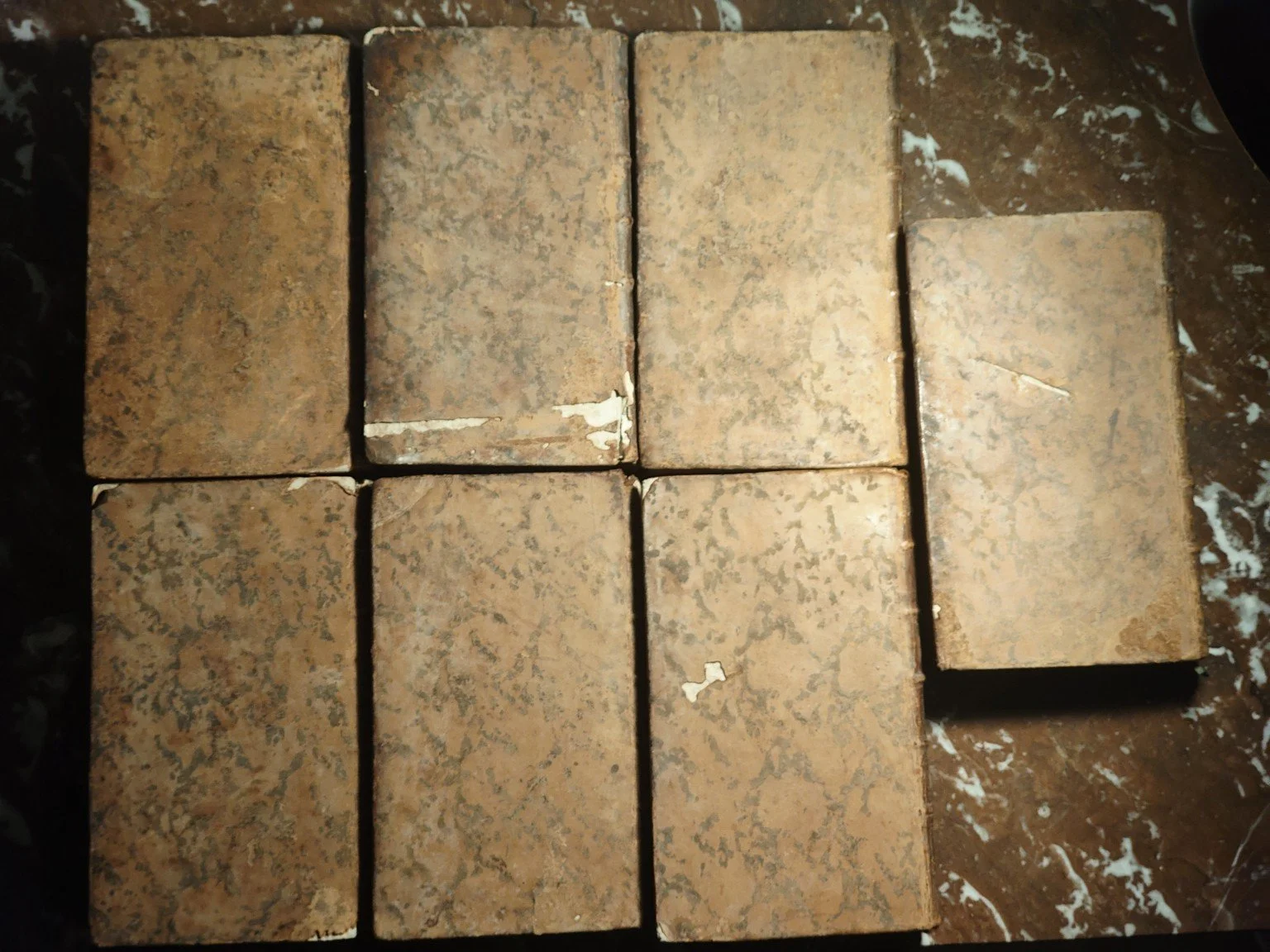 Image 10 of 10