Introduction
This illuminated manuscript leaf is a late medieval survival from a Latin Book of Hours or private devotional manuscript, written on vellum and decorated with burnished gold initials. Produced most likely in France or the Southern Netherlands in the second half of the fifteenth century, it belongs to the intimate world of private prayer that shaped much of late medieval devotional life.
The text includes part of the Passion hymn Patris sapientia, veritas divina, a meditation on the suffering of Christ arranged around the hours of the day. The reverse contains a prayer to Christ, invoking his Passion, Cross and Death as intercession between the soul and divine judgement. Together, the two sides preserve a deeply personal form of late medieval piety, centred on the Passion as both meditation and spiritual protection.
Physical description
Single manuscript leaf on vellum.
Approximate size of leaf: 18 × 14 cm.
Approximate mounted size: 24 × 18 cm.
Written on both sides in Latin.
Gothic textura script in dark ink.
Rubrication in red.
Several illuminated initials in blue, red, brown and burnished gold.
The largest initial is accompanied by decorative penwork extending into the margin.
Text includes part of Patris sapientia, veritas divina and a prayer beginning Domine Ihesu Christe fili Dei vivi.
Mounted in a later mat, with the upper edge of the vellum leaf adhered to the mount.
Condition includes staining, cockling, edge darkening, rubbing to pigments and gold, and a visible horizontal mounting or repair strip at the left margin.
Text remains legible on both sides, with the illumination still attractive and decorative.
Context
Books of Hours were among the most widely used devotional manuscripts of the late Middle Ages. Unlike large liturgical books made for church choirs or monastic use, Books of Hours were intended for private devotion. They allowed lay readers to structure prayer around the rhythm of the day, combining liturgical texts, psalms, prayers to the Virgin, offices for the dead, suffrages to saints and meditations on the Passion of Christ.
This leaf appears to come from a Passion section within such a book, or from a closely related private prayer manuscript. The hymn Patris sapientia was a popular late medieval meditation on Christ’s Passion. It follows the events of the Passion through the canonical hours, transforming the structure of the day into a sequence of remembrance, contrition and devotion.
The accompanying prayer to Christ asks that his Passion, Cross and Death stand between the soul and divine judgement. This language is characteristic of late medieval devotional practice, in which the suffering of Christ was contemplated not only as a historical event, but as a present source of mercy, protection and salvation.
Significance
This leaf is significant as a tangible remnant of the devotional culture of the fifteenth century. Its text and decoration reflect the intimate relationship between manuscript, prayer and daily religious life. The use of vellum, Gothic script, red rubrication and gold initials places it within the visual language of late medieval piety, where even relatively small books could be richly adorned.
Although it is not a grand miniature leaf, its importance lies in its direct connection to private devotion. The prayers preserved here were meant to be read, recited and contemplated by an individual reader. The leaf therefore offers a close view of how late medieval Christians engaged with the Passion of Christ through text, image, rhythm and material beauty.
The combination of identifiable Passion texts, decorative gold initials and a compact Book of Hours format makes this a meaningful example of manuscript culture at the threshold between the medieval and early modern worlds.
Introduction
This illuminated manuscript leaf is a late medieval survival from a Latin Book of Hours or private devotional manuscript, written on vellum and decorated with burnished gold initials. Produced most likely in France or the Southern Netherlands in the second half of the fifteenth century, it belongs to the intimate world of private prayer that shaped much of late medieval devotional life.
The text includes part of the Passion hymn Patris sapientia, veritas divina, a meditation on the suffering of Christ arranged around the hours of the day. The reverse contains a prayer to Christ, invoking his Passion, Cross and Death as intercession between the soul and divine judgement. Together, the two sides preserve a deeply personal form of late medieval piety, centred on the Passion as both meditation and spiritual protection.
Physical description
Single manuscript leaf on vellum.
Approximate size of leaf: 18 × 14 cm.
Approximate mounted size: 24 × 18 cm.
Written on both sides in Latin.
Gothic textura script in dark ink.
Rubrication in red.
Several illuminated initials in blue, red, brown and burnished gold.
The largest initial is accompanied by decorative penwork extending into the margin.
Text includes part of Patris sapientia, veritas divina and a prayer beginning Domine Ihesu Christe fili Dei vivi.
Mounted in a later mat, with the upper edge of the vellum leaf adhered to the mount.
Condition includes staining, cockling, edge darkening, rubbing to pigments and gold, and a visible horizontal mounting or repair strip at the left margin.
Text remains legible on both sides, with the illumination still attractive and decorative.
Context
Books of Hours were among the most widely used devotional manuscripts of the late Middle Ages. Unlike large liturgical books made for church choirs or monastic use, Books of Hours were intended for private devotion. They allowed lay readers to structure prayer around the rhythm of the day, combining liturgical texts, psalms, prayers to the Virgin, offices for the dead, suffrages to saints and meditations on the Passion of Christ.
This leaf appears to come from a Passion section within such a book, or from a closely related private prayer manuscript. The hymn Patris sapientia was a popular late medieval meditation on Christ’s Passion. It follows the events of the Passion through the canonical hours, transforming the structure of the day into a sequence of remembrance, contrition and devotion.
The accompanying prayer to Christ asks that his Passion, Cross and Death stand between the soul and divine judgement. This language is characteristic of late medieval devotional practice, in which the suffering of Christ was contemplated not only as a historical event, but as a present source of mercy, protection and salvation.
Significance
This leaf is significant as a tangible remnant of the devotional culture of the fifteenth century. Its text and decoration reflect the intimate relationship between manuscript, prayer and daily religious life. The use of vellum, Gothic script, red rubrication and gold initials places it within the visual language of late medieval piety, where even relatively small books could be richly adorned.
Although it is not a grand miniature leaf, its importance lies in its direct connection to private devotion. The prayers preserved here were meant to be read, recited and contemplated by an individual reader. The leaf therefore offers a close view of how late medieval Christians engaged with the Passion of Christ through text, image, rhythm and material beauty.
The combination of identifiable Passion texts, decorative gold initials and a compact Book of Hours format makes this a meaningful example of manuscript culture at the threshold between the medieval and early modern worlds.


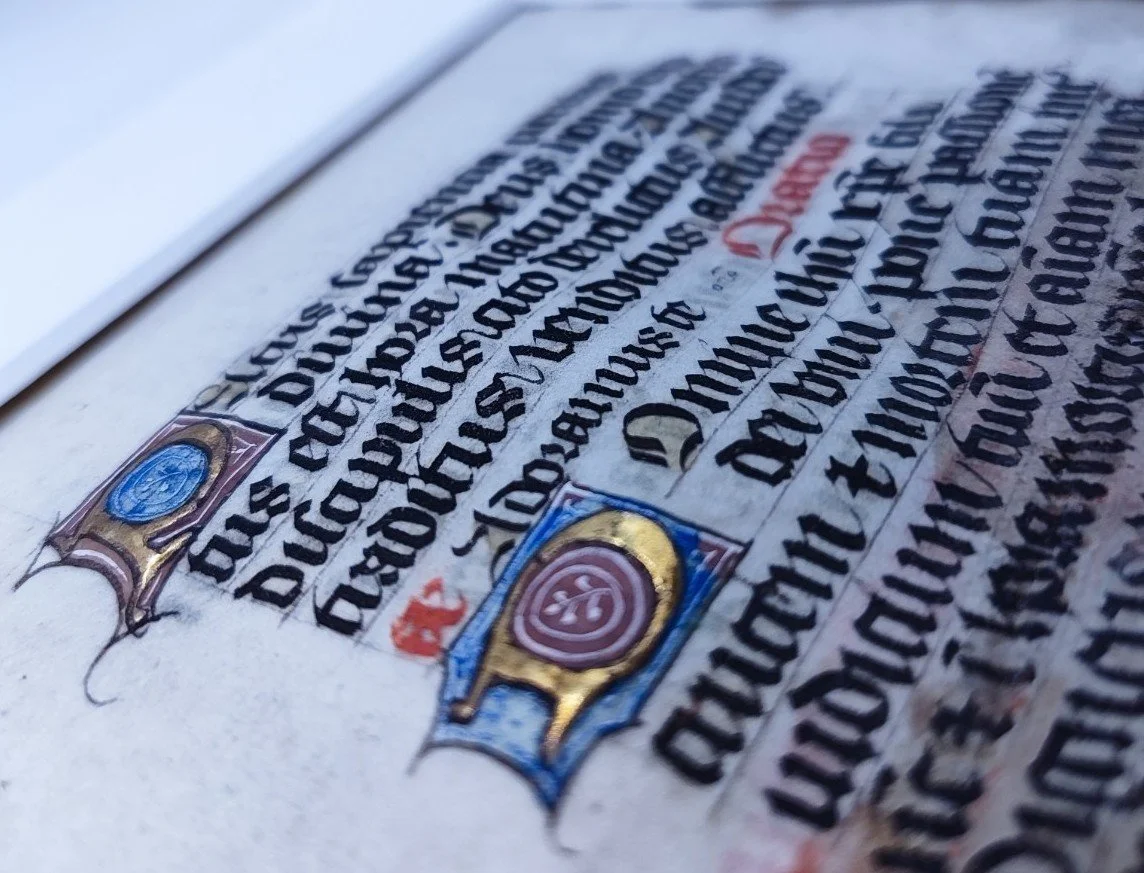 Image 1 of 9
 Image 2 of 9
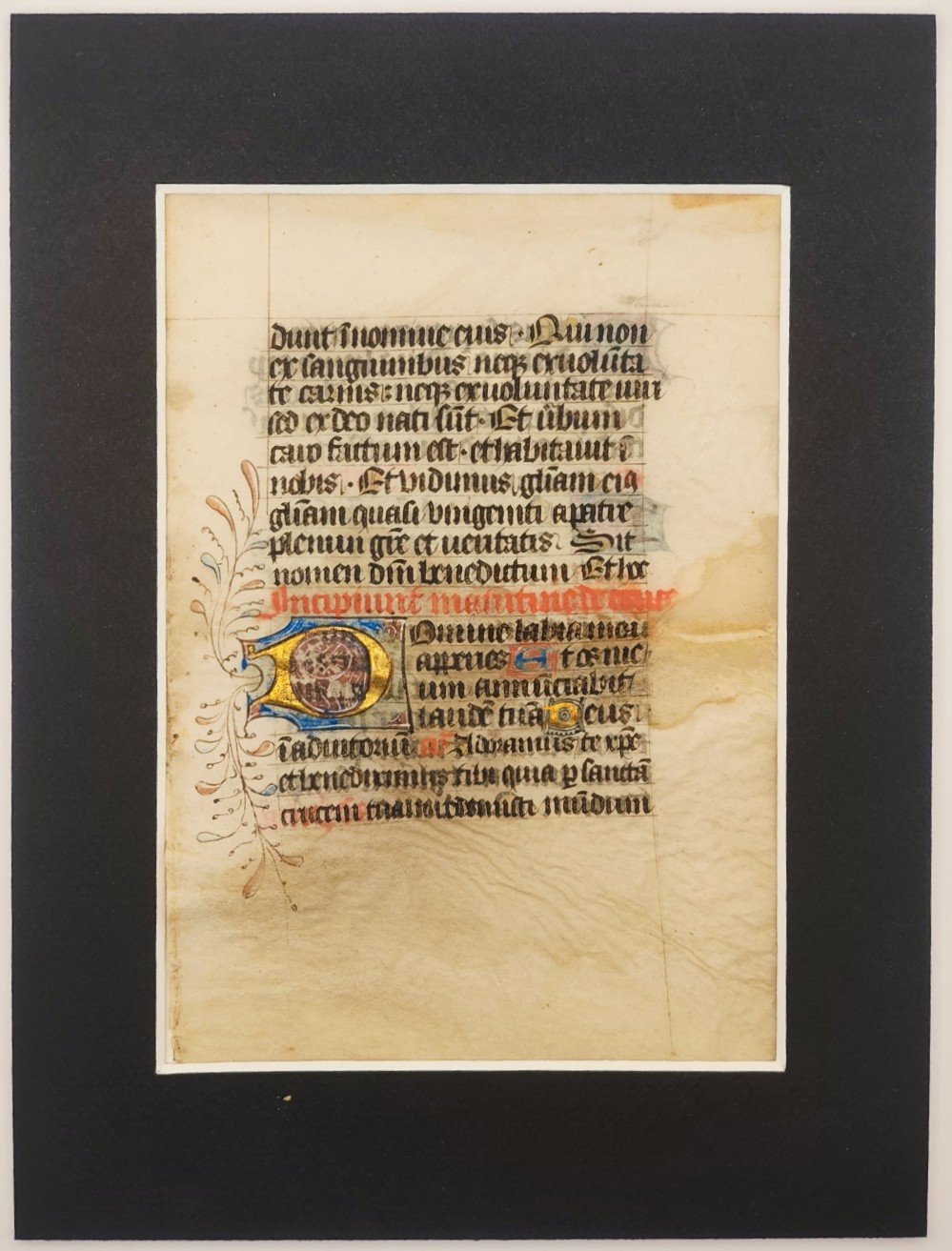 Image 3 of 9
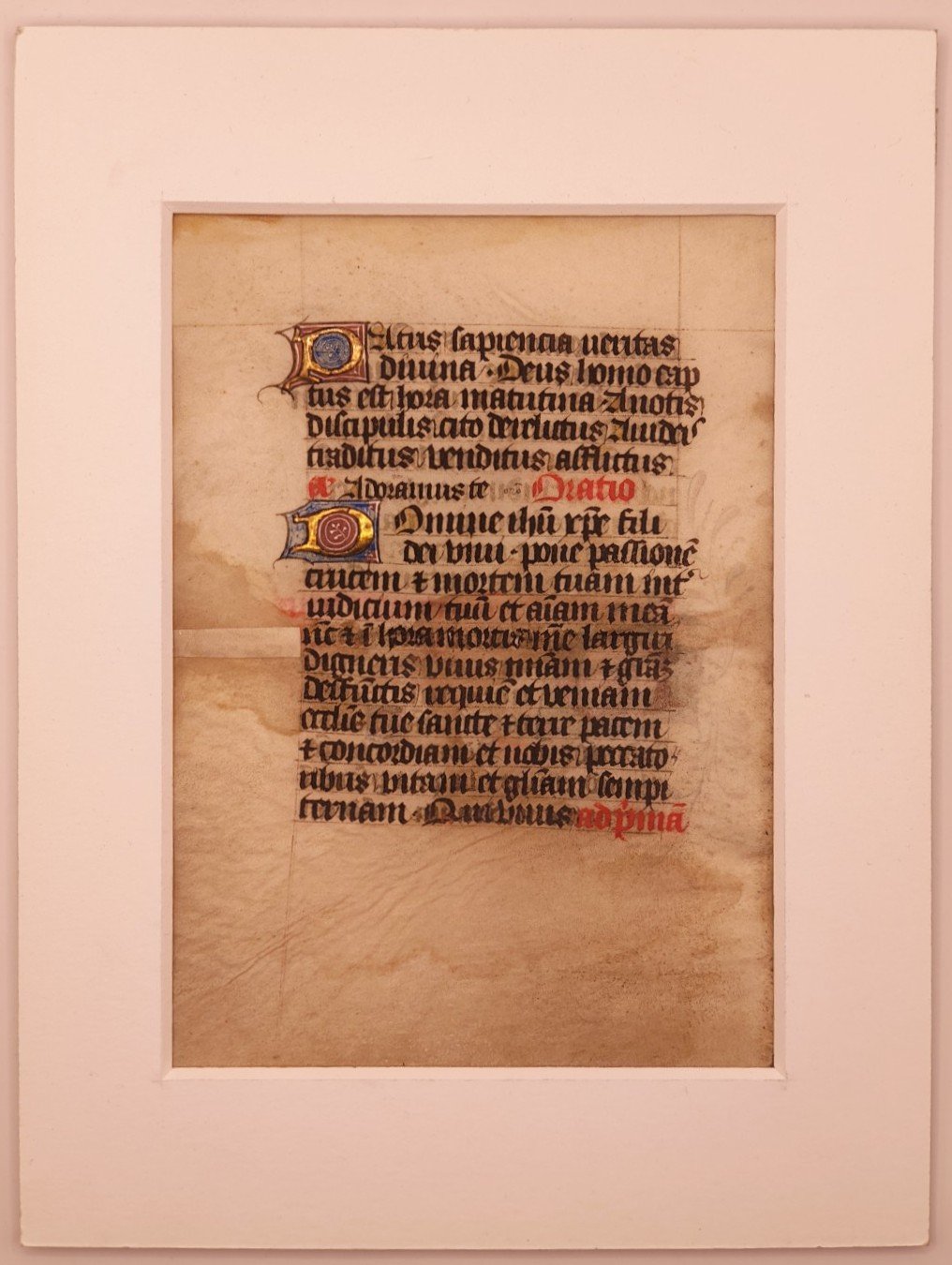 Image 4 of 9
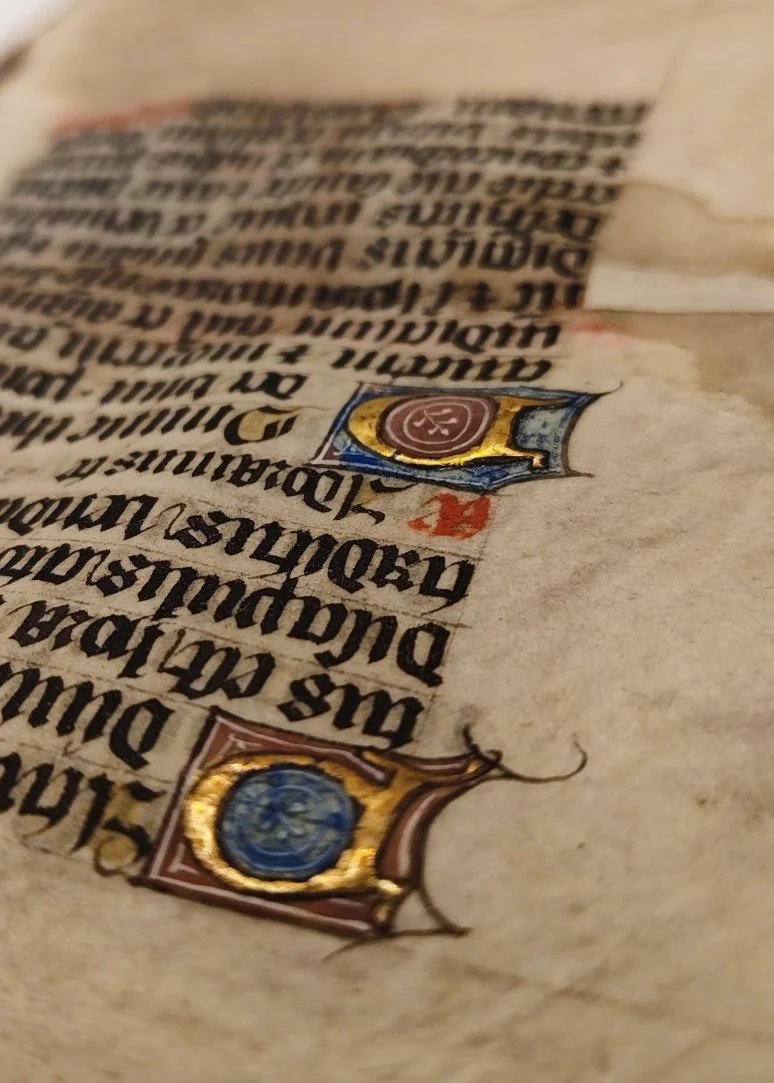 Image 5 of 9
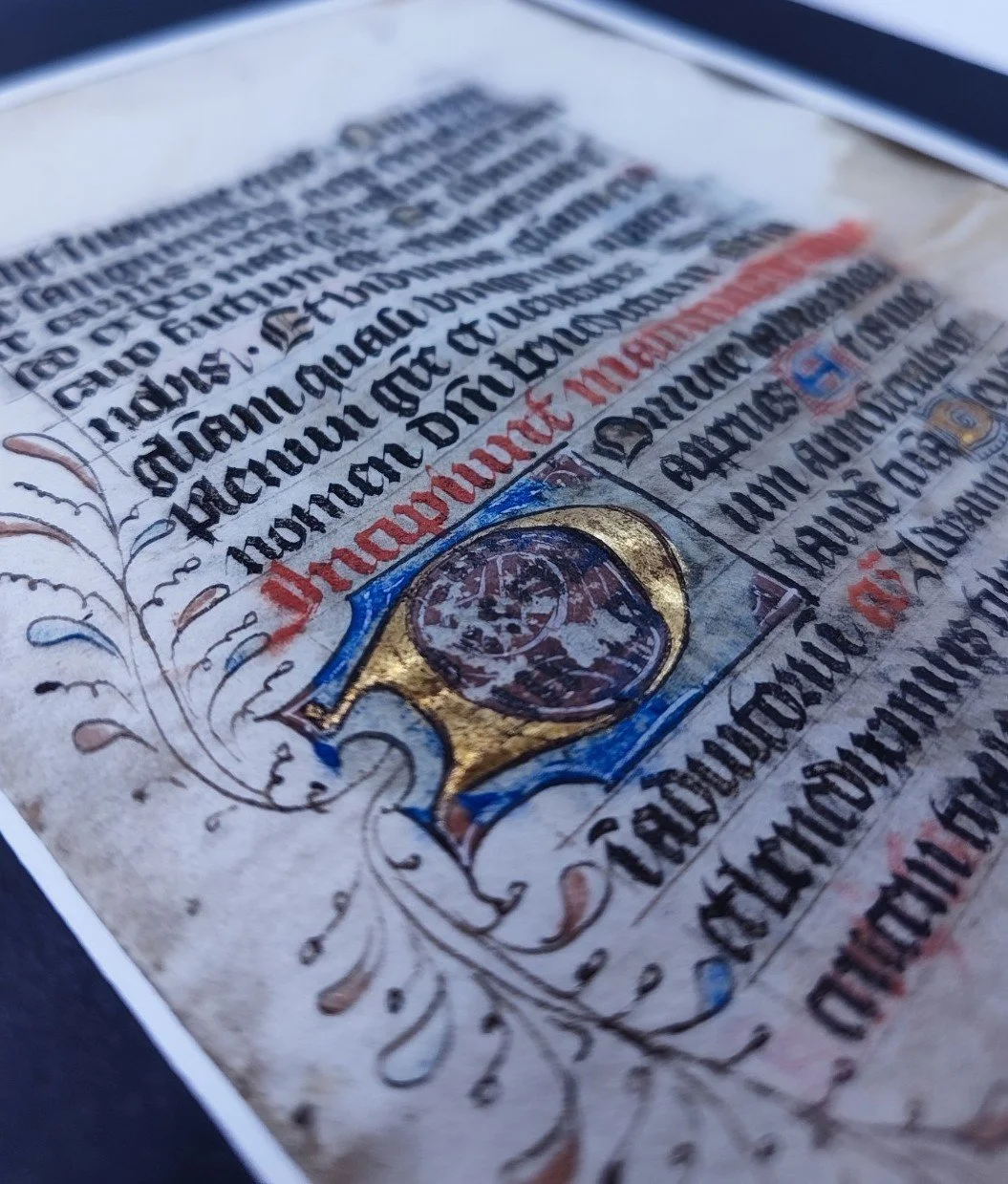 Image 6 of 9
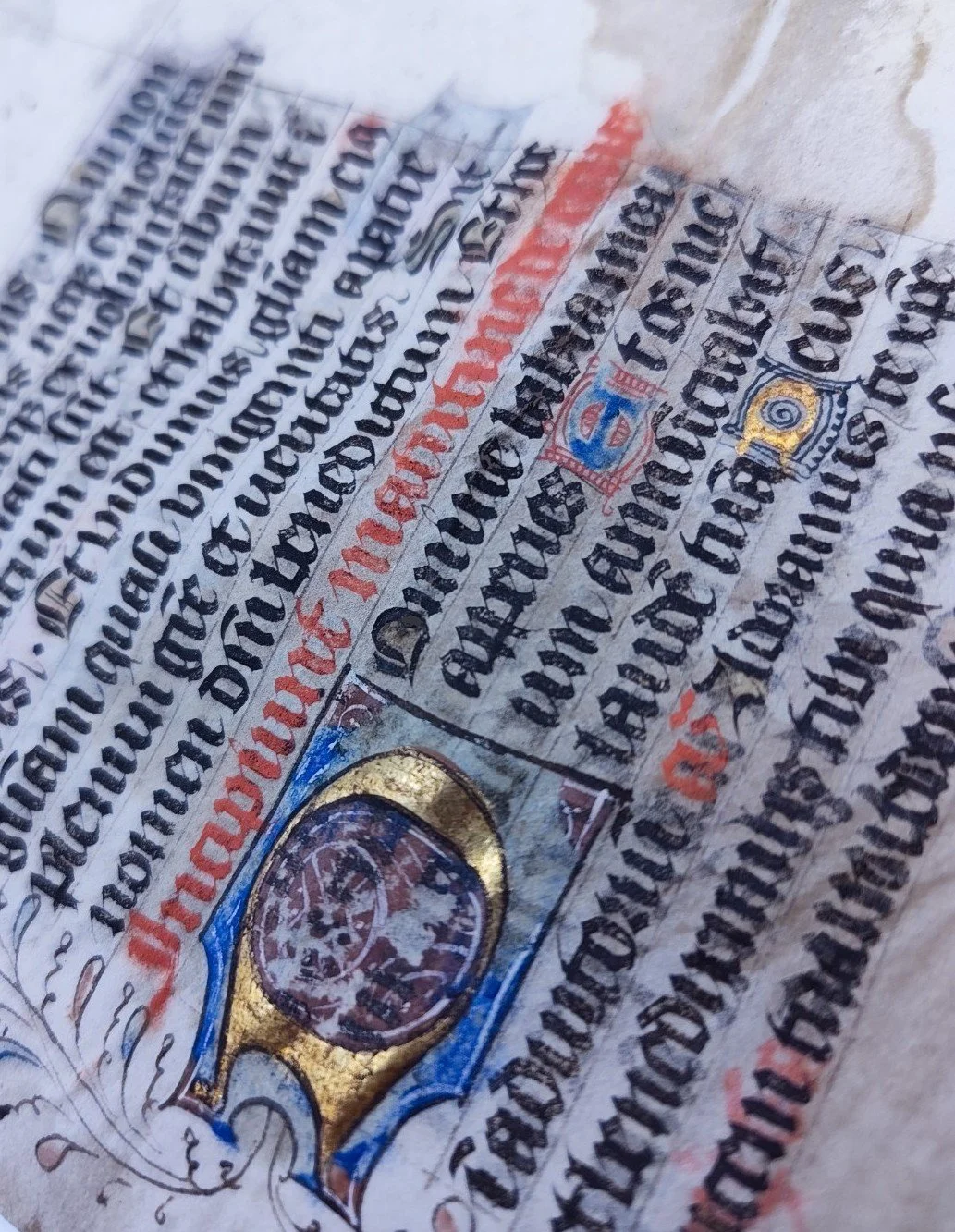 Image 7 of 9
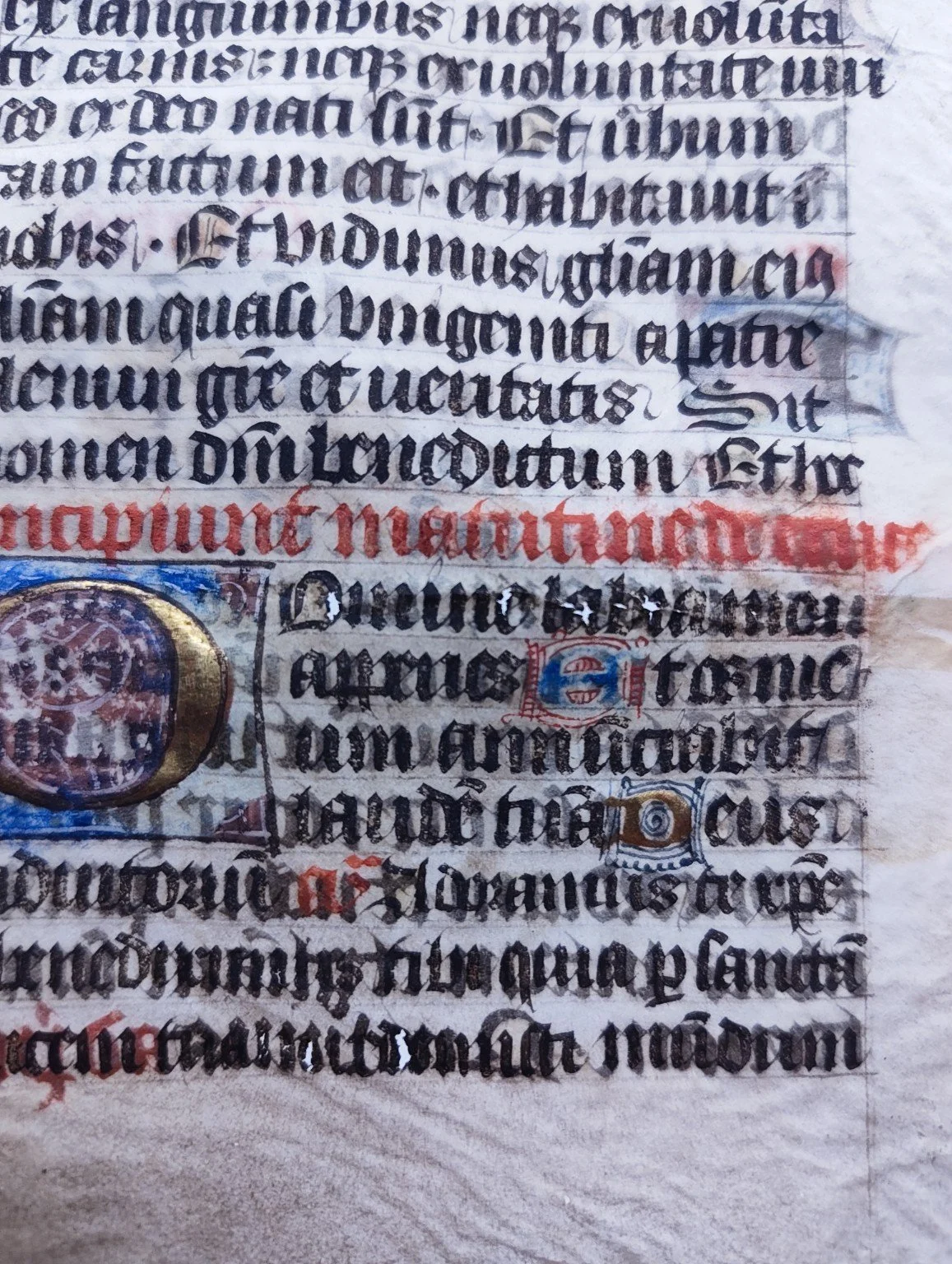 Image 8 of 9
 Image 9 of 9