Introduction
A finely illuminated parchment leaf from a late medieval Latin devotional manuscript, most plausibly a Book of Hours or a small breviary, containing texts associated with the Advent Office. Written on both sides in a dense Gothic script, the leaf is distinguished by burnished gold initials, deep blue and red decoration, and delicate marginal penwork.
The texts evoke one of the central themes of Advent: the expectation of Christ’s coming through the Annunciation to the Virgin. Among the legible passages are the responsory beginning Missus est Gabriel angelus ad Mariam virginem, the hymn Vox clara ecce intonat, and the Marian antiphon Spiritus sanctus in te descendet, Maria. Together they place the leaf within the devotional rhythm of prayer and preparation that preceded Christmas in the medieval liturgical year.
Physical description
• Single parchment leaf, written on both recto and verso
• Leaf dimensions: 19 × 14 cm
• Framed dimensions: 24 × 18 cm
• Latin text written in a formal Gothic bookhand in dark brown to black ink
• Rubrics, liturgical initials and line divisions highlighted in red
• Several illuminated initials executed in gold, blue and red, with decorative pen flourishes extending into the margins
• Decorative line fillers in blue and gold
• Text includes portions of the Advent Office, including Missus est Gabriel angelus, Vox clara ecce intonat and Spiritus sanctus in te descendet, Maria
• Probably produced in northern France or the Southern Netherlands, late 15th century
• Visible toning, staining and waviness to the parchment, particularly on the side with the larger initials
• Presently mounted in a window mat and attached with white adhesive strips at the upper and lower edges
• Conservation note: the adhesive mounting is not appropriate for parchment and should be assessed by a professional conservator before any attempt at removal or remounting
Context
Books of Hours were among the most personal manuscripts of the later Middle Ages. Produced for private devotion, they allowed their owners to follow a daily sequence of prayers modelled on the monastic hours. Their pages were intended to be handled, contemplated and revisited throughout the year, with certain sections adapted to important liturgical seasons.
This leaf belongs to the devotional world of Advent. The text Missus est Gabriel angelus ad Mariam virginem recalls the sending of the Archangel Gabriel to the Virgin Mary, while the hymn Vox clara ecce intonat summons the faithful to prepare for the approaching presence of Christ. The prayerful language of expectation, repentance and divine arrival would have been especially resonant in the weeks before Christmas.
The leaf’s decoration reinforces its devotional purpose. Its gold and coloured initials do not merely embellish the page. They mark transitions within the prayer sequence, guiding the reader through hymns, responses and antiphons while transforming the written word into an object of visual meditation.
Significance
This leaf preserves a fragment of late medieval private devotion at the intersection of text, ritual and craftsmanship. Its carefully ruled parchment, formal Gothic script and illuminated initials reflect the skilled labour required to produce even a single folio of a manuscript intended for prayer.
Particularly appealing is the survival of identifiable Advent texts centred on the Annunciation and the anticipated coming of Christ. Rather than an isolated decorative fragment, the leaf retains a clear liturgical identity and offers a tangible connection to the seasonal practices of its original owner.
The visible marks of age, including staining and later mounting, form part of the object’s history, although the adhesive attachment now requires careful handling. Even in its present condition, the leaf remains an evocative example of the intimate, richly ornamented manuscripts through which medieval readers encountered sacred time and personal prayer.
Introduction
A finely illuminated parchment leaf from a late medieval Latin devotional manuscript, most plausibly a Book of Hours or a small breviary, containing texts associated with the Advent Office. Written on both sides in a dense Gothic script, the leaf is distinguished by burnished gold initials, deep blue and red decoration, and delicate marginal penwork.
The texts evoke one of the central themes of Advent: the expectation of Christ’s coming through the Annunciation to the Virgin. Among the legible passages are the responsory beginning Missus est Gabriel angelus ad Mariam virginem, the hymn Vox clara ecce intonat, and the Marian antiphon Spiritus sanctus in te descendet, Maria. Together they place the leaf within the devotional rhythm of prayer and preparation that preceded Christmas in the medieval liturgical year.
Physical description
• Single parchment leaf, written on both recto and verso
• Leaf dimensions: 19 × 14 cm
• Framed dimensions: 24 × 18 cm
• Latin text written in a formal Gothic bookhand in dark brown to black ink
• Rubrics, liturgical initials and line divisions highlighted in red
• Several illuminated initials executed in gold, blue and red, with decorative pen flourishes extending into the margins
• Decorative line fillers in blue and gold
• Text includes portions of the Advent Office, including Missus est Gabriel angelus, Vox clara ecce intonat and Spiritus sanctus in te descendet, Maria
• Probably produced in northern France or the Southern Netherlands, late 15th century
• Visible toning, staining and waviness to the parchment, particularly on the side with the larger initials
• Presently mounted in a window mat and attached with white adhesive strips at the upper and lower edges
• Conservation note: the adhesive mounting is not appropriate for parchment and should be assessed by a professional conservator before any attempt at removal or remounting
Context
Books of Hours were among the most personal manuscripts of the later Middle Ages. Produced for private devotion, they allowed their owners to follow a daily sequence of prayers modelled on the monastic hours. Their pages were intended to be handled, contemplated and revisited throughout the year, with certain sections adapted to important liturgical seasons.
This leaf belongs to the devotional world of Advent. The text Missus est Gabriel angelus ad Mariam virginem recalls the sending of the Archangel Gabriel to the Virgin Mary, while the hymn Vox clara ecce intonat summons the faithful to prepare for the approaching presence of Christ. The prayerful language of expectation, repentance and divine arrival would have been especially resonant in the weeks before Christmas.
The leaf’s decoration reinforces its devotional purpose. Its gold and coloured initials do not merely embellish the page. They mark transitions within the prayer sequence, guiding the reader through hymns, responses and antiphons while transforming the written word into an object of visual meditation.
Significance
This leaf preserves a fragment of late medieval private devotion at the intersection of text, ritual and craftsmanship. Its carefully ruled parchment, formal Gothic script and illuminated initials reflect the skilled labour required to produce even a single folio of a manuscript intended for prayer.
Particularly appealing is the survival of identifiable Advent texts centred on the Annunciation and the anticipated coming of Christ. Rather than an isolated decorative fragment, the leaf retains a clear liturgical identity and offers a tangible connection to the seasonal practices of its original owner.
The visible marks of age, including staining and later mounting, form part of the object’s history, although the adhesive attachment now requires careful handling. Even in its present condition, the leaf remains an evocative example of the intimate, richly ornamented manuscripts through which medieval readers encountered sacred time and personal prayer.


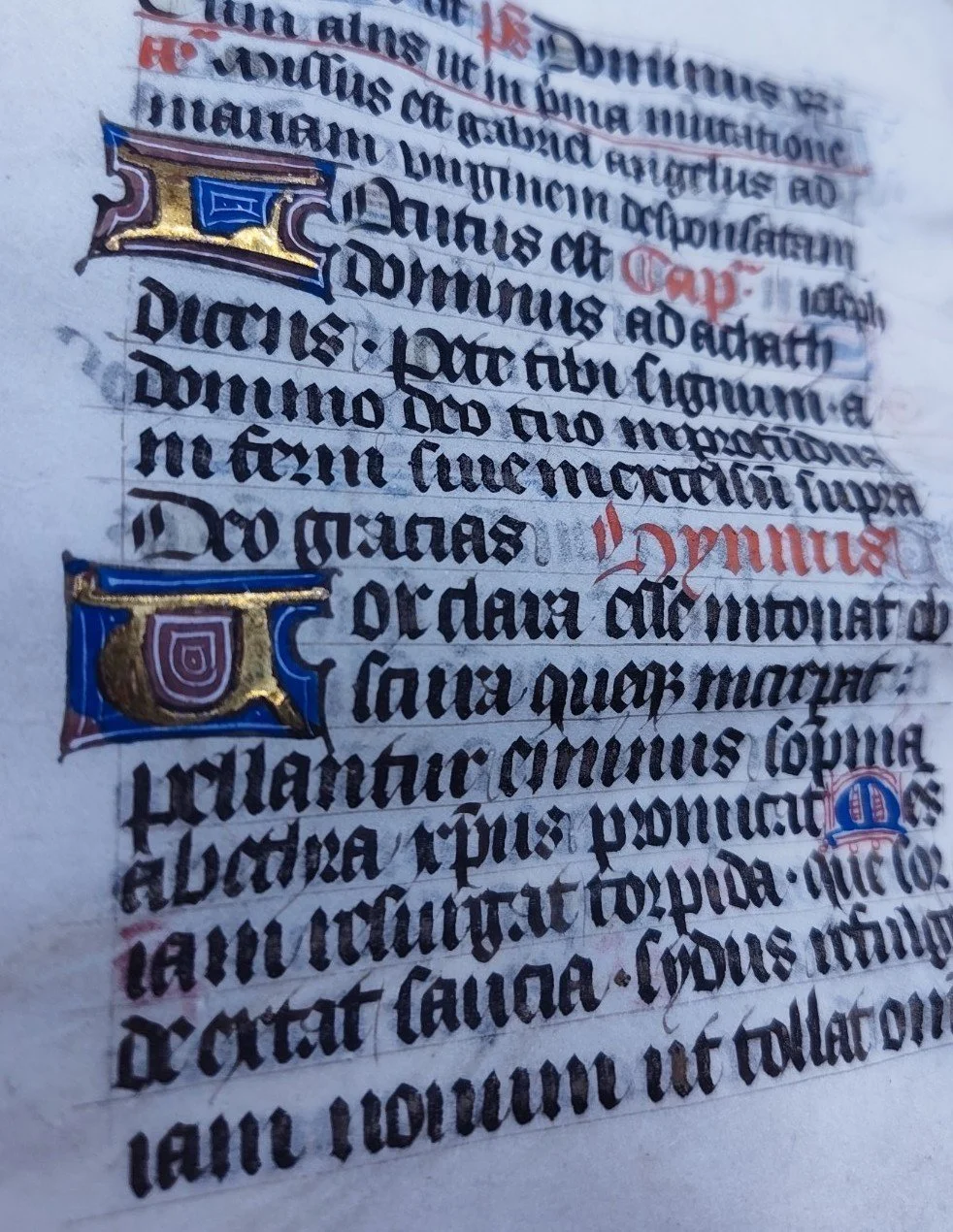 Image 1 of 6
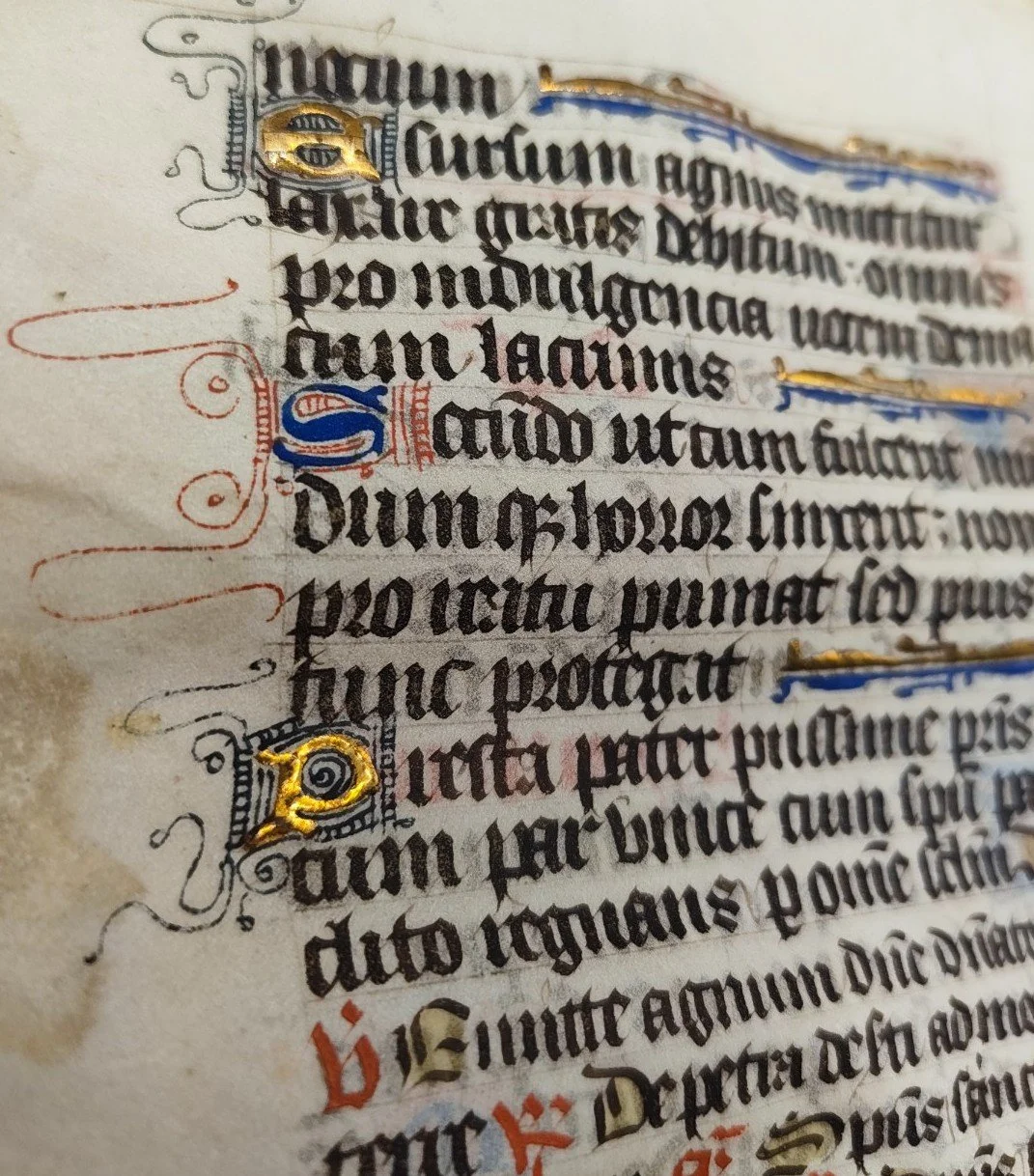 Image 2 of 6
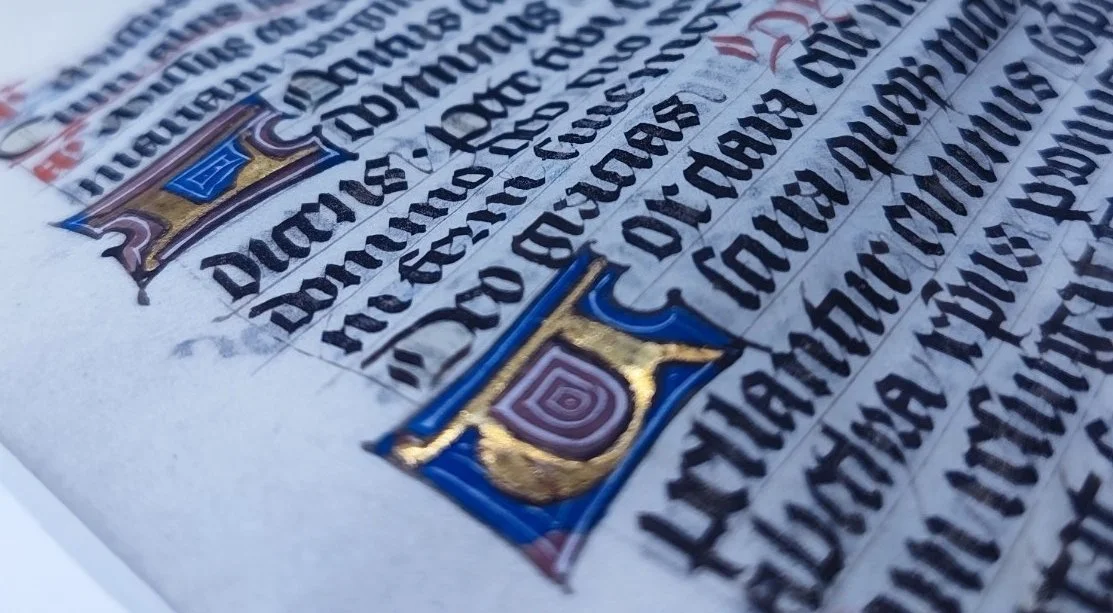 Image 3 of 6
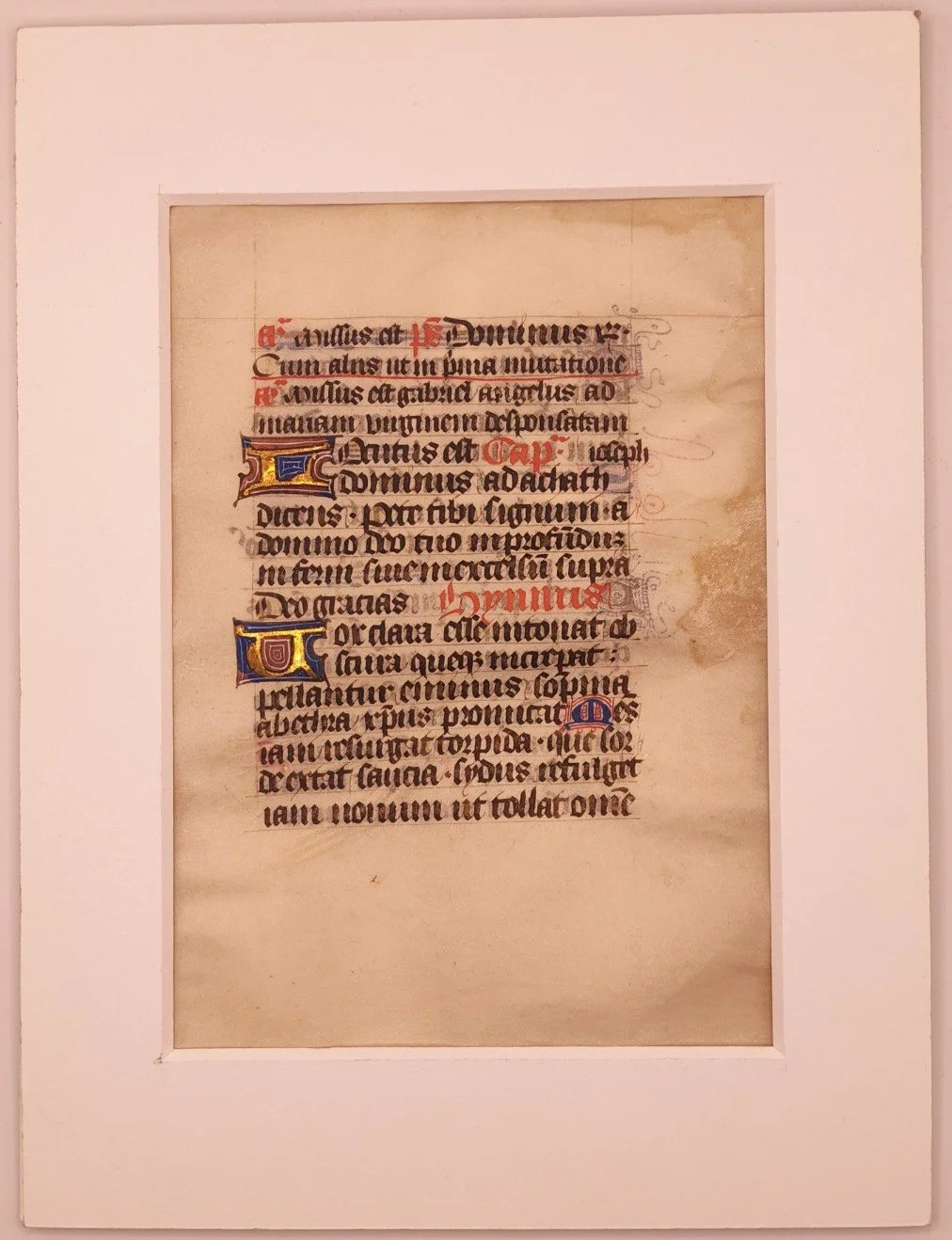 Image 4 of 6
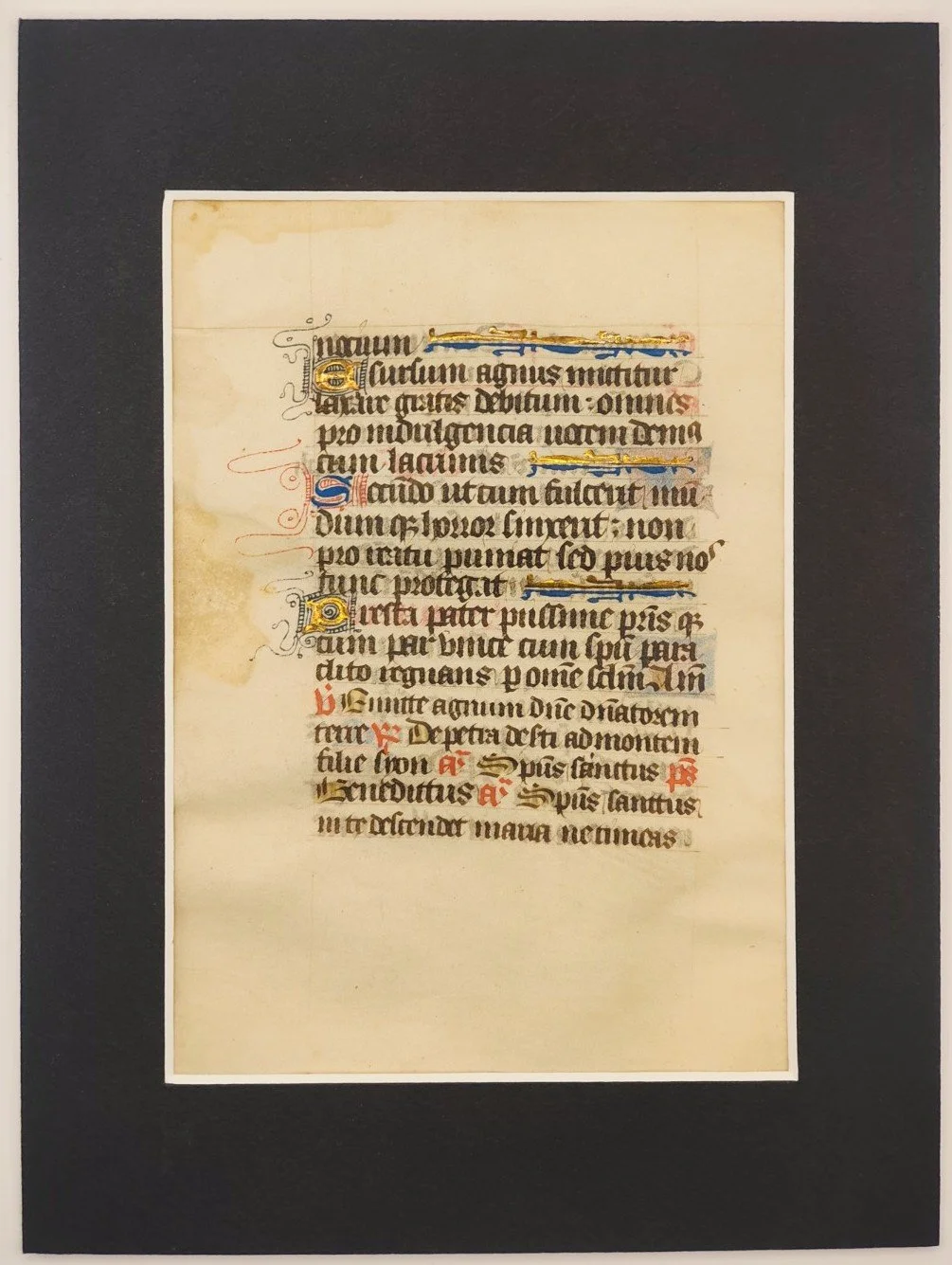 Image 5 of 6
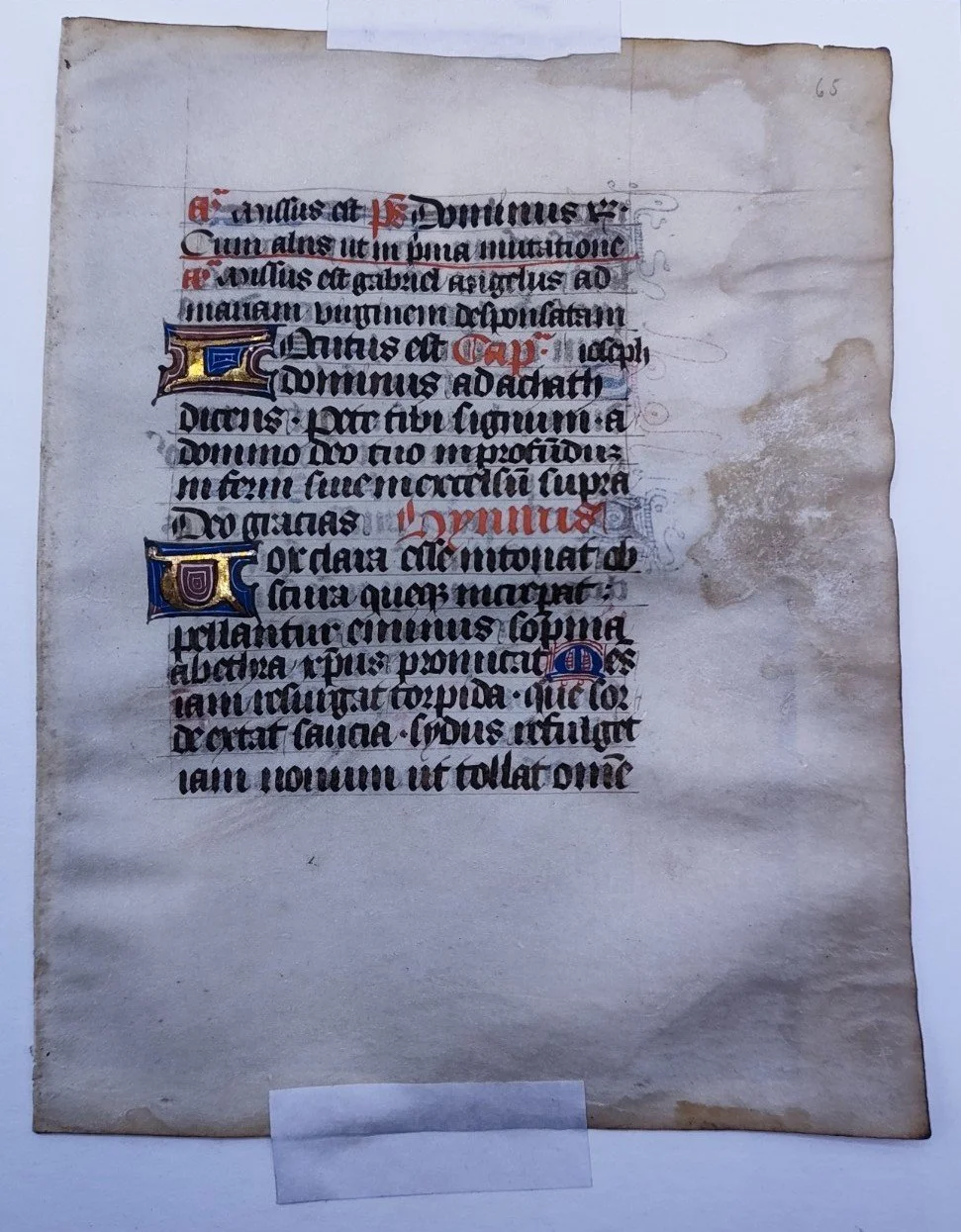 Image 6 of 6