Introduction
This substantial seventeenth-century volume brings together the first two principal parts of Philipp Heinrich Friedlieb’s Florilegium Theologicum, printed in Stralsund, Rostock and Greifswald between 1638 and 1640. Friedlieb’s work belongs to the learned world of Lutheran scholastic theology, where doctrine, biblical interpretation, controversy and preaching were brought together in a systematic form.
The present copy is especially compelling because it is not merely a preserved theological text. It is a working copy. Throughout the volume are early marginal notes, underlinings, biblical references and polemical observations. At the end is a substantial manuscript index, carefully written by an early owner to make the book searchable and useful as a practical theological instrument.
Physical description
Author: Philipp Heinrich Friedlieb, also Philippus Henricus Friedlieb
Title: Florilegium Theologicum, parts I–II
Contents:
Place of printing: Stralsund, Rostock and Greifswald
Date: 1638–1640
Language: Latin, with Greek and Hebrew elements
Binding: Contemporary or near-contemporary vellum
Part I: Complete in itself, pp. 1–930, followed by appendix and printed index
Part II: Complete in itself, pp. 1–596, followed by appendix and printed index
Completeness: Complete in the two included parts, but not complete as the full multi-part Florilegium Theologicum
Annotation: Extensive contemporary or near-contemporary marginalia, underlinings, biblical references and scholarly notes
Manuscript material: Substantial handwritten index added by an early owner
Condition: Vellum binding worn, rubbed, soiled and stained, with visible signs of age and use. Interior with age-toning, occasional spotting, wear and extensive early annotation throughout
Context
Philipp Heinrich Friedlieb was a Lutheran theologian of the seventeenth century, working within the intellectual tradition often described as Protestant orthodoxy. His Florilegium Theologicum was conceived as a systematic theological compendium arranged around doctrinal loci, or principal theological subjects.
The first part, Stoicheiologia & Theologia, treats Scripture, God and the foundations of doctrine. The second part, Angelologia & Anthropologia, concerns angels, demons and the nature of man. Friedlieb’s method is characteristic of the period: doctrinal theses are supported by scriptural confirmation, defended against objections and directed toward practical use in preaching.
This was a world in which theology was not only devotional, but also scholarly, polemical and pedagogical. The presence of Latin, Greek and Hebrew reflects the learned Protestant culture of the seventeenth century, where biblical languages and close textual argument played a central role.
Significance
The particular interest of this copy lies in its evidence of use. The marginalia and manuscript index show that an early reader did not simply own the book, but worked with it closely. The volume was read, marked, organized and returned to as a tool for study, disputation and preaching.
The handwritten index is especially important. It transforms the printed book into a personalized reference work, allowing the reader to navigate theological topics, biblical passages and doctrinal arguments more efficiently. In this sense, the volume preserves not only Friedlieb’s text, but also a record of historical reading practice.
As an object, it offers several layers of interest: seventeenth-century Lutheran theology, early modern scholarly method, the history of preaching, book use, marginalia and manuscript indexing. Its worn vellum binding and heavily annotated pages give the book a strong physical presence, making it a vivid survival from the working library of an early modern theological reader.
Introduction
This substantial seventeenth-century volume brings together the first two principal parts of Philipp Heinrich Friedlieb’s Florilegium Theologicum, printed in Stralsund, Rostock and Greifswald between 1638 and 1640. Friedlieb’s work belongs to the learned world of Lutheran scholastic theology, where doctrine, biblical interpretation, controversy and preaching were brought together in a systematic form.
The present copy is especially compelling because it is not merely a preserved theological text. It is a working copy. Throughout the volume are early marginal notes, underlinings, biblical references and polemical observations. At the end is a substantial manuscript index, carefully written by an early owner to make the book searchable and useful as a practical theological instrument.
Physical description
Author: Philipp Heinrich Friedlieb, also Philippus Henricus Friedlieb
Title: Florilegium Theologicum, parts I–II
Contents:
Place of printing: Stralsund, Rostock and Greifswald
Date: 1638–1640
Language: Latin, with Greek and Hebrew elements
Binding: Contemporary or near-contemporary vellum
Part I: Complete in itself, pp. 1–930, followed by appendix and printed index
Part II: Complete in itself, pp. 1–596, followed by appendix and printed index
Completeness: Complete in the two included parts, but not complete as the full multi-part Florilegium Theologicum
Annotation: Extensive contemporary or near-contemporary marginalia, underlinings, biblical references and scholarly notes
Manuscript material: Substantial handwritten index added by an early owner
Condition: Vellum binding worn, rubbed, soiled and stained, with visible signs of age and use. Interior with age-toning, occasional spotting, wear and extensive early annotation throughout
Context
Philipp Heinrich Friedlieb was a Lutheran theologian of the seventeenth century, working within the intellectual tradition often described as Protestant orthodoxy. His Florilegium Theologicum was conceived as a systematic theological compendium arranged around doctrinal loci, or principal theological subjects.
The first part, Stoicheiologia & Theologia, treats Scripture, God and the foundations of doctrine. The second part, Angelologia & Anthropologia, concerns angels, demons and the nature of man. Friedlieb’s method is characteristic of the period: doctrinal theses are supported by scriptural confirmation, defended against objections and directed toward practical use in preaching.
This was a world in which theology was not only devotional, but also scholarly, polemical and pedagogical. The presence of Latin, Greek and Hebrew reflects the learned Protestant culture of the seventeenth century, where biblical languages and close textual argument played a central role.
Significance
The particular interest of this copy lies in its evidence of use. The marginalia and manuscript index show that an early reader did not simply own the book, but worked with it closely. The volume was read, marked, organized and returned to as a tool for study, disputation and preaching.
The handwritten index is especially important. It transforms the printed book into a personalized reference work, allowing the reader to navigate theological topics, biblical passages and doctrinal arguments more efficiently. In this sense, the volume preserves not only Friedlieb’s text, but also a record of historical reading practice.
As an object, it offers several layers of interest: seventeenth-century Lutheran theology, early modern scholarly method, the history of preaching, book use, marginalia and manuscript indexing. Its worn vellum binding and heavily annotated pages give the book a strong physical presence, making it a vivid survival from the working library of an early modern theological reader.


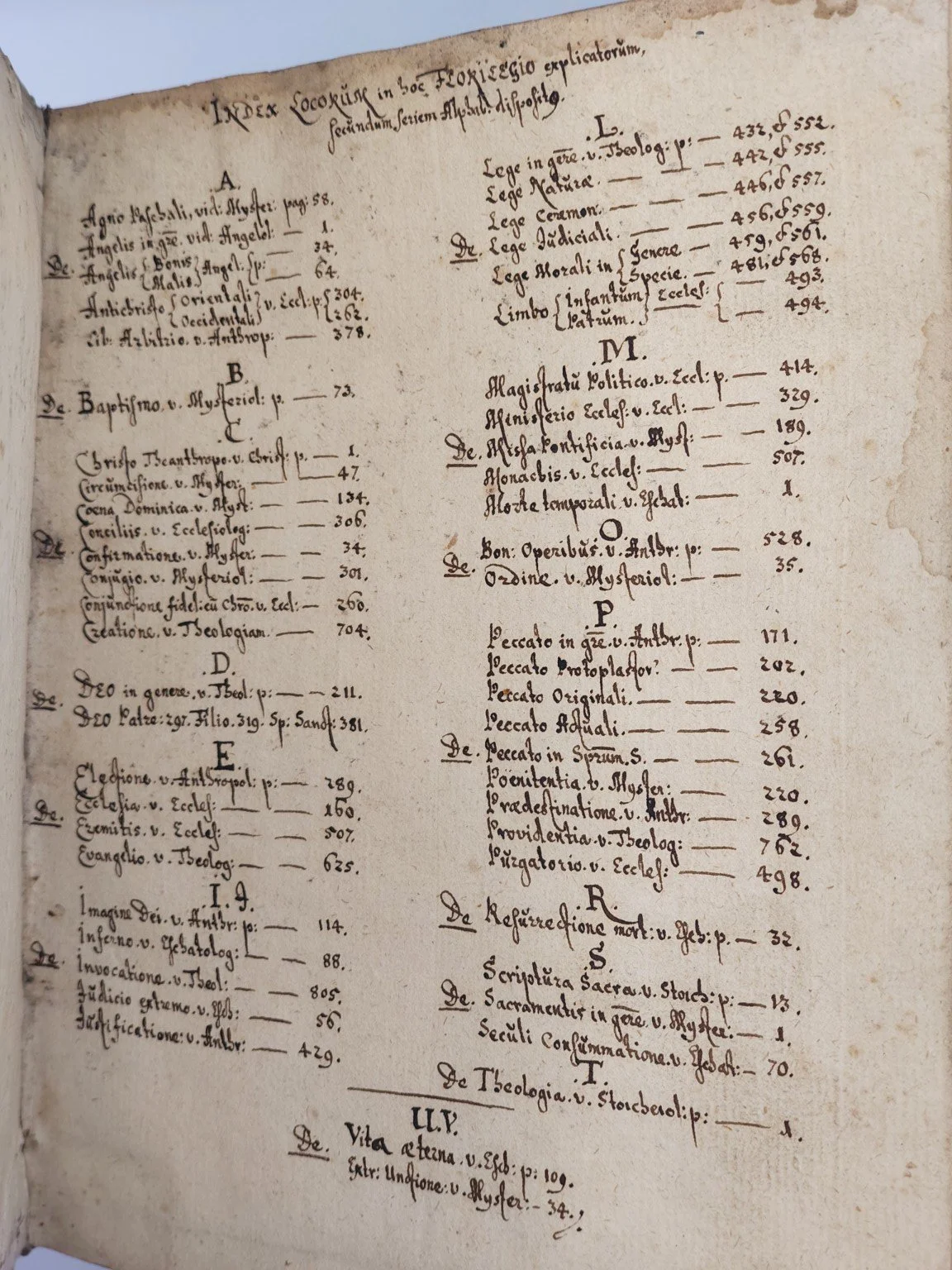 Image 1 of 12
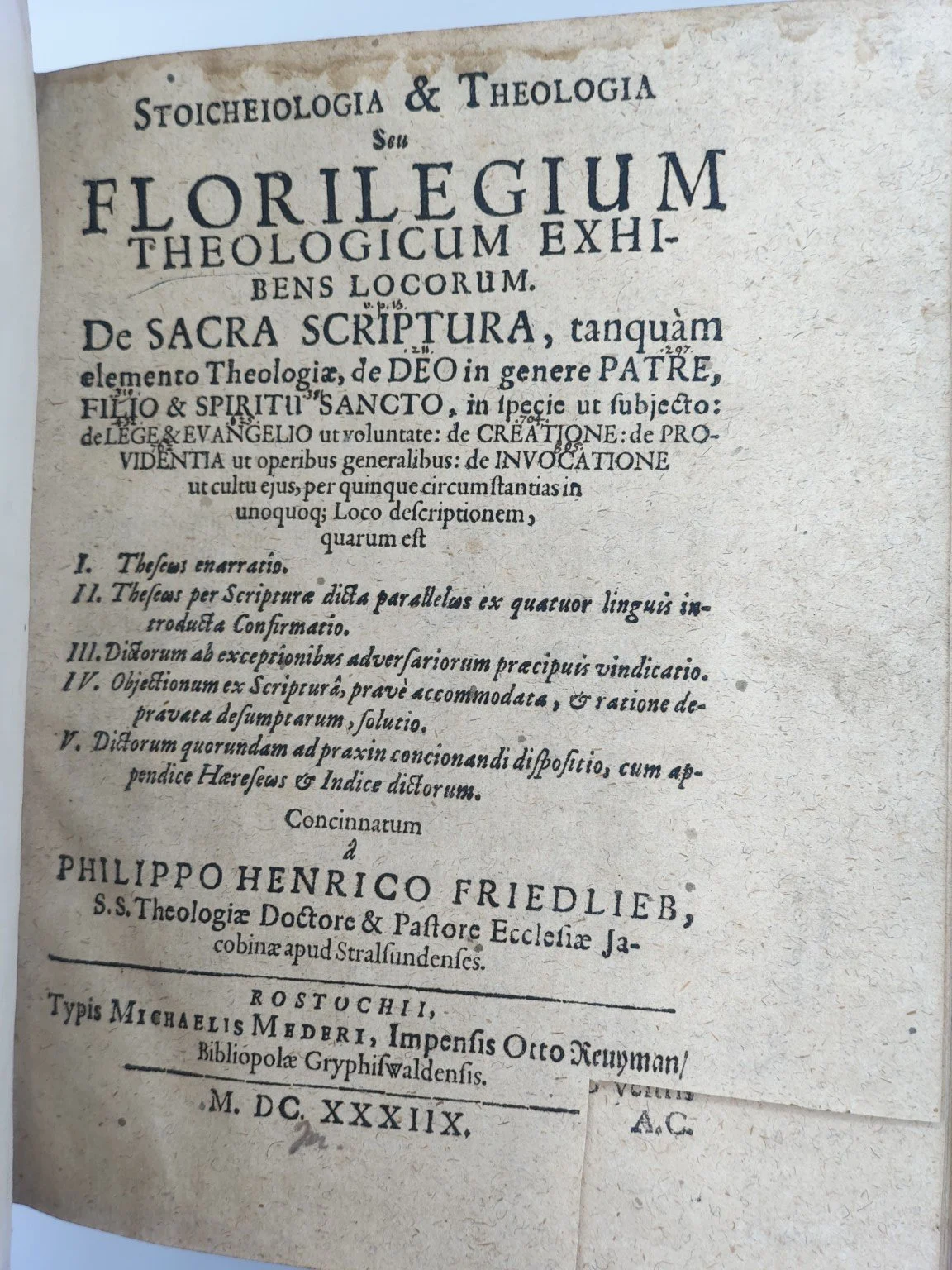 Image 2 of 12
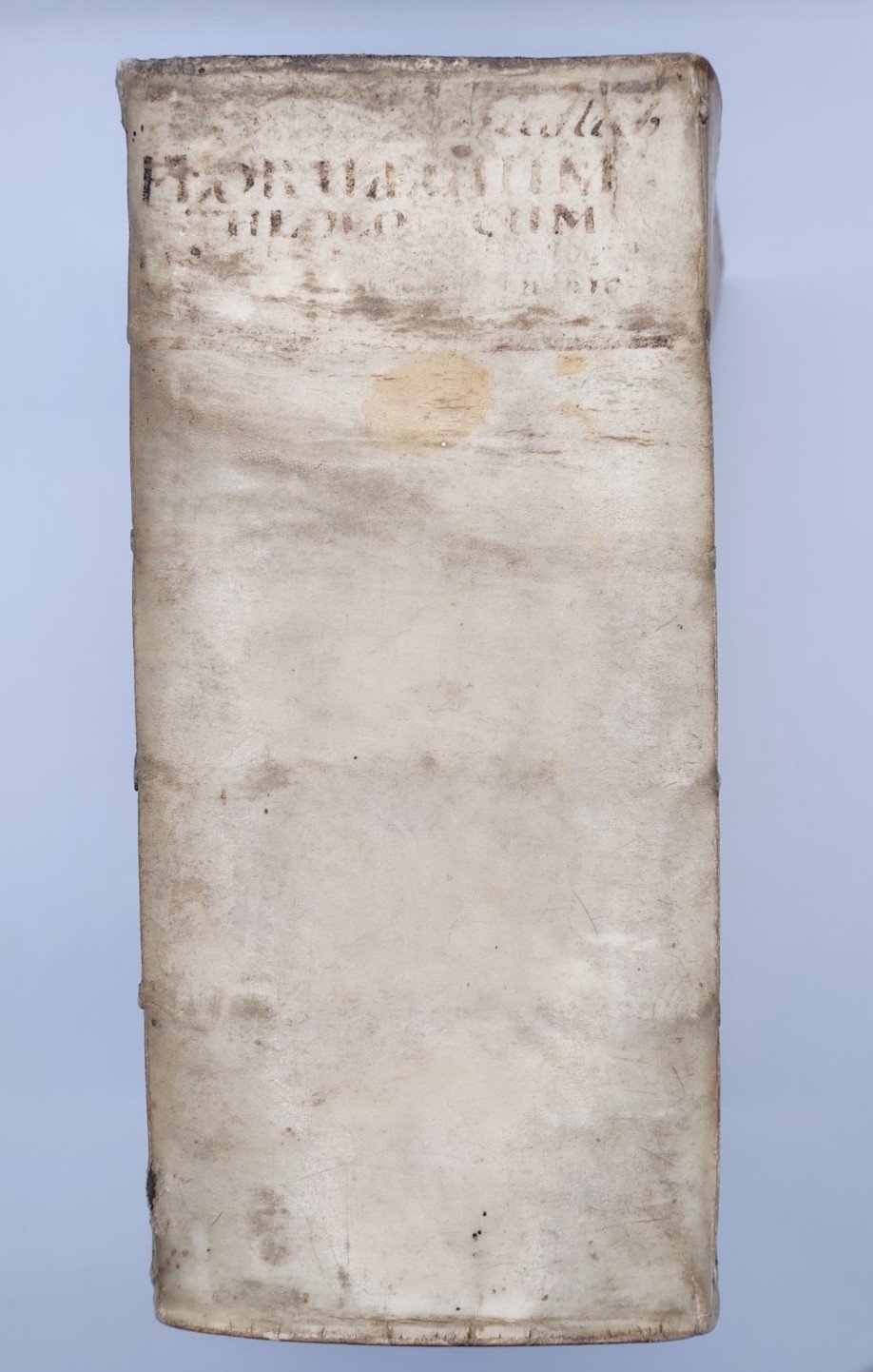 Image 3 of 12
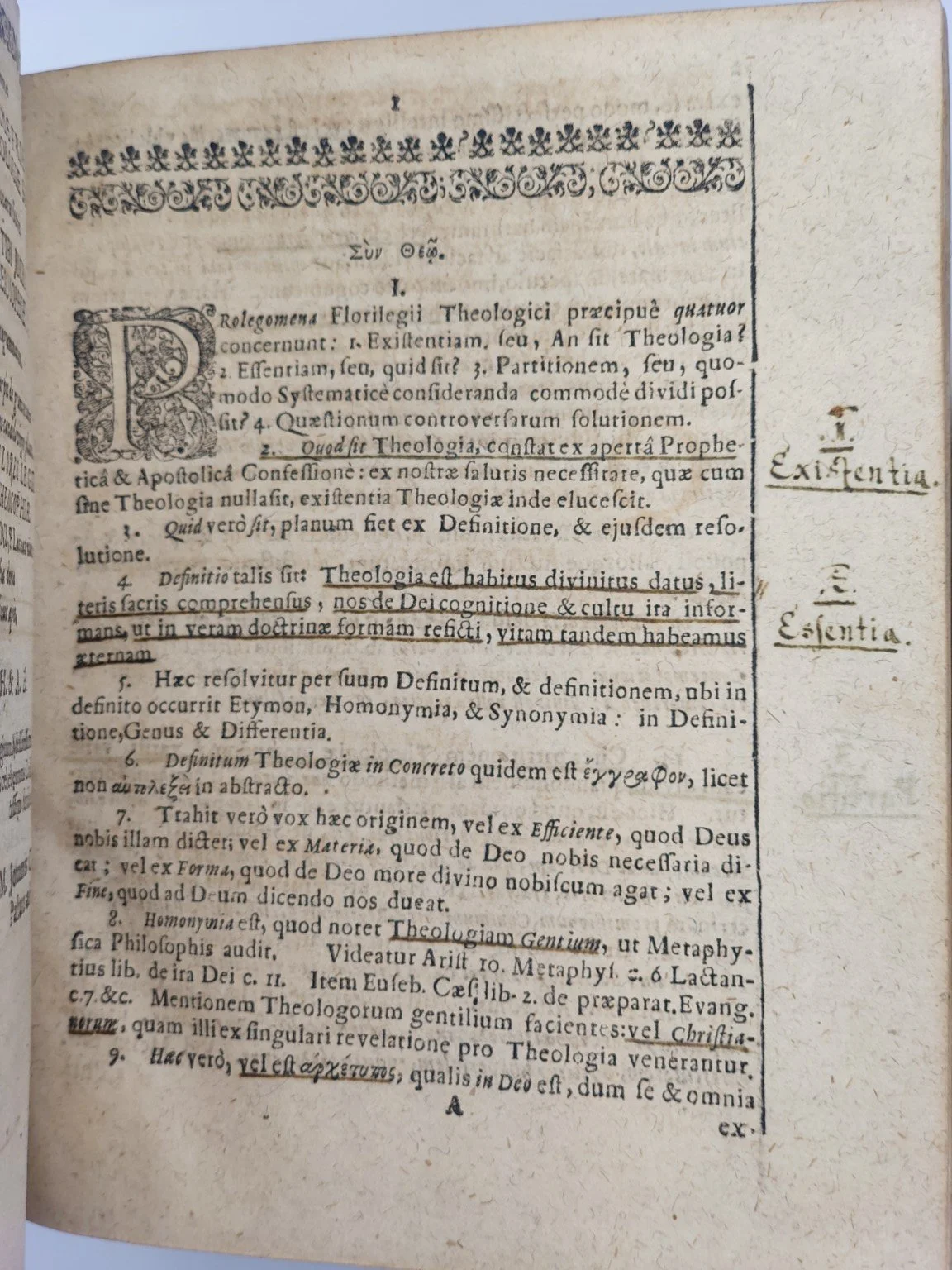 Image 4 of 12
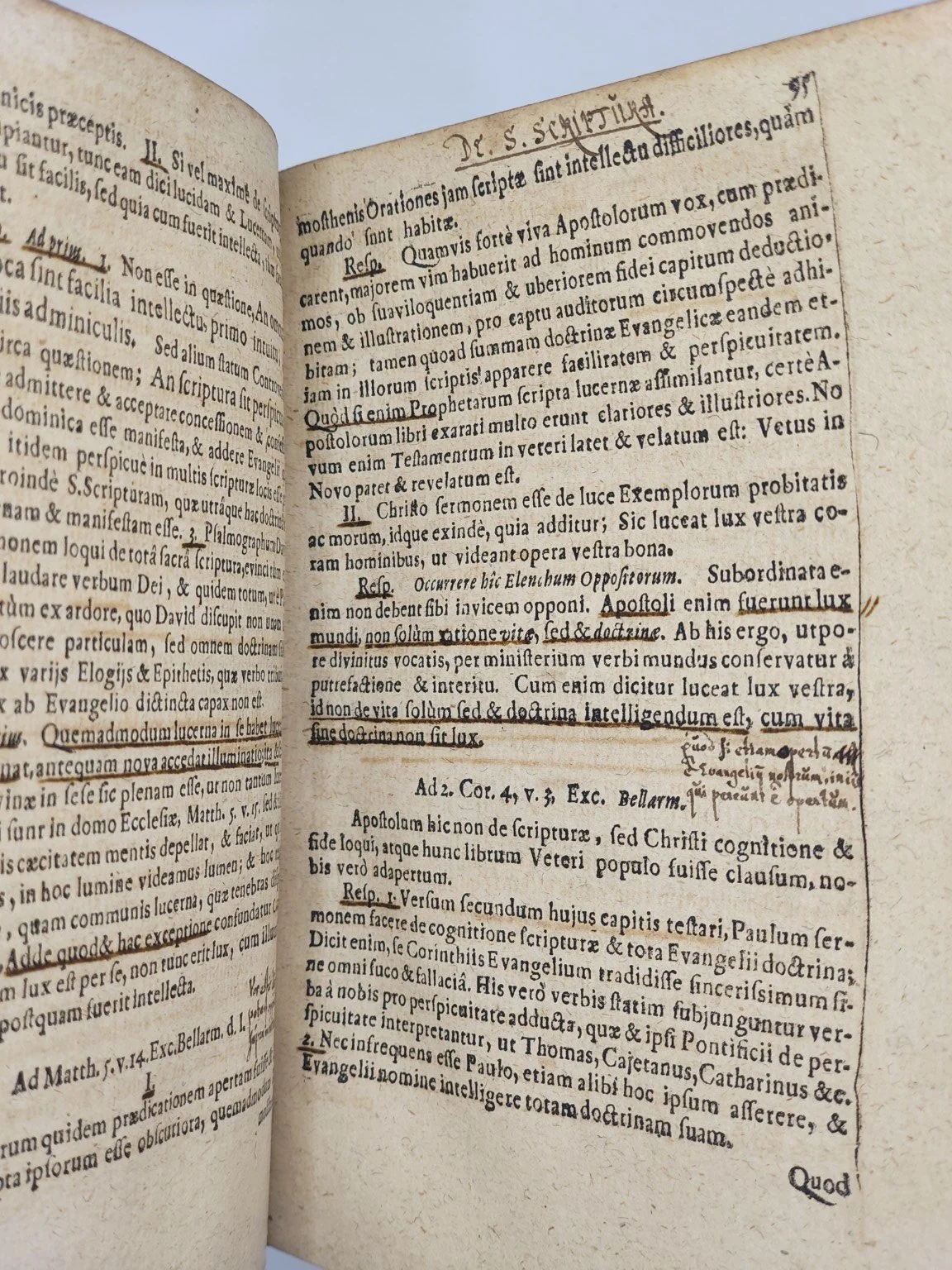 Image 5 of 12
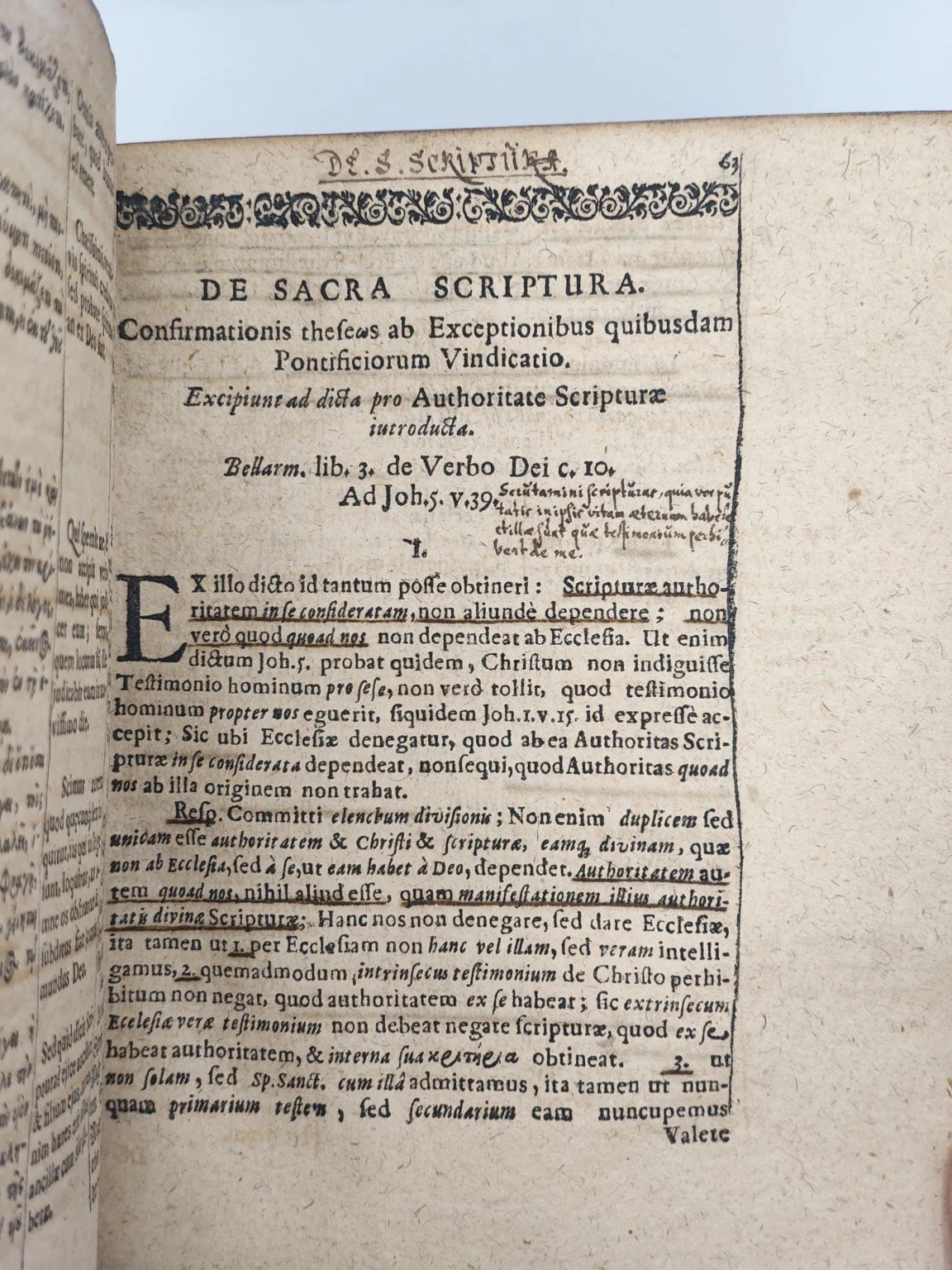 Image 6 of 12
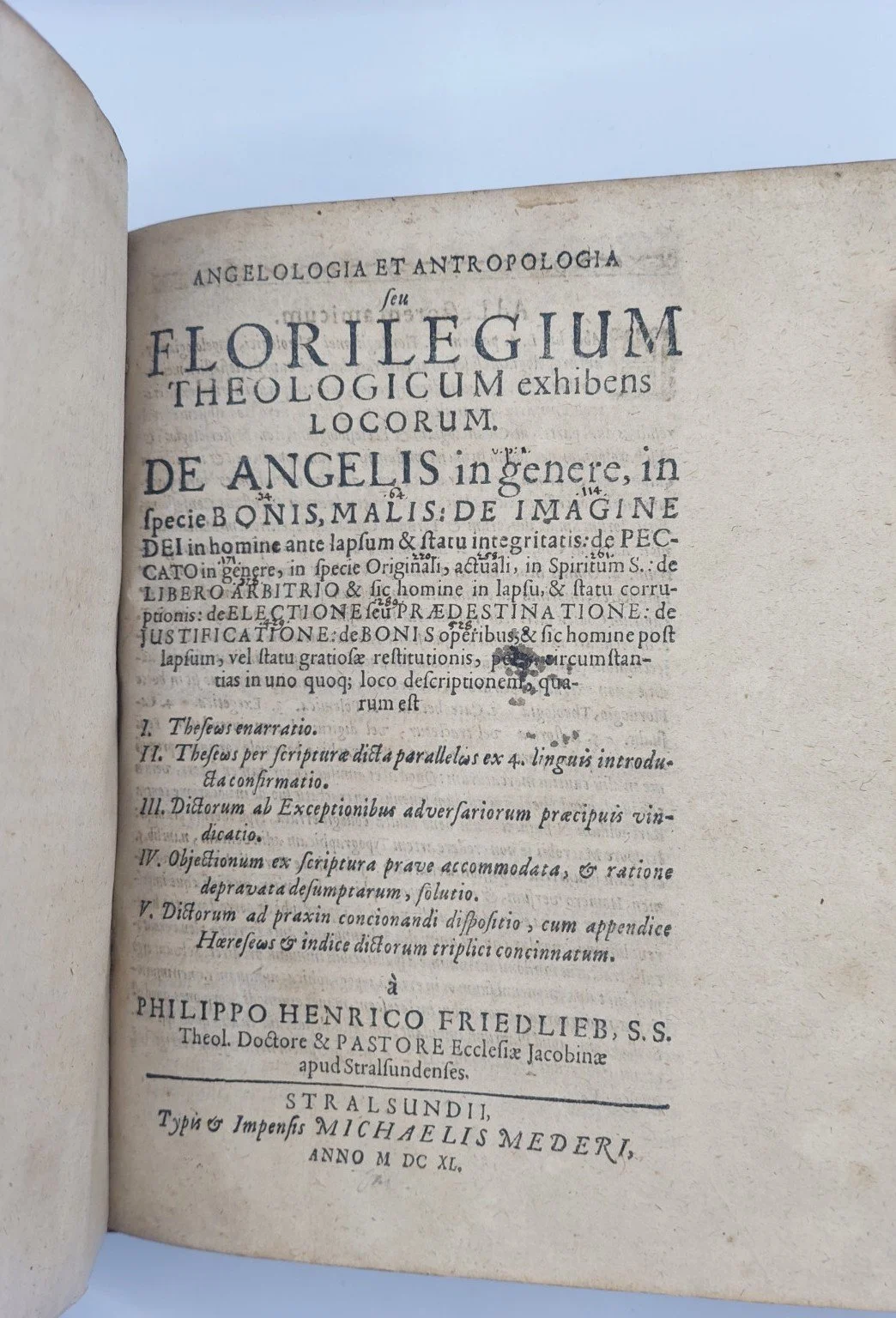 Image 7 of 12
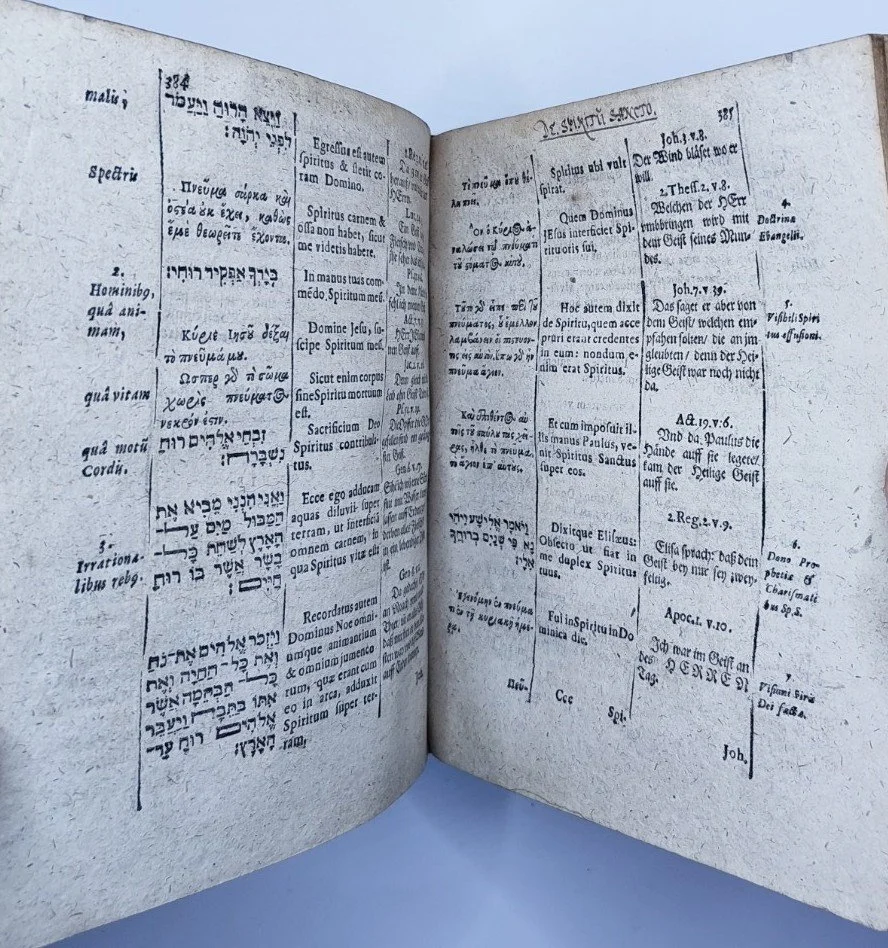 Image 8 of 12
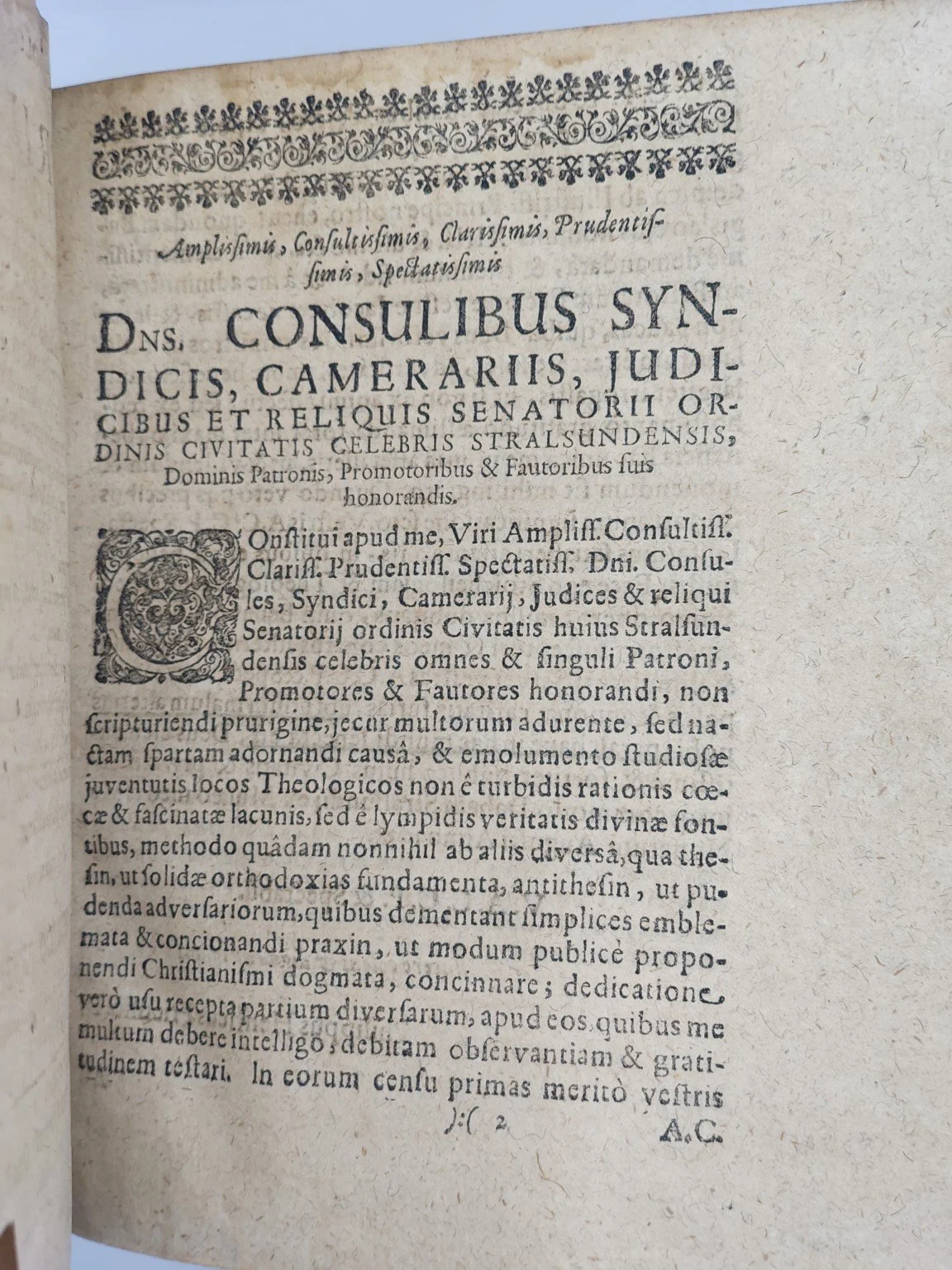 Image 9 of 12
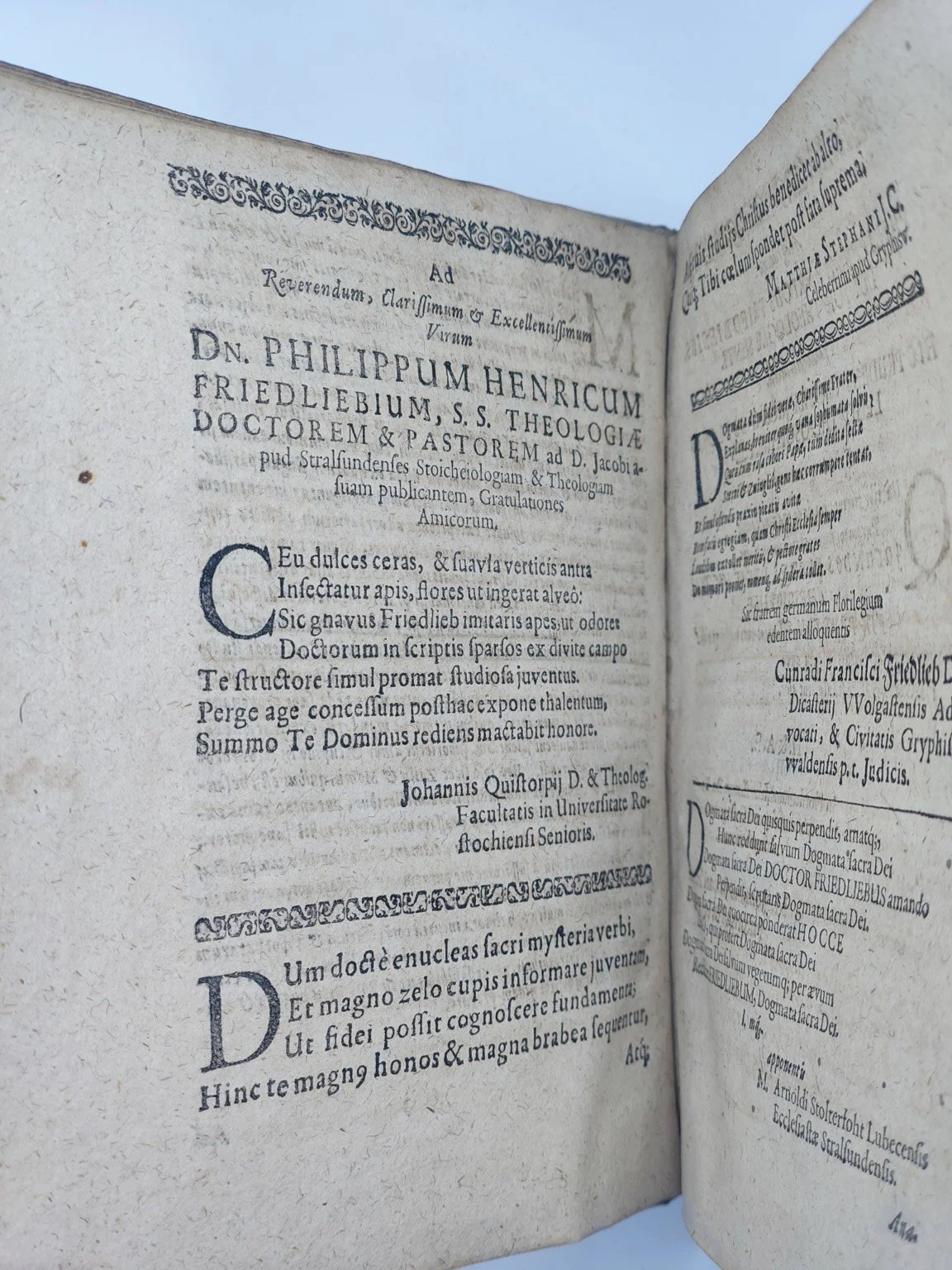 Image 10 of 12
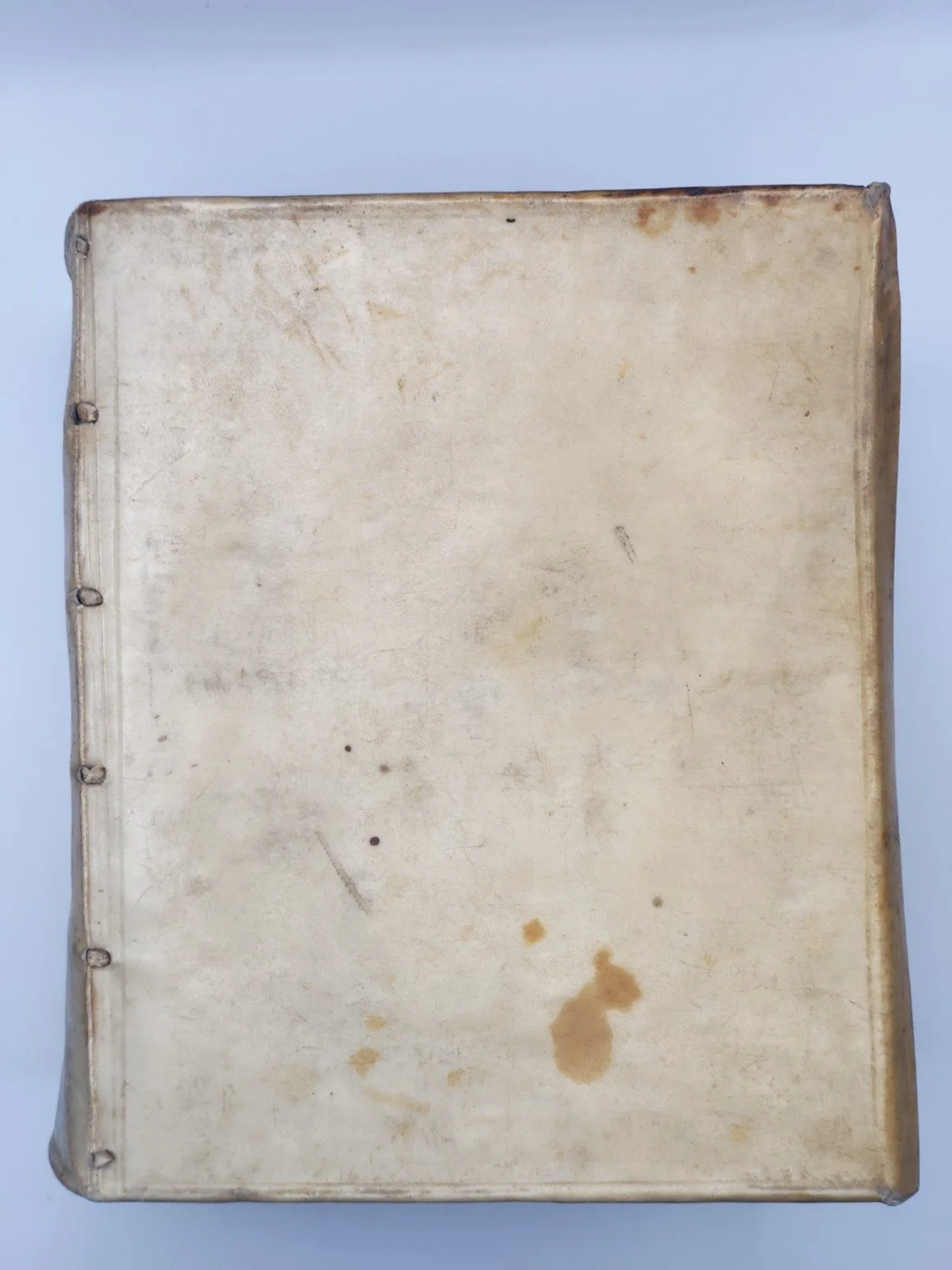 Image 11 of 12
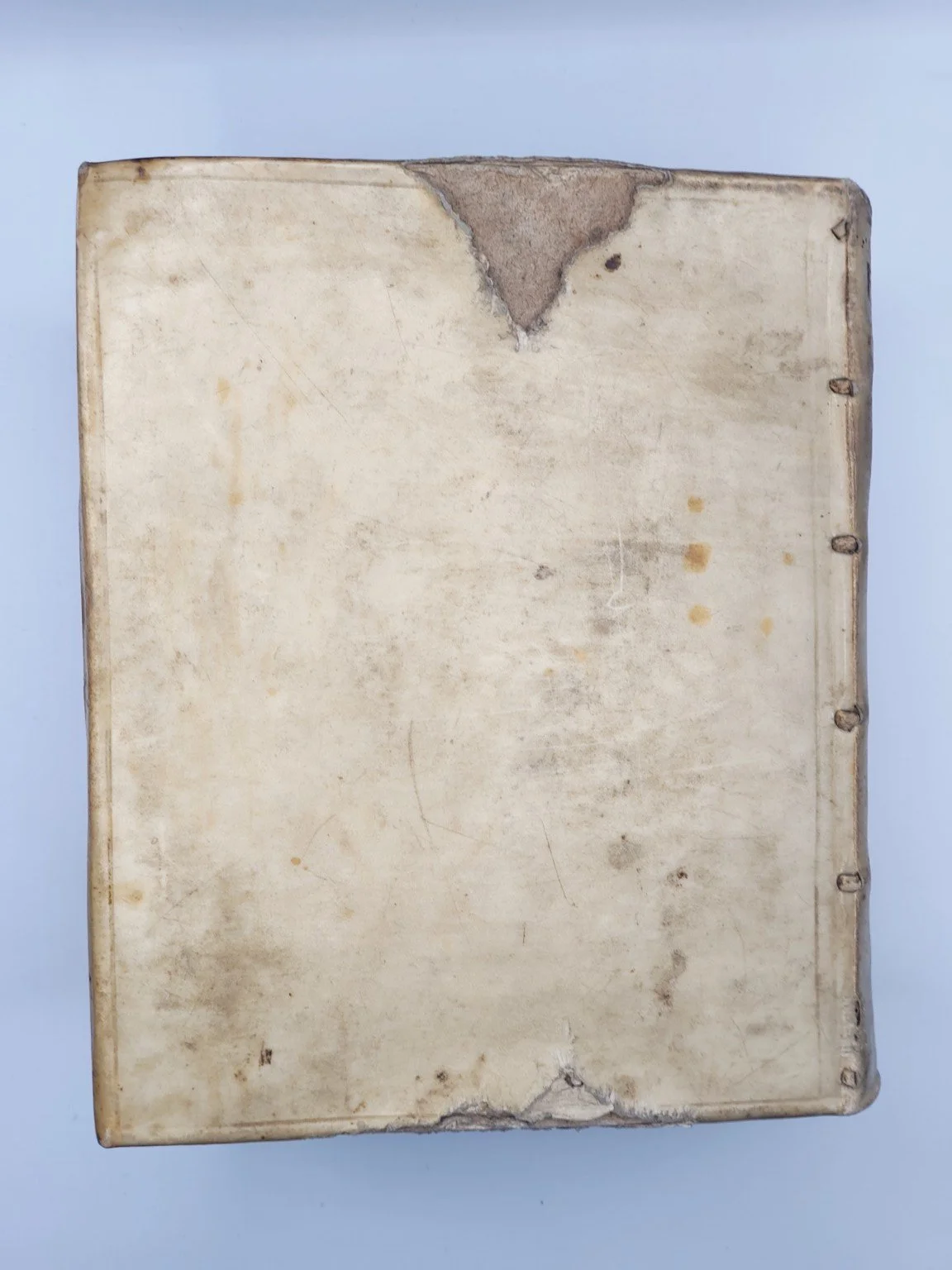 Image 12 of 12