Introduction
Johann Samuel Adami, better known by his pseudonym Misander, was a prolific Lutheran writer of devotional and theological works. His Deliciae Poenitentiales, Oder: Buß-Ergetzlichkeiten, printed in Hamburg in 1722, is a compact book of penitential devotion: a collection of 103 biblical passages intended for repentance, confession, absolution, and preparation for a Christian death.
This copy is especially evocative because it preserves not only the printed devotional text, but also a contemporary handwritten penitential prayer on the endpaper. The prayer begins “Gott sey mir Sünder gnädig” — “God, be gracious to me, a sinner” — and is also condensed into a symmetrical square of initials above the text. This small manuscript addition gives the volume a strong sense of private devotional use.
Physical description
Author: Johann Samuel Adami, alias Misander
Title: Deliciae Poenitentiales, Oder: Buß-Ergetzlichkeiten
Place of publication: Hamburg
Publisher: Samuel Heyl
Date: 1722
Format: 12mo
Pagination: 735 pages
Language: German
Script/type: German blackletter
Binding: Contemporary or near-contemporary vellum binding
Spine: Manuscript title to spine, partly faded and rubbed
Illustration: Engraved portrait frontispiece of Johann Samuel Adami
Title page: Printed in red and black
Completeness: Complete copy
Manuscript addition: Contemporary devotional note on the endpaper, including a short German penitential prayer and a corresponding square of initials
Condition: Binding soiled, rubbed, stained, and worn, with age-related marks. Interior toned and spotted in places, with signs of use consistent with age. A good antiquarian copy with notable devotional character.
Context
Deliciae Poenitentiales belongs to the world of early eighteenth-century Lutheran devotional literature. Its purpose was practical and pastoral: it gathered biblical passages for use in penitential reflection, on days of repentance, in sermons, and in the context of confession and absolution.
The title itself may be translated loosely as “penitential delights” or “comforts of repentance.” This reflects a central theme of Lutheran devotional writing: repentance was not merely an expression of guilt, but a path toward divine mercy, consolation, and salvation.
The handwritten note in this copy fits the book’s purpose with unusual precision. The prayer reads:
Gott sey mir Sünder gnädig!
So stirbt ein Sünder selig.
Mein Einiger Mittler Erlöse Mich.
So stirbt ein Sünder selig.
Gott sey mir Sünder gnädig.
In English:
God, be gracious to me, a sinner.
Thus a sinner dies blessed.
My only mediator, redeem me.
Thus a sinner dies blessed.
God, be gracious to me, a sinner.
The phrase “Gott sey mir Sünder gnädig” echoes the biblical prayer of the publican in Luke 18:13, while “Mittler” refers to Christ as mediator. The manuscript note is therefore not a random ownership mark, but a deeply appropriate devotional response to the printed book.
Significance
This is a modest but highly atmospheric survival from early eighteenth-century Lutheran devotional culture. Its significance lies not only in the printed text, but in the way this particular copy was used.
The contemporary manuscript prayer transforms the volume from a standard devotional book into an object of personal religious practice. The symmetrical initial square above the prayer suggests memorisation, meditation, or private devotional repetition. It gives the book a direct connection to the inner life of an early reader: repentance, fear of death, hope for mercy, and trust in Christ as mediator.
Preserved in its early vellum binding, complete with engraved portrait and red-and-black title page, this copy offers a compelling example of how religious books were read, handled, and personalised in the Lutheran world of the early eighteenth century.
Introduction
Johann Samuel Adami, better known by his pseudonym Misander, was a prolific Lutheran writer of devotional and theological works. His Deliciae Poenitentiales, Oder: Buß-Ergetzlichkeiten, printed in Hamburg in 1722, is a compact book of penitential devotion: a collection of 103 biblical passages intended for repentance, confession, absolution, and preparation for a Christian death.
This copy is especially evocative because it preserves not only the printed devotional text, but also a contemporary handwritten penitential prayer on the endpaper. The prayer begins “Gott sey mir Sünder gnädig” — “God, be gracious to me, a sinner” — and is also condensed into a symmetrical square of initials above the text. This small manuscript addition gives the volume a strong sense of private devotional use.
Physical description
Author: Johann Samuel Adami, alias Misander
Title: Deliciae Poenitentiales, Oder: Buß-Ergetzlichkeiten
Place of publication: Hamburg
Publisher: Samuel Heyl
Date: 1722
Format: 12mo
Pagination: 735 pages
Language: German
Script/type: German blackletter
Binding: Contemporary or near-contemporary vellum binding
Spine: Manuscript title to spine, partly faded and rubbed
Illustration: Engraved portrait frontispiece of Johann Samuel Adami
Title page: Printed in red and black
Completeness: Complete copy
Manuscript addition: Contemporary devotional note on the endpaper, including a short German penitential prayer and a corresponding square of initials
Condition: Binding soiled, rubbed, stained, and worn, with age-related marks. Interior toned and spotted in places, with signs of use consistent with age. A good antiquarian copy with notable devotional character.
Context
Deliciae Poenitentiales belongs to the world of early eighteenth-century Lutheran devotional literature. Its purpose was practical and pastoral: it gathered biblical passages for use in penitential reflection, on days of repentance, in sermons, and in the context of confession and absolution.
The title itself may be translated loosely as “penitential delights” or “comforts of repentance.” This reflects a central theme of Lutheran devotional writing: repentance was not merely an expression of guilt, but a path toward divine mercy, consolation, and salvation.
The handwritten note in this copy fits the book’s purpose with unusual precision. The prayer reads:
Gott sey mir Sünder gnädig!
So stirbt ein Sünder selig.
Mein Einiger Mittler Erlöse Mich.
So stirbt ein Sünder selig.
Gott sey mir Sünder gnädig.
In English:
God, be gracious to me, a sinner.
Thus a sinner dies blessed.
My only mediator, redeem me.
Thus a sinner dies blessed.
God, be gracious to me, a sinner.
The phrase “Gott sey mir Sünder gnädig” echoes the biblical prayer of the publican in Luke 18:13, while “Mittler” refers to Christ as mediator. The manuscript note is therefore not a random ownership mark, but a deeply appropriate devotional response to the printed book.
Significance
This is a modest but highly atmospheric survival from early eighteenth-century Lutheran devotional culture. Its significance lies not only in the printed text, but in the way this particular copy was used.
The contemporary manuscript prayer transforms the volume from a standard devotional book into an object of personal religious practice. The symmetrical initial square above the prayer suggests memorisation, meditation, or private devotional repetition. It gives the book a direct connection to the inner life of an early reader: repentance, fear of death, hope for mercy, and trust in Christ as mediator.
Preserved in its early vellum binding, complete with engraved portrait and red-and-black title page, this copy offers a compelling example of how religious books were read, handled, and personalised in the Lutheran world of the early eighteenth century.


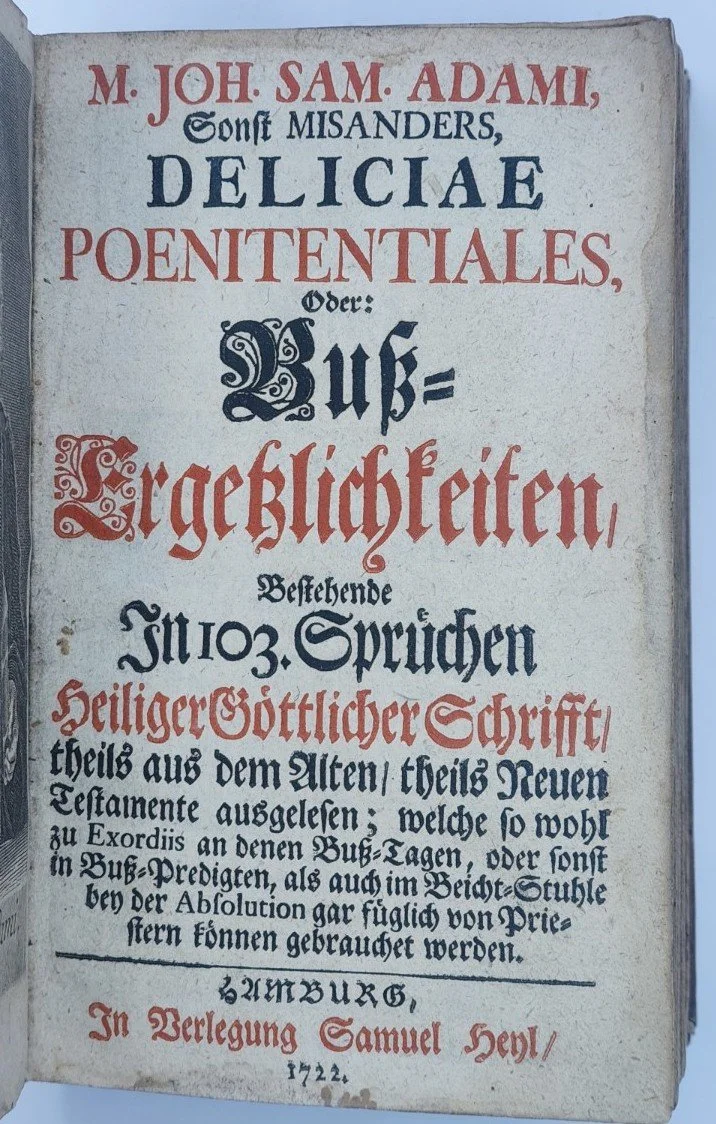 Image 1 of 9
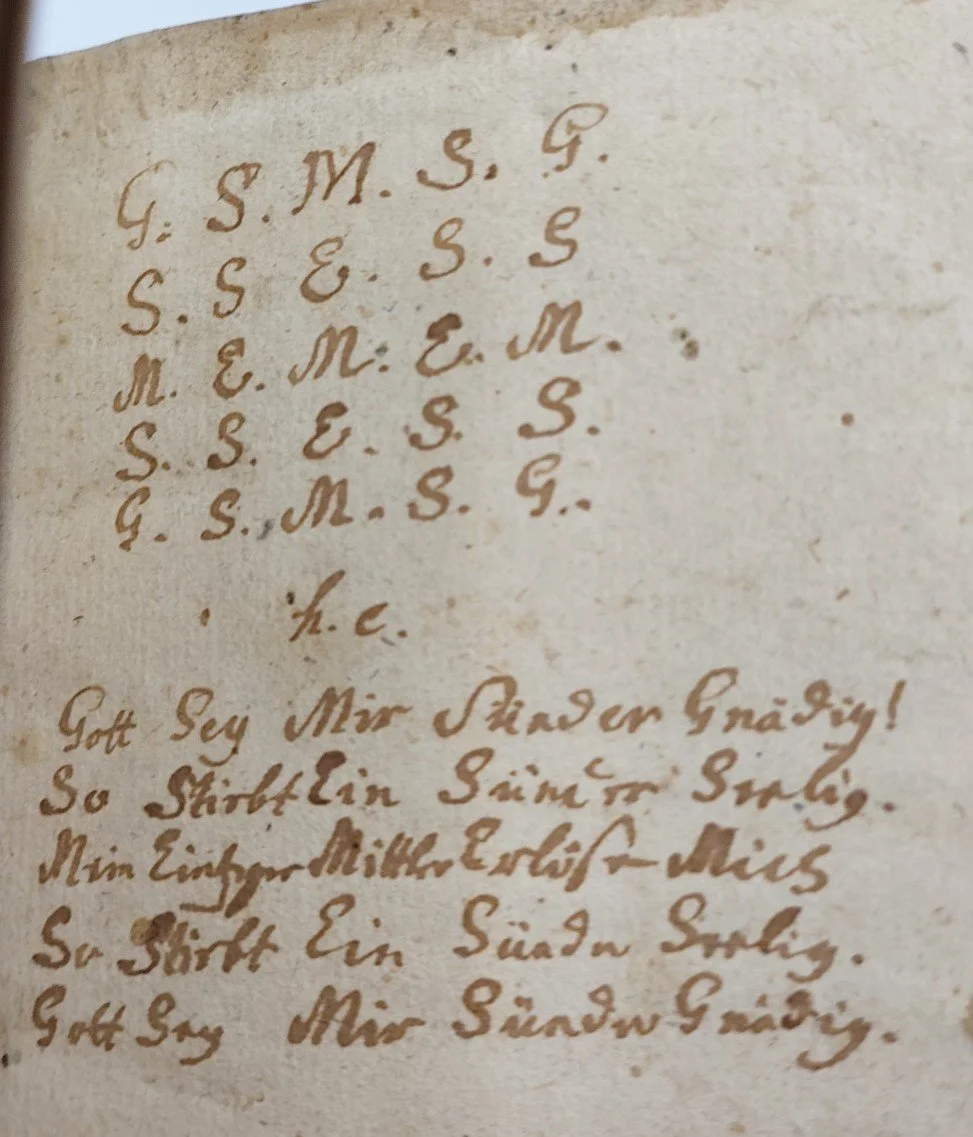 Image 2 of 9
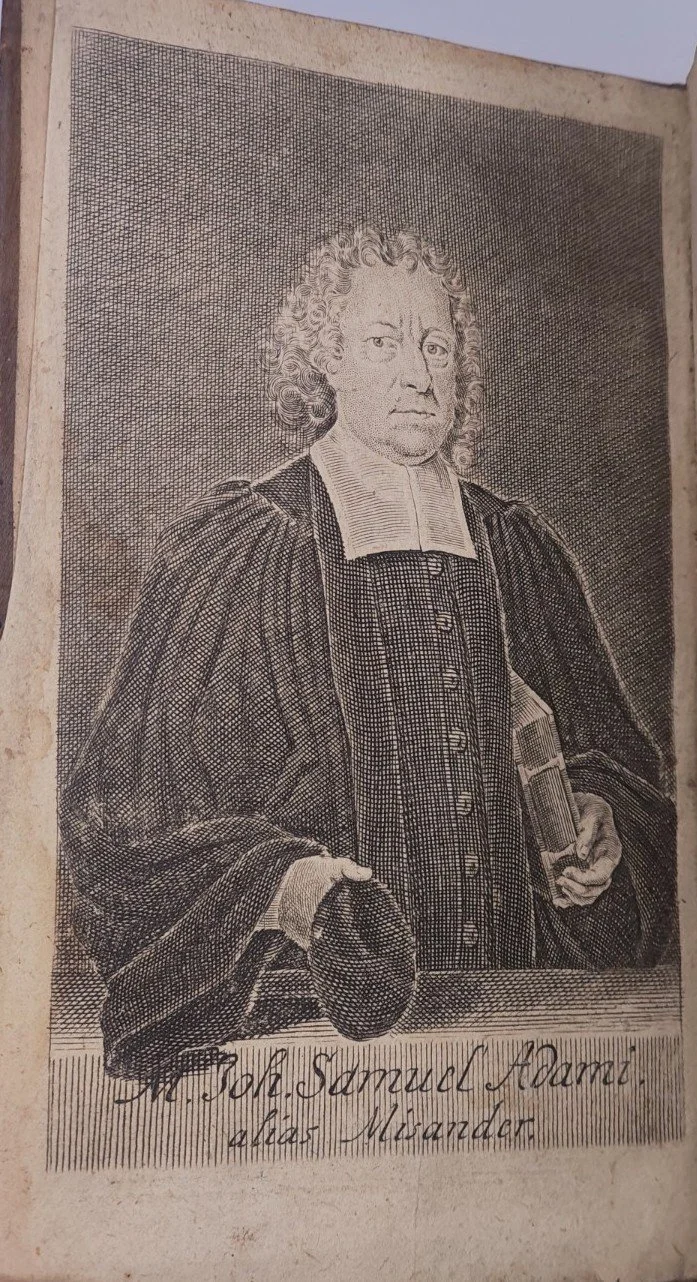 Image 3 of 9
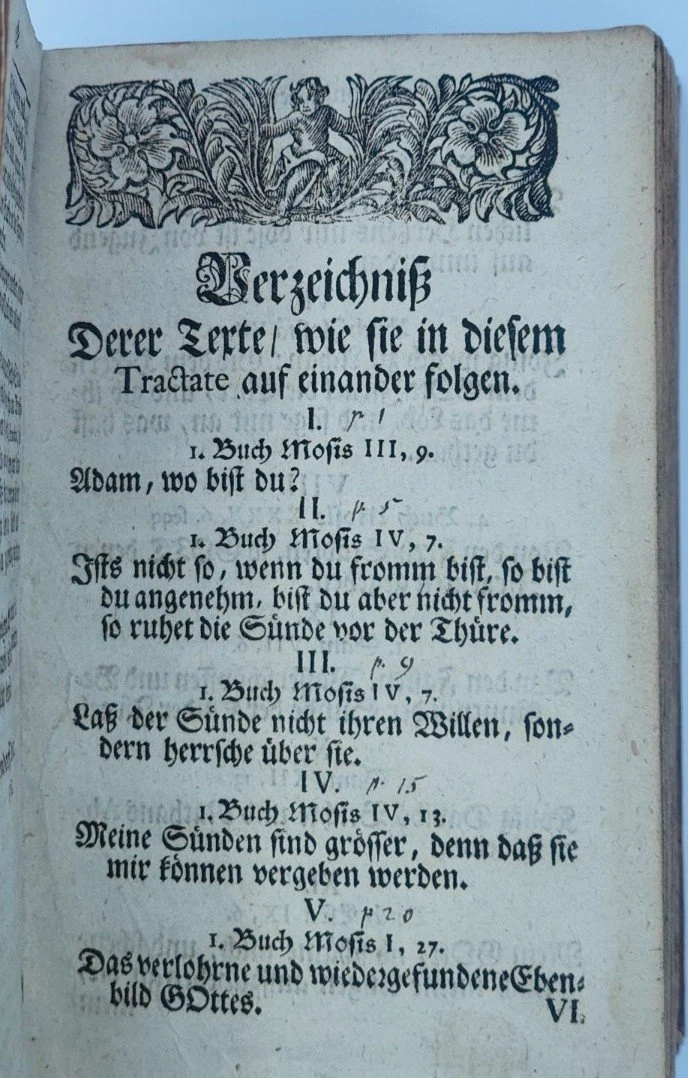 Image 4 of 9
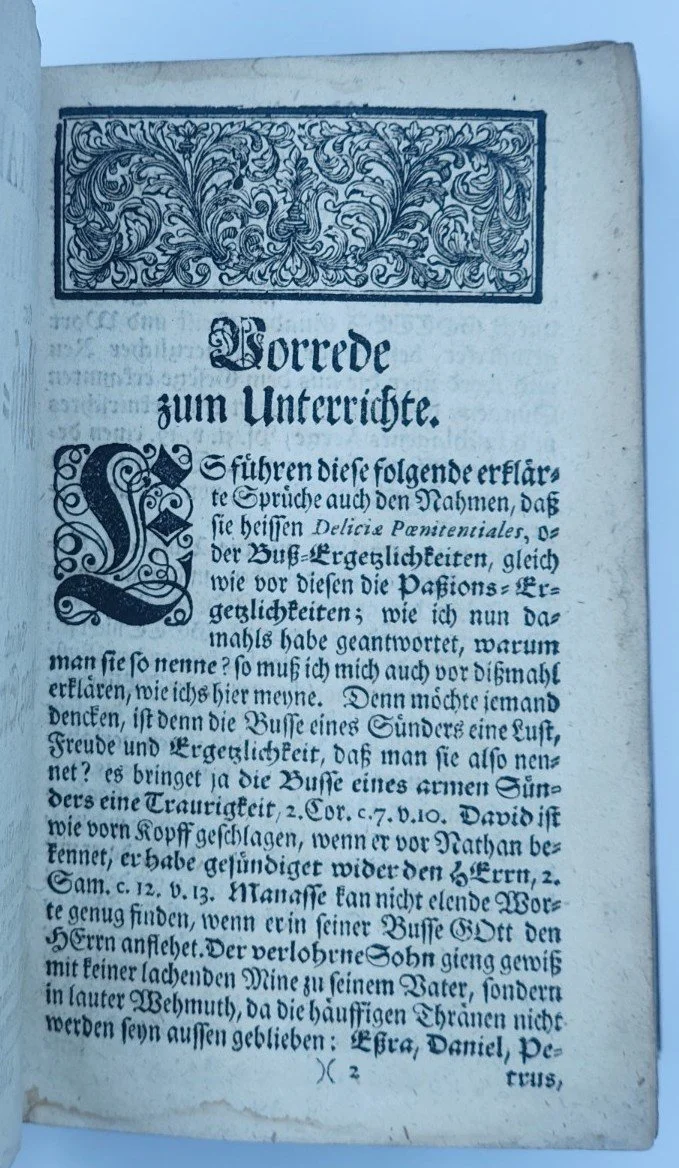 Image 5 of 9
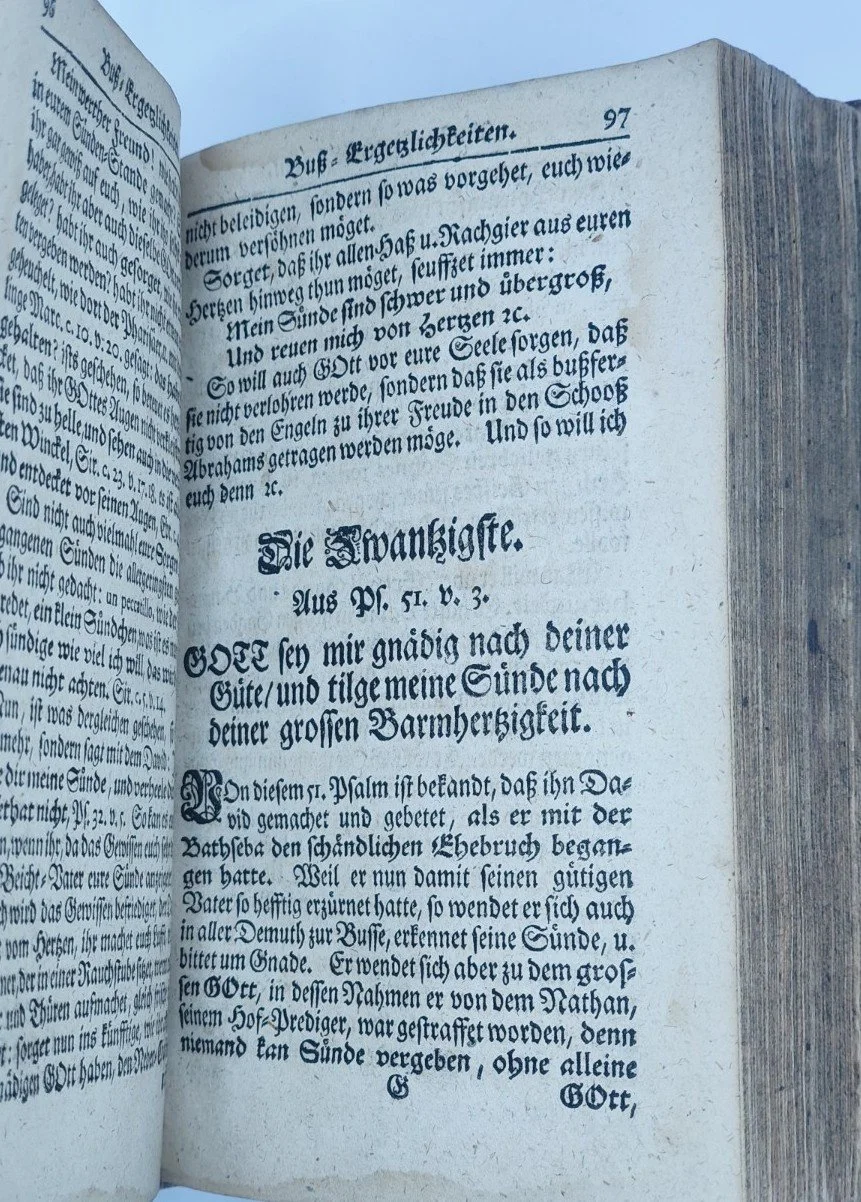 Image 6 of 9
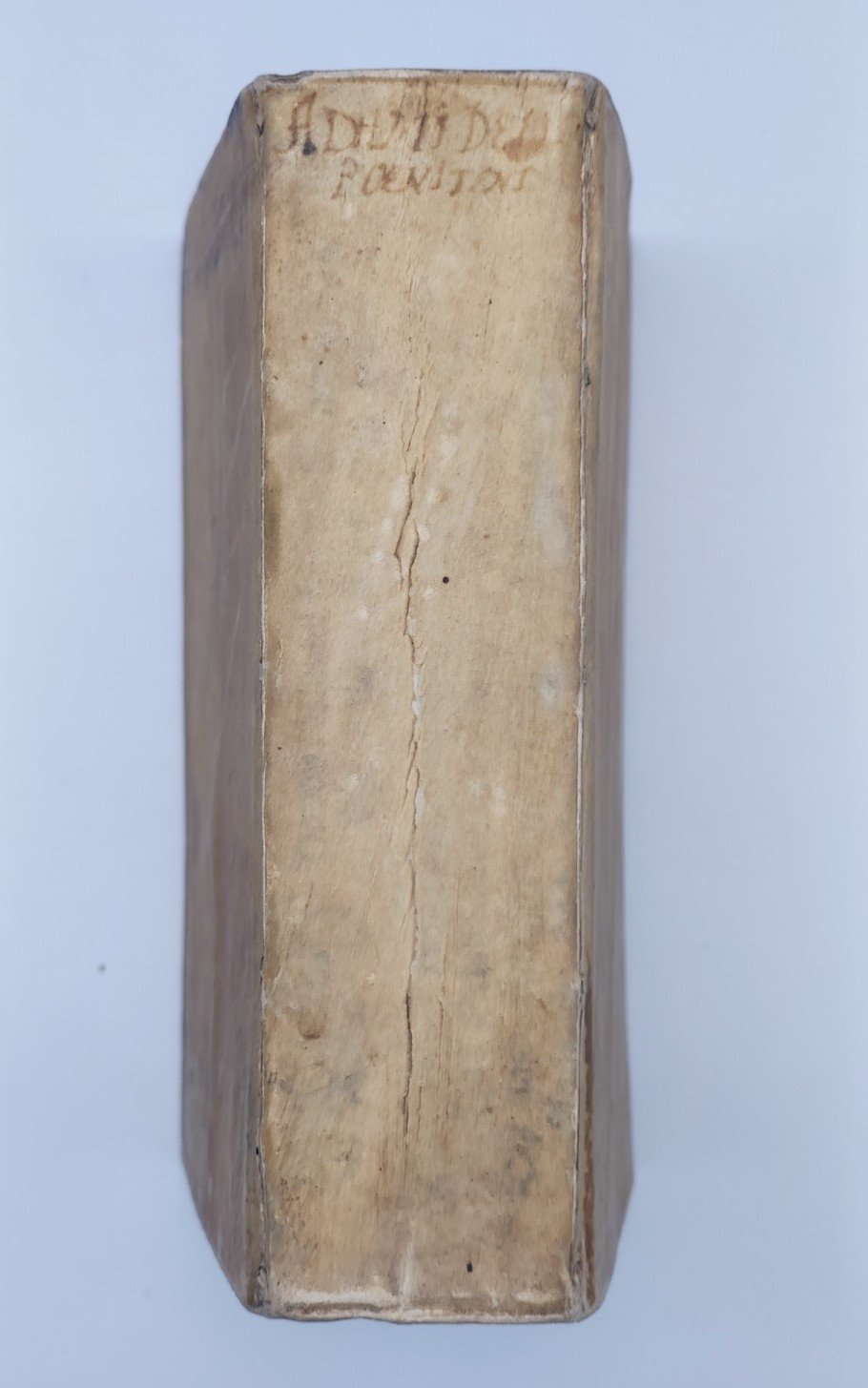 Image 7 of 9
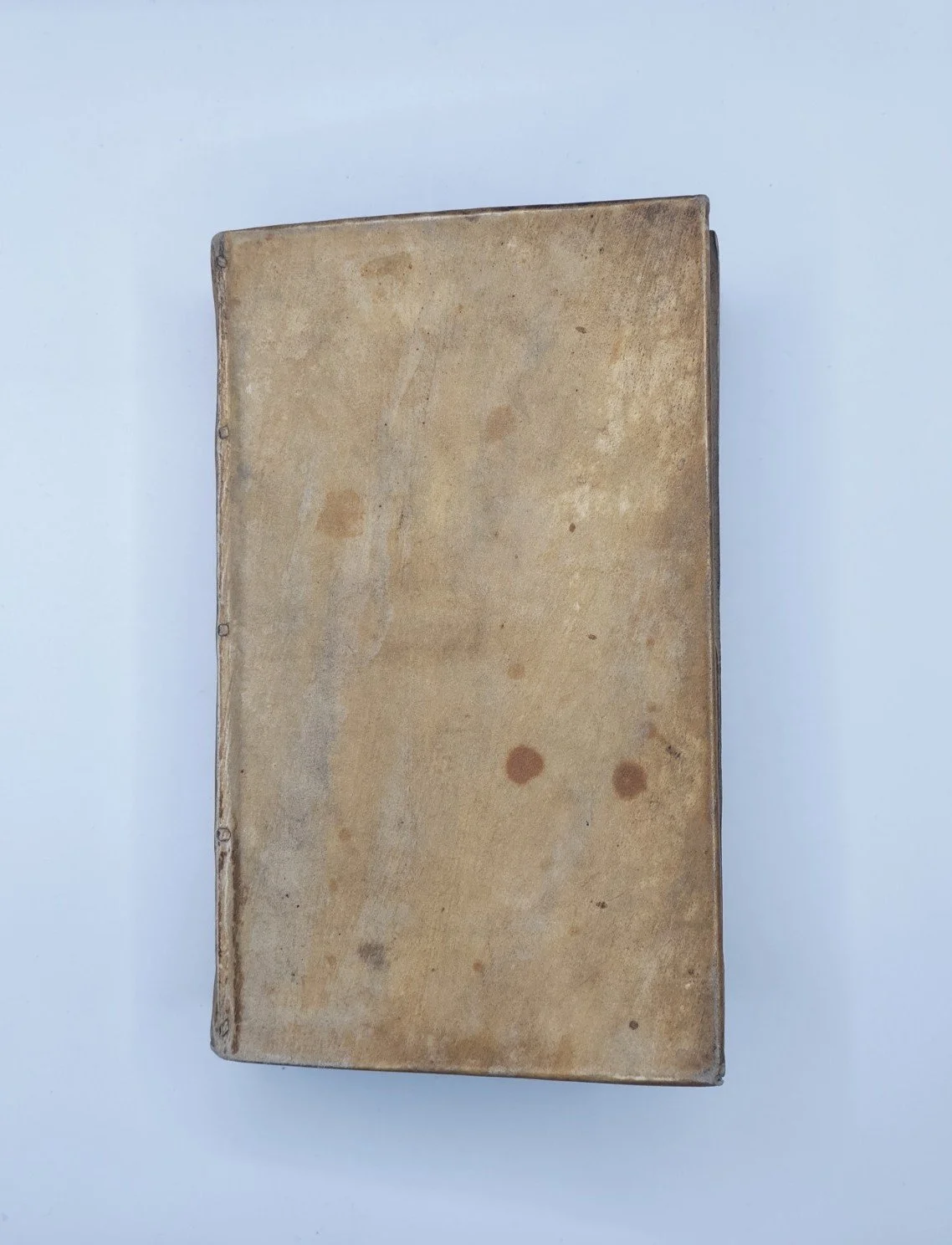 Image 8 of 9
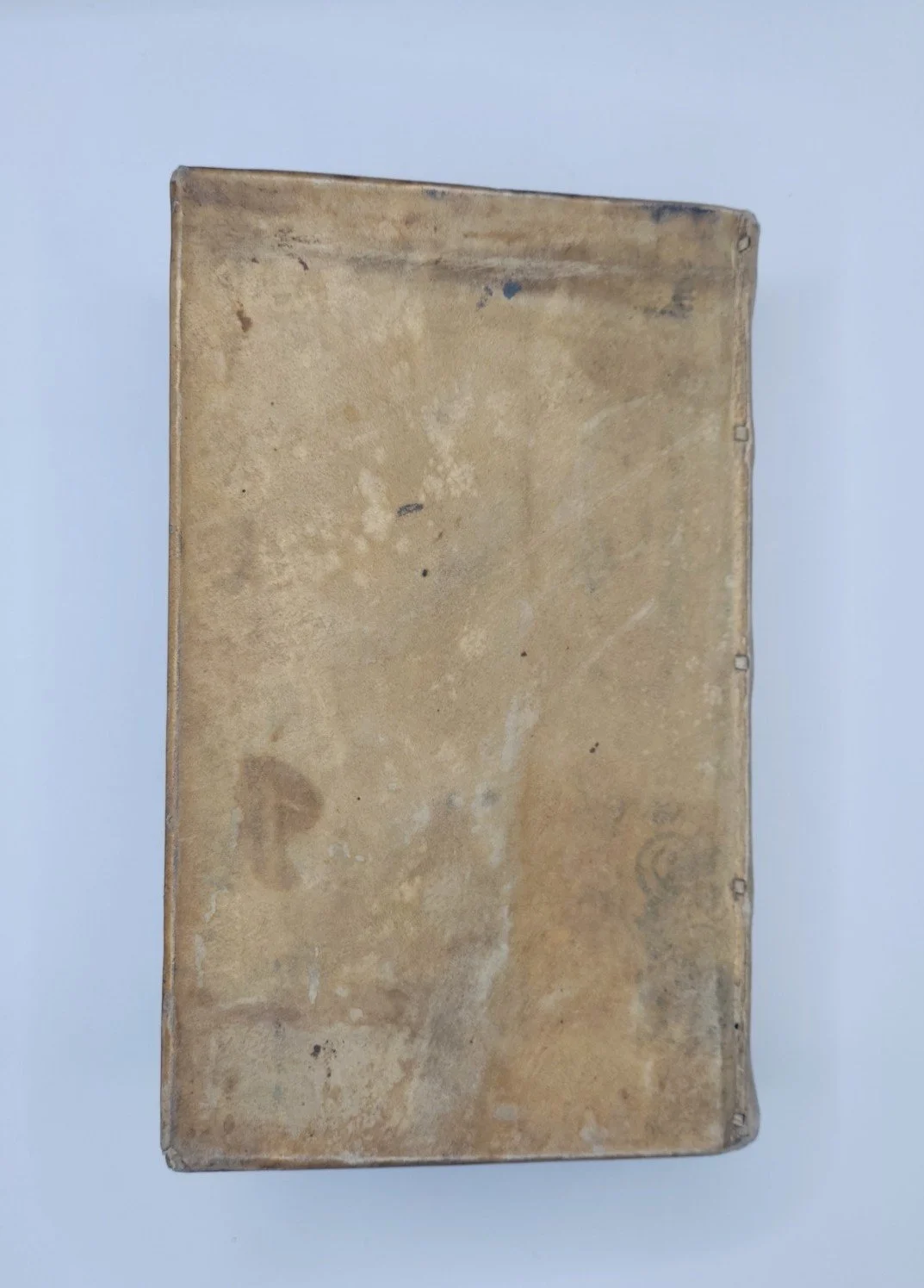 Image 9 of 9