Introduction
This small seventeenth-century Roman Breviary was printed in Paris in 1660. It is the Pars Aestivalis, the summer part of the Breviarium Romanum, the liturgical book used for the daily offices of the Roman Catholic Church.
Printed in red and black, with engraved illustrations, blue-stained edges, and an early gilt-tooled leather binding, the volume is a compact witness to the post-Tridentine Catholic book world. It was not made as a decorative luxury book, but as a practical object for repeated liturgical use — a book to be handled, read, and carried through the rhythm of daily prayer.
Physical description
Title: Breviarium Romanum. Pars Aestivalis
Place of printing: Paris
Publisher/printer: Apud Societatem Typographicam Librorum Officii Ecclesiastici
Year: 1660
Language: Latin
Printed in red and black
Dense double-column text
Engraved illustrations
Blue-stained edges
Early or contemporary dark leather binding with gilt decoration
Manuscript ownership and use inscriptions to the endleaves
One inscription appears to include the phrase “pro choro”, suggesting possible use in a choir, conventual, or ecclesiastical context
Binding rubbed and worn, with wear to corners, spine, joints, and extremities
Internal age-toning, staining, spotting, and handling wear throughout
Context
The Breviarium Romanum was the central book of the Roman Catholic Divine Office, containing the psalms, hymns, readings, responsories, antiphons, and prayers used throughout the canonical hours. Following the Council of Trent, the Roman Breviary was revised and standardized, becoming one of the defining liturgical books of the post-Tridentine Catholic Church.
This volume belongs to that tradition. As the Pars Aestivalis, it contains the summer portion of the breviary cycle rather than the complete year. Such books were often issued in seasonal parts, allowing the user to carry only the relevant volume for a given period of the liturgical year.
The Paris imprint, red-and-black printing, engraved imagery, and compact format place the book within a world of practical ecclesiastical printing: carefully produced, visually ordered, and intended for sustained religious use.
Significance
What makes this copy especially appealing is the combination of formal liturgical printing and visible traces of use. The early manuscript notes to the endleaves, including the possible “pro choro” inscription, suggest that the book may once have belonged to a choir, convent, or ecclesiastical institution. Such evidence gives the volume a more immediate material history.
Rather than being merely an abstract liturgical text, this is a book with signs of ownership, handling, and devotional practice. Its worn binding, stained leaves, blue edges, engraved illustrations, and manuscript inscriptions all contribute to its character as a surviving working object from seventeenth-century Catholic life.
For collectors of theology, liturgy, early printed books, Catholic devotional material, or books with provenance and use marks, this is a compact but evocative example of the Roman Breviary tradition.
Introduction
This small seventeenth-century Roman Breviary was printed in Paris in 1660. It is the Pars Aestivalis, the summer part of the Breviarium Romanum, the liturgical book used for the daily offices of the Roman Catholic Church.
Printed in red and black, with engraved illustrations, blue-stained edges, and an early gilt-tooled leather binding, the volume is a compact witness to the post-Tridentine Catholic book world. It was not made as a decorative luxury book, but as a practical object for repeated liturgical use — a book to be handled, read, and carried through the rhythm of daily prayer.
Physical description
Title: Breviarium Romanum. Pars Aestivalis
Place of printing: Paris
Publisher/printer: Apud Societatem Typographicam Librorum Officii Ecclesiastici
Year: 1660
Language: Latin
Printed in red and black
Dense double-column text
Engraved illustrations
Blue-stained edges
Early or contemporary dark leather binding with gilt decoration
Manuscript ownership and use inscriptions to the endleaves
One inscription appears to include the phrase “pro choro”, suggesting possible use in a choir, conventual, or ecclesiastical context
Binding rubbed and worn, with wear to corners, spine, joints, and extremities
Internal age-toning, staining, spotting, and handling wear throughout
Context
The Breviarium Romanum was the central book of the Roman Catholic Divine Office, containing the psalms, hymns, readings, responsories, antiphons, and prayers used throughout the canonical hours. Following the Council of Trent, the Roman Breviary was revised and standardized, becoming one of the defining liturgical books of the post-Tridentine Catholic Church.
This volume belongs to that tradition. As the Pars Aestivalis, it contains the summer portion of the breviary cycle rather than the complete year. Such books were often issued in seasonal parts, allowing the user to carry only the relevant volume for a given period of the liturgical year.
The Paris imprint, red-and-black printing, engraved imagery, and compact format place the book within a world of practical ecclesiastical printing: carefully produced, visually ordered, and intended for sustained religious use.
Significance
What makes this copy especially appealing is the combination of formal liturgical printing and visible traces of use. The early manuscript notes to the endleaves, including the possible “pro choro” inscription, suggest that the book may once have belonged to a choir, convent, or ecclesiastical institution. Such evidence gives the volume a more immediate material history.
Rather than being merely an abstract liturgical text, this is a book with signs of ownership, handling, and devotional practice. Its worn binding, stained leaves, blue edges, engraved illustrations, and manuscript inscriptions all contribute to its character as a surviving working object from seventeenth-century Catholic life.
For collectors of theology, liturgy, early printed books, Catholic devotional material, or books with provenance and use marks, this is a compact but evocative example of the Roman Breviary tradition.


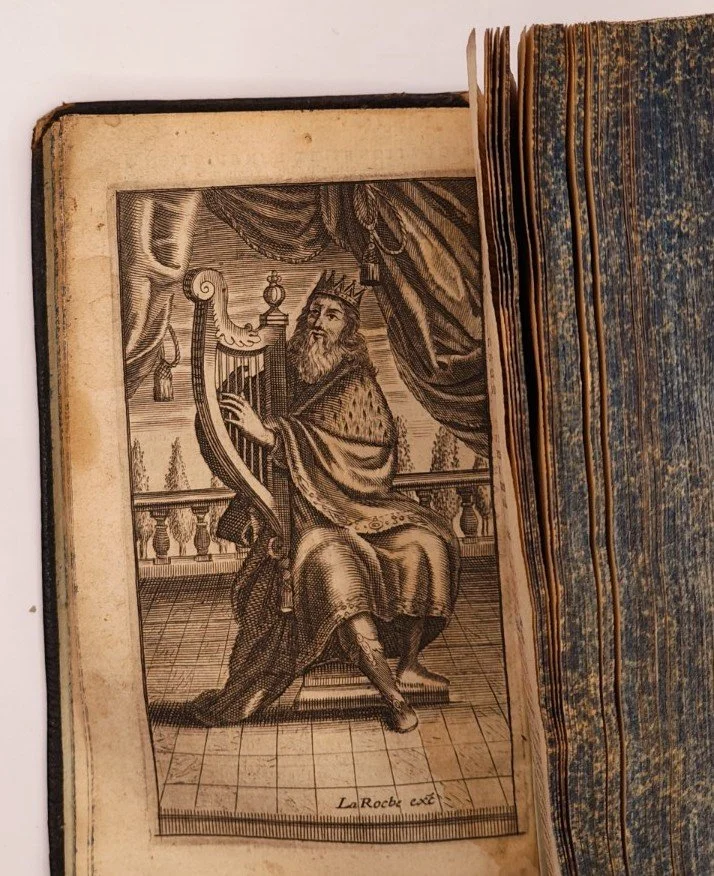 Image 1 of 12
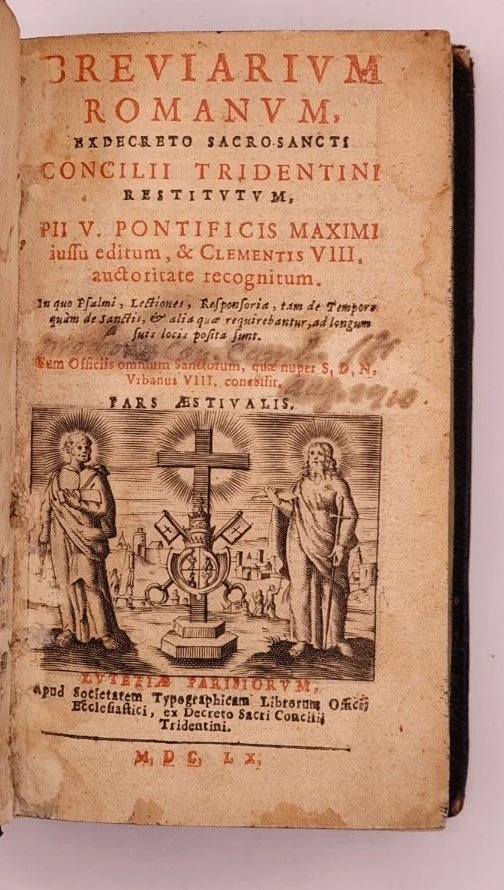 Image 2 of 12
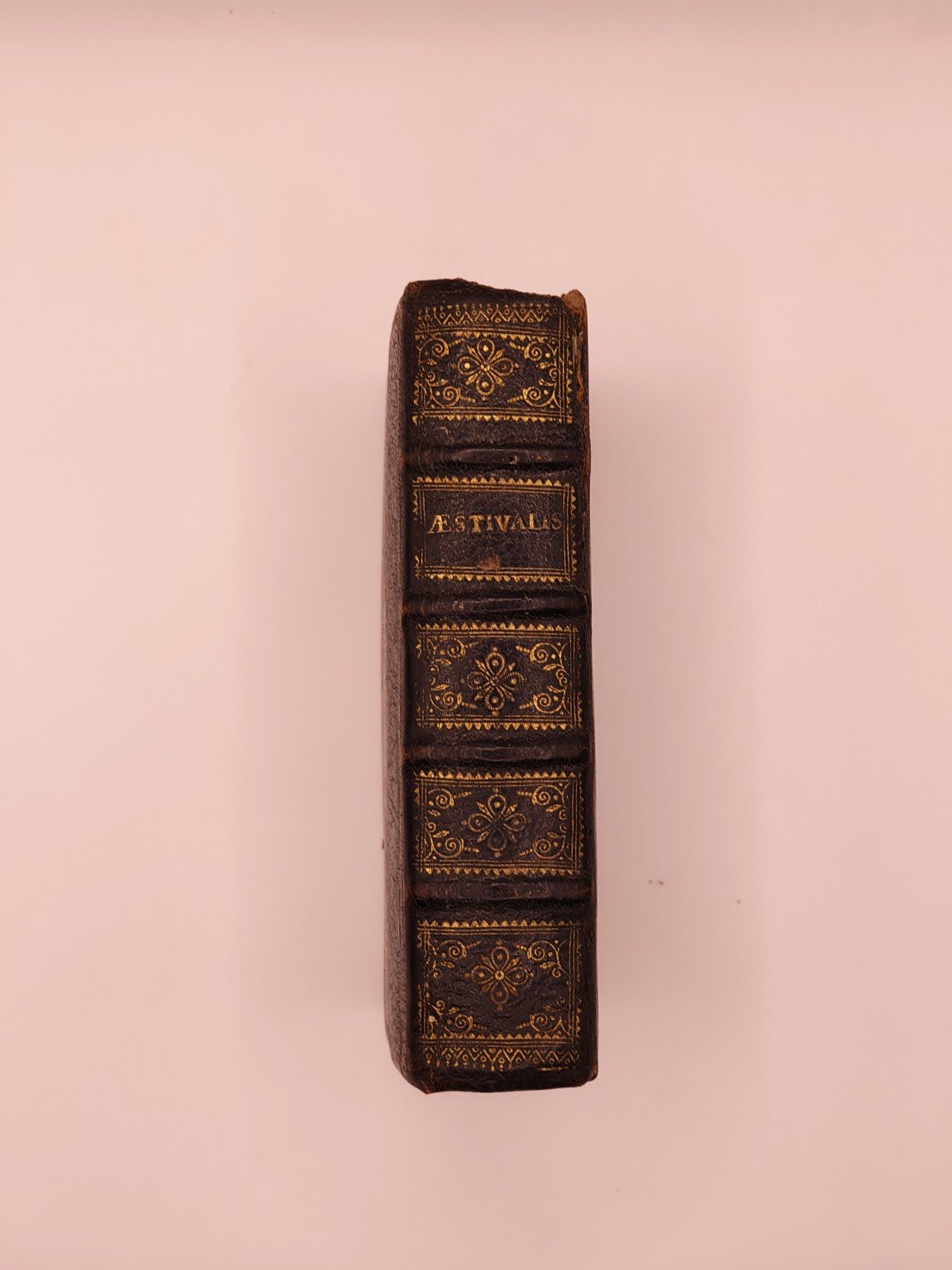 Image 3 of 12
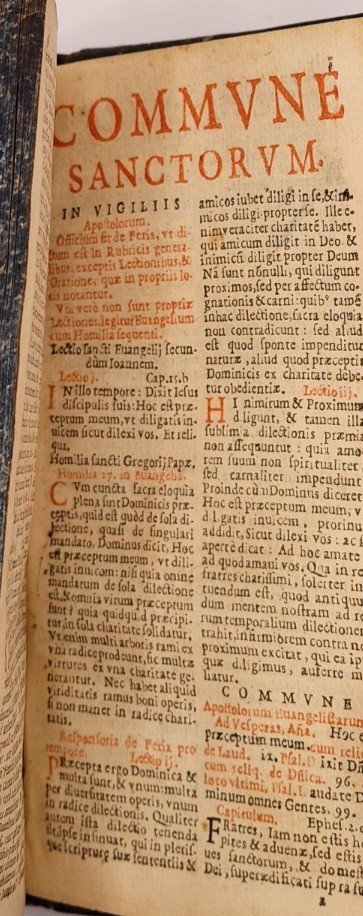 Image 4 of 12
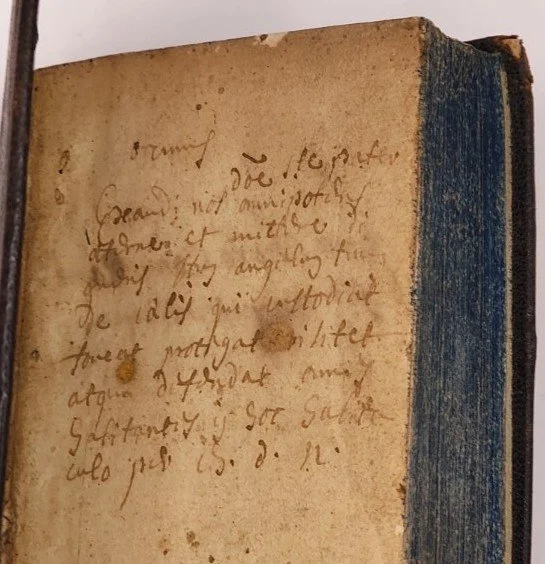 Image 5 of 12
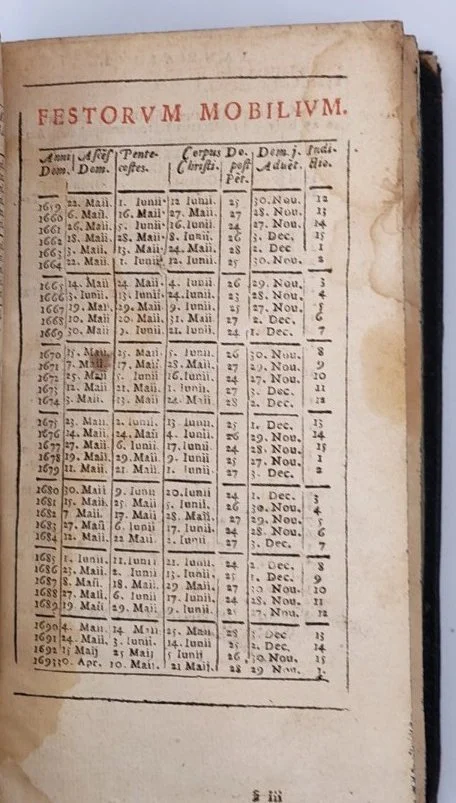 Image 6 of 12
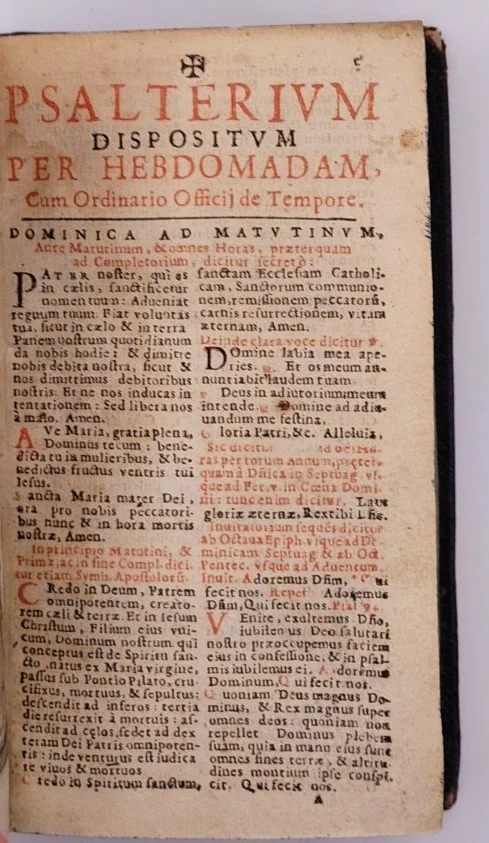 Image 7 of 12
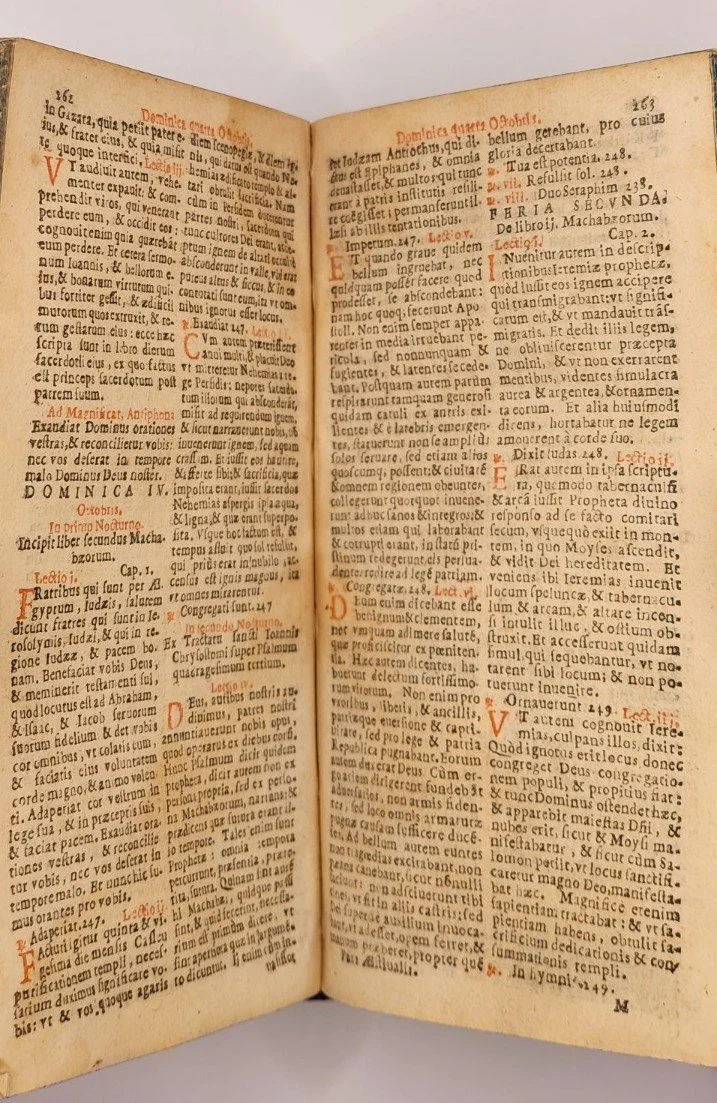 Image 8 of 12
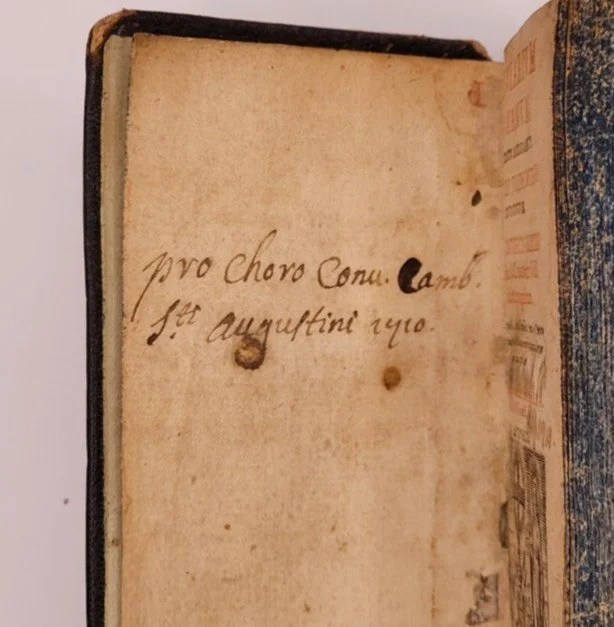 Image 9 of 12
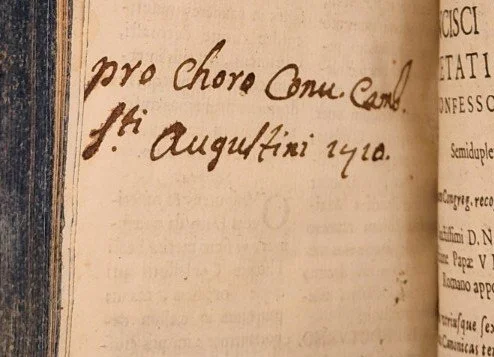 Image 10 of 12
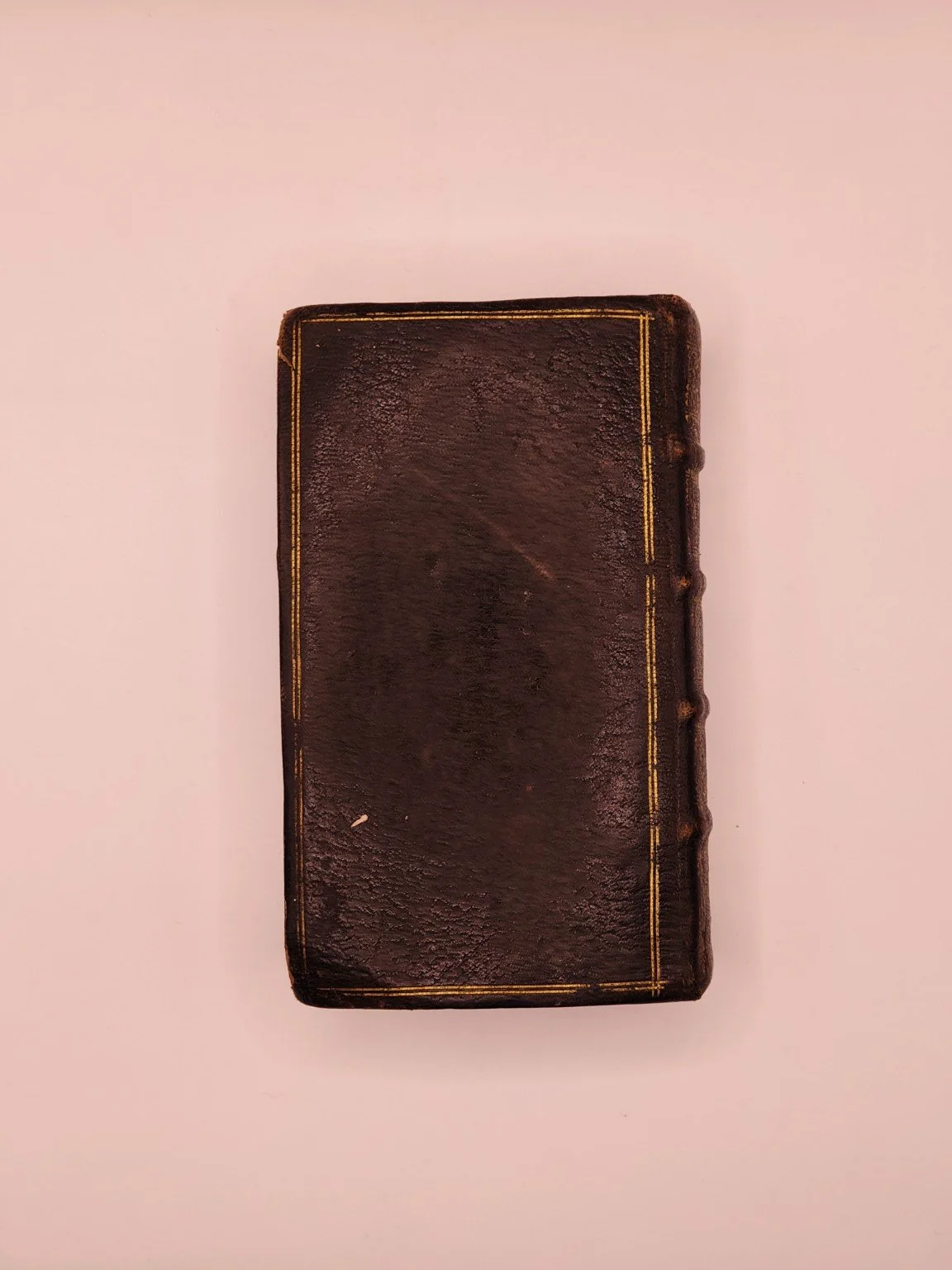 Image 11 of 12
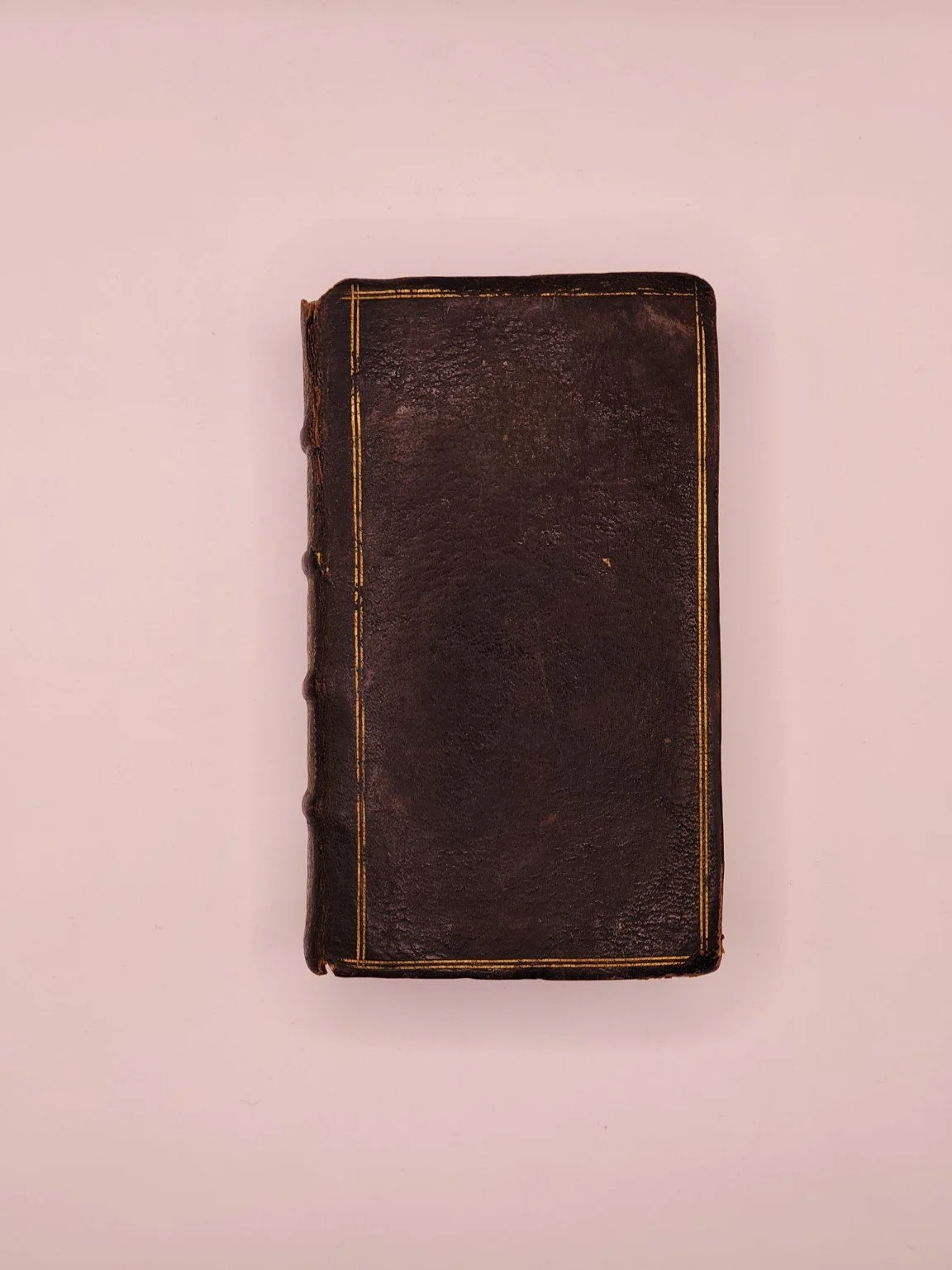 Image 12 of 12