Introduction
This Swedish Bible, printed in Gothenburg in 1764 by Johan Georg Lange, stands as a tangible witness to the religious life and material culture of late eighteenth century Sweden. The substantial full leather binding with its brass clasps and bosses was made to endure generations of use, and the surviving inscriptions reveal that it did precisely that. Names and dates in several hands mark the book’s passage through households where Scripture formed part of the rhythm of everyday life. The volume presents itself not merely as a religious text but as an inherited object shaped by time, devotion and repeated handling.
Physical Description
Title: Biblia. Thet är All Then Heliga Schrift
Language: Swedish
Date: 1764
Place of printing: Gothenburg
Printer: Johan Georg Lange
Edition: Third edition
Binding: Contemporary full leather with original brass clasps and corner fittings
Typography: Black letter type in double column with customary chapter summaries
Provenance: Multiple handwritten ownership notes from the eighteenth and nineteenth centuries
Condition: General wear to binding, scuffing and age toning throughout, scattered spotting, traces of handling, minor worming to boards, textblock complete and sound
Context
Biblical printing in eighteenth century Sweden was both a religious and a civic enterprise. Printers such as Johan Georg Lange contributed to a broader project of supplying durable and legible editions for public and domestic use. Large format Bibles in protective bindings were intended not only for reading but also for preservation, functioning as household anchors for liturgical reading, family records and moral instruction. This volume embodies that dual purpose. The weight of the binding, the brass fittings and the fraktur type all evoke a culture in which the material form of the book was understood as part of its authority.
Significance
Beyond its textual content, the importance of this Bible lies in its accumulated history. The inscriptions on the endpapers create a chain of provenance that transforms the book into a record of personal and familial memory. Wear on the binding and toning of the paper give it a character shaped by continuous use rather than by neglect. As a historical artefact it offers insight into the circulation of sacred texts in provincial Sweden and the forms of craftsmanship that supported such circulation. It stands as a representative example of Swedish eighteenth century Bible printing and as a surviving object of lived devotion.
Introduction
This Swedish Bible, printed in Gothenburg in 1764 by Johan Georg Lange, stands as a tangible witness to the religious life and material culture of late eighteenth century Sweden. The substantial full leather binding with its brass clasps and bosses was made to endure generations of use, and the surviving inscriptions reveal that it did precisely that. Names and dates in several hands mark the book’s passage through households where Scripture formed part of the rhythm of everyday life. The volume presents itself not merely as a religious text but as an inherited object shaped by time, devotion and repeated handling.
Physical Description
Title: Biblia. Thet är All Then Heliga Schrift
Language: Swedish
Date: 1764
Place of printing: Gothenburg
Printer: Johan Georg Lange
Edition: Third edition
Binding: Contemporary full leather with original brass clasps and corner fittings
Typography: Black letter type in double column with customary chapter summaries
Provenance: Multiple handwritten ownership notes from the eighteenth and nineteenth centuries
Condition: General wear to binding, scuffing and age toning throughout, scattered spotting, traces of handling, minor worming to boards, textblock complete and sound
Context
Biblical printing in eighteenth century Sweden was both a religious and a civic enterprise. Printers such as Johan Georg Lange contributed to a broader project of supplying durable and legible editions for public and domestic use. Large format Bibles in protective bindings were intended not only for reading but also for preservation, functioning as household anchors for liturgical reading, family records and moral instruction. This volume embodies that dual purpose. The weight of the binding, the brass fittings and the fraktur type all evoke a culture in which the material form of the book was understood as part of its authority.
Significance
Beyond its textual content, the importance of this Bible lies in its accumulated history. The inscriptions on the endpapers create a chain of provenance that transforms the book into a record of personal and familial memory. Wear on the binding and toning of the paper give it a character shaped by continuous use rather than by neglect. As a historical artefact it offers insight into the circulation of sacred texts in provincial Sweden and the forms of craftsmanship that supported such circulation. It stands as a representative example of Swedish eighteenth century Bible printing and as a surviving object of lived devotion.


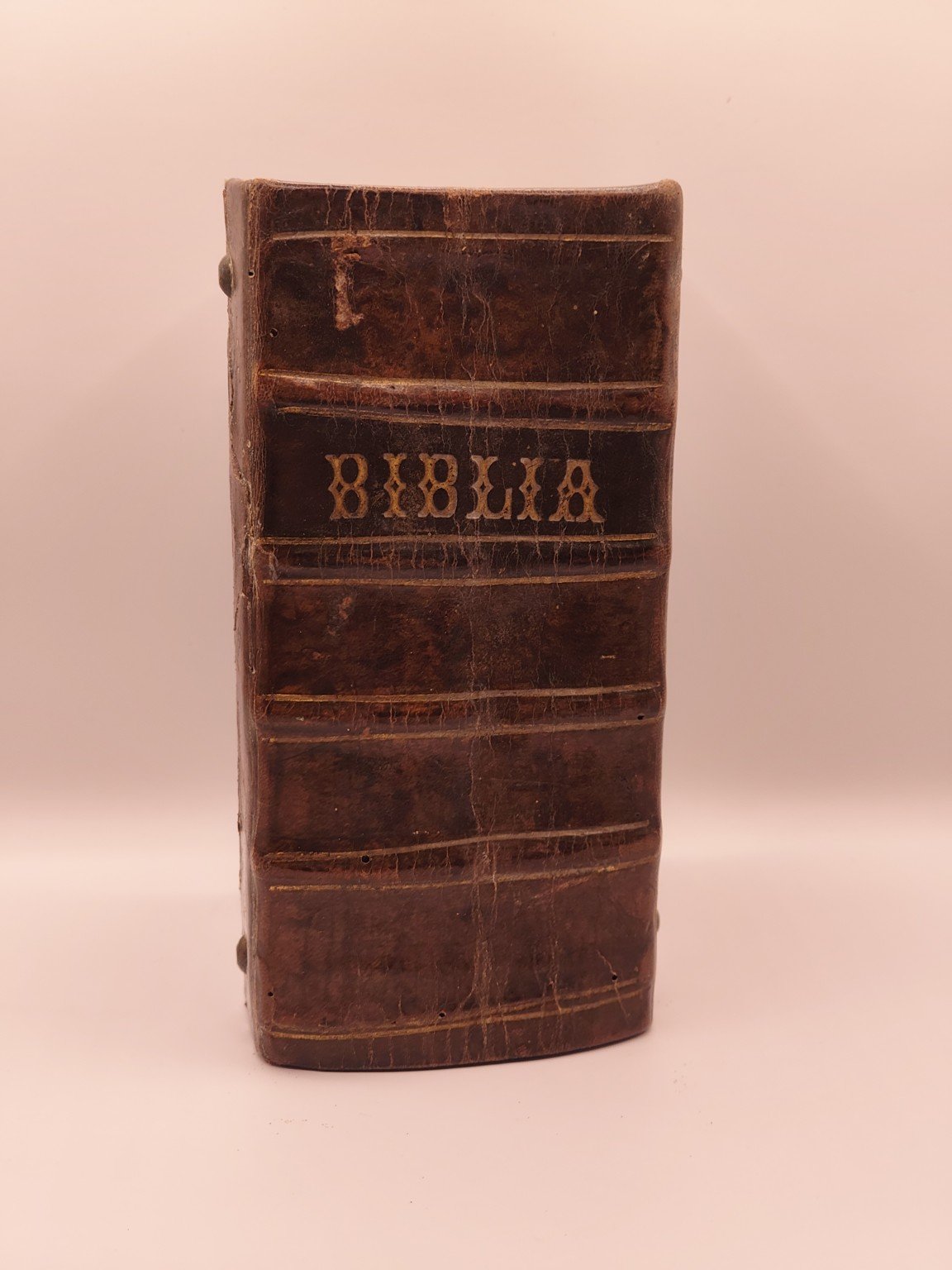 Image 1 of 9
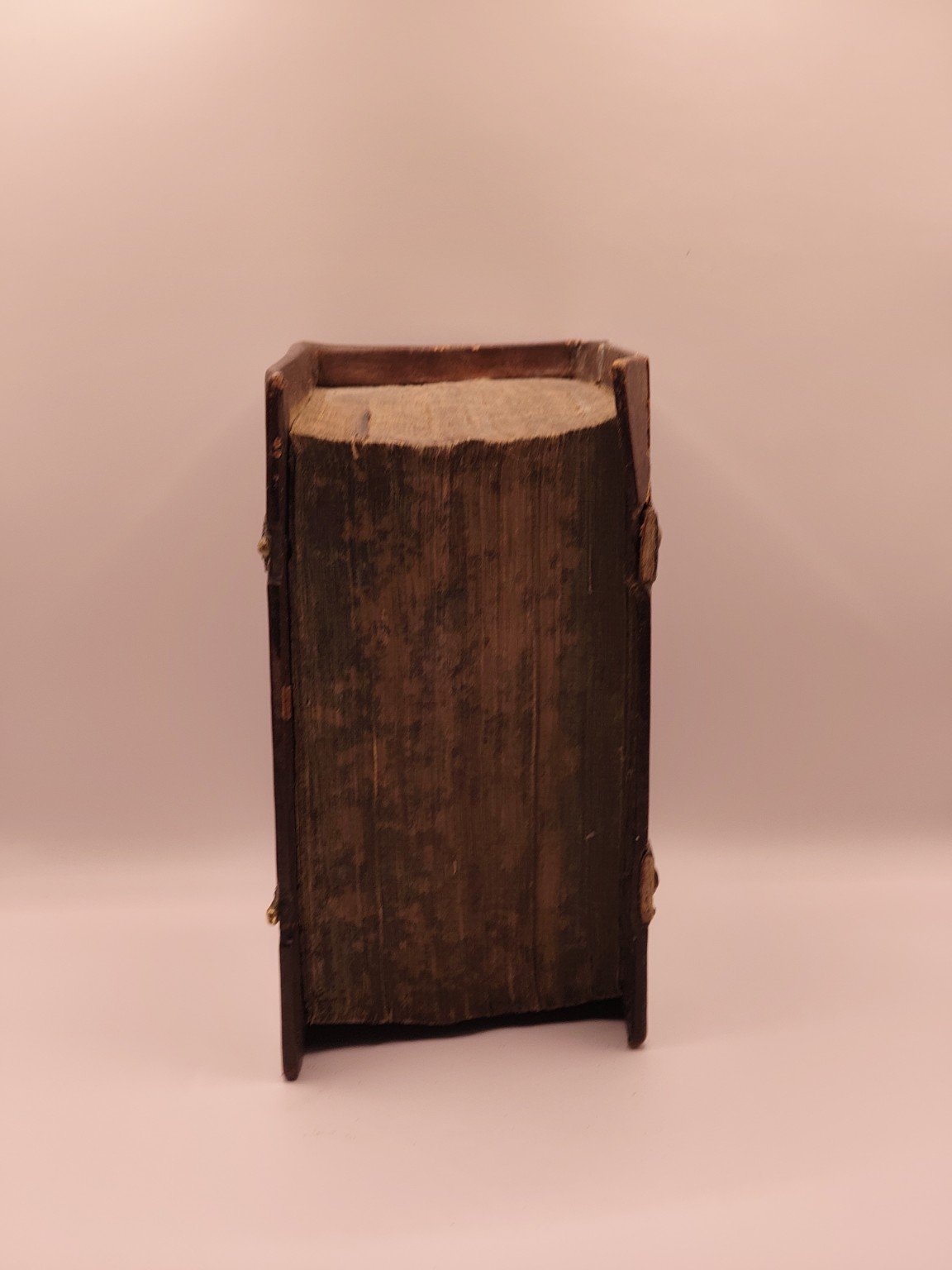 Image 2 of 9
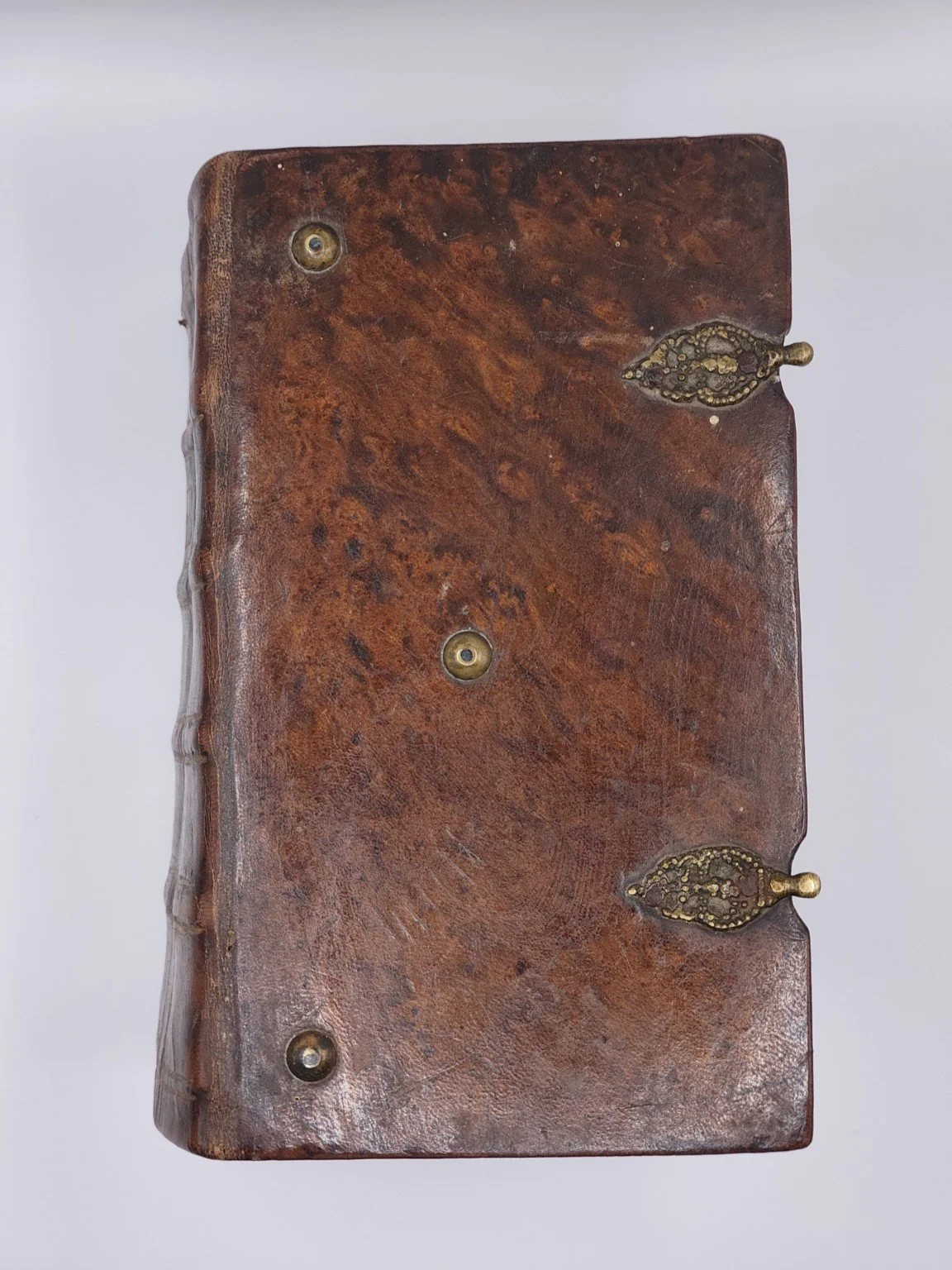 Image 3 of 9
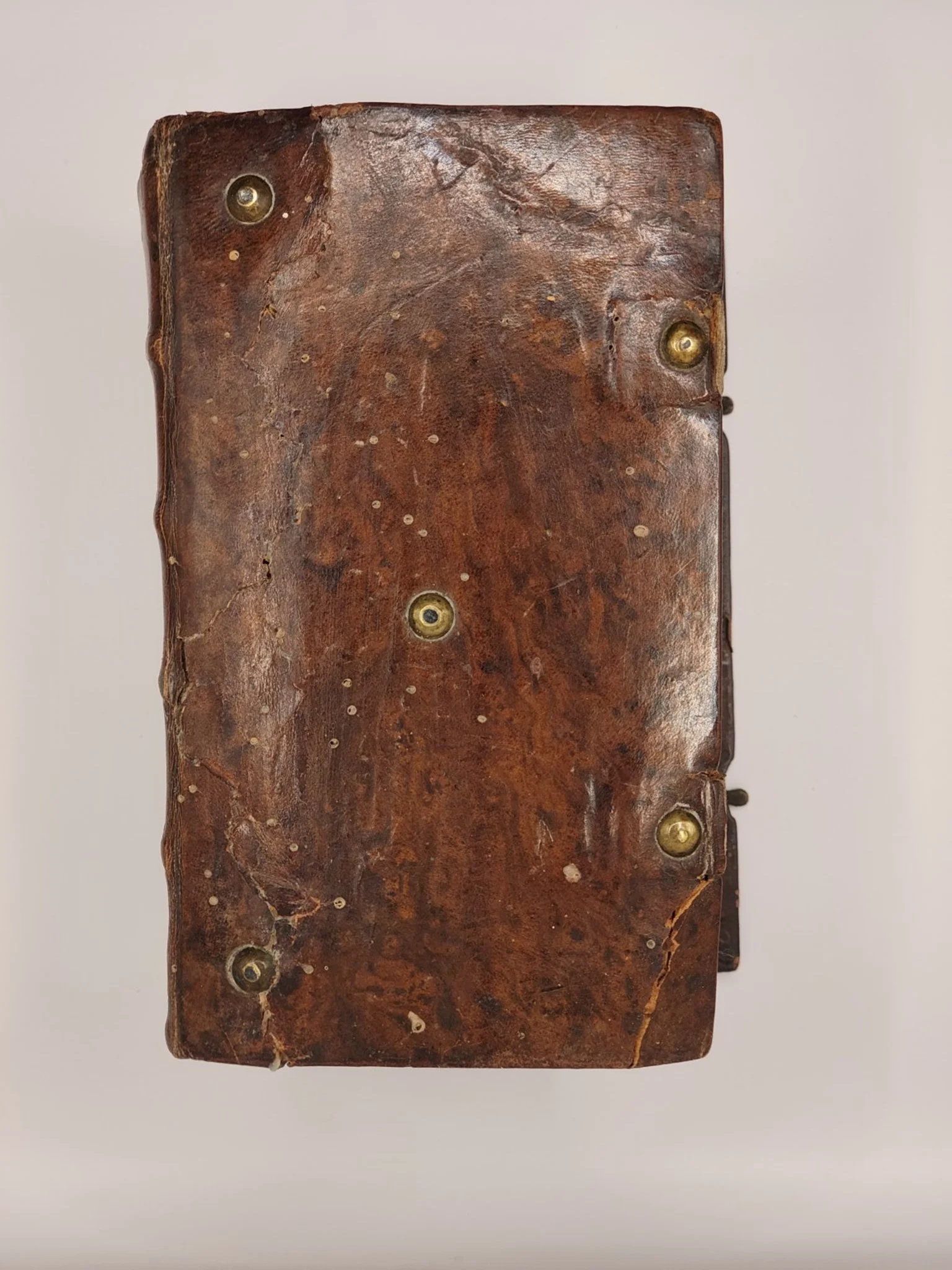 Image 4 of 9
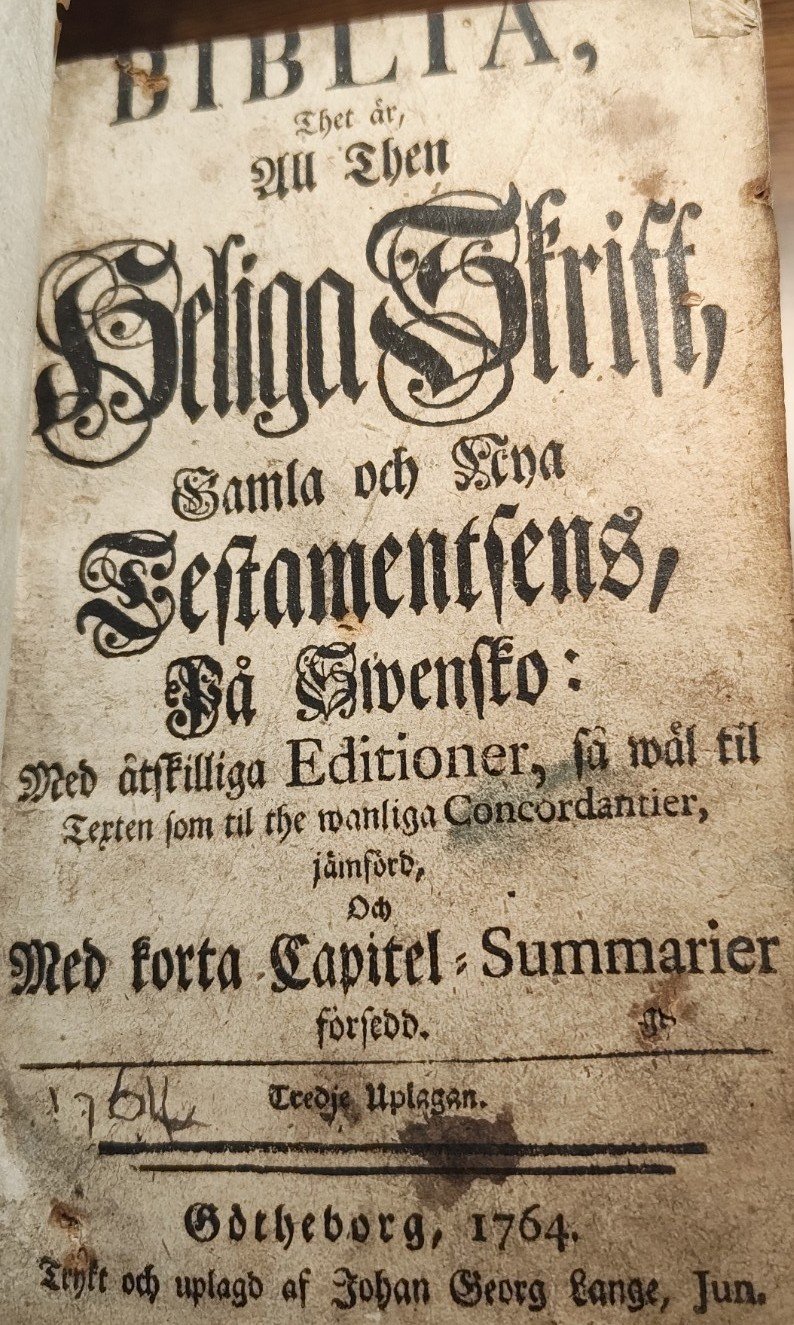 Image 5 of 9
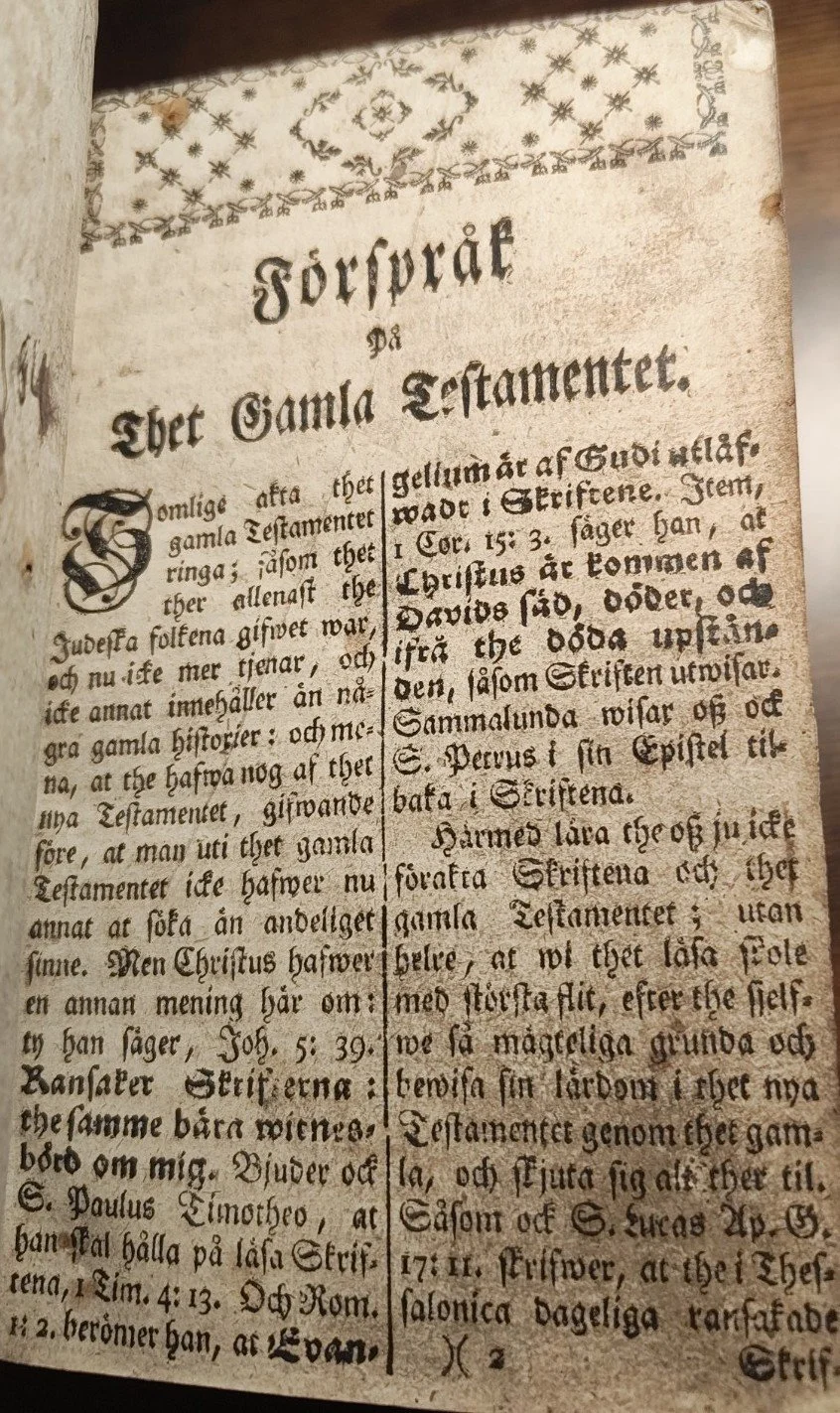 Image 6 of 9
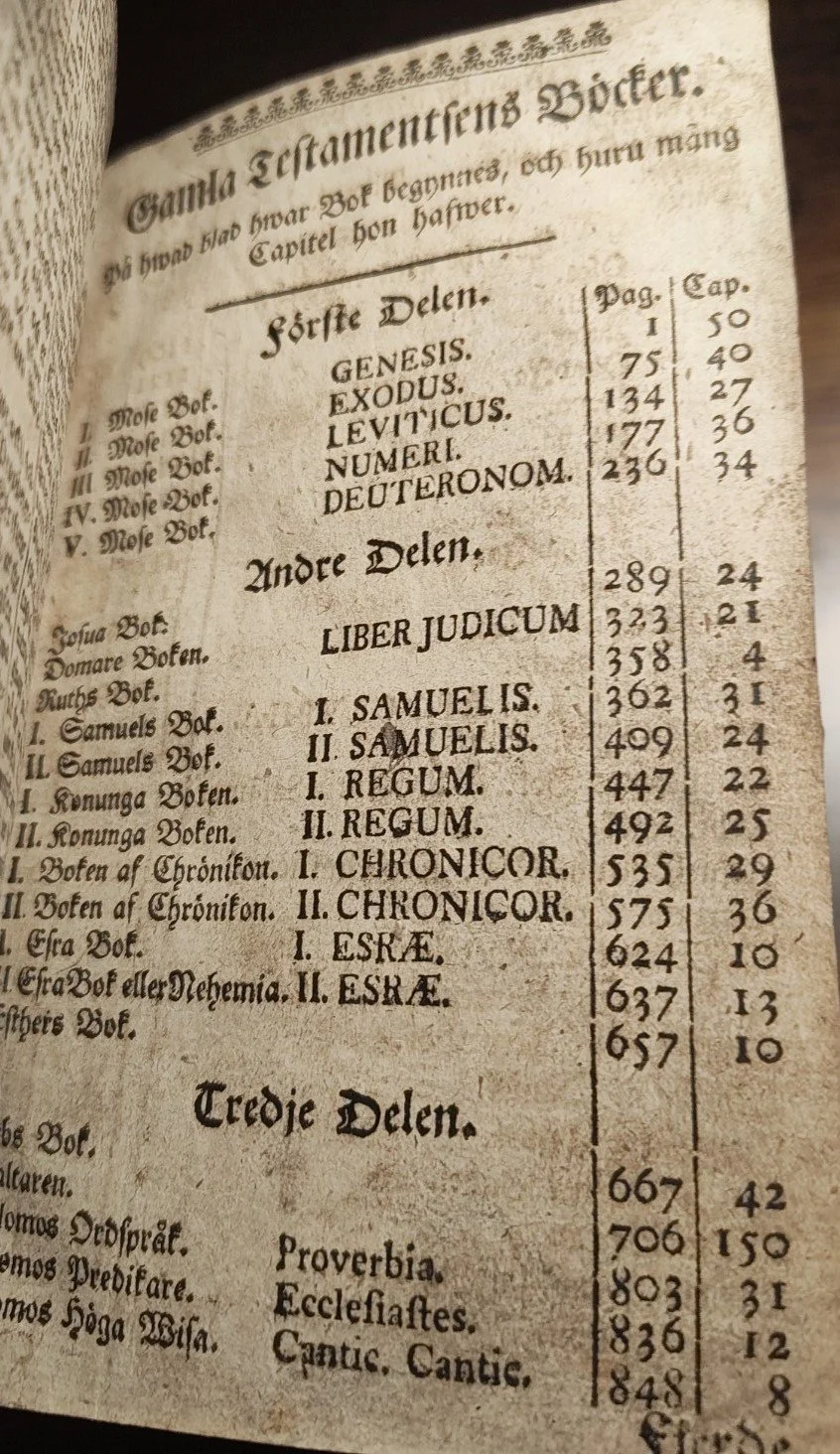 Image 7 of 9
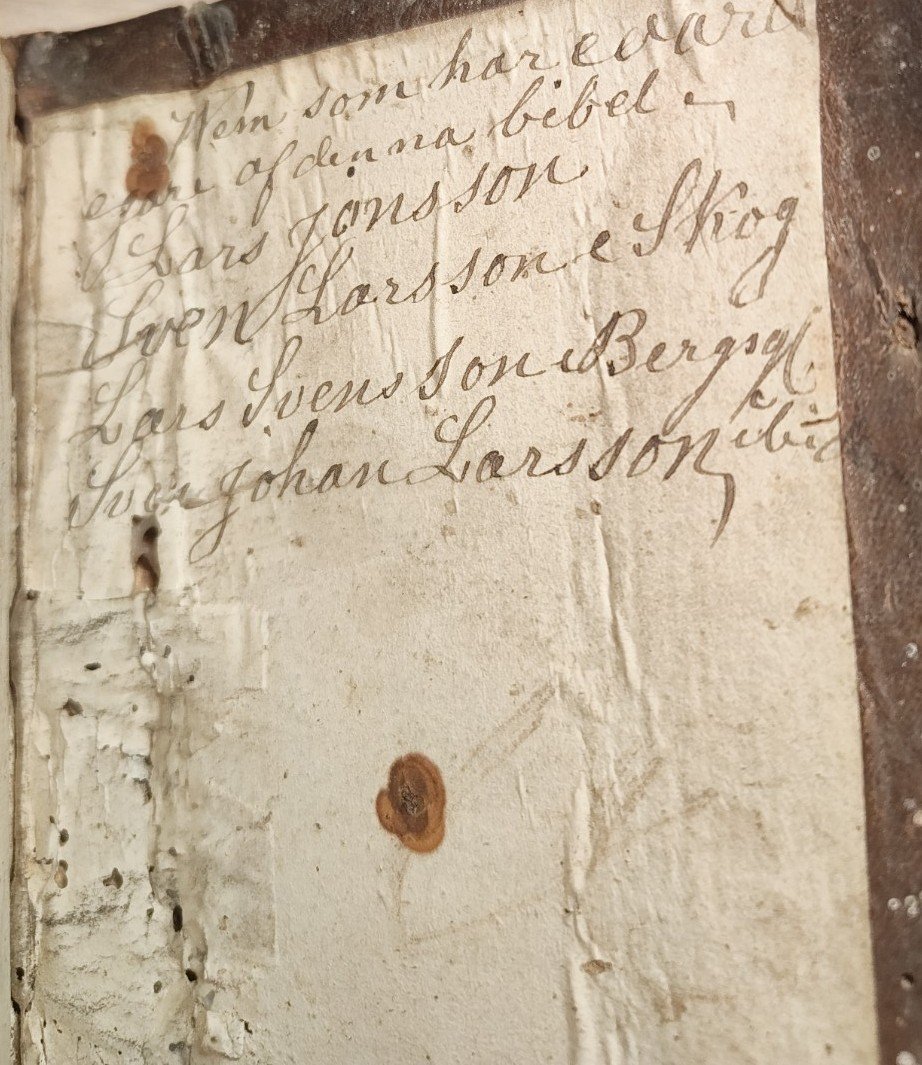 Image 8 of 9
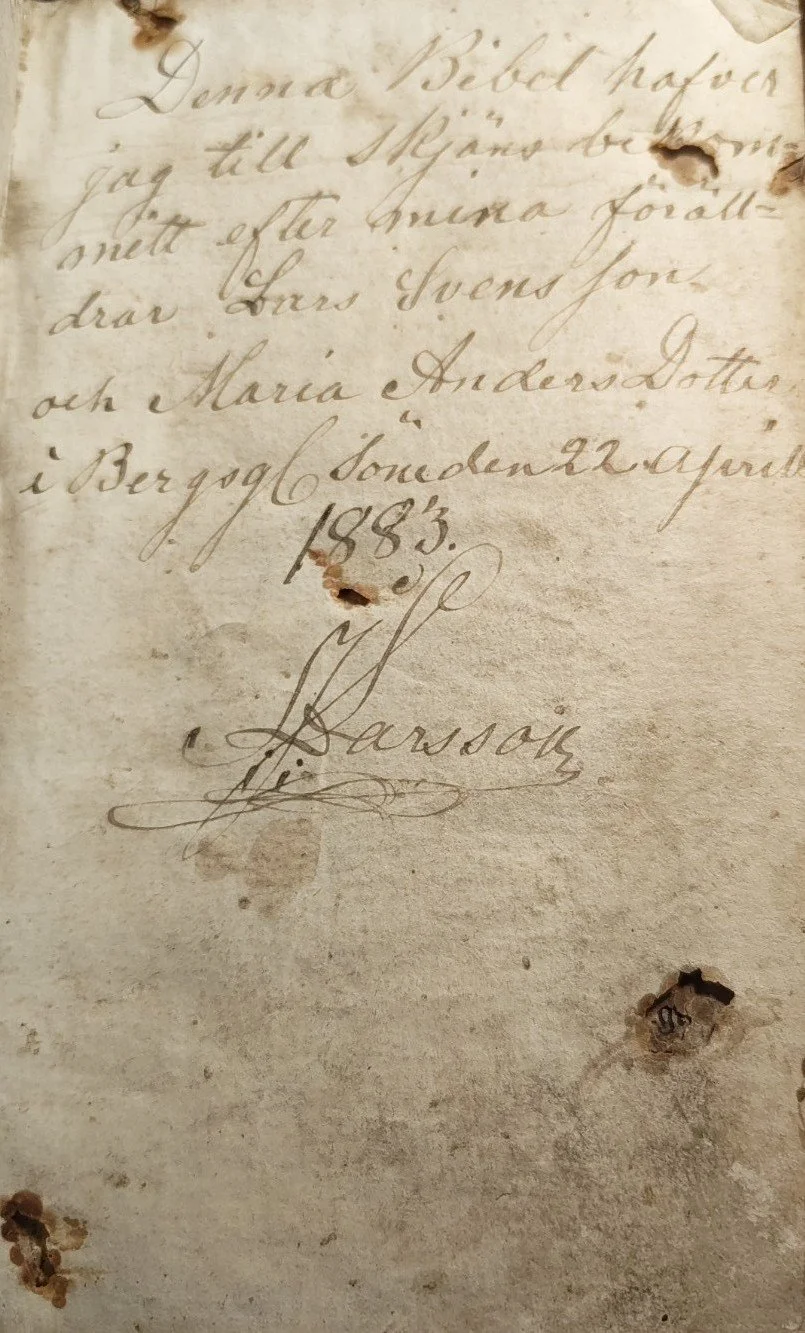 Image 9 of 9