Introduction
Few subjects captured the imagination of nineteenth century Europe as powerfully as ancient Egypt. Following the decipherment of hieroglyphs and the growing wave of archaeological discoveries along the Nile, Egyptology emerged as one of the most fascinating fields of historical inquiry. Among the books that brought this ancient civilisation to a wider audience, Aegypten in Bild und Wort stands out as one of the most ambitious and visually impressive.
Written by the German Egyptologist Georg Ebers and published in Stuttgart and Leipzig by Eduard Hallberger in 1879, this monumental two volume work sought to present the world of ancient Egypt through both scholarship and imagery. Combining detailed historical narrative with hundreds of illustrations, the book offered nineteenth century readers a richly visual journey through temples, monuments, landscapes, and daily life along the Nile.
Large, dramatic, and beautifully illustrated, the work belongs to the great tradition of Victorian illustrated books that transformed new archaeological discoveries into works of art for the private library.
Physical description
• Two volumes
• Published Stuttgart and Leipzig, Eduard Hallberger, 1879–1880
• Large folio format
• Original decorative publisher’s cloth bindings
• Elaborate blind stamped ornament to boards
• Gilt decorated spines
• Distinctive turquoise decorative inlays to the covers
• Profusely illustrated throughout with several hundred wood engraved illustrations and plates
• Includes coloured maps as issued
• Illustrations depicting Egyptian temples, monuments, landscapes of the Nile, reconstructions of ancient life, and biblical scenes set in Pharaonic Egypt
Context
The late nineteenth century witnessed an extraordinary surge of European interest in the ancient world of Egypt. Following the decipherment of hieroglyphic writing by Jean François Champollion earlier in the century, the civilisation of the pharaohs could at last be studied and understood in unprecedented detail. Archaeological expeditions and scholarly publications brought temples, inscriptions, and artefacts to the attention of scholars and the public alike.
Within this atmosphere of discovery, Georg Ebers emerged as one of the most influential figures of early Egyptology. Known both as a scholar and as a popular writer, Ebers sought to present ancient Egypt not merely as an academic subject but as a living civilisation accessible to a broader audience.
Aegypten in Bild und Wort was conceived as a monumental visual introduction to this world. The text provides historical explanation and cultural interpretation, while the illustrations recreate the architecture, landscapes, and ceremonial life of ancient Egypt with remarkable detail. The result is a work that combines scholarship, artistry, and the nineteenth century fascination with the distant past.
Significance
More than a century after its publication, Aegypten in Bild und Wort remains one of the most striking illustrated books devoted to ancient Egypt. Its hundreds of engravings capture the Victorian imagination at a moment when archaeology and historical curiosity were reshaping the European understanding of antiquity.
The elaborate decorative binding with its turquoise ornamentation reflects the book’s original role as a display piece within the cultivated libraries of the nineteenth century. Such works were designed not only to educate but also to inspire wonder, inviting readers to travel imaginatively along the Nile and encounter the monuments of one of the world’s oldest civilisations.
Today the work stands at the intersection of scholarship, book art, and cultural history. It appeals to collectors of Egyptology, admirers of nineteenth century illustrated books, and those drawn to the enduring mystery and beauty of ancient Egypt.
Introduction
Few subjects captured the imagination of nineteenth century Europe as powerfully as ancient Egypt. Following the decipherment of hieroglyphs and the growing wave of archaeological discoveries along the Nile, Egyptology emerged as one of the most fascinating fields of historical inquiry. Among the books that brought this ancient civilisation to a wider audience, Aegypten in Bild und Wort stands out as one of the most ambitious and visually impressive.
Written by the German Egyptologist Georg Ebers and published in Stuttgart and Leipzig by Eduard Hallberger in 1879, this monumental two volume work sought to present the world of ancient Egypt through both scholarship and imagery. Combining detailed historical narrative with hundreds of illustrations, the book offered nineteenth century readers a richly visual journey through temples, monuments, landscapes, and daily life along the Nile.
Large, dramatic, and beautifully illustrated, the work belongs to the great tradition of Victorian illustrated books that transformed new archaeological discoveries into works of art for the private library.
Physical description
• Two volumes
• Published Stuttgart and Leipzig, Eduard Hallberger, 1879–1880
• Large folio format
• Original decorative publisher’s cloth bindings
• Elaborate blind stamped ornament to boards
• Gilt decorated spines
• Distinctive turquoise decorative inlays to the covers
• Profusely illustrated throughout with several hundred wood engraved illustrations and plates
• Includes coloured maps as issued
• Illustrations depicting Egyptian temples, monuments, landscapes of the Nile, reconstructions of ancient life, and biblical scenes set in Pharaonic Egypt
Context
The late nineteenth century witnessed an extraordinary surge of European interest in the ancient world of Egypt. Following the decipherment of hieroglyphic writing by Jean François Champollion earlier in the century, the civilisation of the pharaohs could at last be studied and understood in unprecedented detail. Archaeological expeditions and scholarly publications brought temples, inscriptions, and artefacts to the attention of scholars and the public alike.
Within this atmosphere of discovery, Georg Ebers emerged as one of the most influential figures of early Egyptology. Known both as a scholar and as a popular writer, Ebers sought to present ancient Egypt not merely as an academic subject but as a living civilisation accessible to a broader audience.
Aegypten in Bild und Wort was conceived as a monumental visual introduction to this world. The text provides historical explanation and cultural interpretation, while the illustrations recreate the architecture, landscapes, and ceremonial life of ancient Egypt with remarkable detail. The result is a work that combines scholarship, artistry, and the nineteenth century fascination with the distant past.
Significance
More than a century after its publication, Aegypten in Bild und Wort remains one of the most striking illustrated books devoted to ancient Egypt. Its hundreds of engravings capture the Victorian imagination at a moment when archaeology and historical curiosity were reshaping the European understanding of antiquity.
The elaborate decorative binding with its turquoise ornamentation reflects the book’s original role as a display piece within the cultivated libraries of the nineteenth century. Such works were designed not only to educate but also to inspire wonder, inviting readers to travel imaginatively along the Nile and encounter the monuments of one of the world’s oldest civilisations.
Today the work stands at the intersection of scholarship, book art, and cultural history. It appeals to collectors of Egyptology, admirers of nineteenth century illustrated books, and those drawn to the enduring mystery and beauty of ancient Egypt.


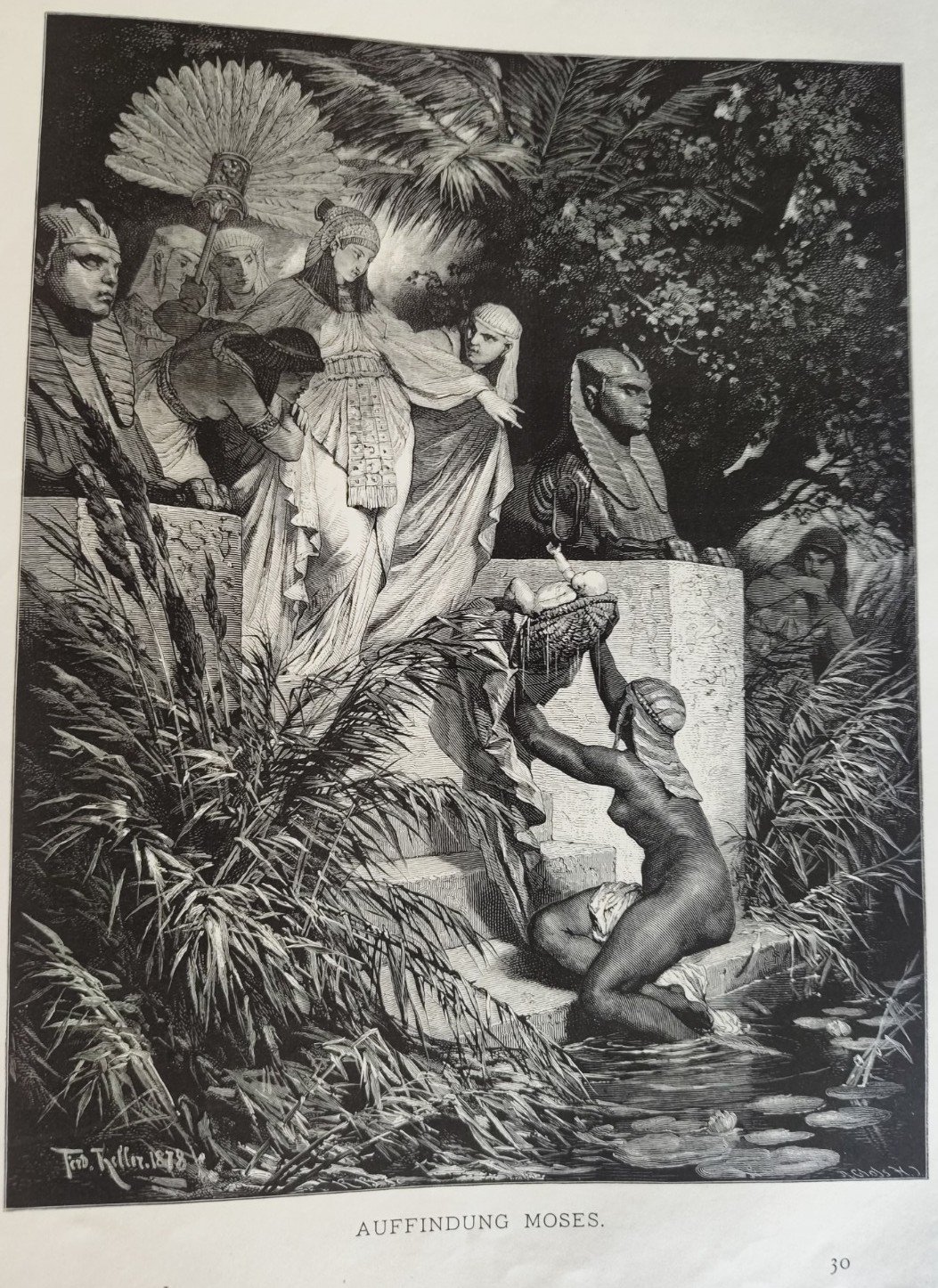 Image 1 of 10
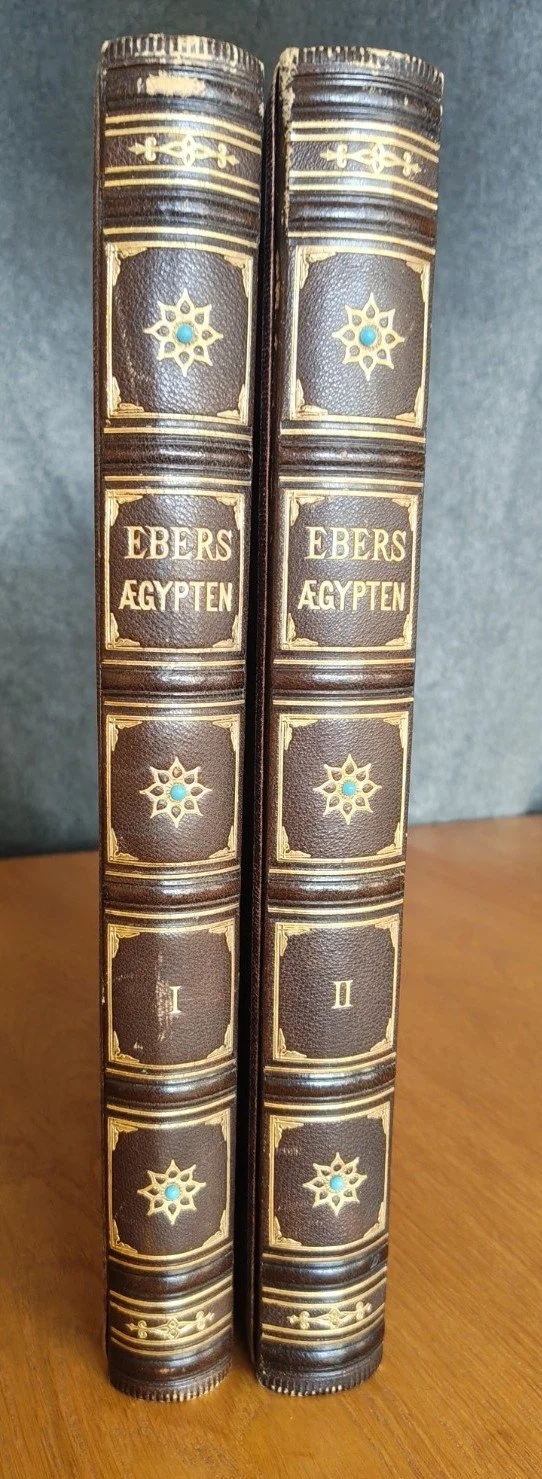 Image 2 of 10
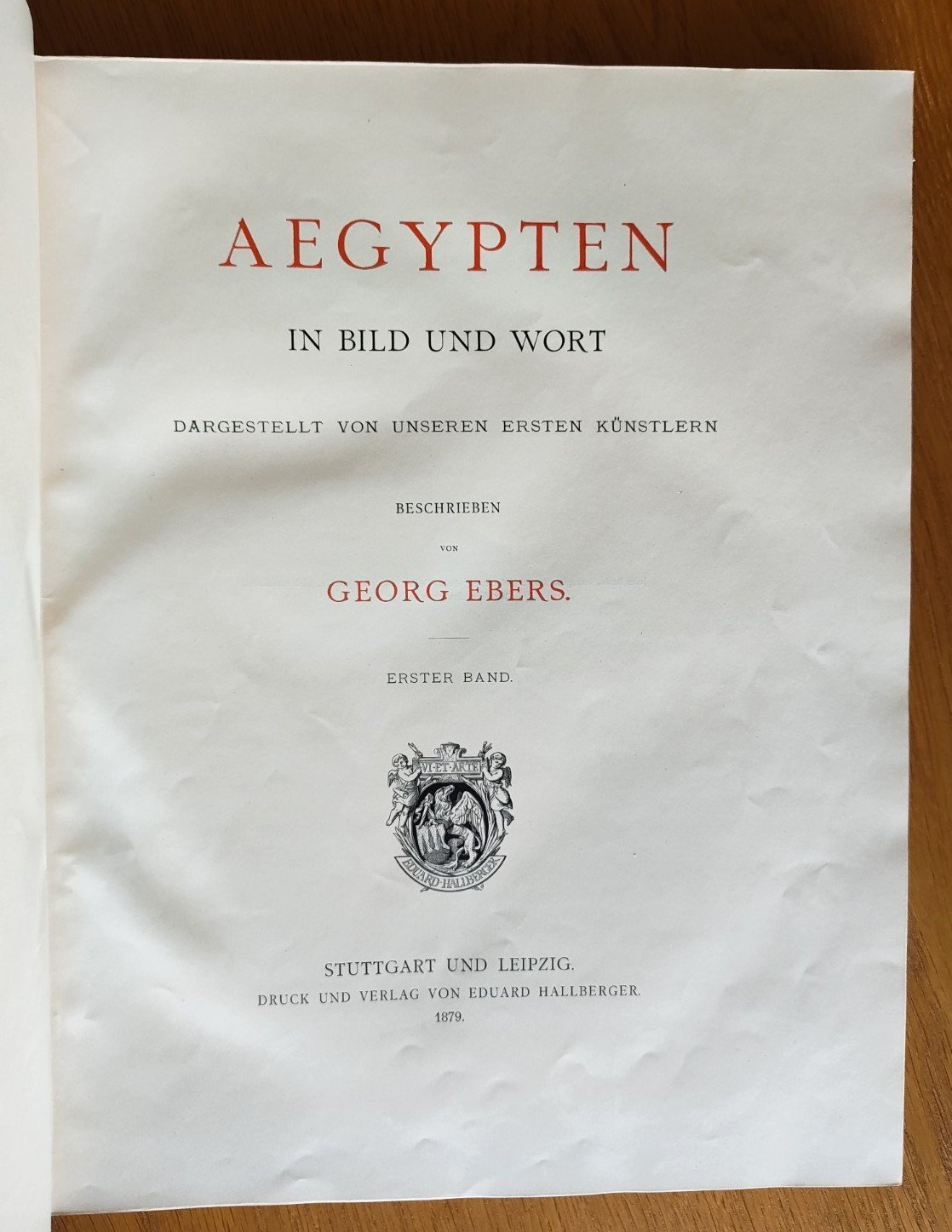 Image 3 of 10
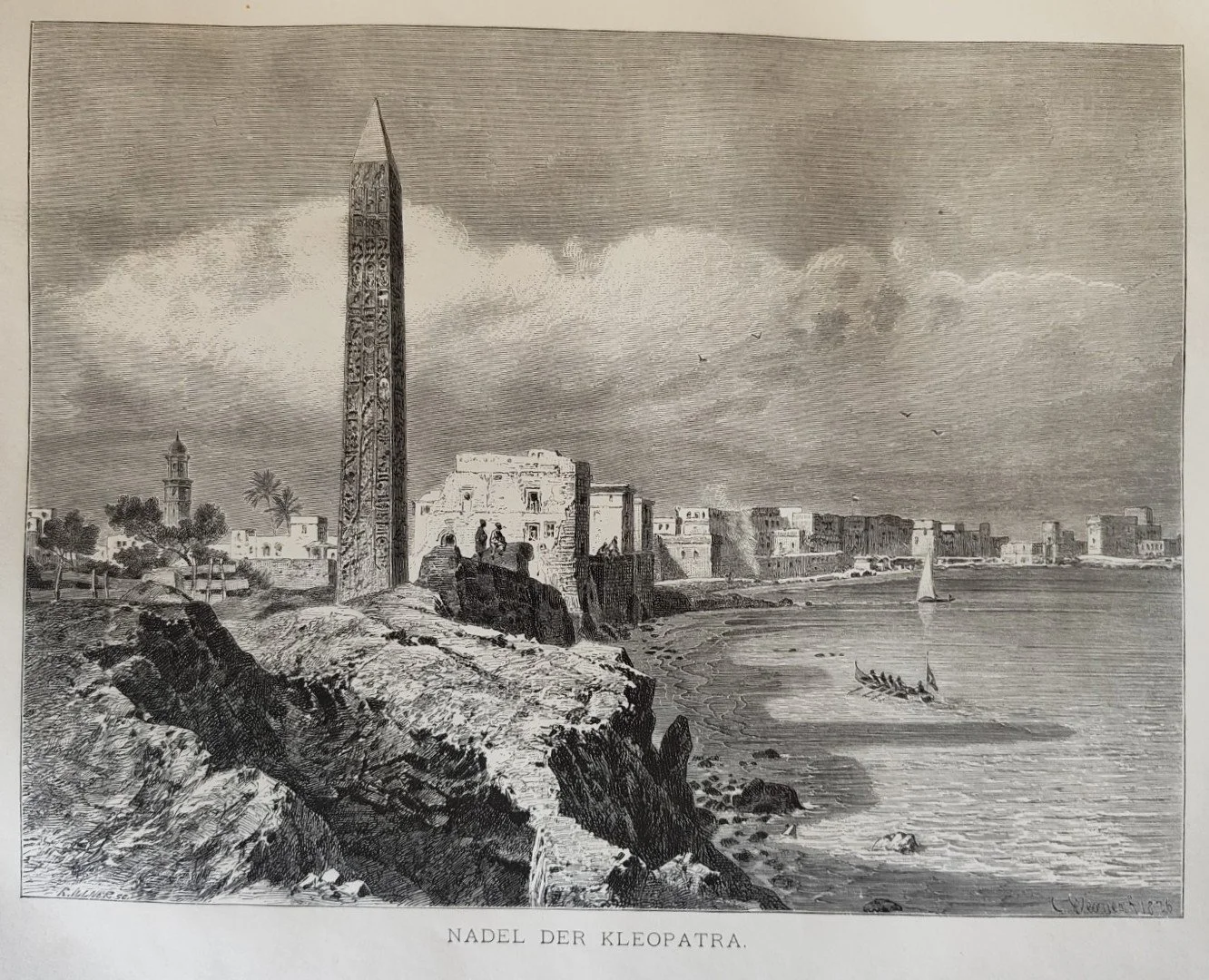 Image 4 of 10
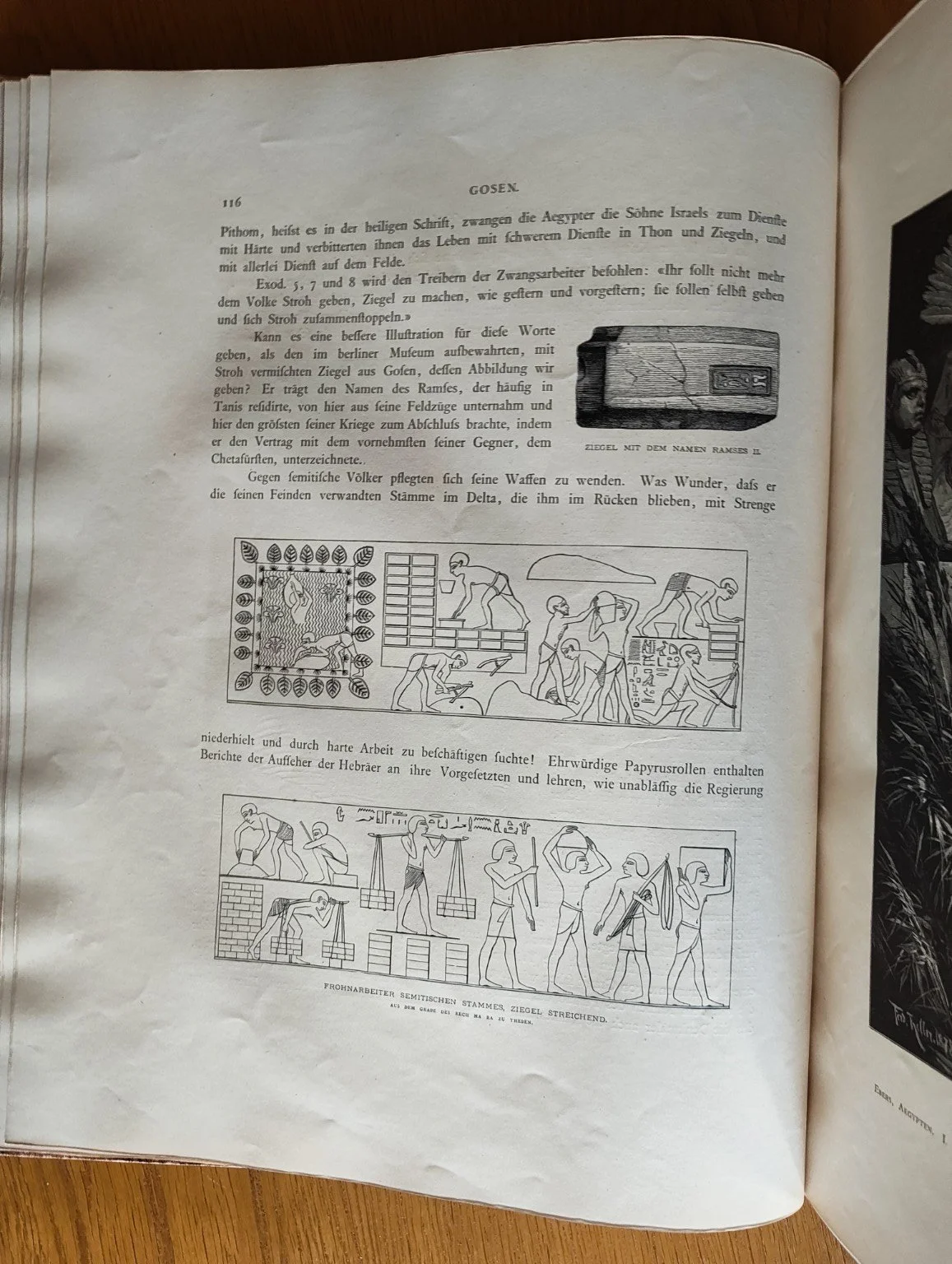 Image 5 of 10
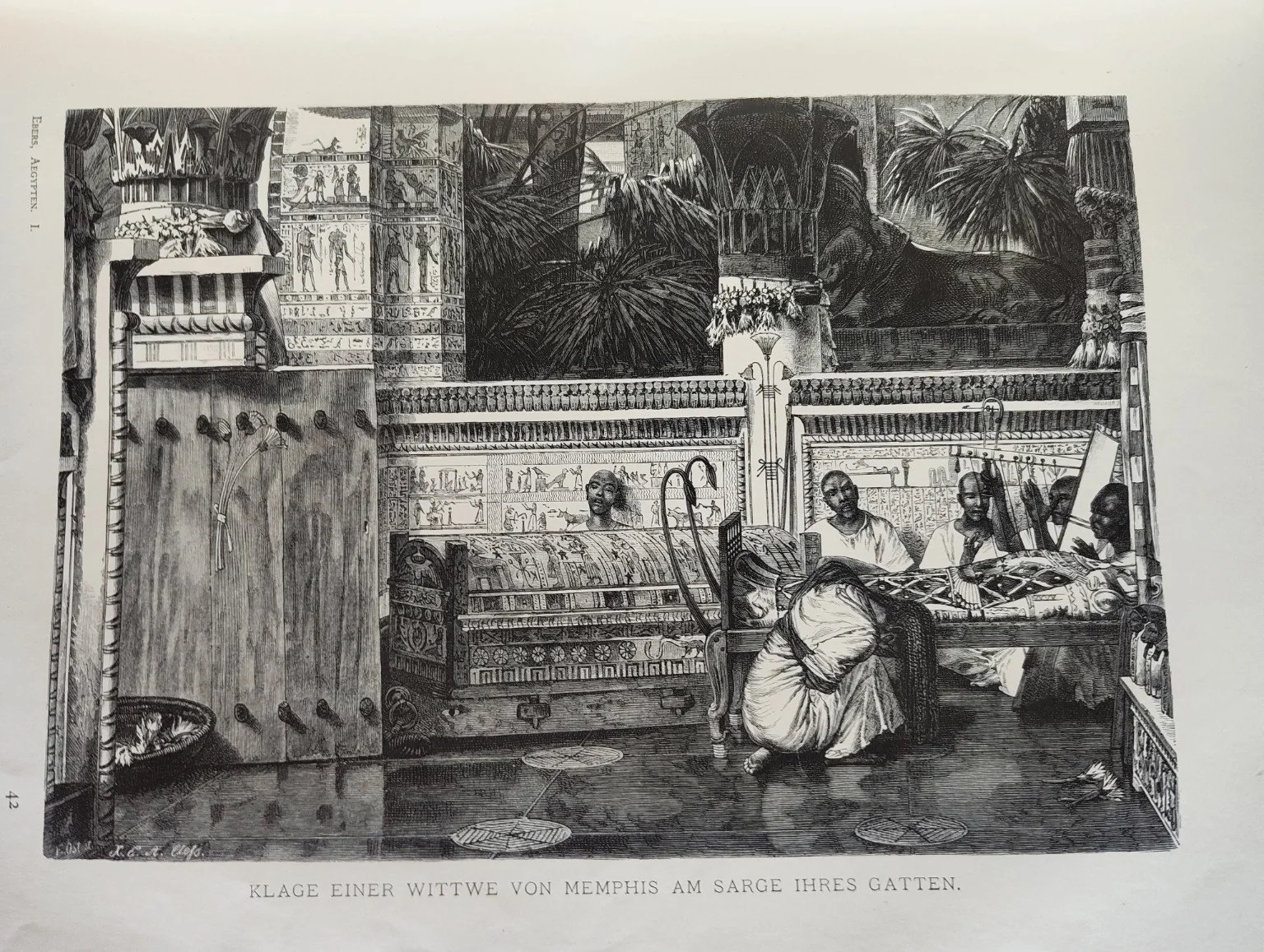 Image 6 of 10
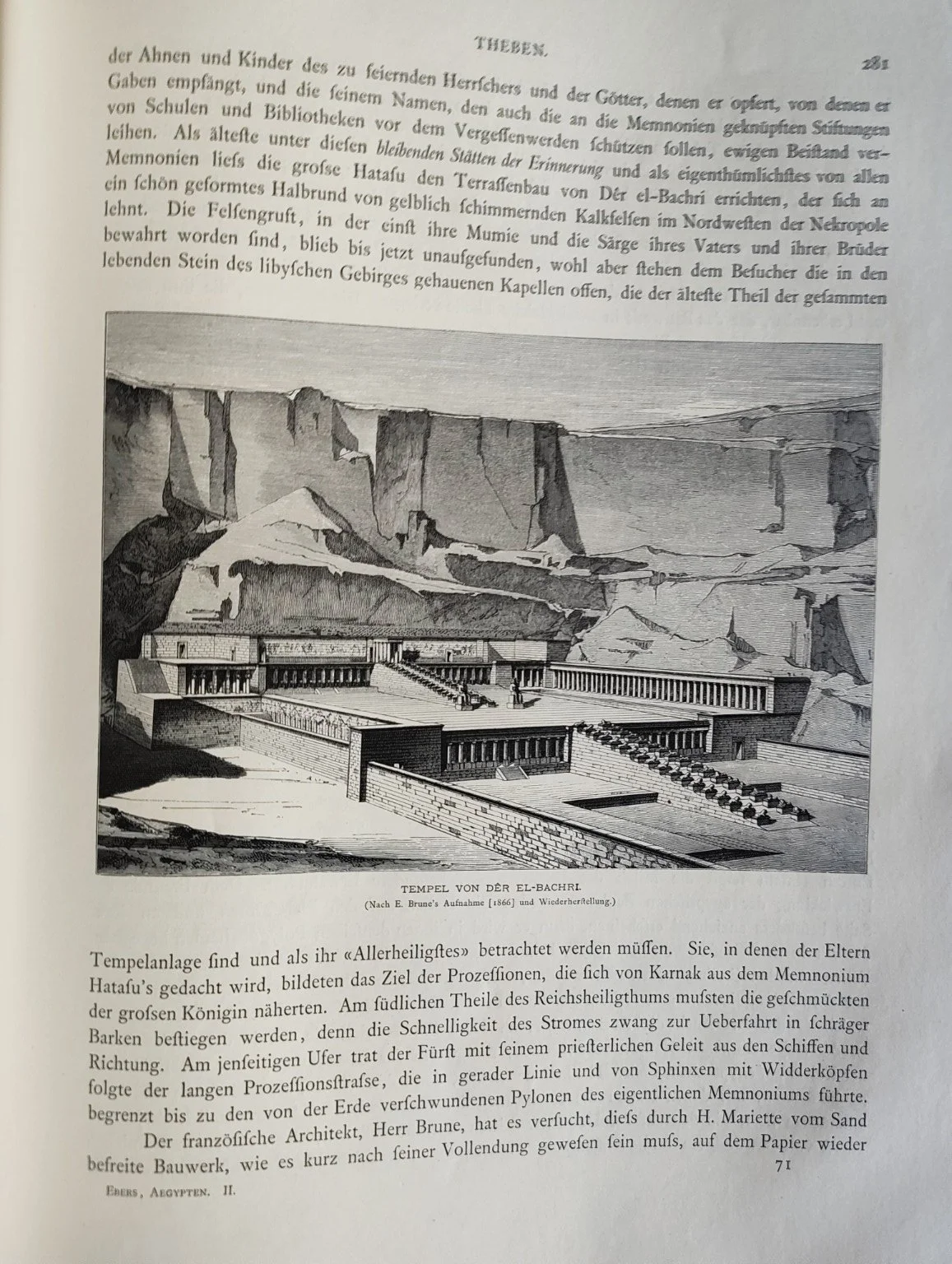 Image 7 of 10
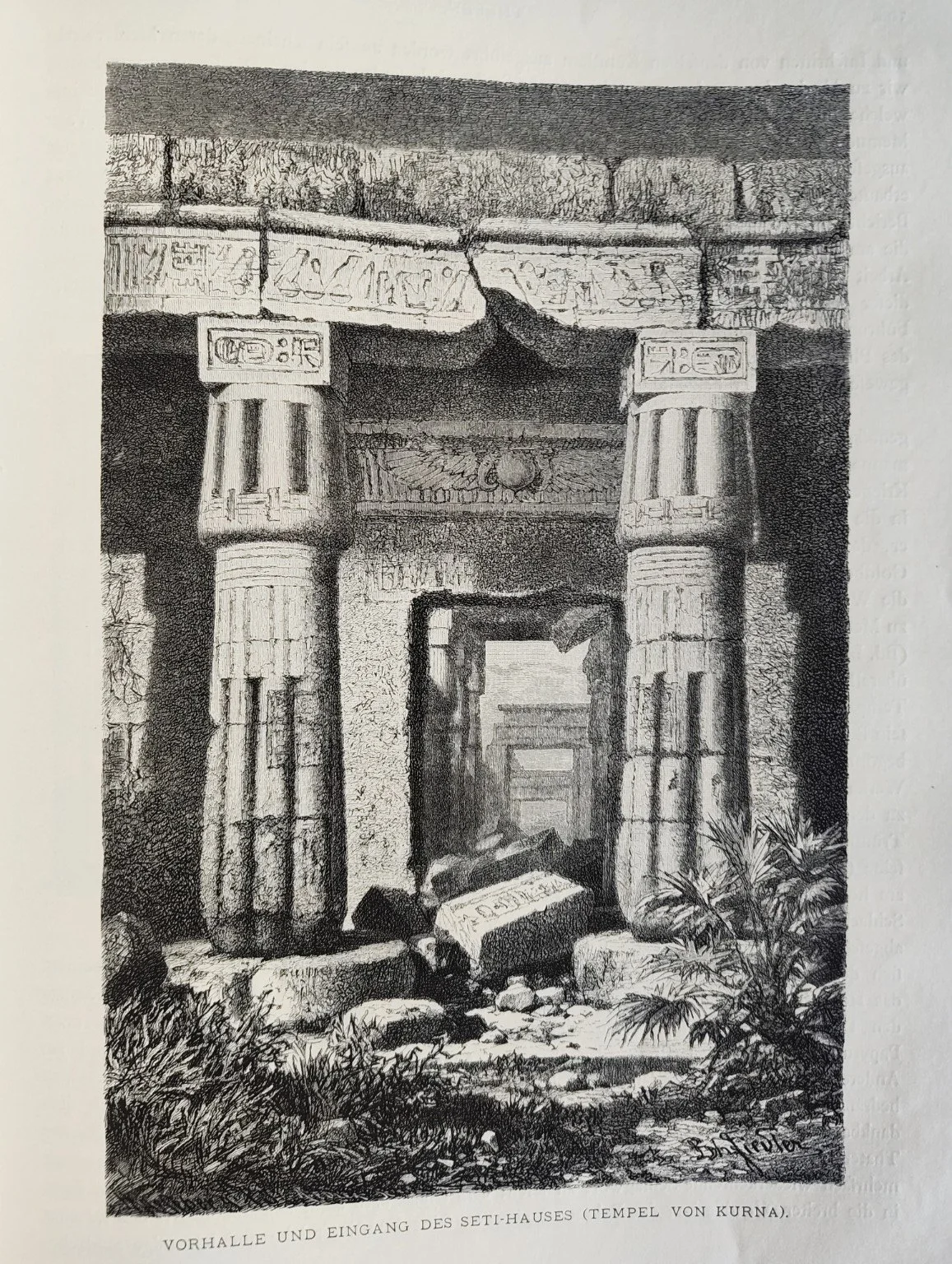 Image 8 of 10
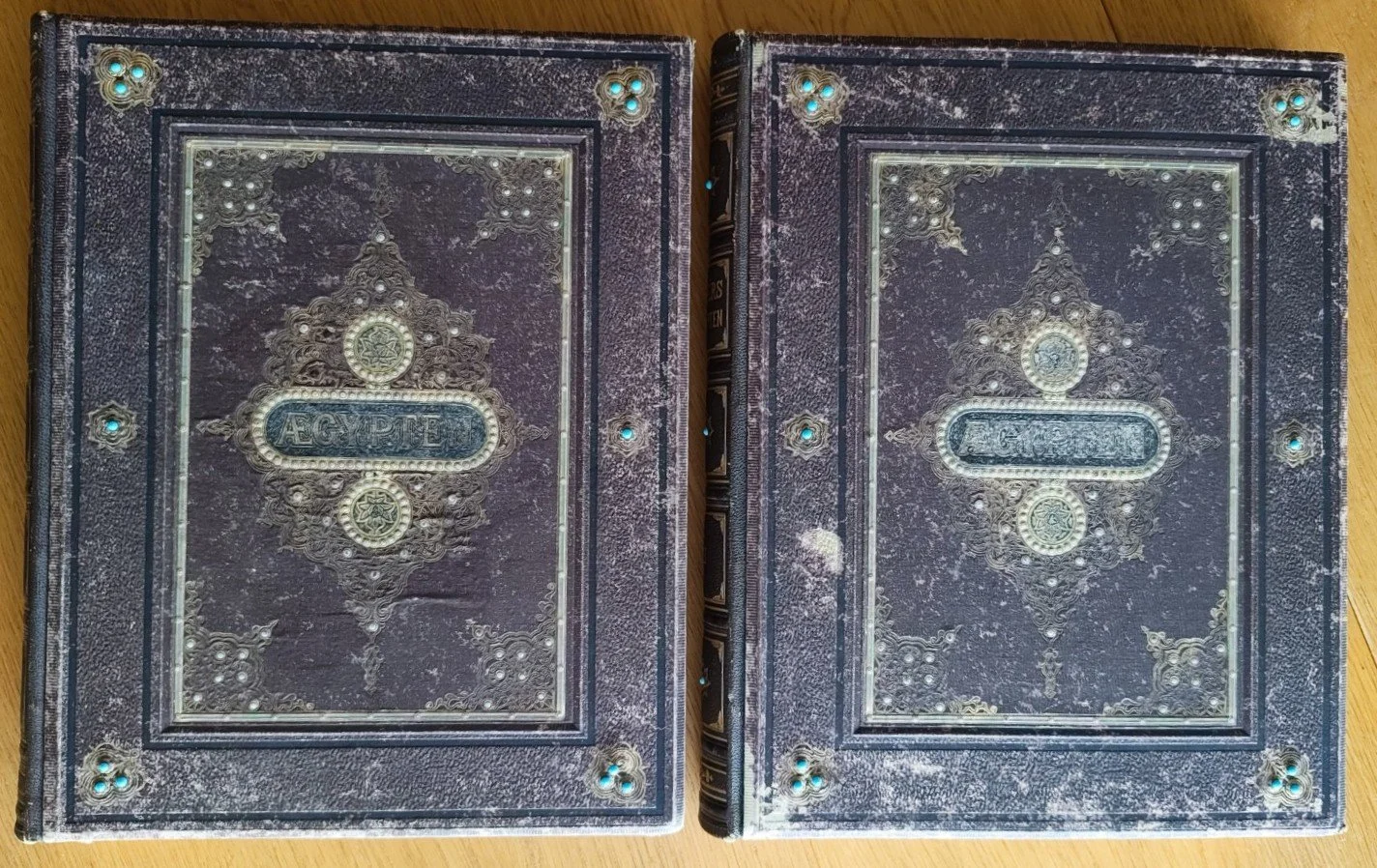 Image 9 of 10
 Image 10 of 10