Introduction
This copy of La Rhétorique, ou l’Art de parler by Bernard Lamy, printed at La Haye in 1737, represents one of the most influential rhetorical treatises of the French Enlightenment. Lamy’s work bridges classical rhetoric and early modern theories of language, persuasion, and reason, and remained in continuous pedagogical use throughout the eighteenth century.
The volume bears a contemporary ownership inscription reading “Adrien Flourmond, Poujol 1766”, situating the book within a concrete intellectual milieu less than three decades after publication. This personal mark anchors the text in lived use rather than abstract transmission, reinforcing its role as a working manual for thought, speech, and instruction rather than a purely theoretical artifact.
Physical Description
Title: La Rhétorique, ou l’Art de parler
Author: Bernard Lamy
Language: French
Date: 1737
Place of printing: La Haye
Printer / Publisher: Pierre Paupie
Edition: Sixth edition
Format: Single volume
Binding: Contemporary full leather, gilt spine compartments with floral tools
Typography: Roman type, structured chapters with formal divisions and headings
Provenance: Early manuscript ownership inscription “Adrien Flourmond, Poujol 1766”
Condition: General age wear to binding, surface abrasions and toning, scattered spotting to textblock, minor edge wear; internally complete and structurally sound
Context
First published in the late seventeenth century, La Rhétorique became one of the standard rhetorical textbooks of the Enlightenment. Lamy, an Oratorian priest and philosopher, sought to reconcile classical rhetorical tradition with Cartesian clarity and moral reasoning. His approach emphasizes persuasion as an ethical and intellectual act grounded in clarity of thought, precision of language, and disciplined structure.
By the time of this sixth edition, the work had secured its place in educational curricula across France and beyond, circulating among clerics, teachers, students, and lay readers engaged in law, theology, and letters. Its continued reprinting reflects both its pedagogical utility and its adaptability to changing intellectual climates.
Significance
The importance of this volume lies not only in its textual content but also in its material and historical specificity. The survival of a named eighteenth century owner situates the book within an identifiable chain of use, transforming it from a neutral instructional text into a witness of rhetorical practice at the individual level.
As a later Enlightenment edition in contemporary binding, the book exemplifies how rhetorical theory was preserved, studied, and physically handled in everyday intellectual life. It stands as a representative artifact of eighteenth century educational culture, where rhetoric functioned as a foundational discipline shaping discourse, judgment, and civic participation.
Introduction
This copy of La Rhétorique, ou l’Art de parler by Bernard Lamy, printed at La Haye in 1737, represents one of the most influential rhetorical treatises of the French Enlightenment. Lamy’s work bridges classical rhetoric and early modern theories of language, persuasion, and reason, and remained in continuous pedagogical use throughout the eighteenth century.
The volume bears a contemporary ownership inscription reading “Adrien Flourmond, Poujol 1766”, situating the book within a concrete intellectual milieu less than three decades after publication. This personal mark anchors the text in lived use rather than abstract transmission, reinforcing its role as a working manual for thought, speech, and instruction rather than a purely theoretical artifact.
Physical Description
Title: La Rhétorique, ou l’Art de parler
Author: Bernard Lamy
Language: French
Date: 1737
Place of printing: La Haye
Printer / Publisher: Pierre Paupie
Edition: Sixth edition
Format: Single volume
Binding: Contemporary full leather, gilt spine compartments with floral tools
Typography: Roman type, structured chapters with formal divisions and headings
Provenance: Early manuscript ownership inscription “Adrien Flourmond, Poujol 1766”
Condition: General age wear to binding, surface abrasions and toning, scattered spotting to textblock, minor edge wear; internally complete and structurally sound
Context
First published in the late seventeenth century, La Rhétorique became one of the standard rhetorical textbooks of the Enlightenment. Lamy, an Oratorian priest and philosopher, sought to reconcile classical rhetorical tradition with Cartesian clarity and moral reasoning. His approach emphasizes persuasion as an ethical and intellectual act grounded in clarity of thought, precision of language, and disciplined structure.
By the time of this sixth edition, the work had secured its place in educational curricula across France and beyond, circulating among clerics, teachers, students, and lay readers engaged in law, theology, and letters. Its continued reprinting reflects both its pedagogical utility and its adaptability to changing intellectual climates.
Significance
The importance of this volume lies not only in its textual content but also in its material and historical specificity. The survival of a named eighteenth century owner situates the book within an identifiable chain of use, transforming it from a neutral instructional text into a witness of rhetorical practice at the individual level.
As a later Enlightenment edition in contemporary binding, the book exemplifies how rhetorical theory was preserved, studied, and physically handled in everyday intellectual life. It stands as a representative artifact of eighteenth century educational culture, where rhetoric functioned as a foundational discipline shaping discourse, judgment, and civic participation.


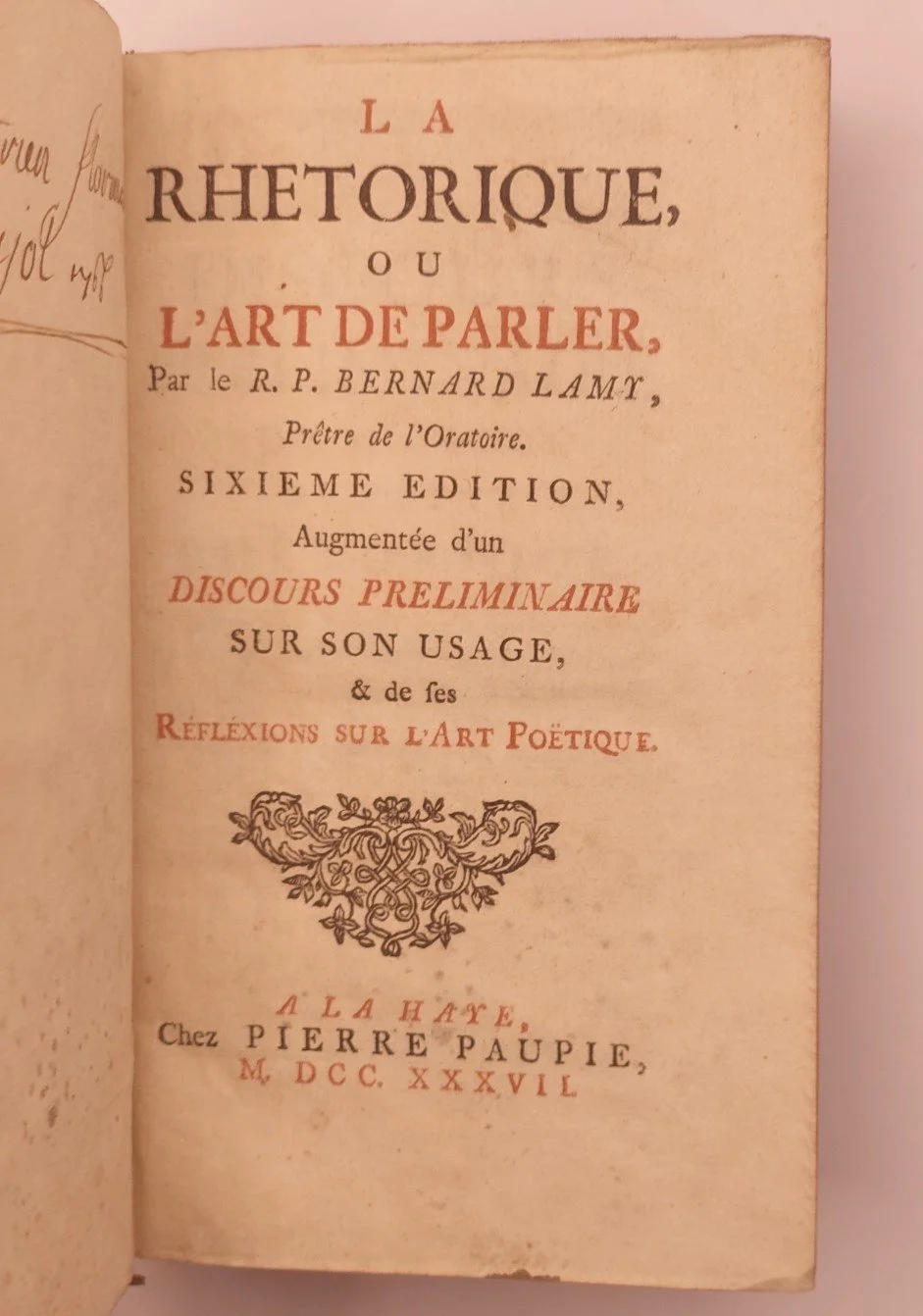 Image 1 of 6
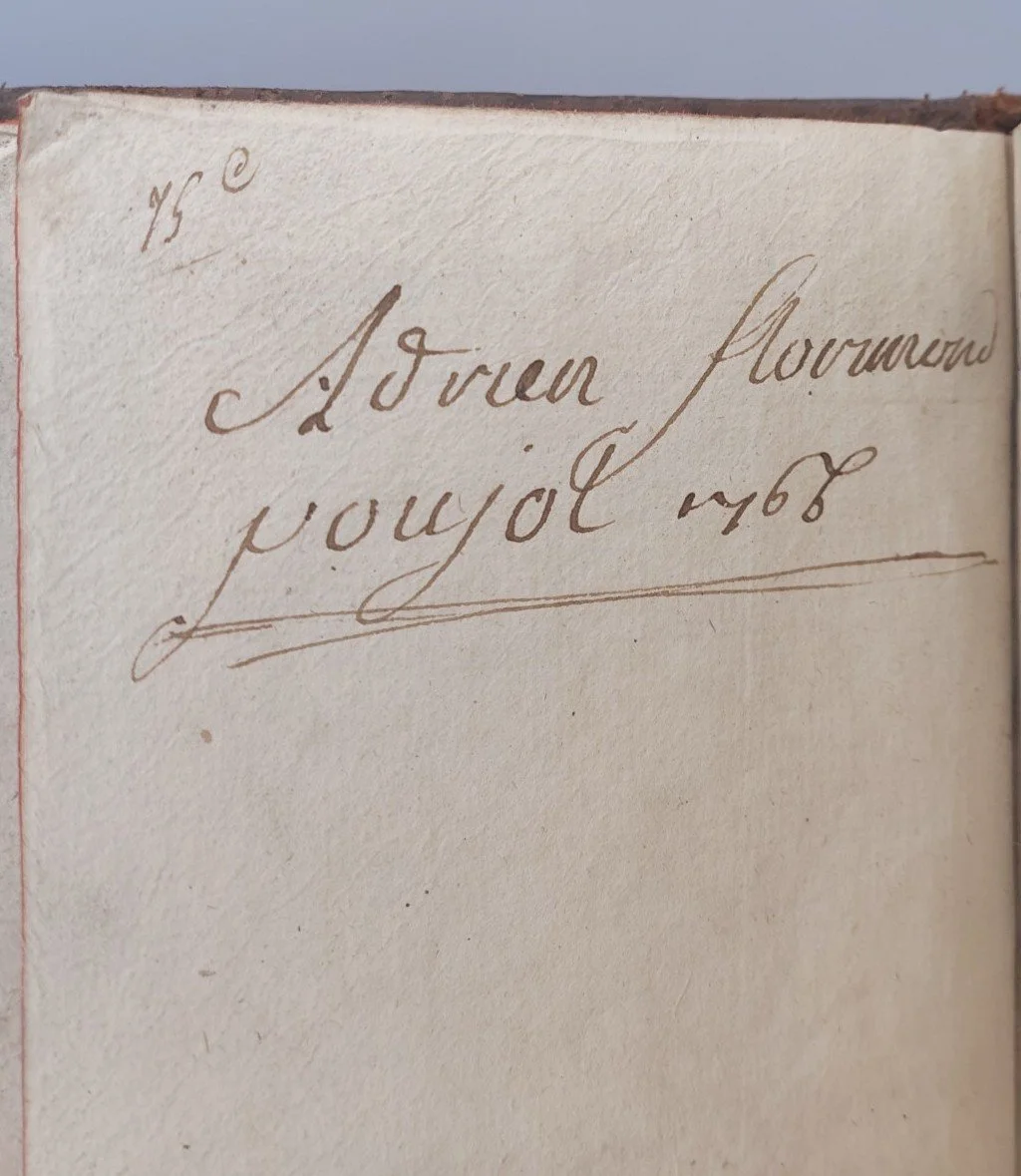 Image 2 of 6
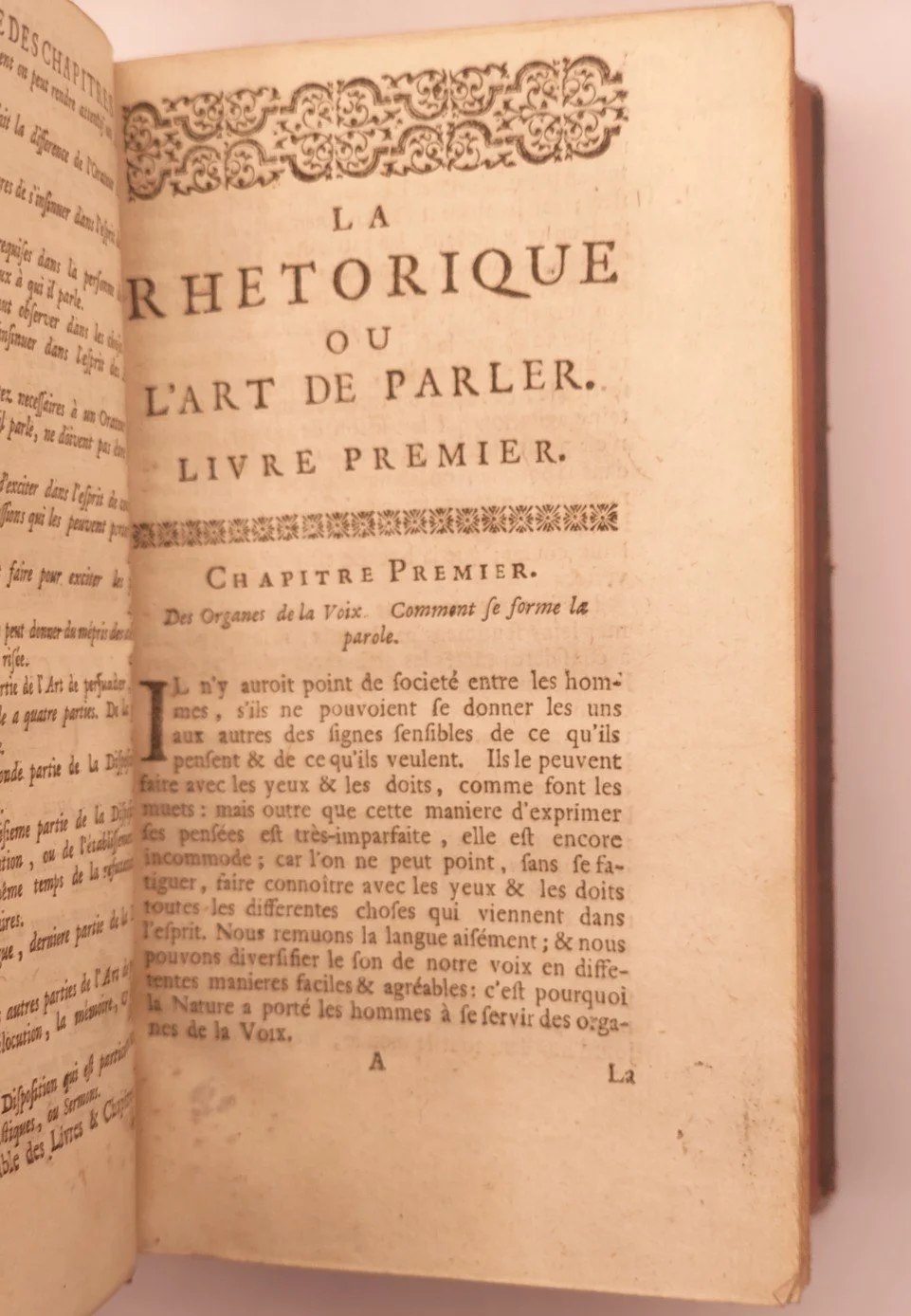 Image 3 of 6
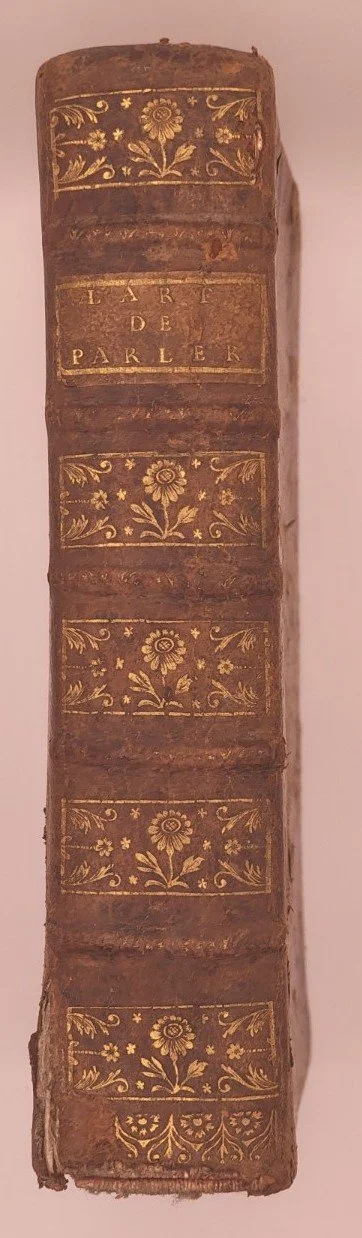 Image 4 of 6
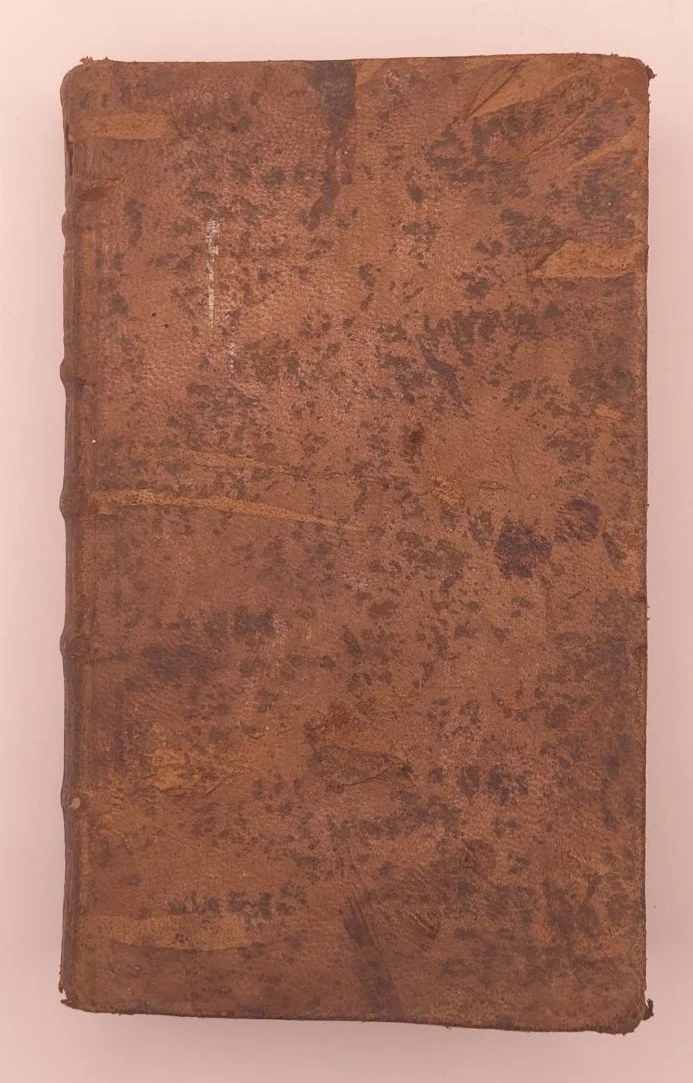 Image 5 of 6
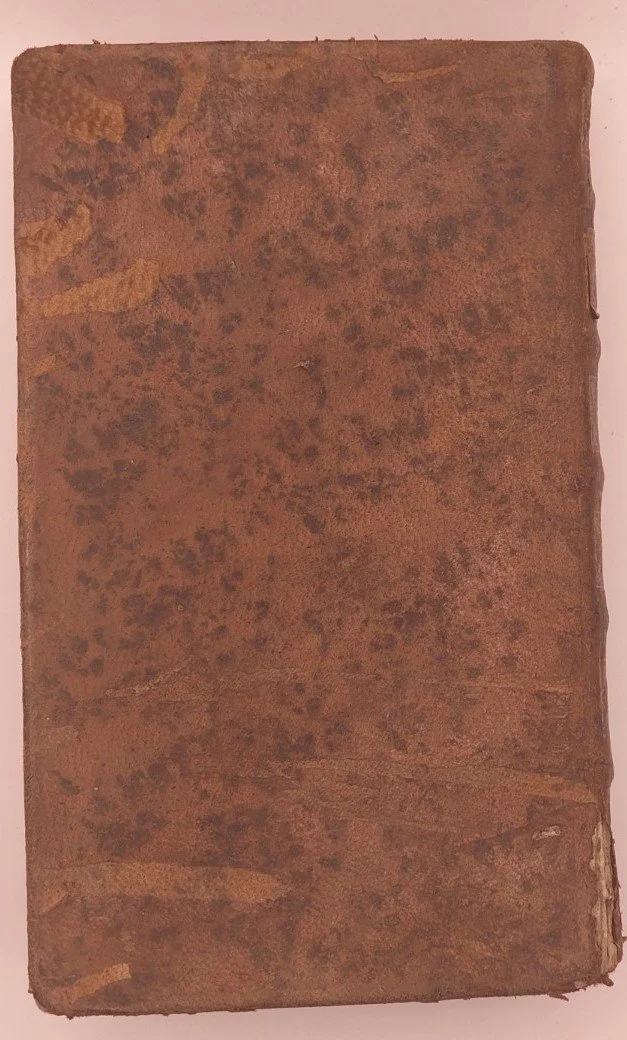 Image 6 of 6